

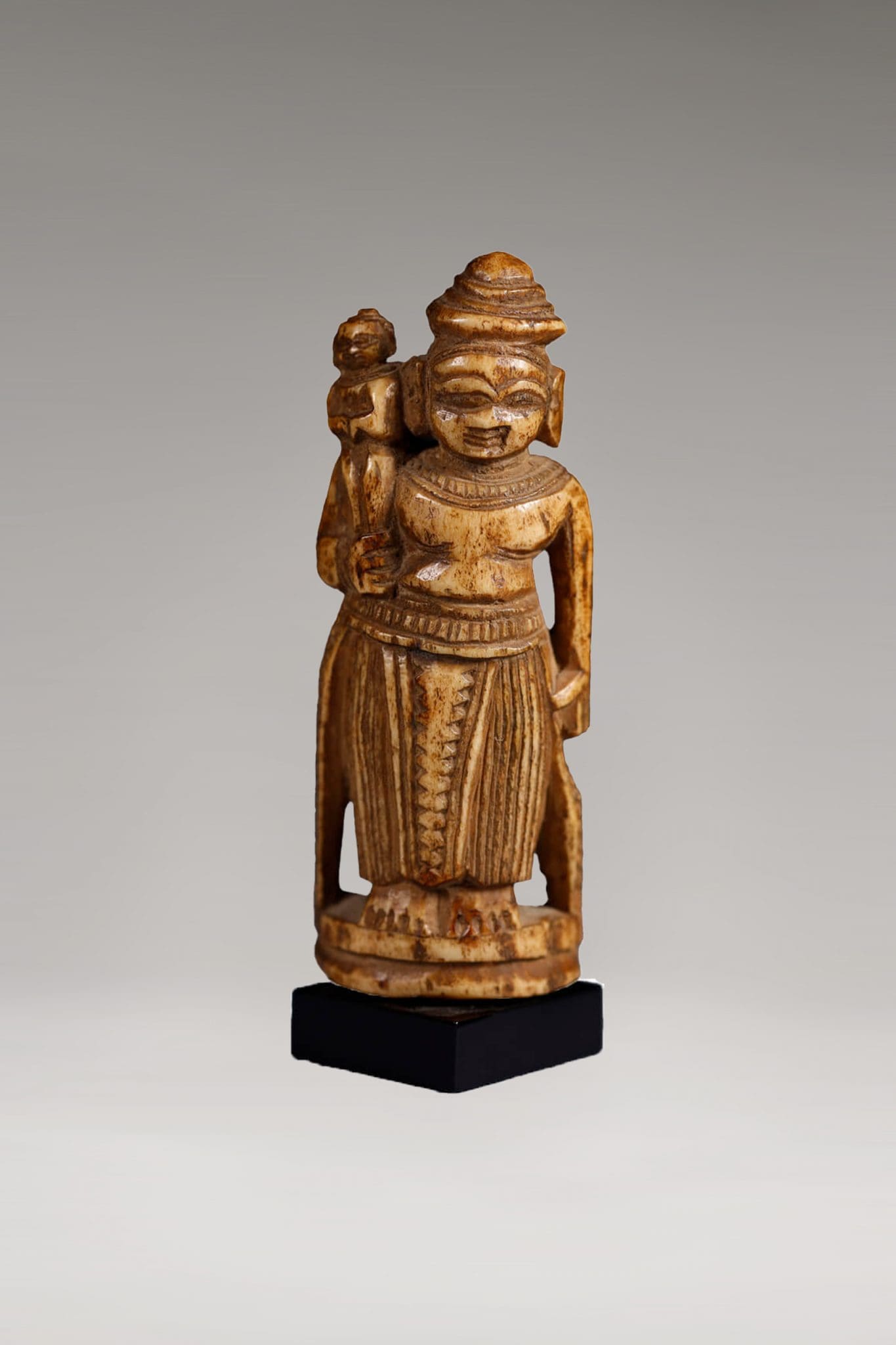
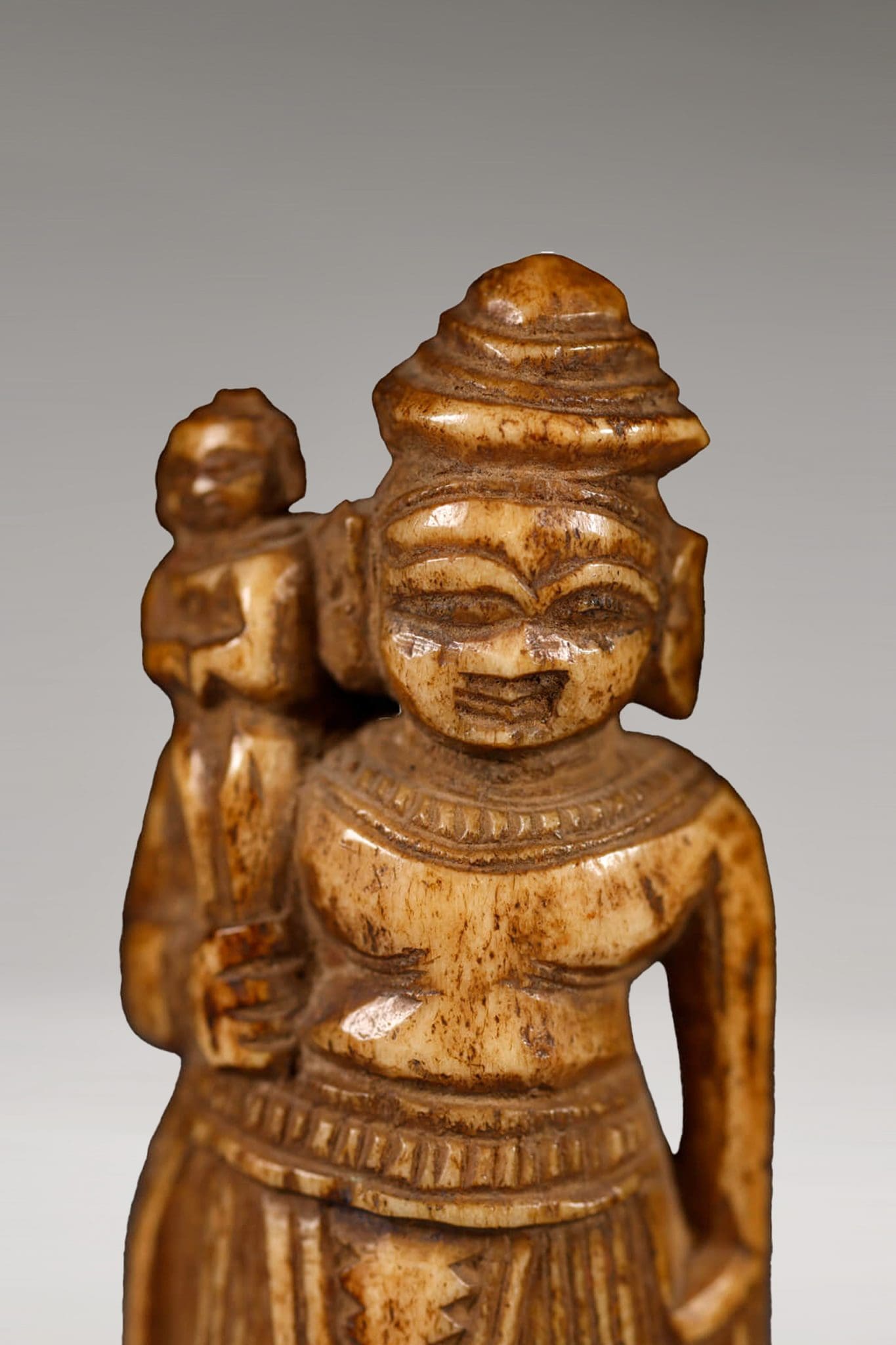
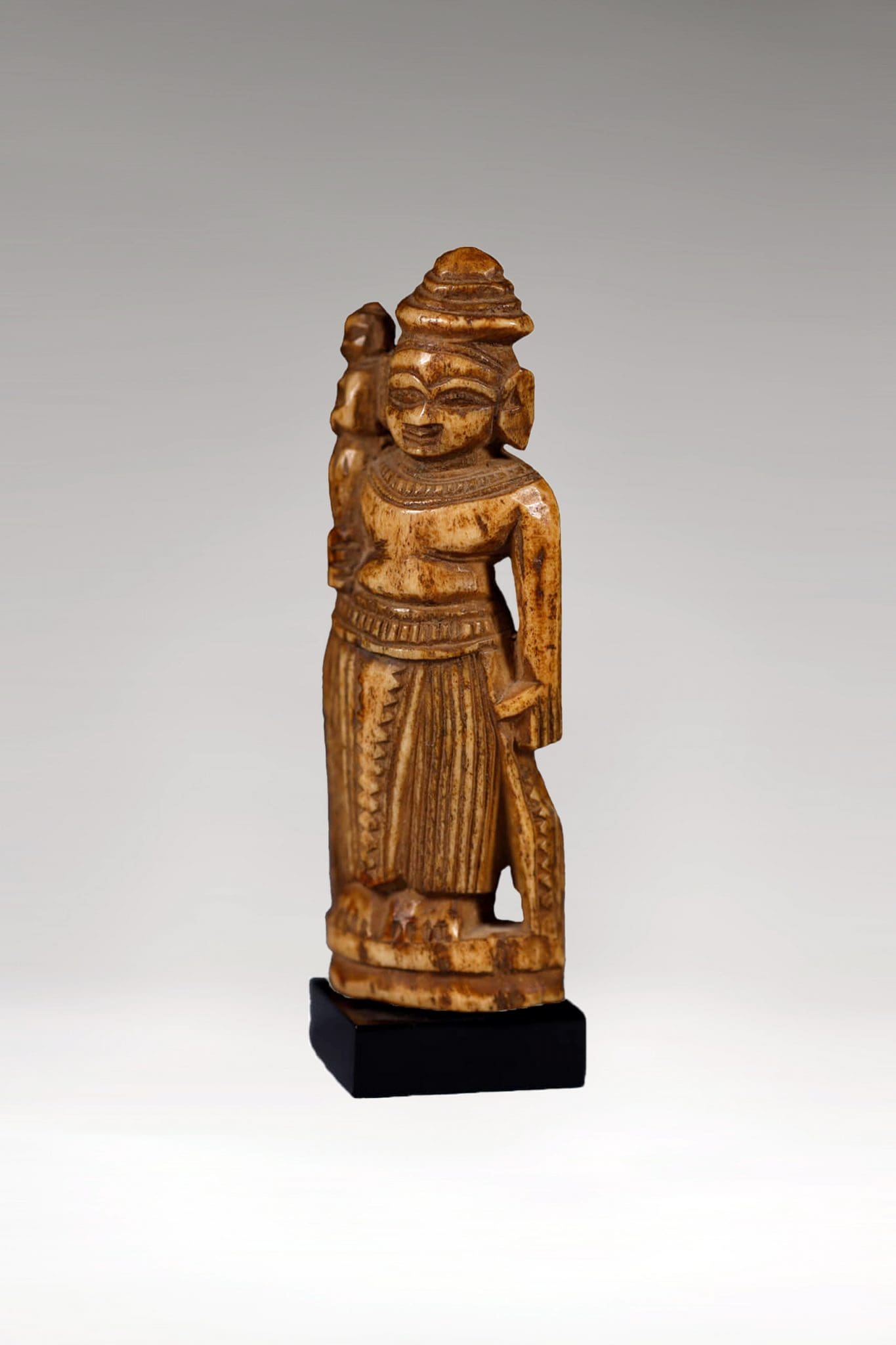
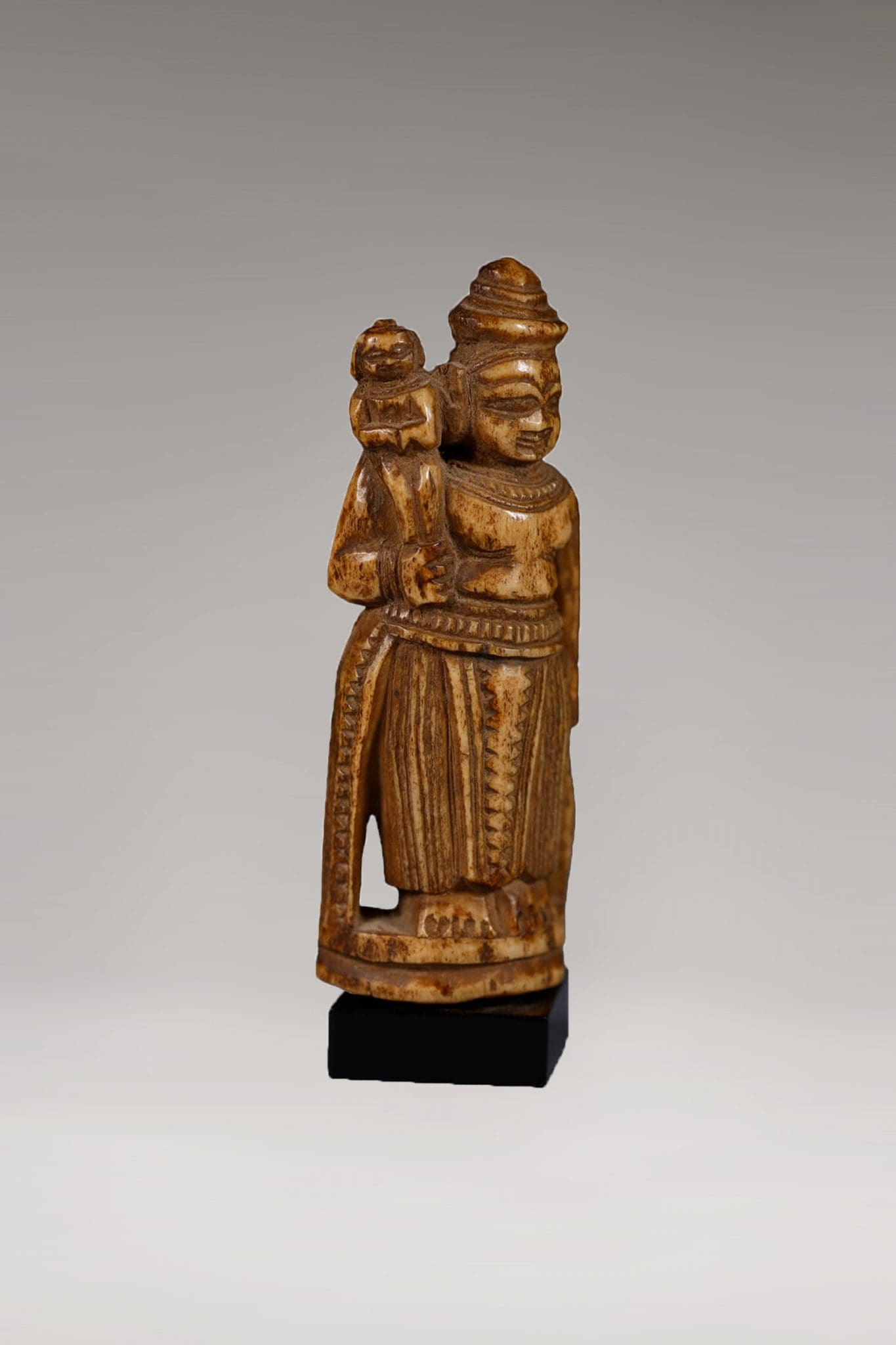
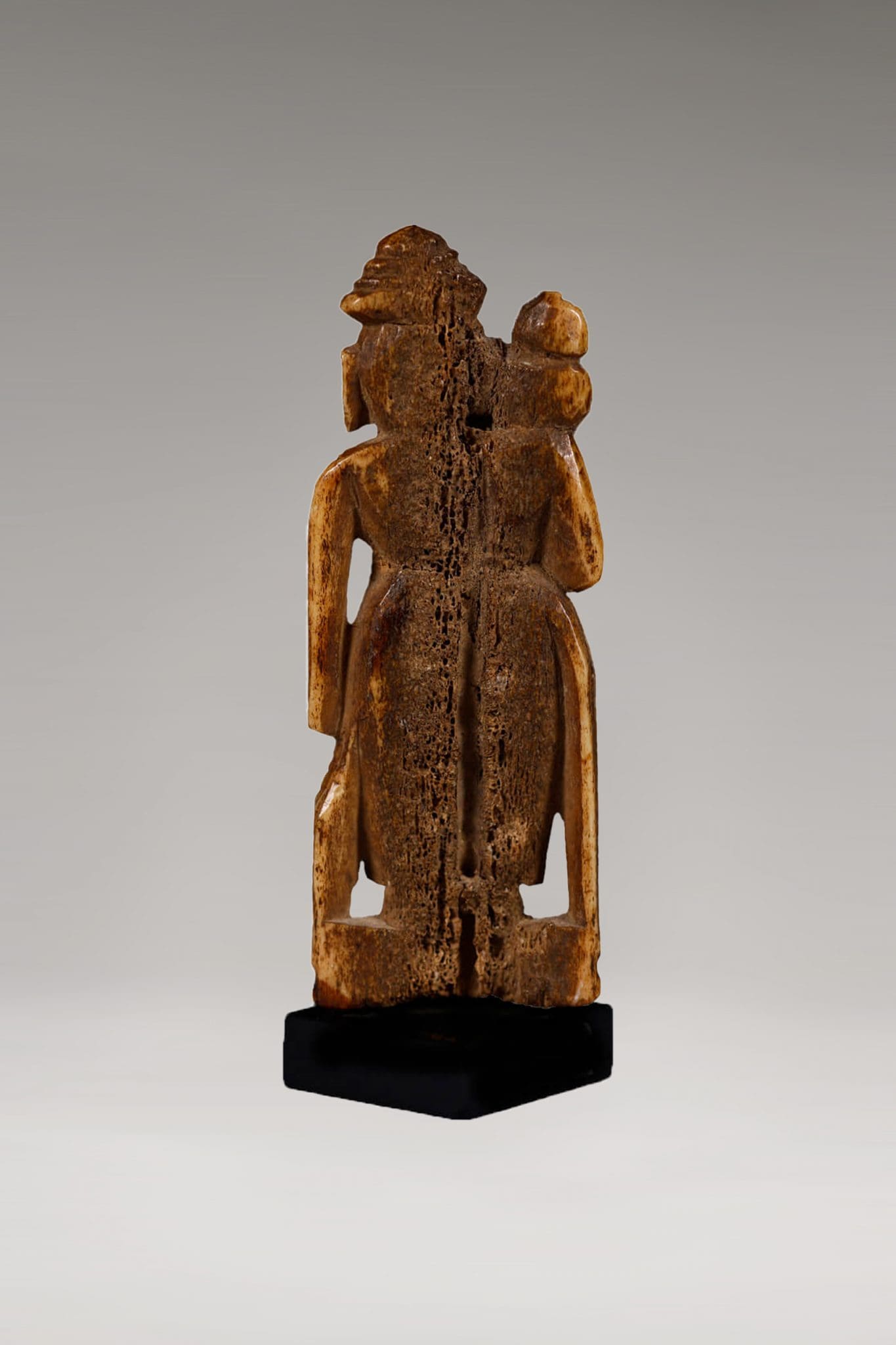
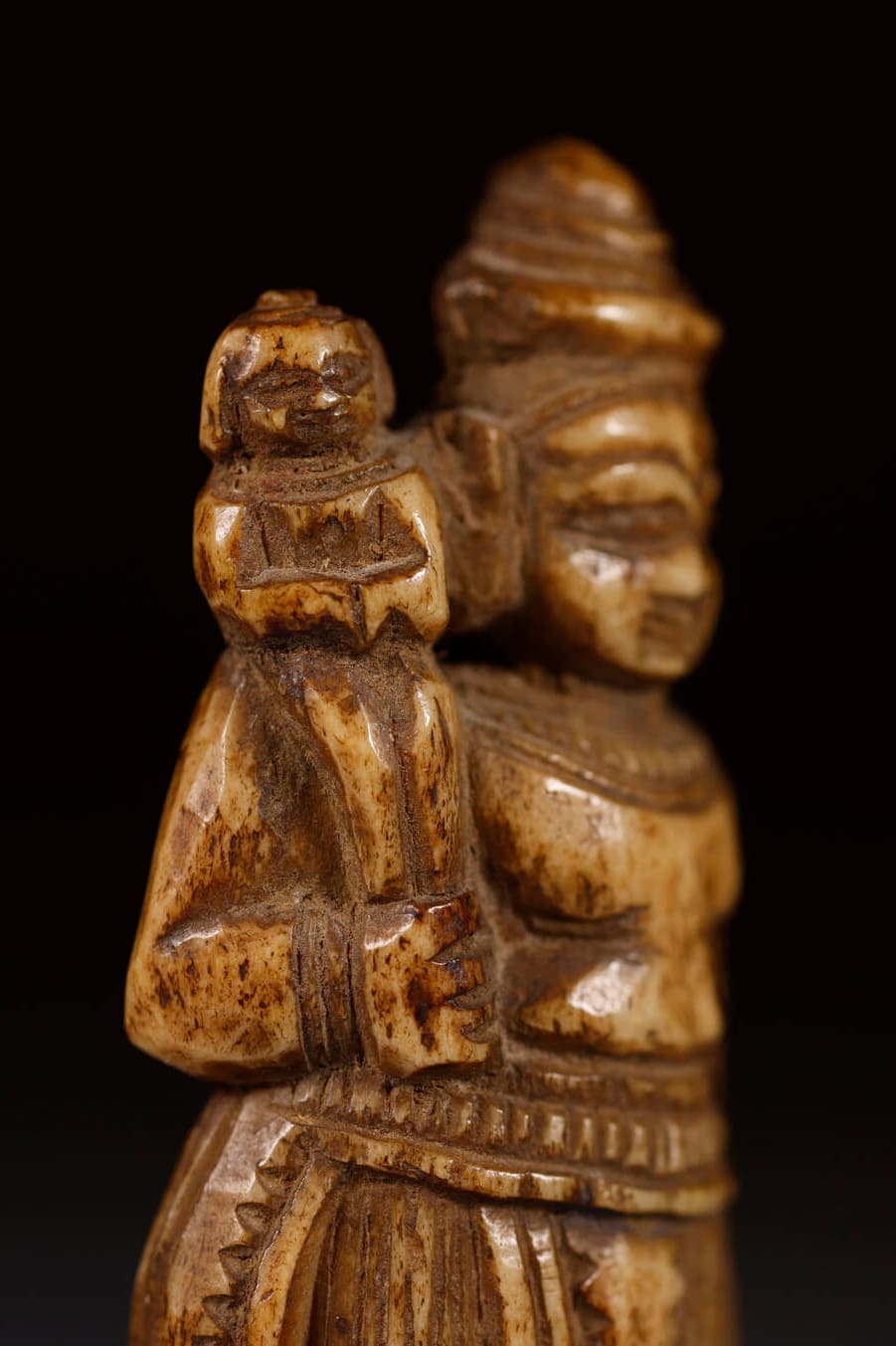
Yashoda and Krishna: The Divine Child and His Mother
In the devotional traditions of North India, few relationships carry more theological and emotional weight than that of Yashoda and the infant Krishna. Yashoda was the foster mother of Krishna — the cowherd woman of Vrindavan in whose household the god was raised, unaware for much of his childhood of his own divine nature. In the Bhagavata Purana and the devotional poetry of the Vaishnava saints, the relationship between Yashoda and Krishna became a primary vehicle for exploring the concept of vatsalya bhava — the love of a parent for a child — as one of the five principal modes through which a devotee might experience the divine. To hold and nurture Krishna, to feed him, to hear him cry, to discipline him and be forgiven by his cosmic smile: these were acts through which the human and the infinite met most tenderly. Yashoda, in this theology, was among the most blessed souls who ever lived — a woman so pure of heart that god was pleased to be her child.
A Miniature of Extraordinary Intimacy
At 9.5 centimetres in height, this 17th-century bone carving is a miniature in the fullest sense — an object made to be held in a single hand, to be placed on a personal altar, to be carried on a journey. The tradition of personal devotional images in North India encompasses a wide range of materials and scales: marble images for temples, bronze figures for household shrines, and small objects in ivory, bone, and hardstone for individual practice. Bone was worked by specialist carvers — particularly in the Mughal period, when bone and ivory carving reached remarkable levels of technical refinement — using fine tools that could render facial features, drapery folds, and the distinctive roundness of the infant’s limbs at a scale that challenges the limits of the material.
Devotional Objects in the Mughal and Post-Mughal North
The 17th century in North India was a period of extraordinary cultural production, much of it centred on the Mughal courts at Agra and Delhi but reaching into the independent kingdoms and religious communities that surrounded them. Vaishnava devotional culture — centred on the worship of Vishnu in his Krishna form — flourished throughout this period, producing literature, music, painting, and sculpture of enduring significance. Mathura, the legendary birthplace of Krishna and located south of Delhi near Agra, remained a centre of pilgrimage and artistic production throughout the Mughal period. Small devotional objects like this Yashoda and Krishna figure circulated among pious households as objects of daily worship — placed on the domestic altar at dawn, offered flowers and lamp-light, and held during meditation and prayer. They were instruments of devotion before they were works of art; that they have become recognised as both is a mark of the extraordinary skill their makers brought to a purpose that was entirely spiritual.



 No products in the cart.