

Mathura and the Origins of Indian Figural Sculpture
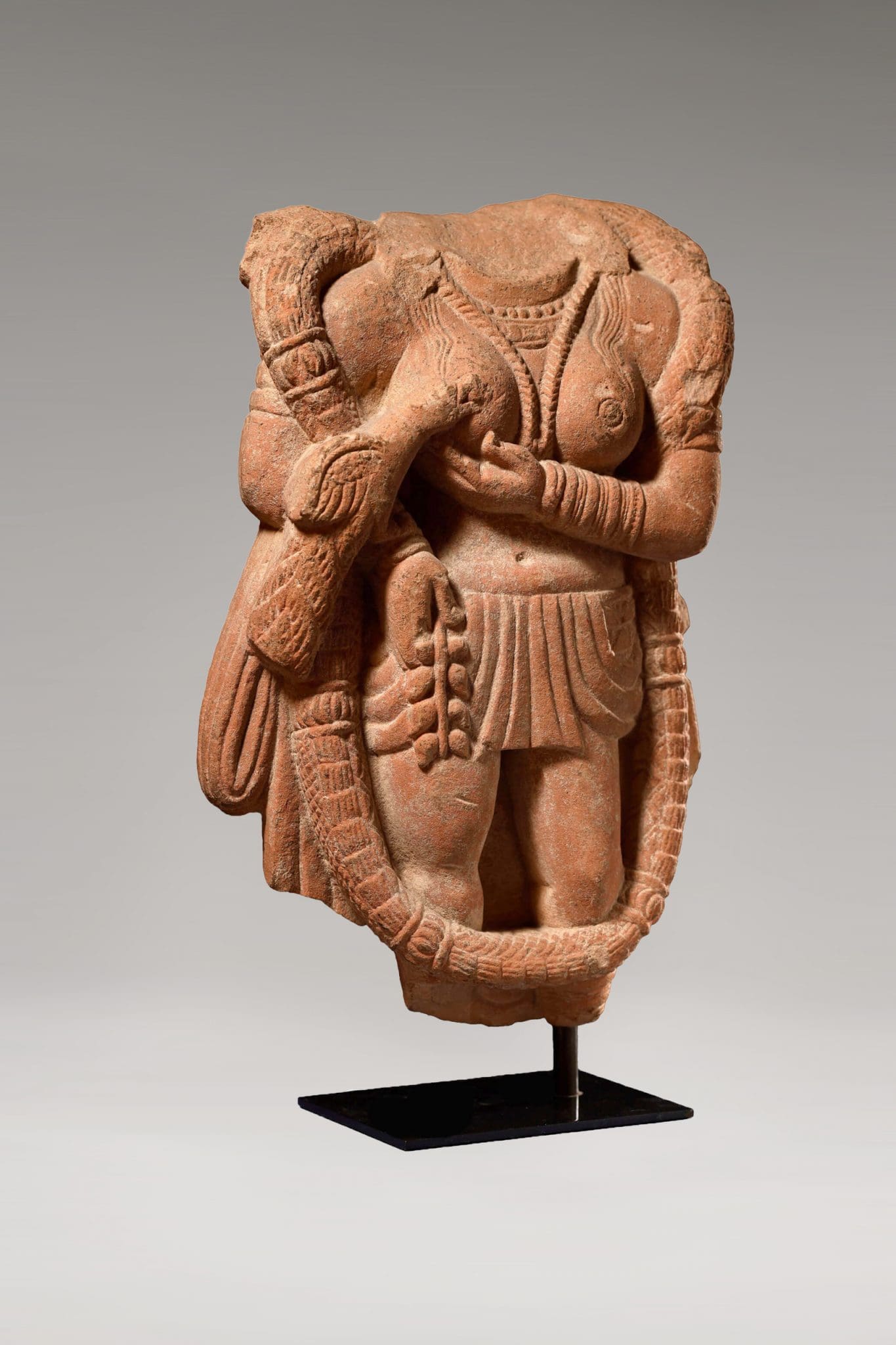
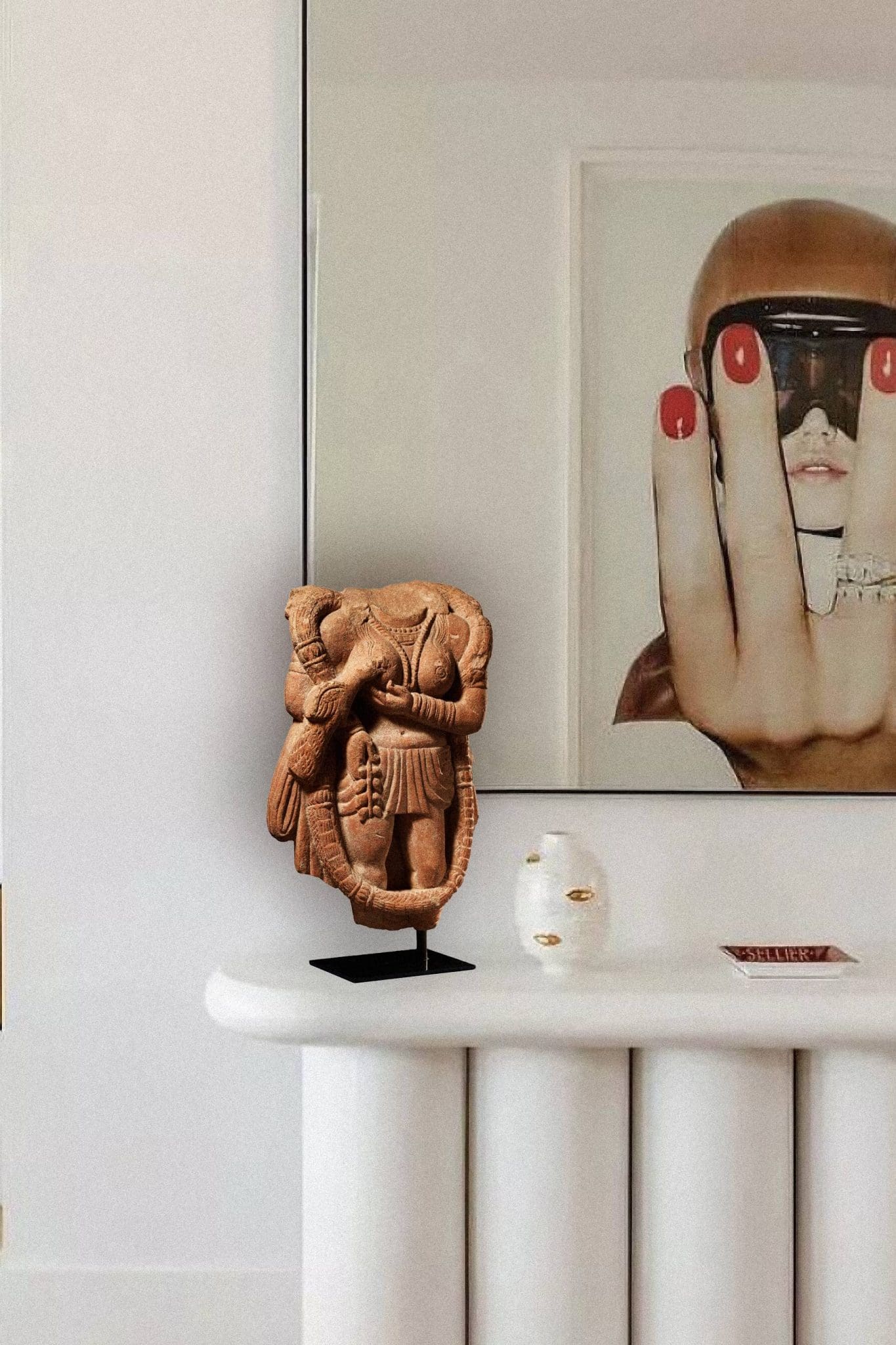
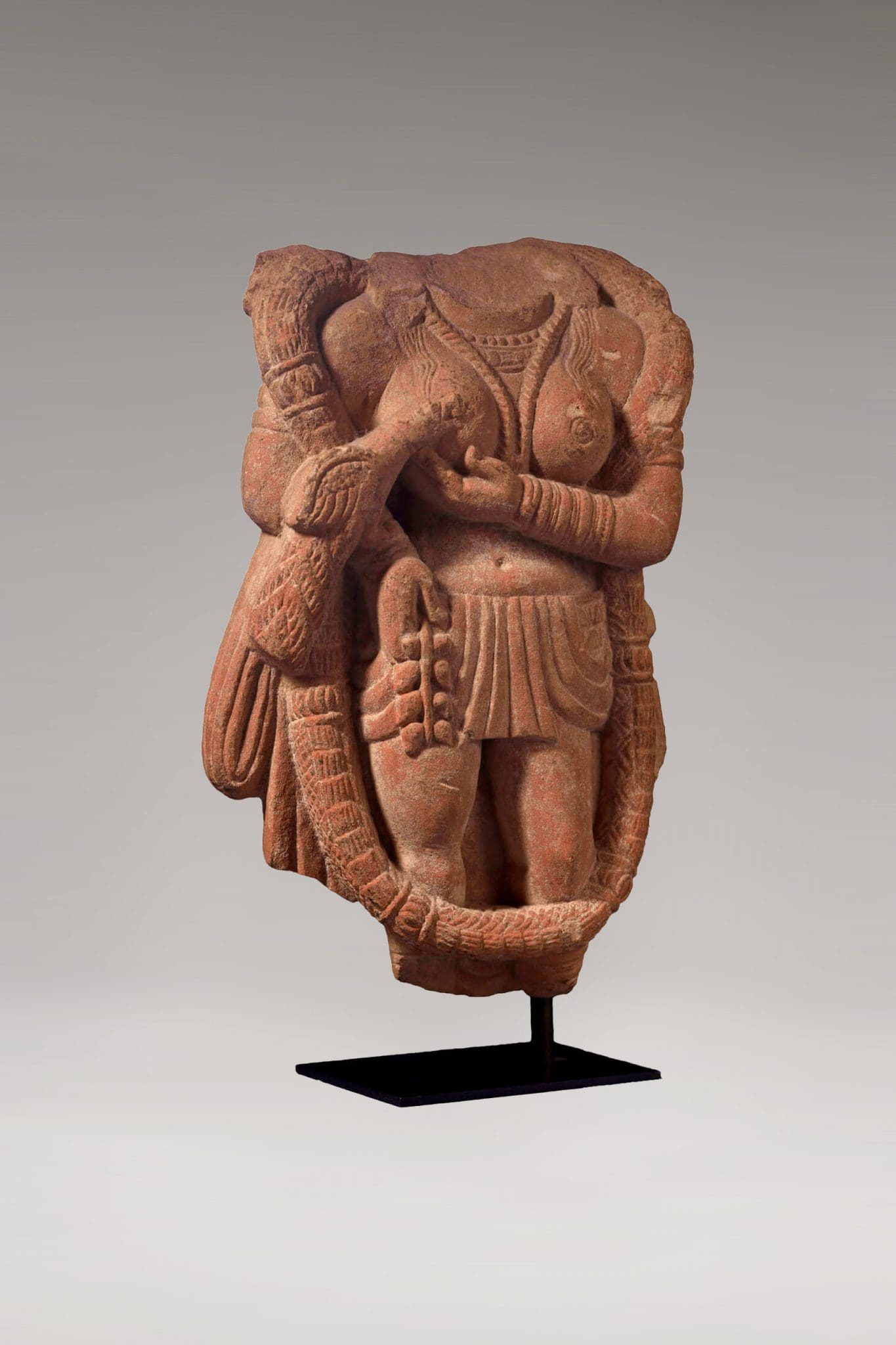
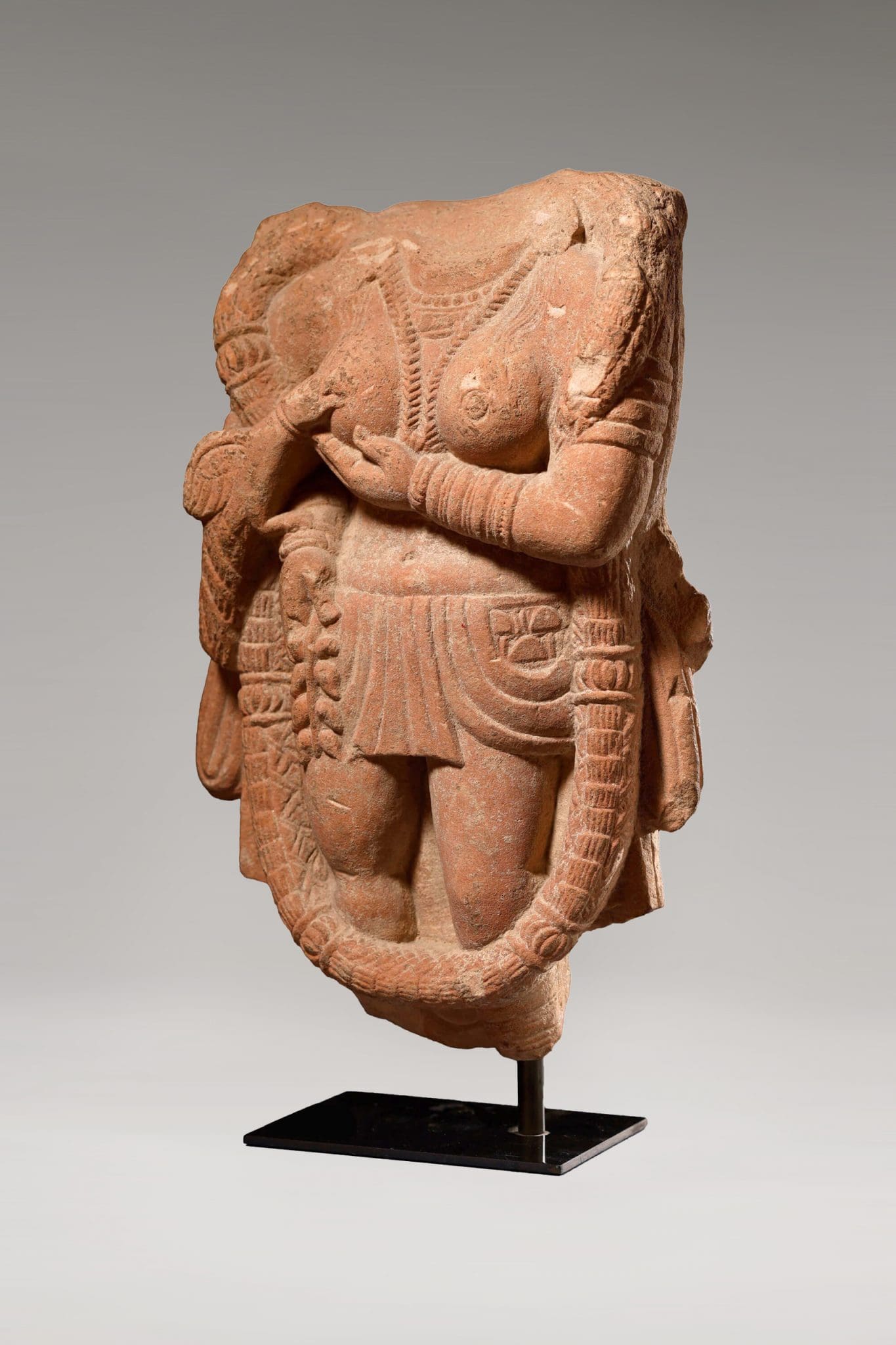
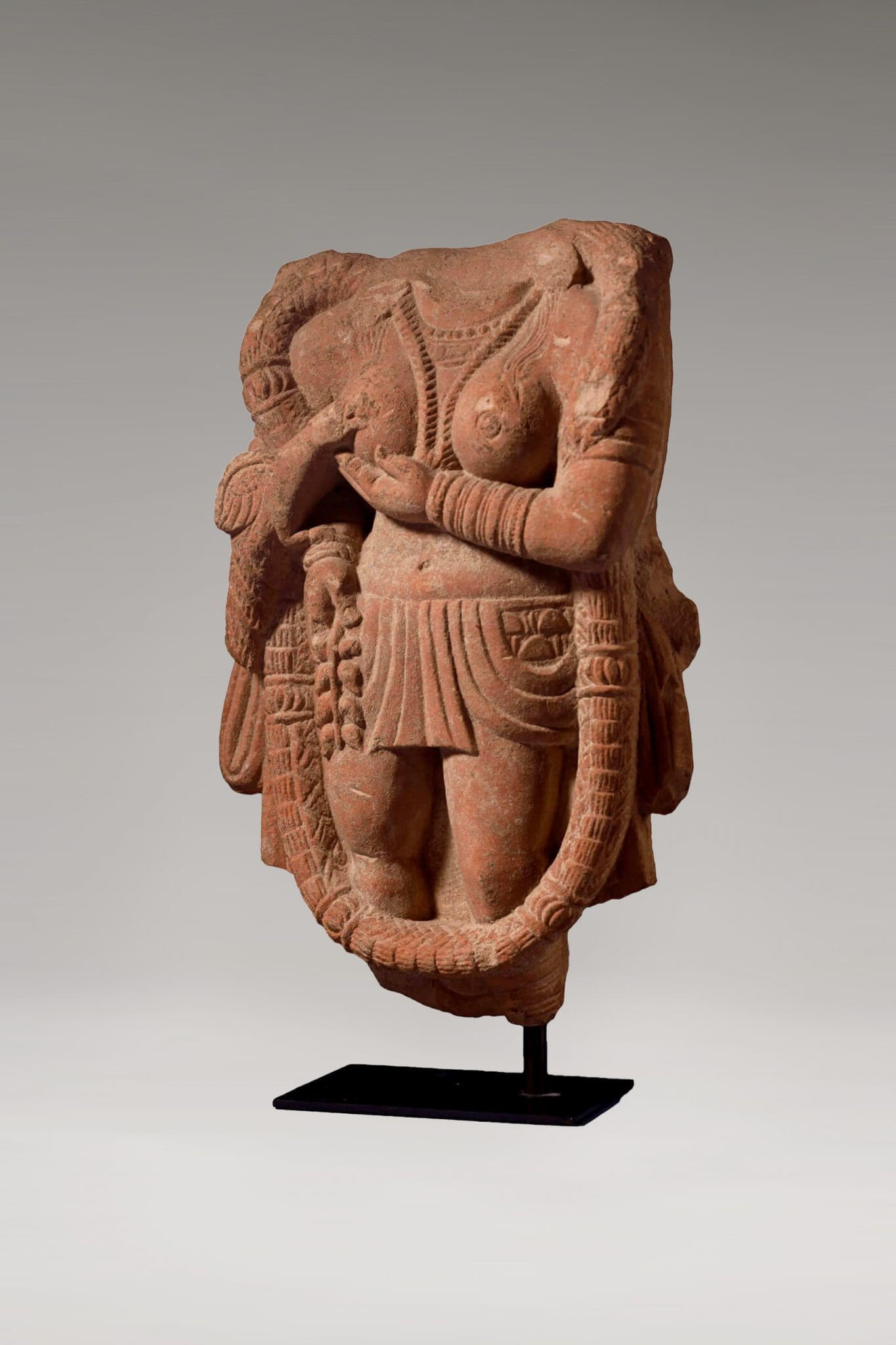
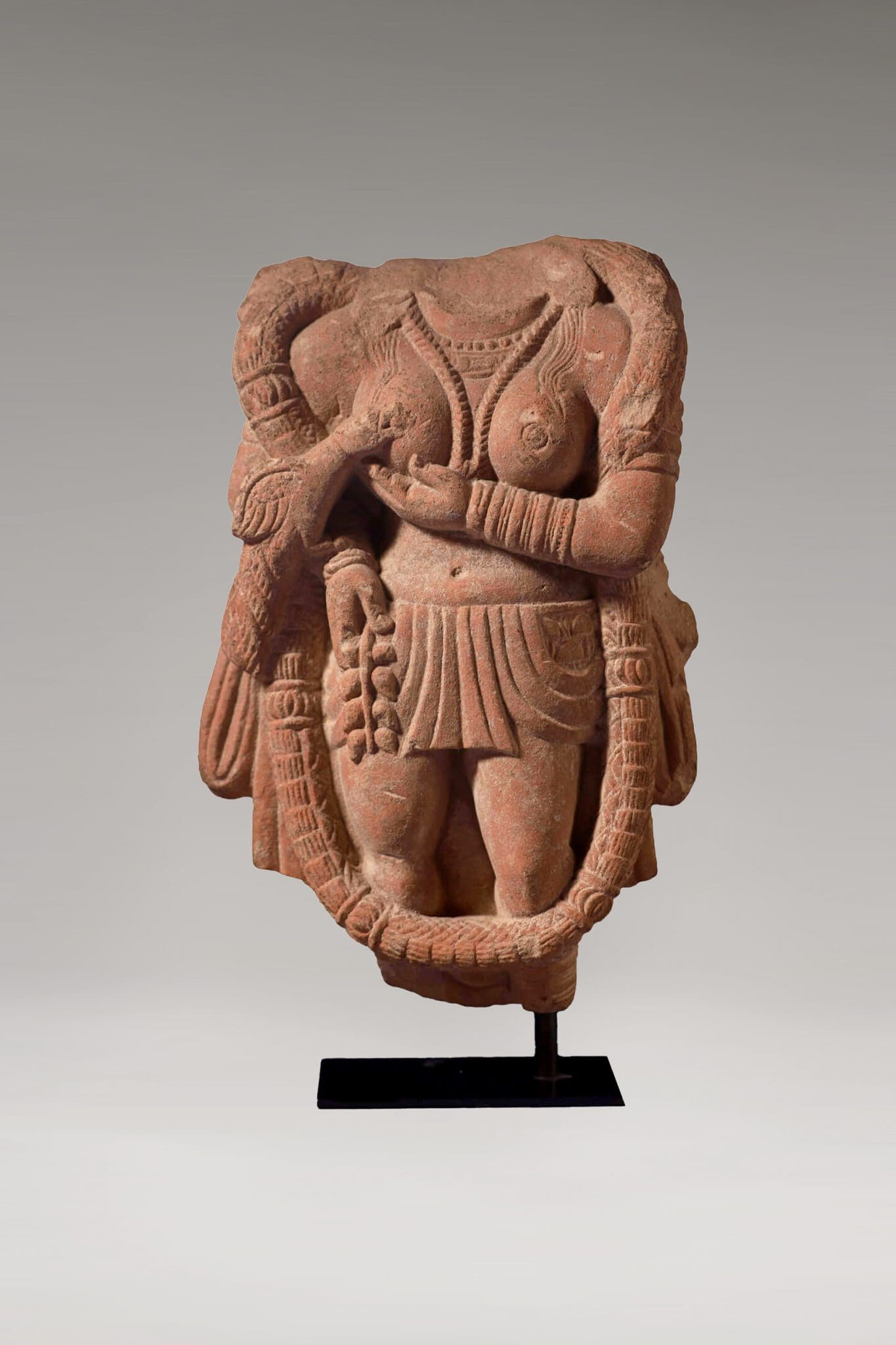
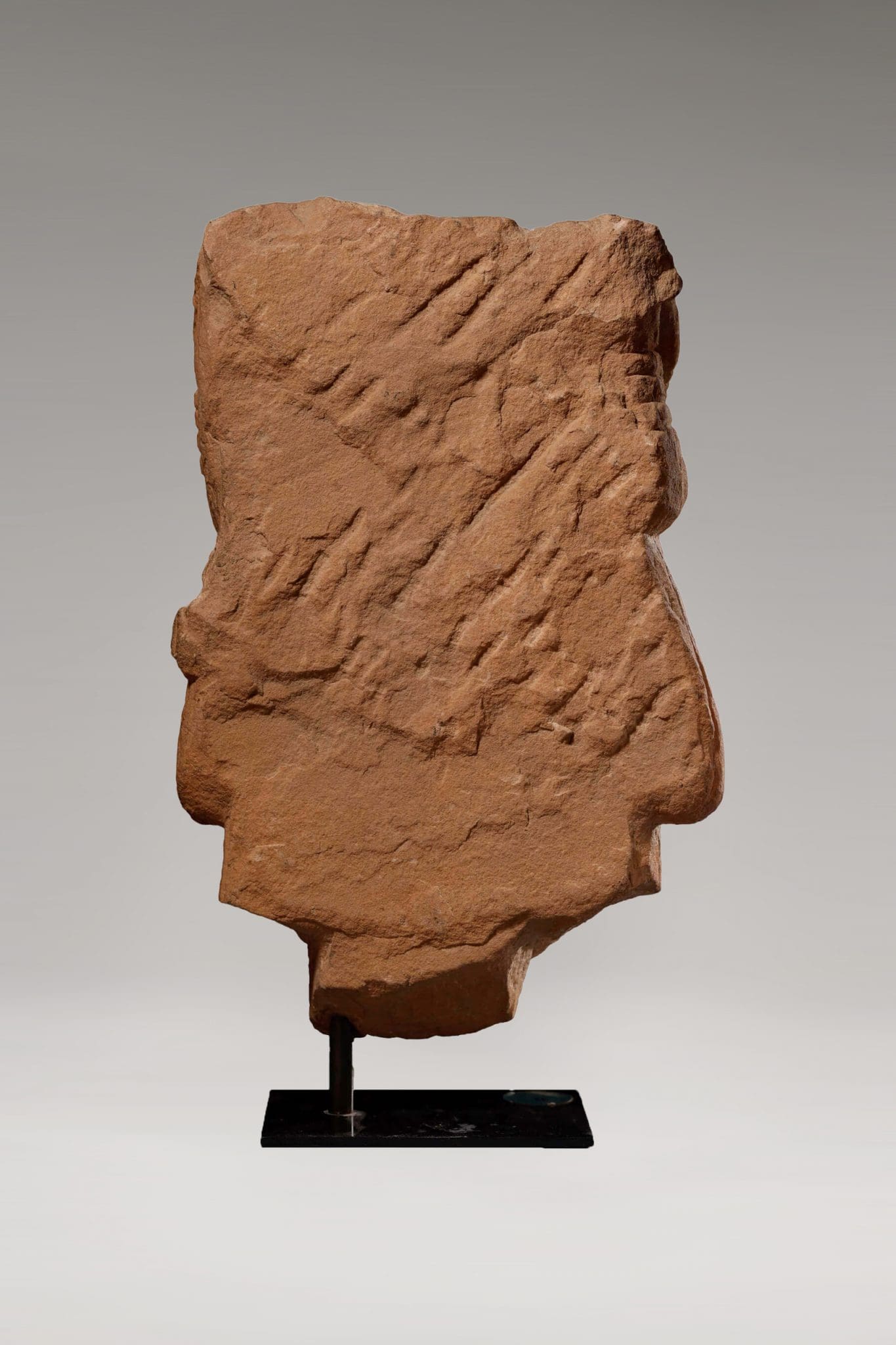
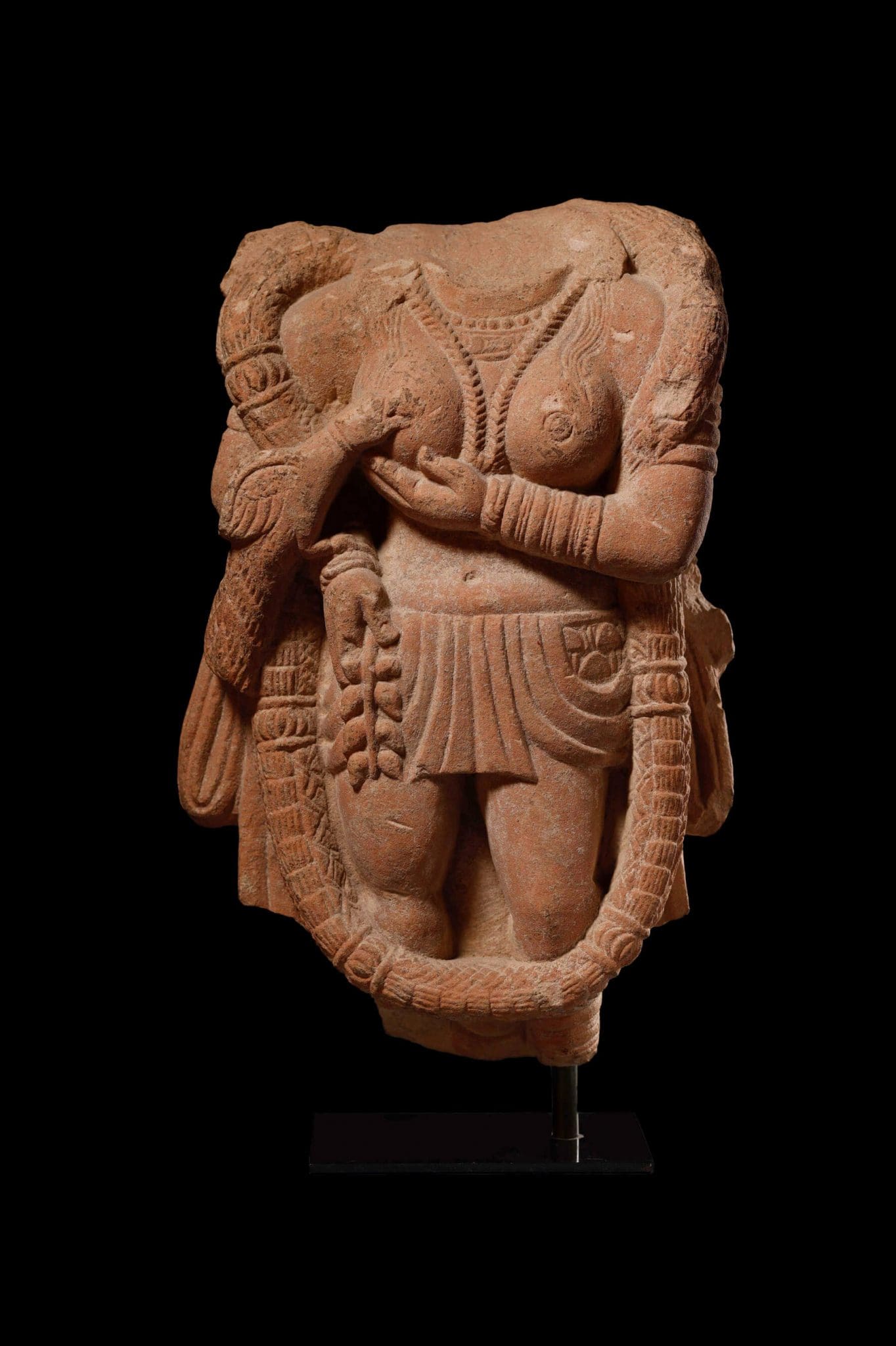
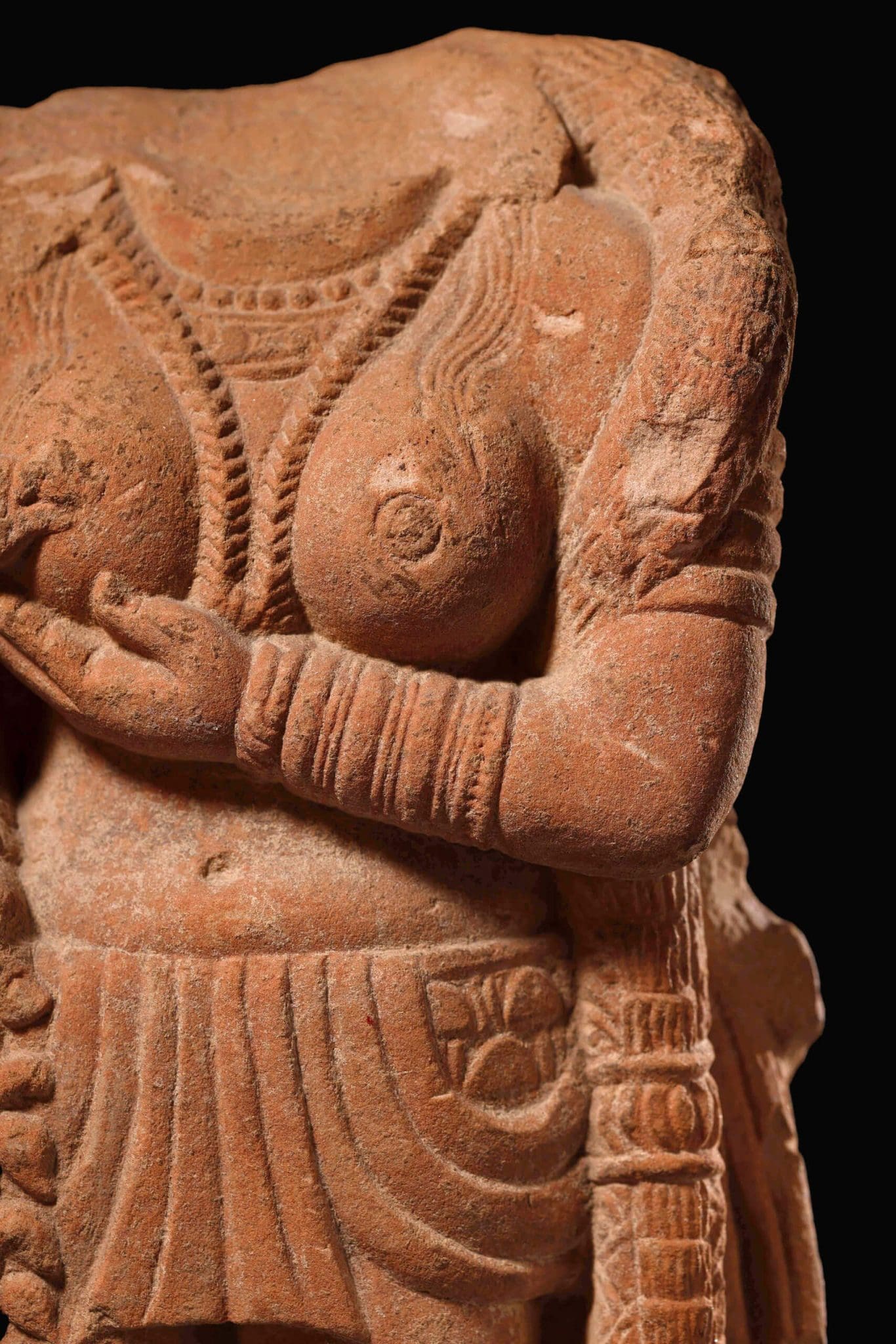
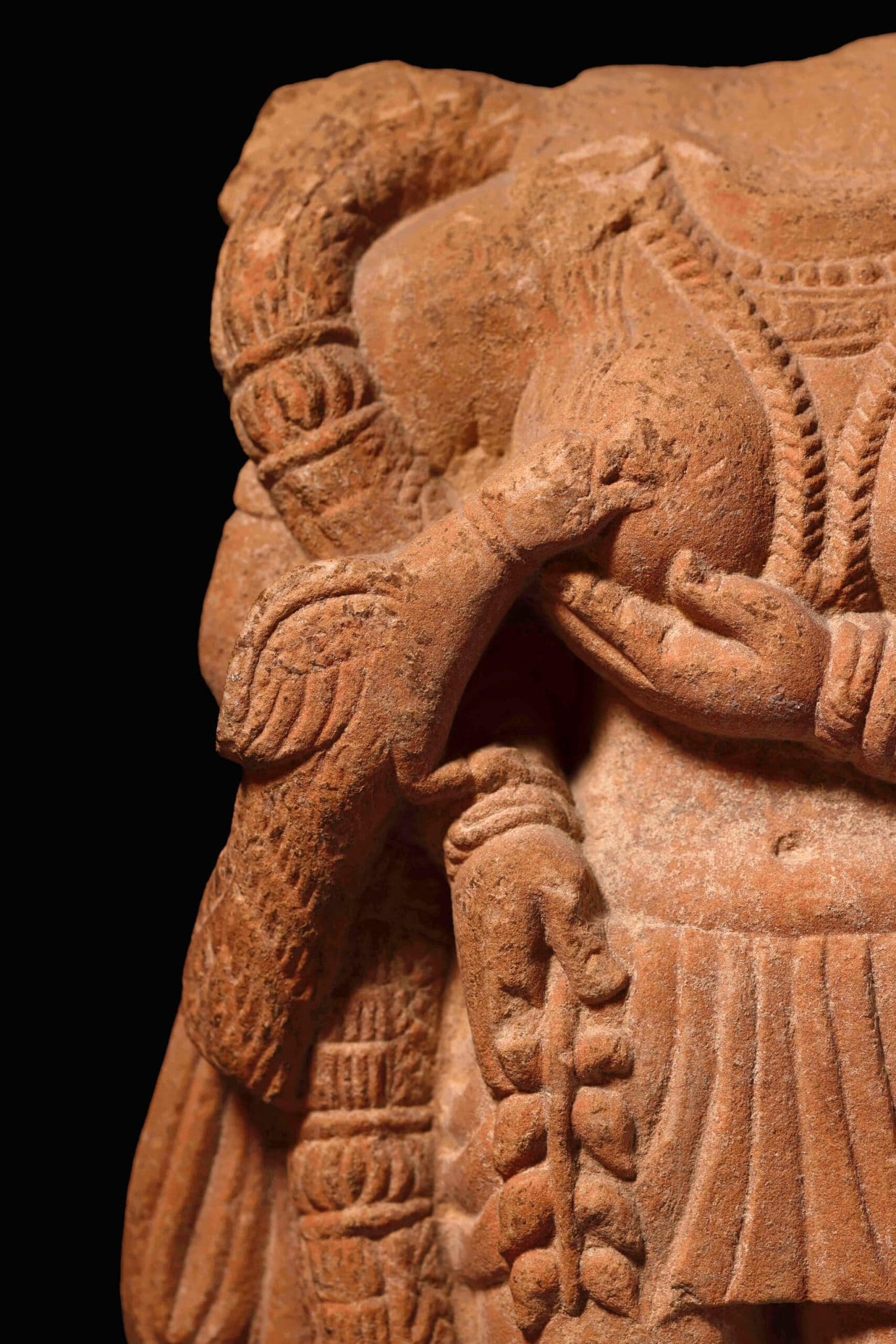
Mathura — the sacred city on the Yamuna River in what is now Uttar Pradesh — was one of the two great centres of sculptural production in ancient India, the other being Gandhara in the northwest. While Gandhara absorbed the Hellenistic tradition brought by Alexander’s successors and produced images of the Buddha in a markedly Greco-Roman idiom, Mathura developed an indigenous sculptural language rooted in earlier Mauryan and Shunga traditions, producing figures of extraordinary sensuous vitality from the distinctive pink sandstone of the local quarries. During the Kushan period (1st–3rd century CE), Mathura sculpture reached its first great peak of achievement: the workshops of the city produced canonical images of the Buddha, Jain tirthankaras, Hindu deities, and the full range of subsidiary figures — yakshi, dvarapala, and apsara — that populate the sacred architectural programmes of the period. This Yakshi torso, dateable on stylistic grounds to the first or second century CE, belongs to this foundational moment in Indian sculptural history.
The Yakshi and the Iconography of Abundance
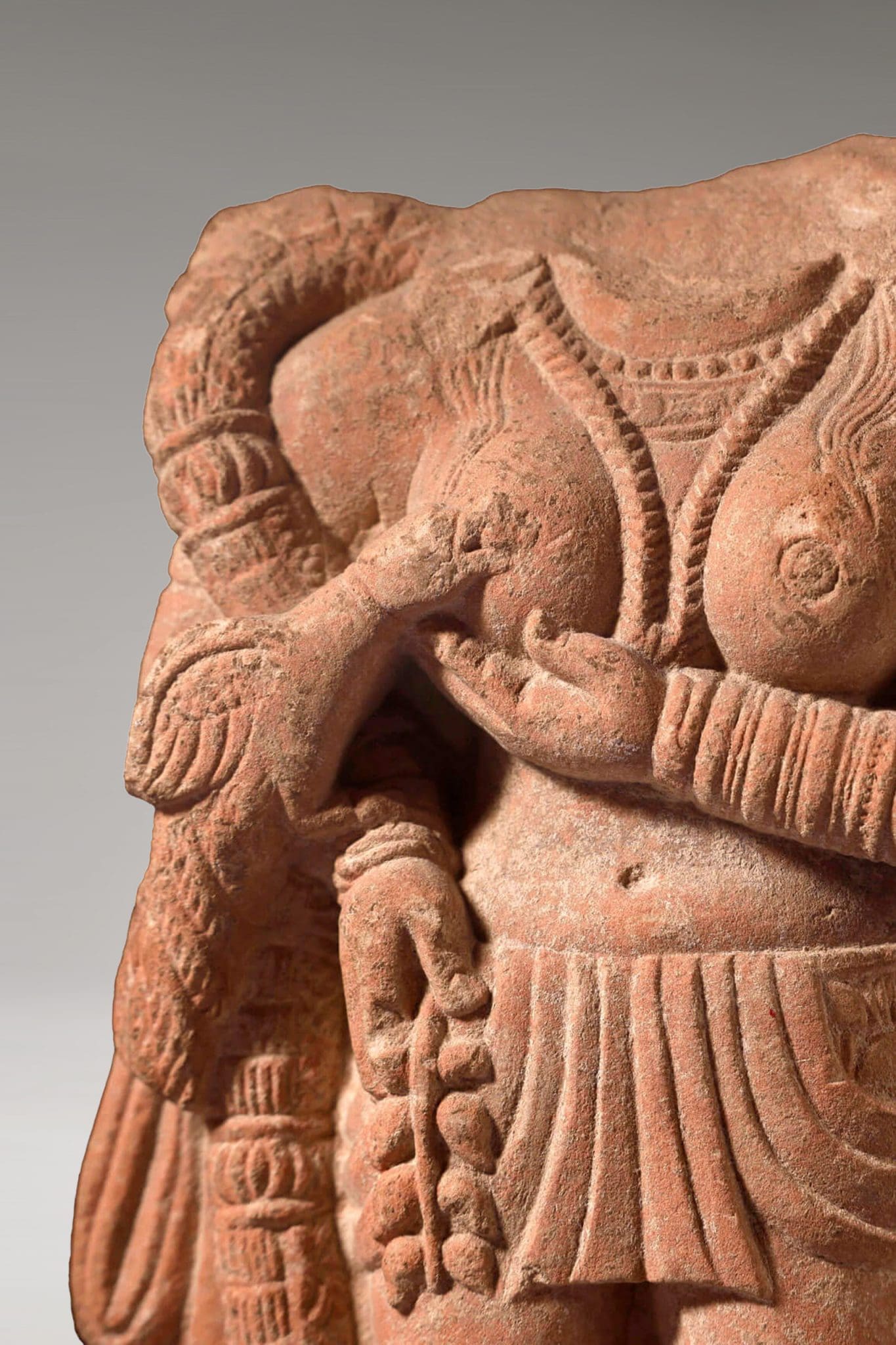
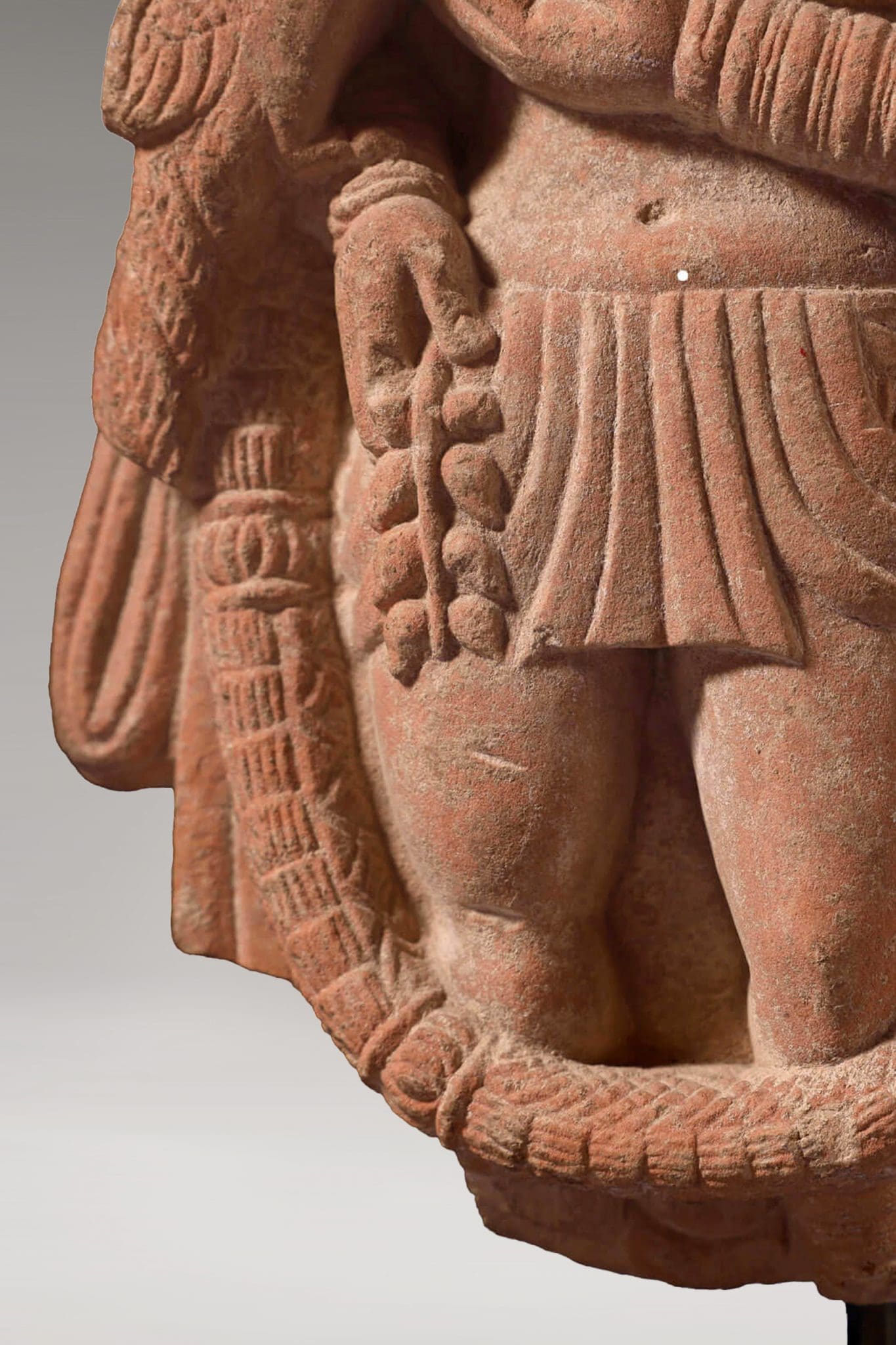
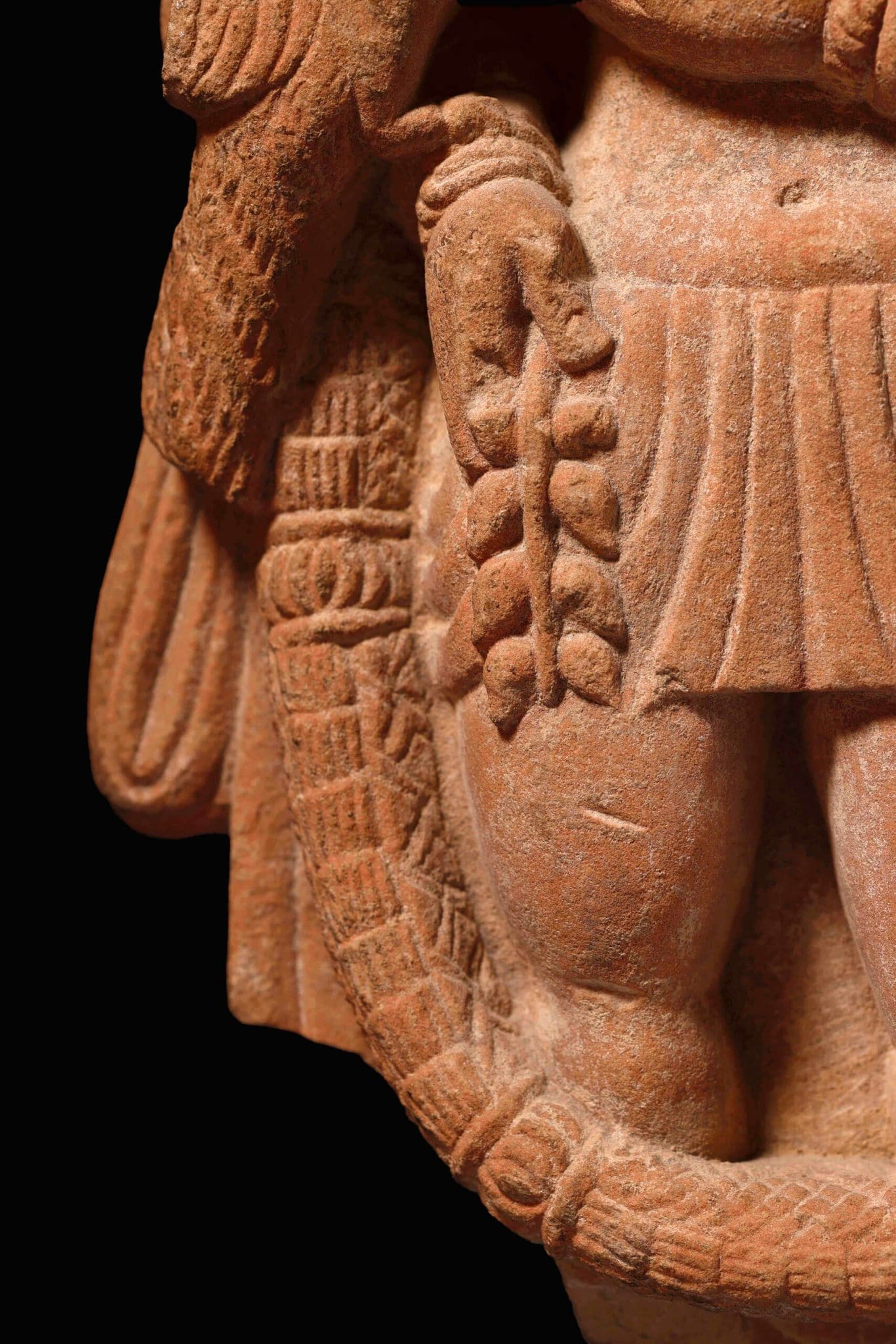
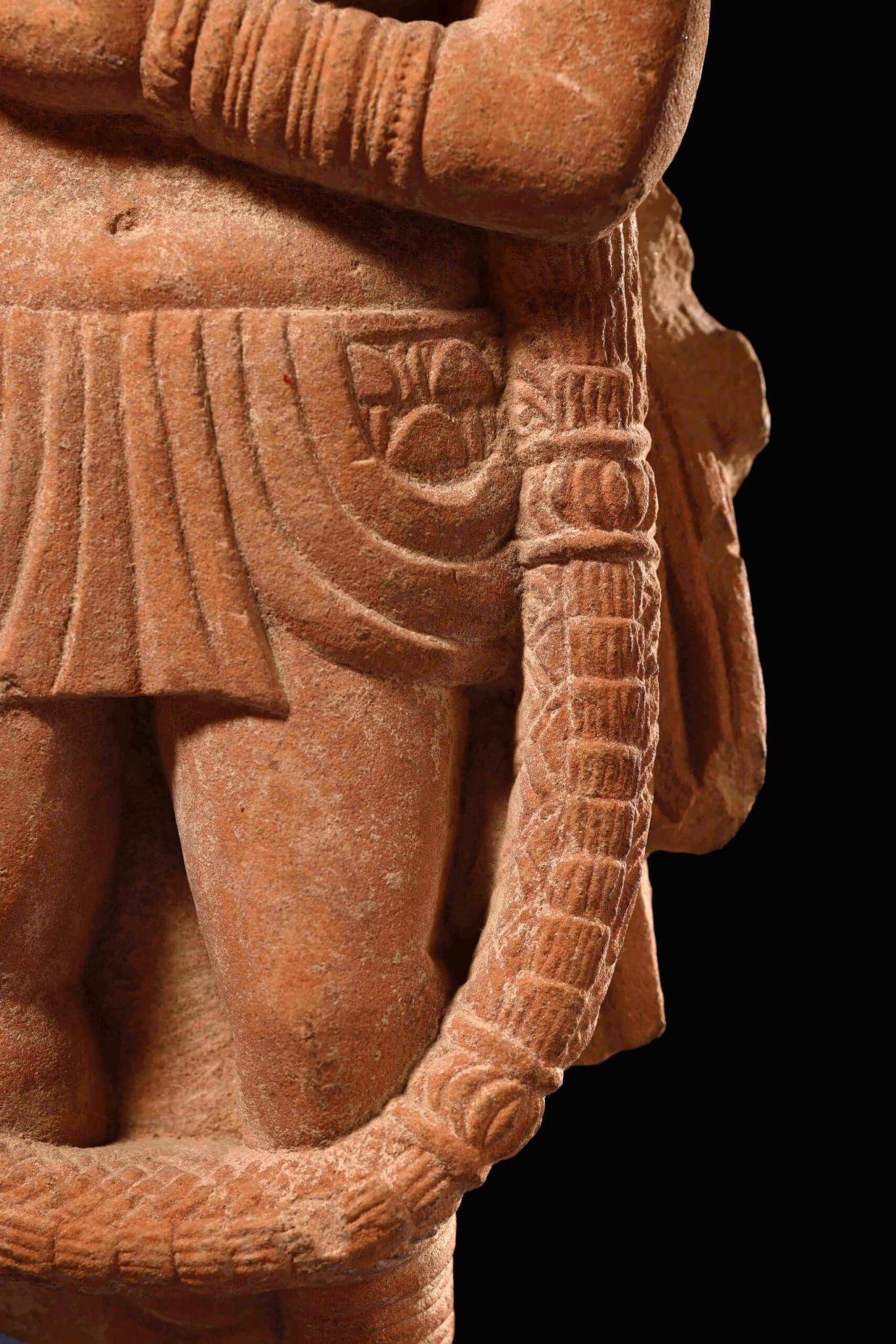
The Yakshi — a class of female nature spirit associated with trees, water, fertility, and abundance — has inhabited the sacred imagination of the Indian subcontinent since the pre-Buddhist period, appearing in the earliest Mauryan sculptural programmes as a full-bodied female figure whose sensuous physicality expressed the life-giving powers of the natural world. In the Buddhist tradition, Yakshi figures appear as guardian spirits at the gates of stupas — most famously at Sanchi and Bharhut — where their posture of entwined embrace with a flowering tree encodes a complex theology of abundance and spiritual generation. The Mathura workshops brought to the representation of the Yakshi a technical mastery and formal boldness that made these figures among the most accomplished achievements of ancient Indian art: the rounded volumes of the torso, modelled with a tactile sensitivity that evokes the warmth and weight of living flesh, reflect the sculptor’s awareness that the divine body must be experienced as physically present rather than merely depicted. This torso, in good conservation, communicates the formal intelligence of the Mathura school with undiminished power.
Collecting Mathura Sculpture in Europe
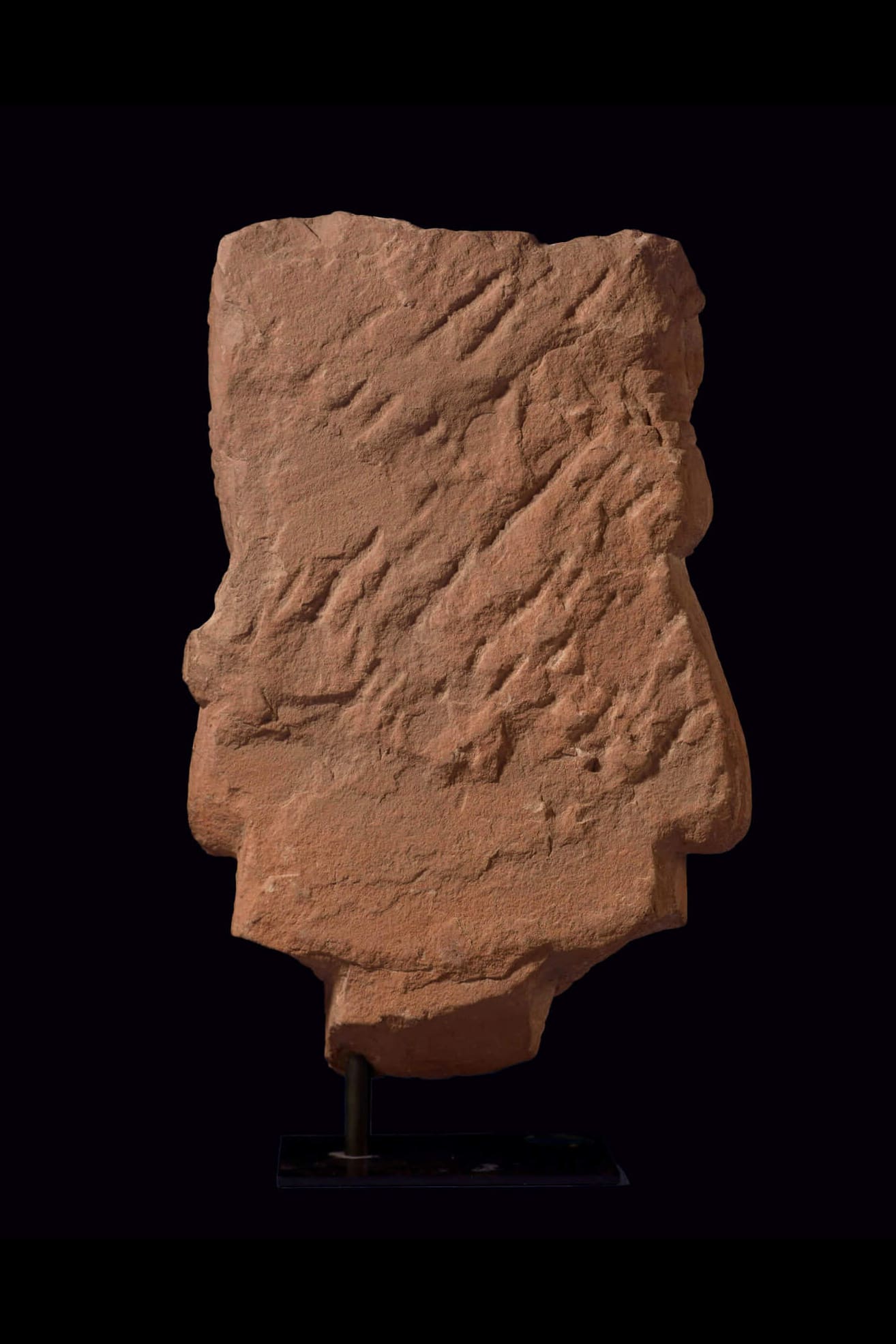
Mathura sculpture has been collected in Europe since the nineteenth century, when pioneering excavations conducted under the auspices of the Archaeological Survey of India first brought this material to international attention. Major museums — the Victoria and Albert Museum, the Musée Guimet, the Rijksmuseum in Amsterdam, the Metropolitan Museum of Art in New York — hold important examples, and a substantial body of Mathura material has entered European private collections through the auction market over the past century and a half. This Yakshi torso’s provenance through Rosebery’s Auctioneers in London, followed by acquisition into a Spanish private collection in Barcelona, provides a clear and documented chain of ownership. For the collector of South Asian antiquities, a Mathura limestone fragment of this quality — preserving the characteristic rounded modelling and the formal balance of the original composition — represents an opportunity to acquire a work from one of the defining moments in the history of world sculpture.
 No products in the cart.