

Buddhist Monasticism and Sculptural Representation in Burma
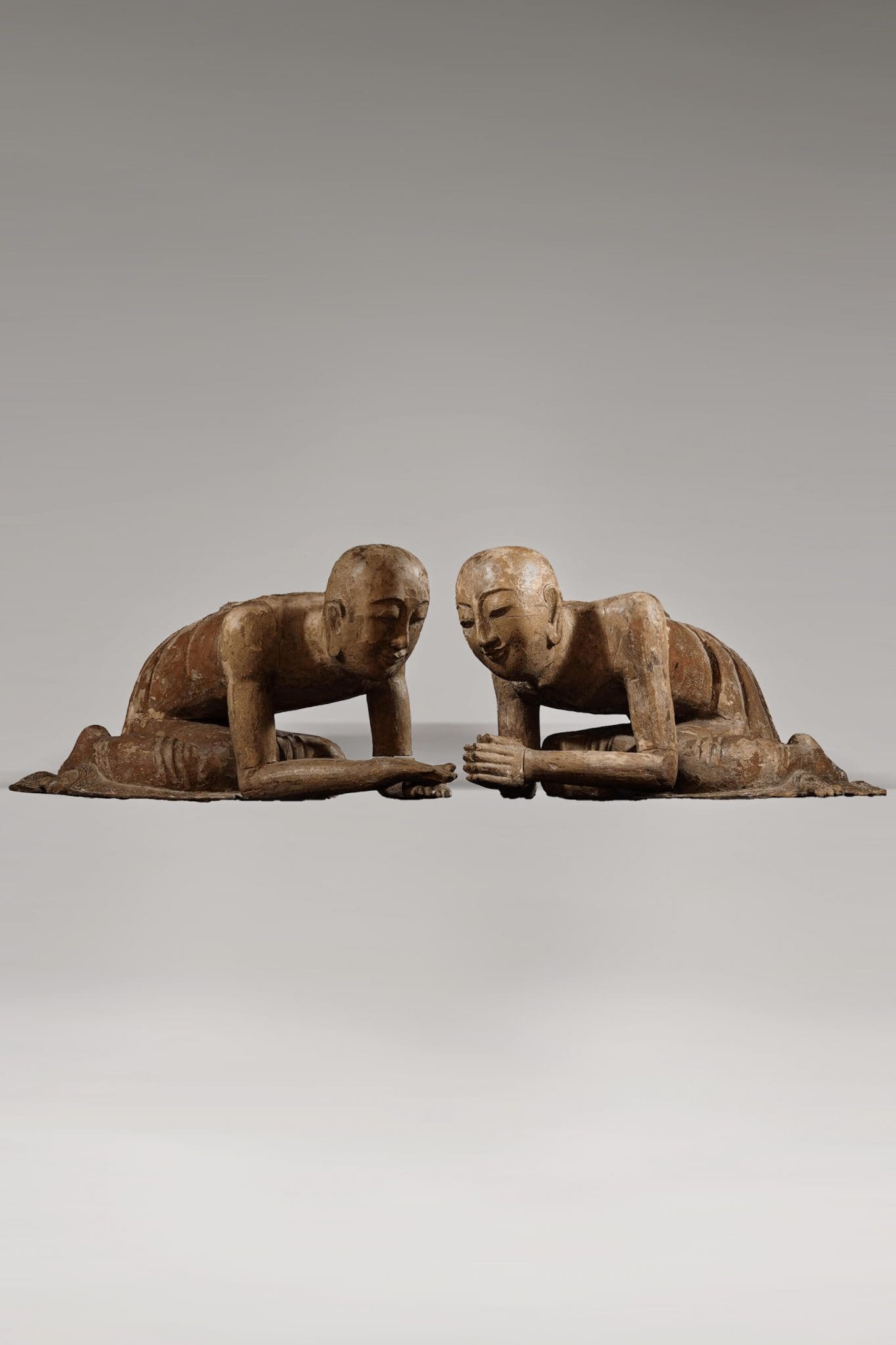
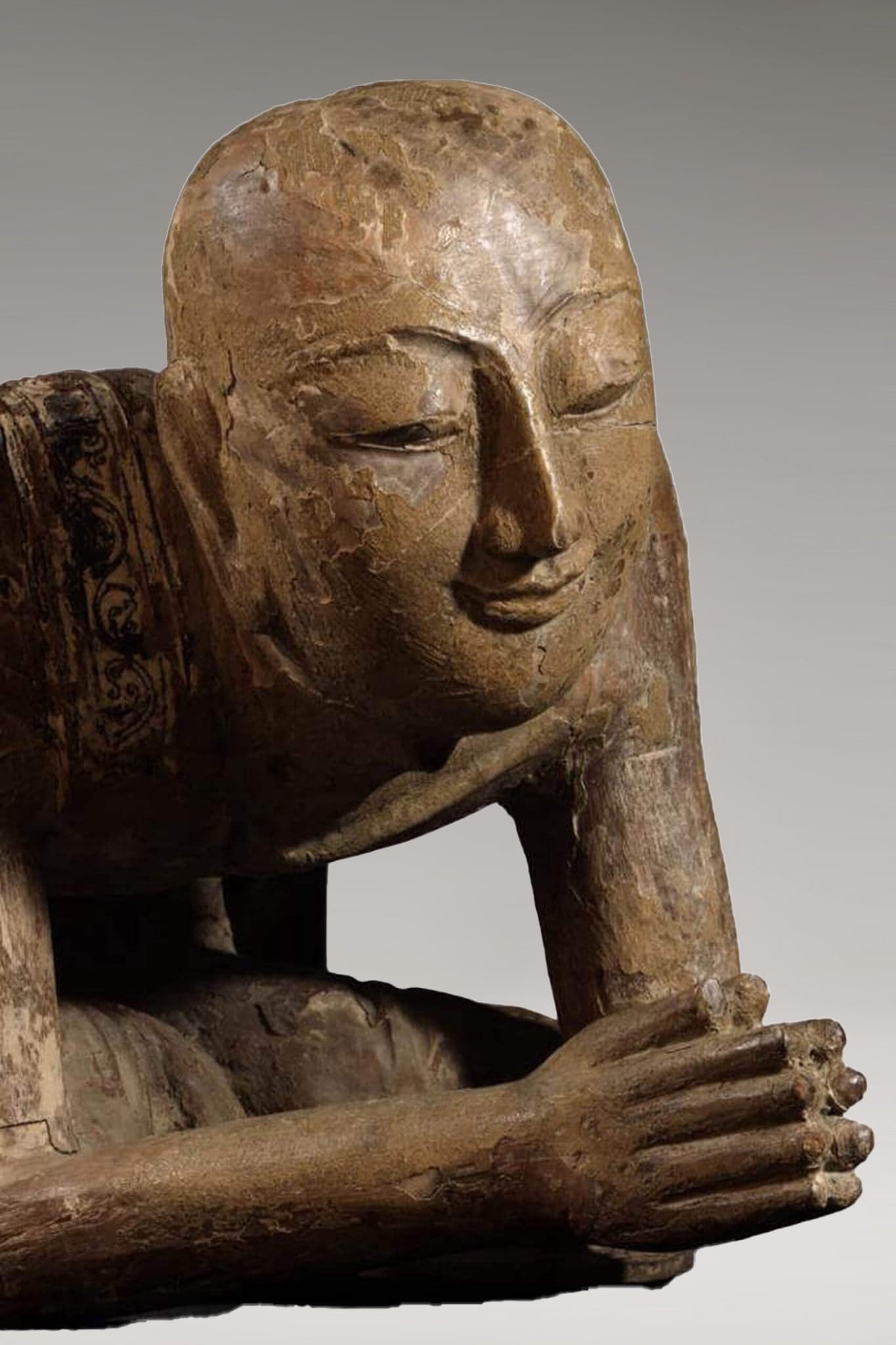
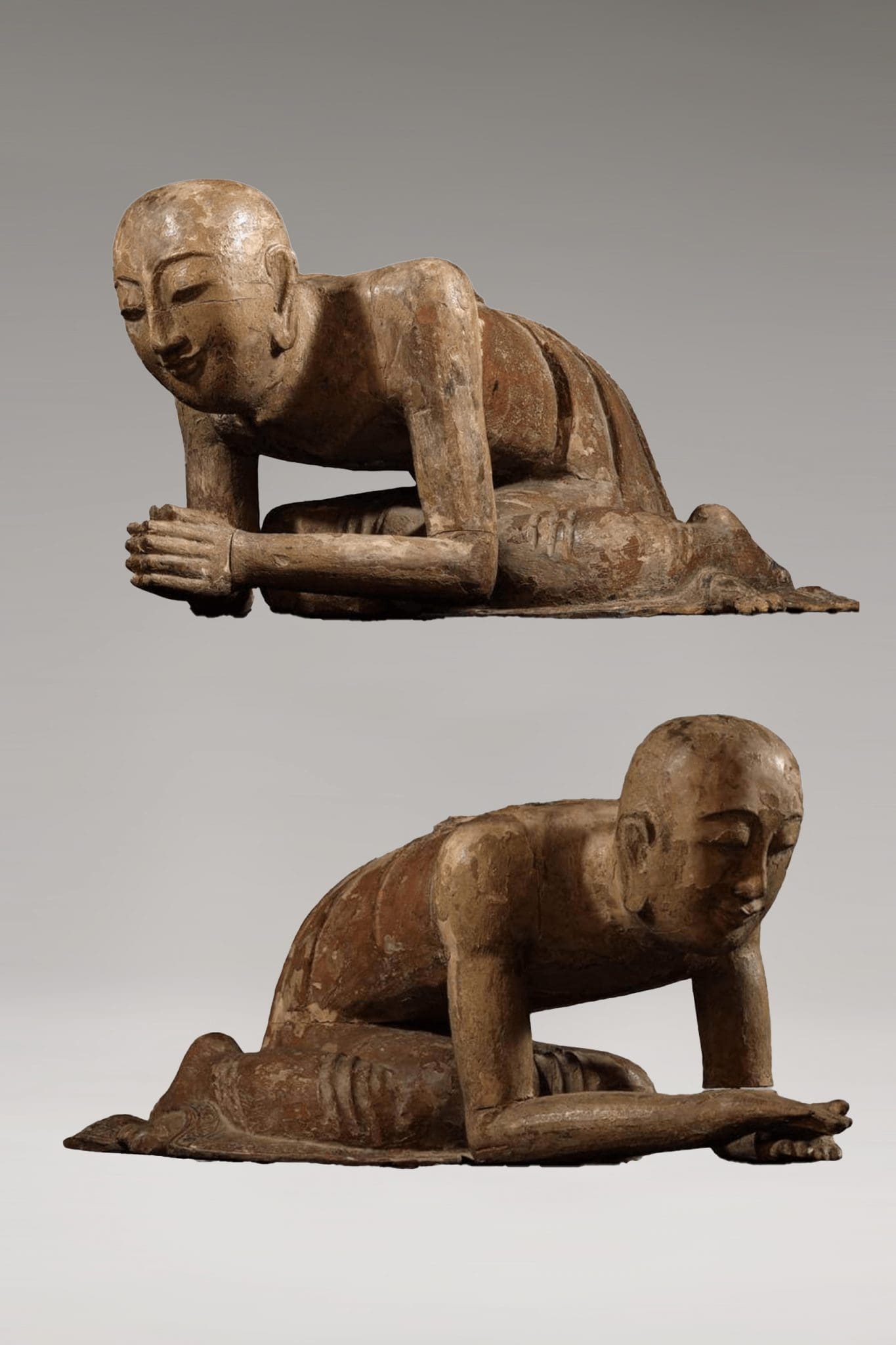
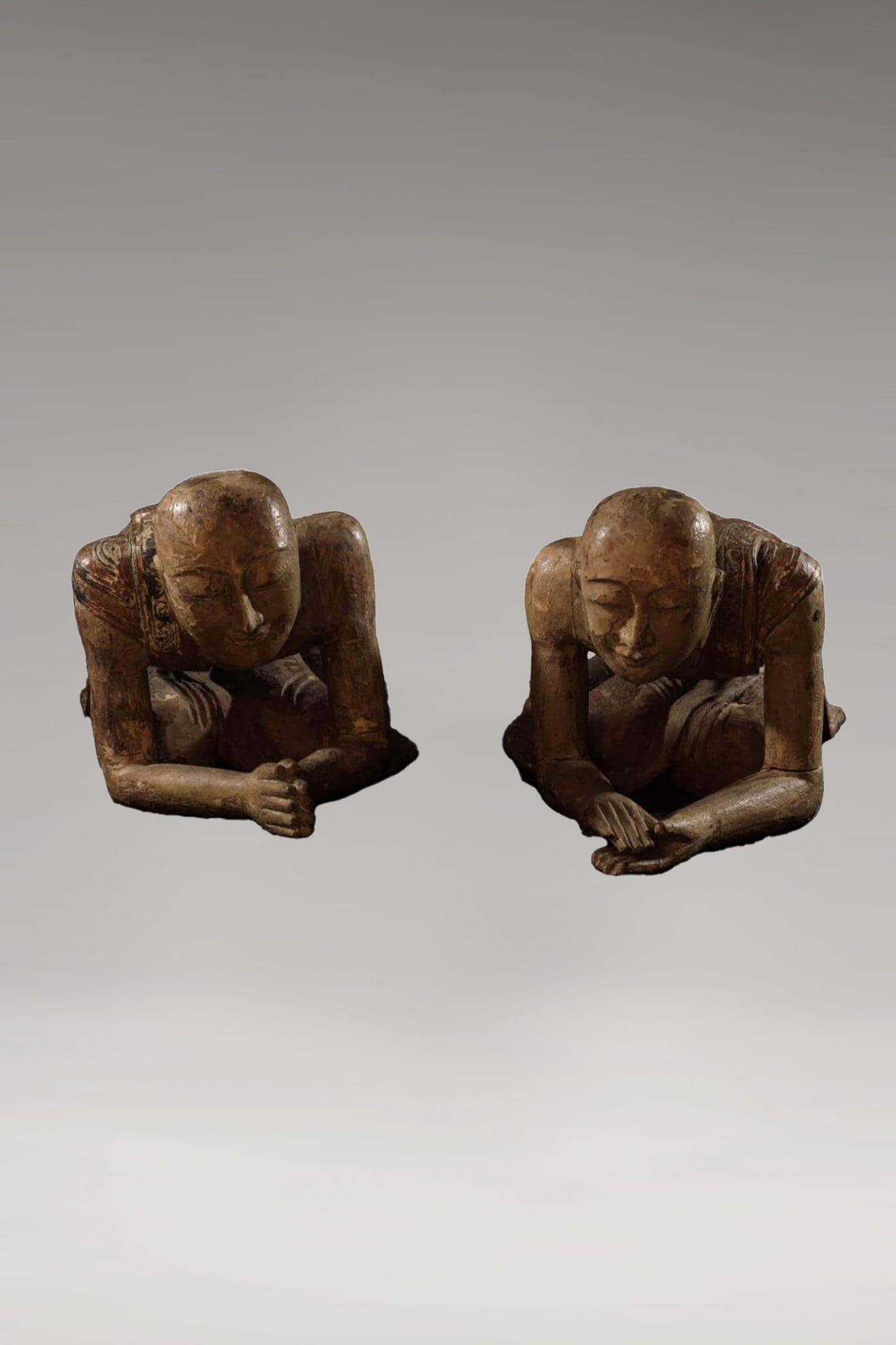
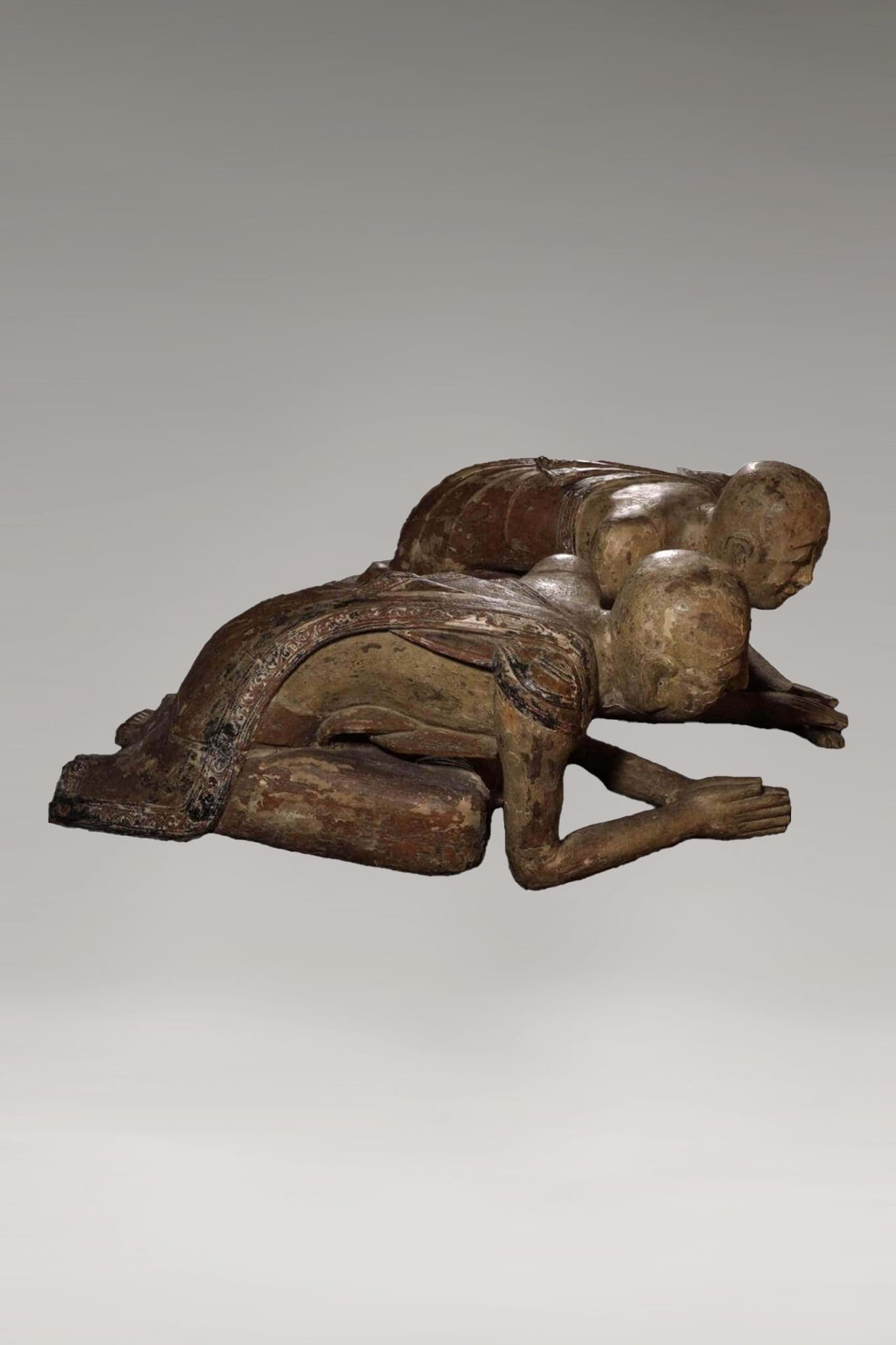
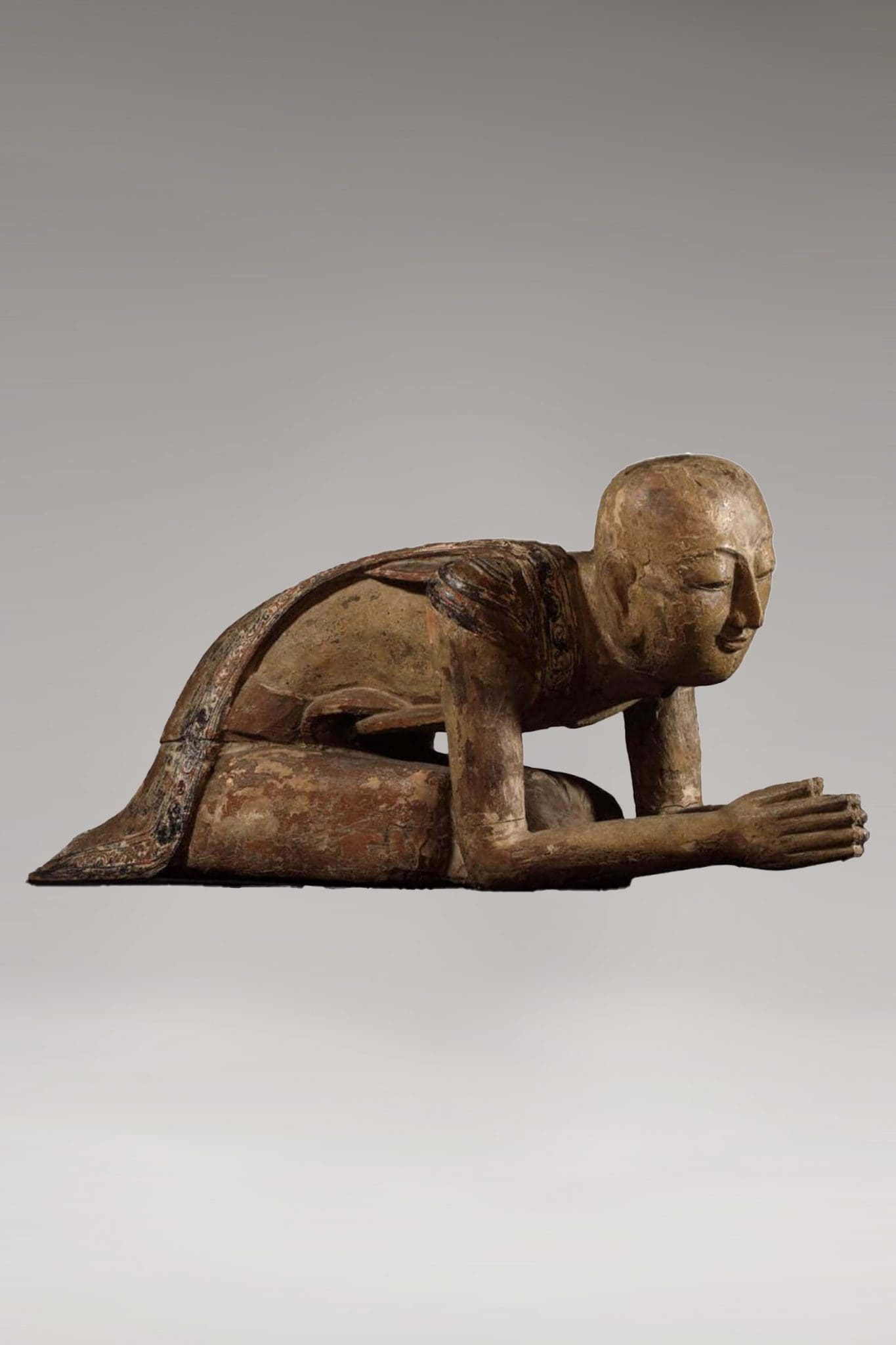
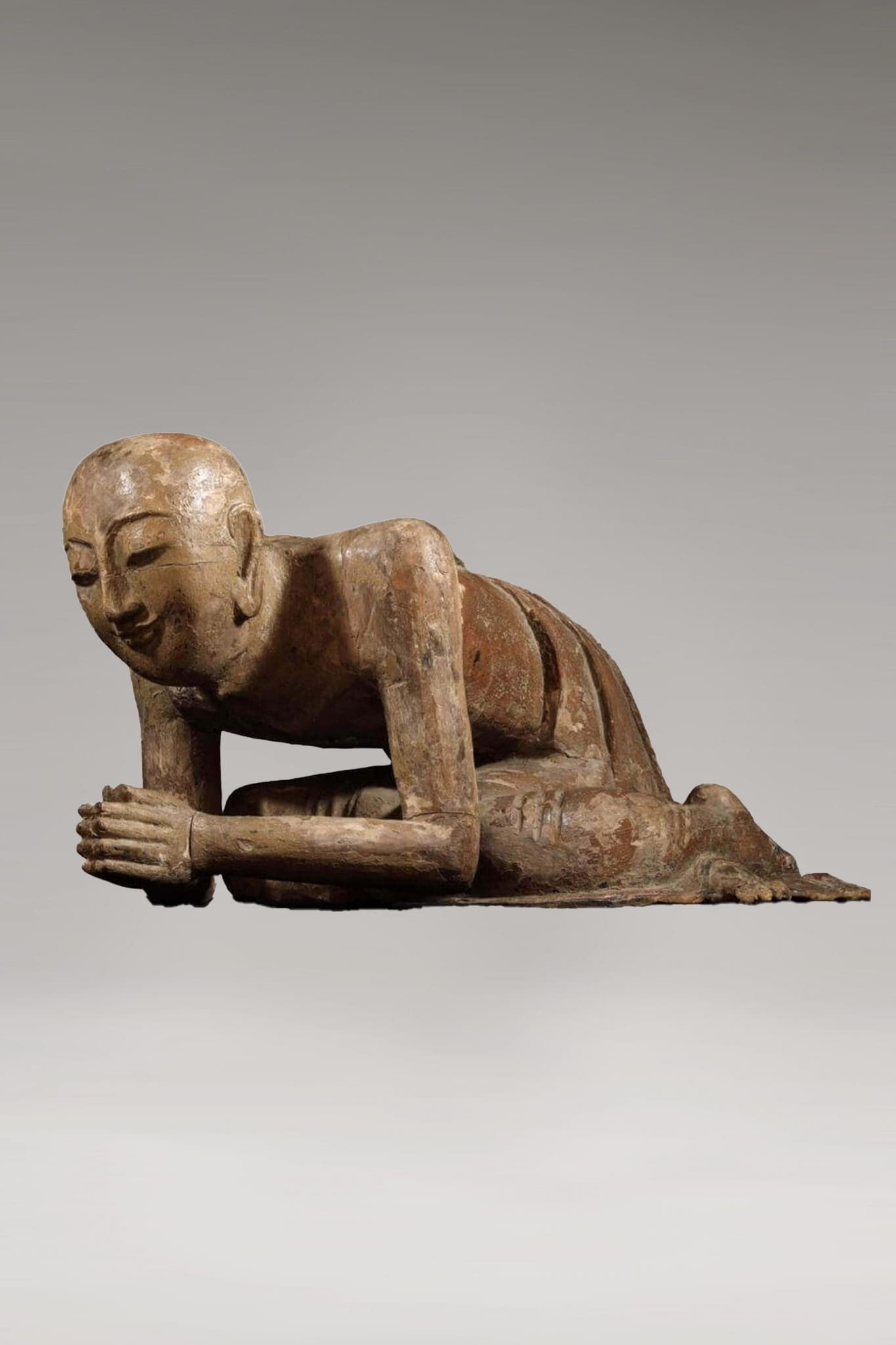
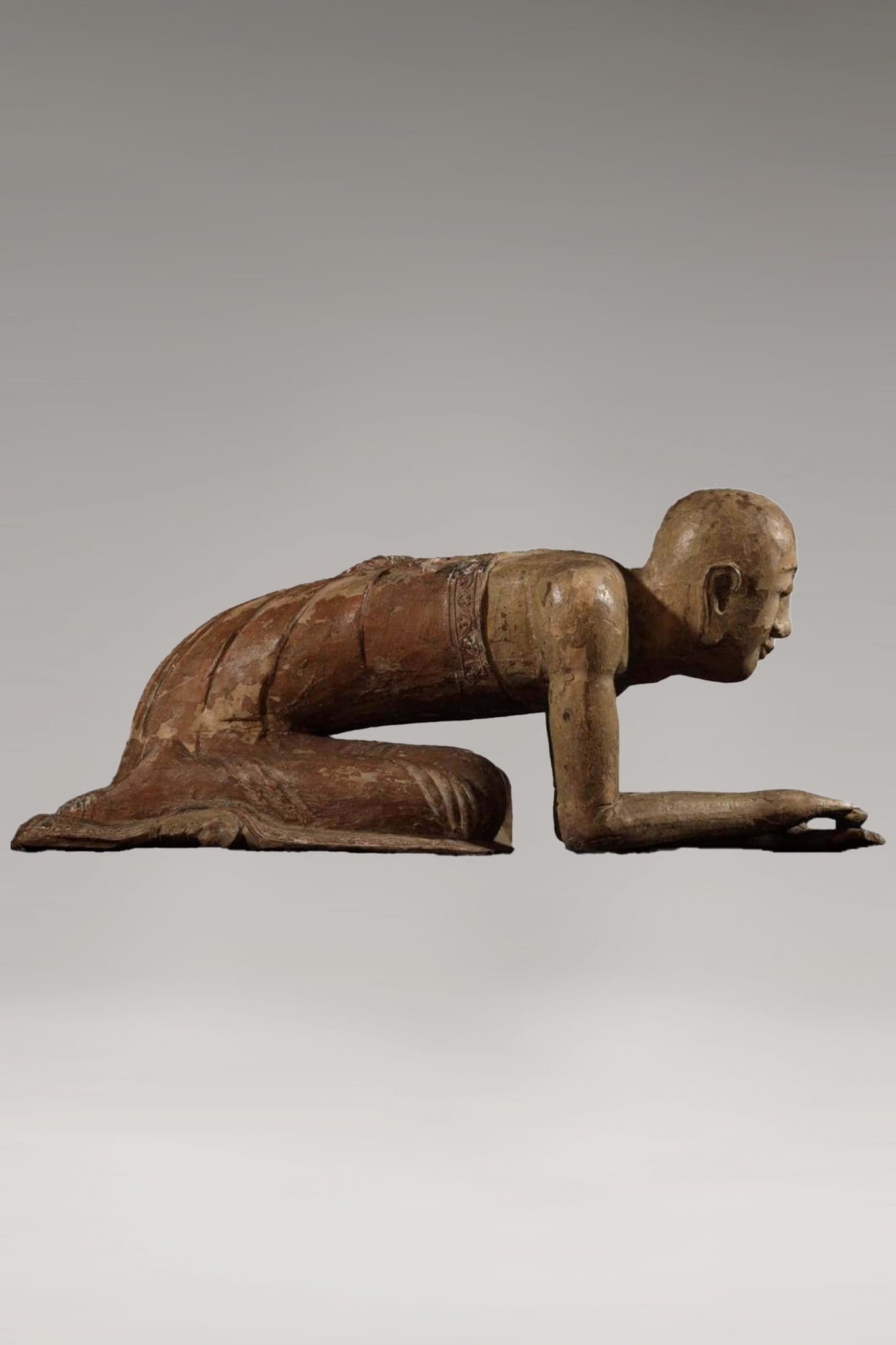
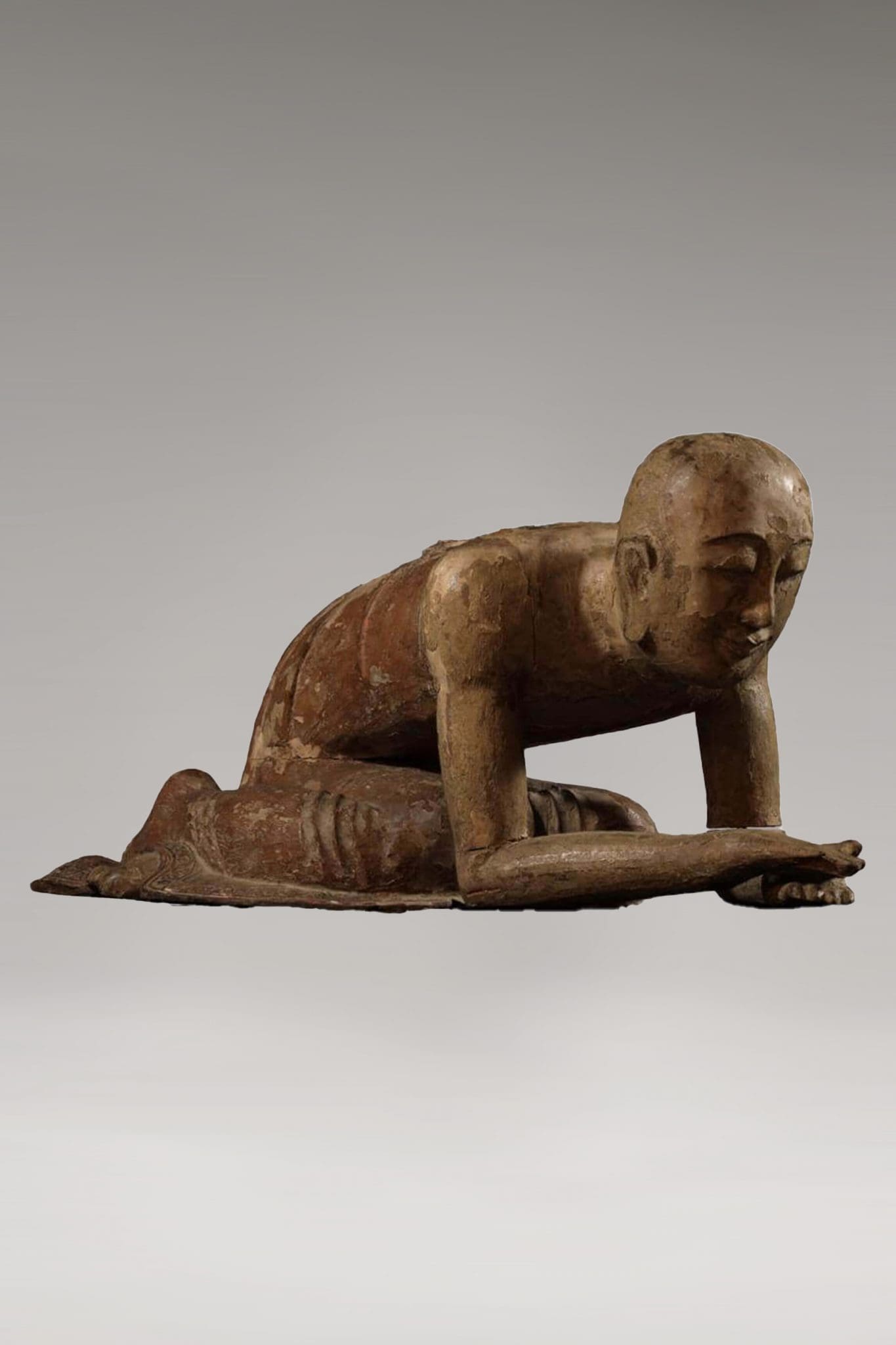
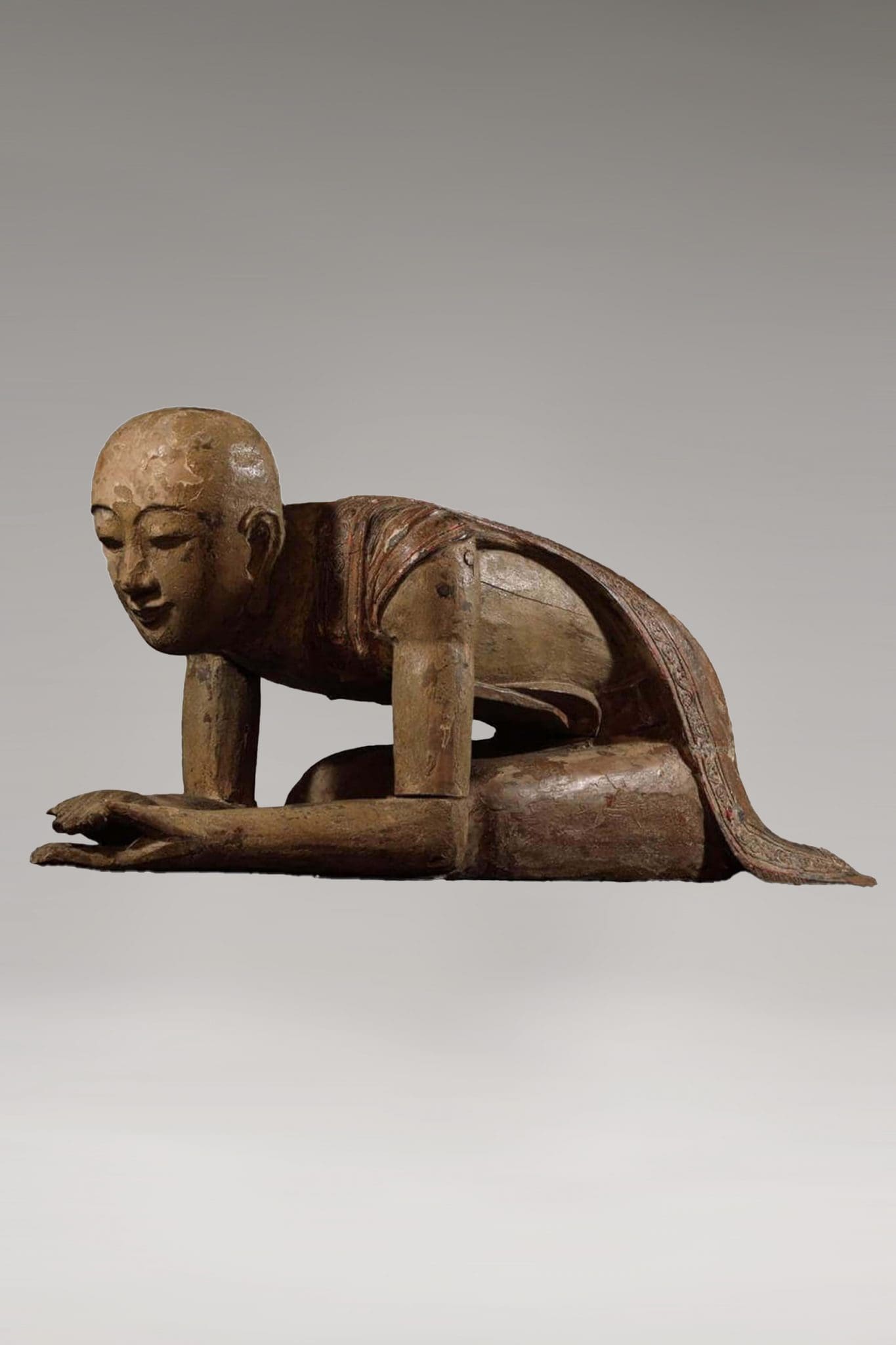
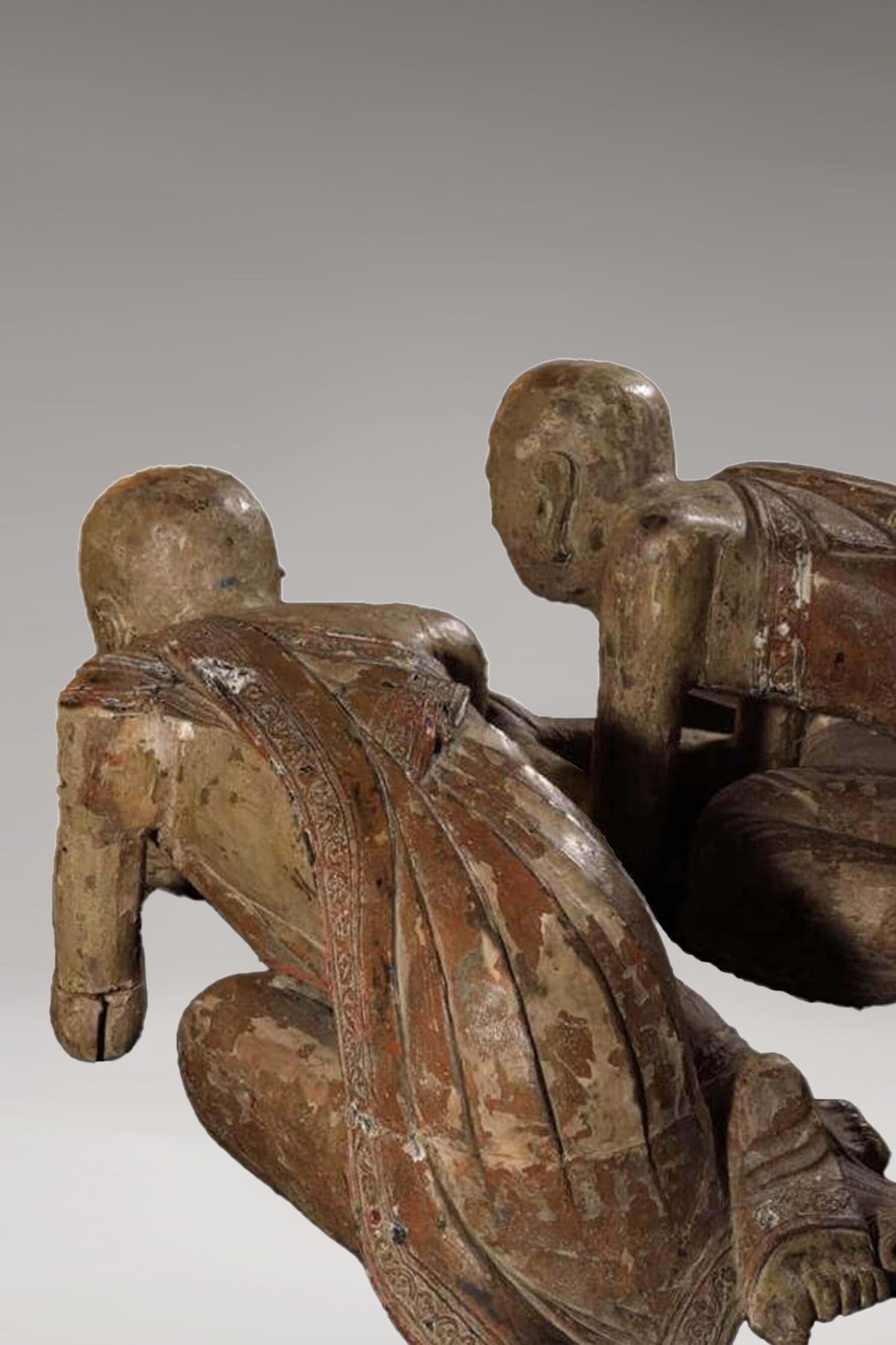
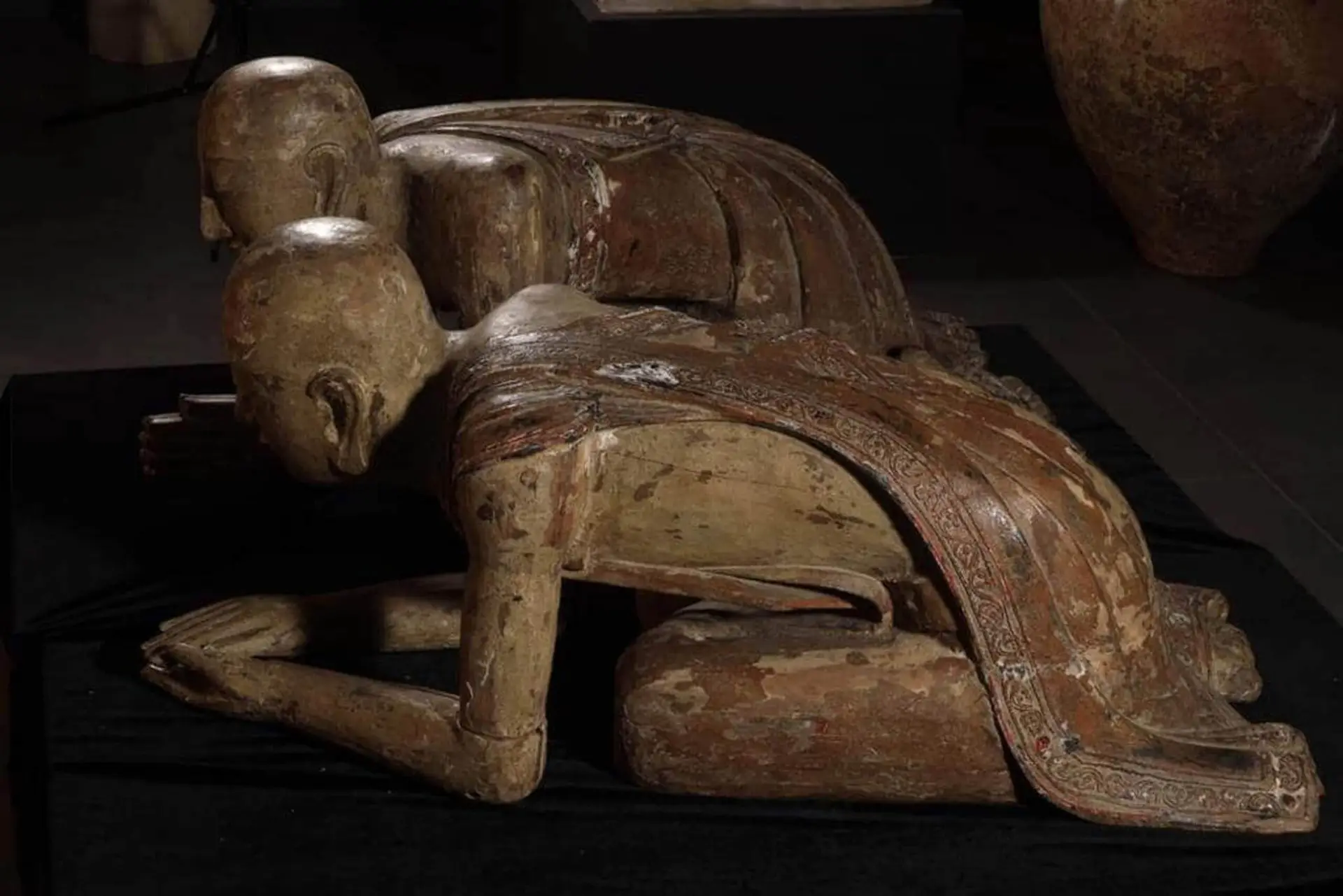
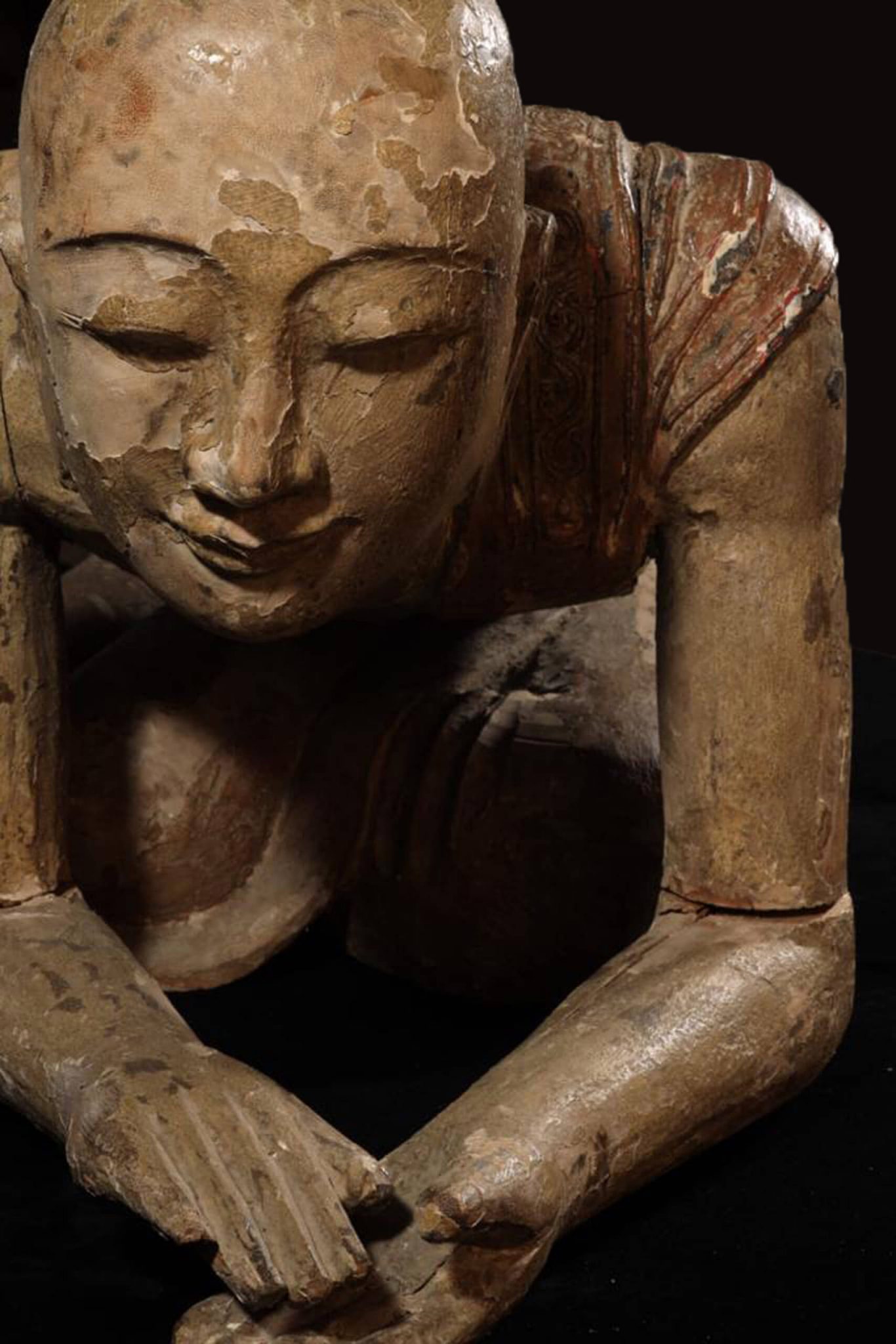
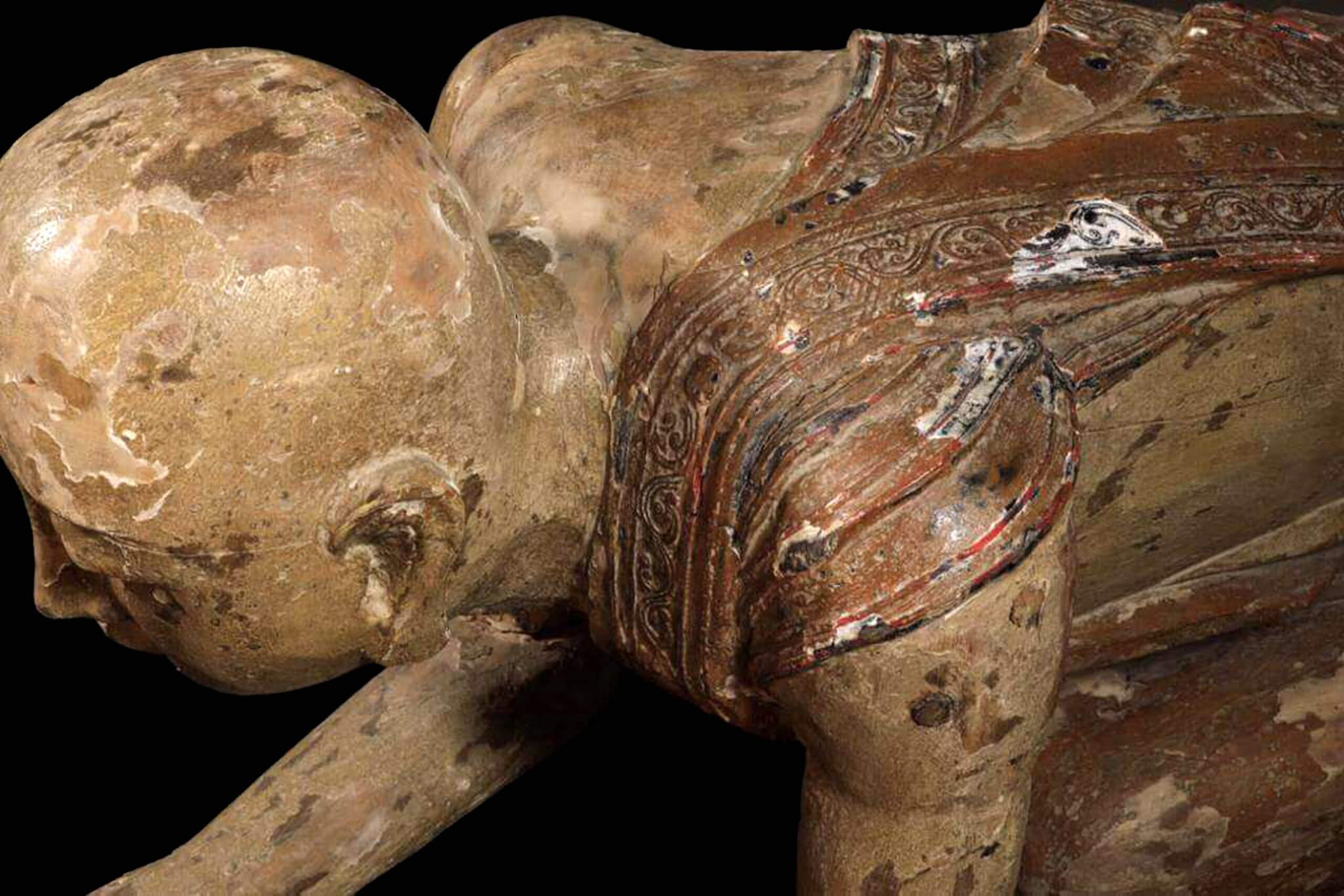
Burma’s long history as one of the great centres of Theravāda Buddhism produced a sculptural tradition of extraordinary richness and consistency, shaped by the intimate relationship between the sangha — the community of monks — and the lay population that supported it through patronage, offerings, and the commissioning of religious images. The representation of monks and abbots in sculptural form occupied a specific niche within this tradition: unlike the canonical Buddha images whose iconography was governed by strict formal codes, monk figures offered sculptors and their patrons greater latitude in the expression of individual character and spiritual authority. Important abbots — masters of meditation, teachers of the Dhamma, founders of monastery lineages — were commemorated in polychrome wooden effigies installed in the monastery buildings they had inhabited, consulted by their successors, and venerated as embodiments of accumulated merit and wisdom. The pair presented here, dating to the seventeenth or eighteenth century, belongs to this tradition of commemorative portraiture in wood, their considerable scale — 106 centimetres in height — conferring the authority of major presences within their original monastery setting.
Polychrome and Gilding in Burmese Woodcarving
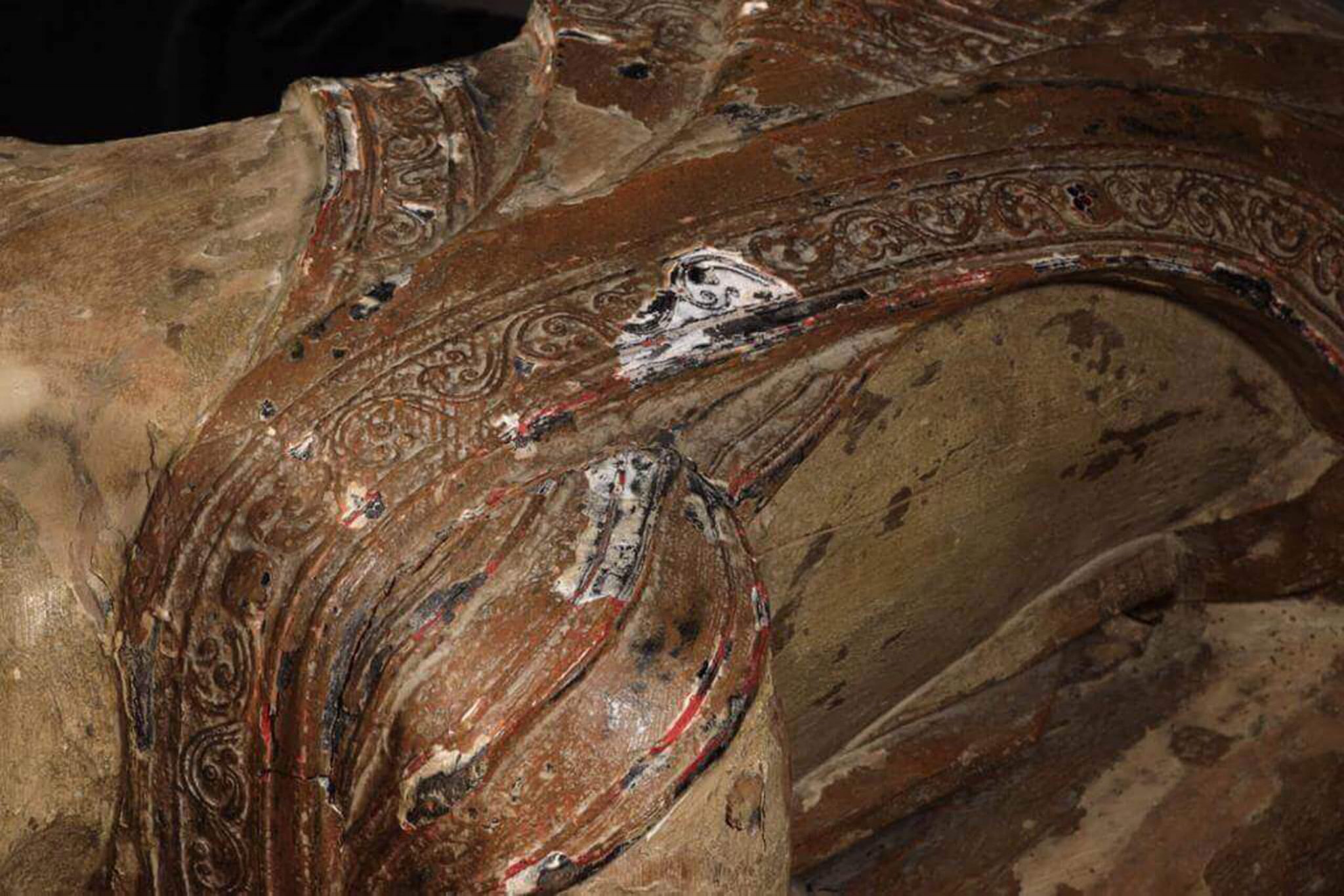
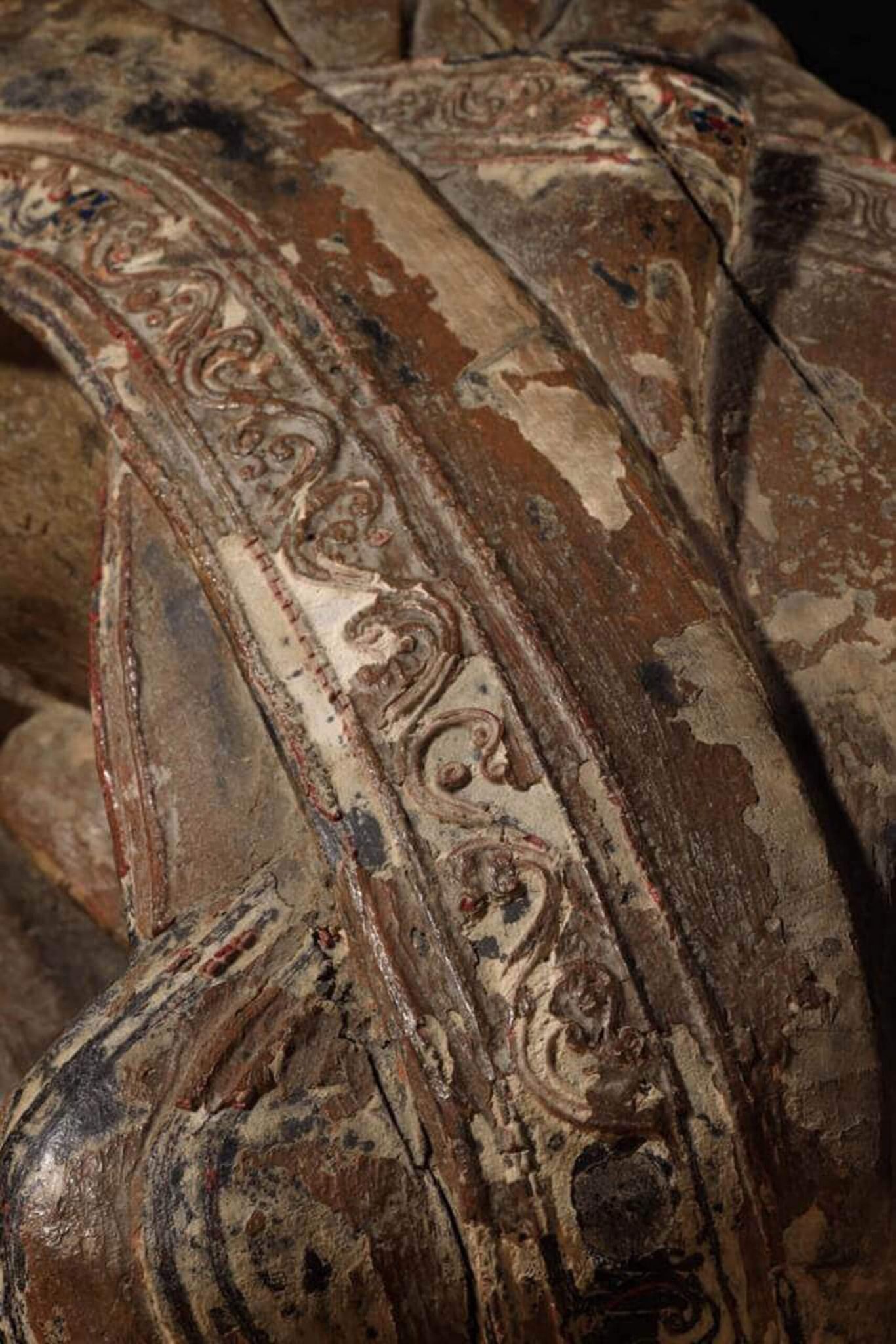
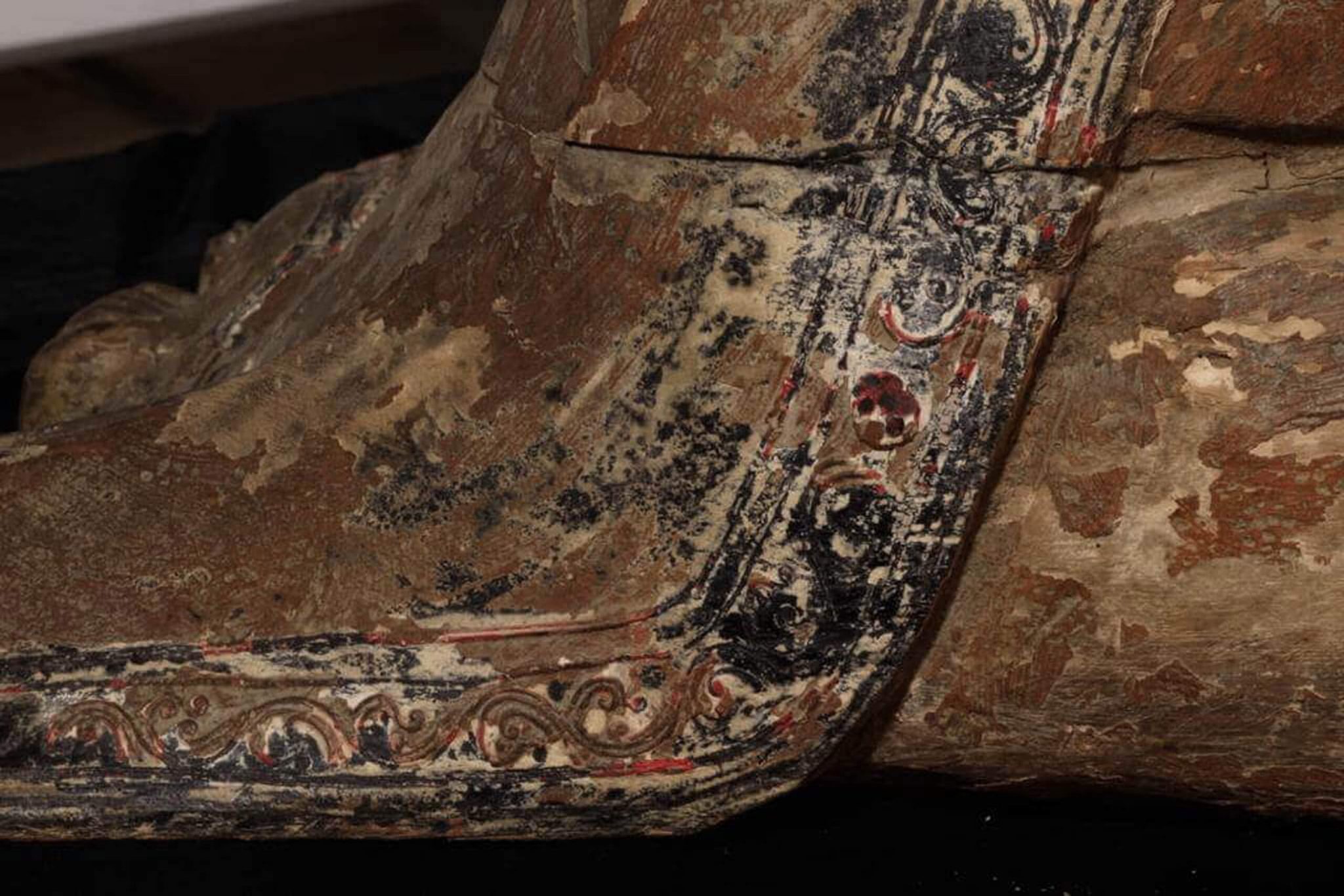
The technical achievement of this pair lies in the integration of carved form with polychrome surface treatment — a combination that defines the most distinguished examples of Burmese religious woodcarving from the Toungoo and early Konbaung periods. The carver would have worked from hardwood, blocking out the primary volumes of the figure before refining the surface into the complex passages of robe folds, facial features, and hand positions that carry the devotional meaning of the work. Over this carved ground, layers of lacquer and gesso were applied to create a surface suitable for gilding and polychrome painting, the gold leaf applied to robes, halos, and decorative details reflecting the wealth and piety of the commissioning institution. The monk’s robe — draped according to canonical specifications for the Theravāda monastic habit — is the largest single surface in the composition, and its treatment in this pair demonstrates the painter’s mastery of the controlled gilded surface: flat expanses broken by incised pattern and the subtle relief of carved fabric folds.
Burmese Religious Art in the International Collection
Burmese religious sculpture of the seventeenth and eighteenth centuries has been collected in Europe since the colonial period, but serious scholarly and market attention to this material has grown considerably in recent decades, driven by growing recognition of Burma’s exceptional contribution to the broader Theravāda Buddhist artistic tradition of mainland Southeast Asia. Major examples are held in the collections of the British Museum, the Musée des Arts Asiatiques-Guimet, and the Asian Art Museum in San Francisco. A matched pair of this scale and quality — 106 centimetres in height, in good conservation, with polychrome and gilding intact — represents a significant and relatively unusual acquisition opportunity: monk pairs were produced for specific monastery settings and are rarely preserved together outside those institutional contexts. For the collector of Southeast Asian Buddhist art, this Set of Two Monks offers the particular resonance of a work created to embody and transmit spiritual authority across generations.

 No products in the cart.