


Vanitas: The Skull and the Question It Asks
The skull as an object of contemplation has a history in European culture that predates Christianity and extends into the present. From the Greek and Roman use of skull imagery in funerary contexts, through the medieval dance of death (danse macabre), to the 17th-century Dutch vanitas still life and onward into the contemporary art of Damien Hirst’s diamond-encrusted For the Love of God (2007), the skull has served as the most concentrated possible statement of the fact that every human life ends. The tradition is called vanitas, from the Latin word for vanity or emptiness, after the verse from Ecclesiastes: “Vanity of vanities, all is vanity.” To place a skull among objects of beauty — flowers, goblets, hourglasses, musical instruments — was to insist that beauty and pleasure carry within them the seed of their own end. To carve a skull from beautiful material — from ivory, from crystal, from marble — was to make this argument more complex: to present death in the language of luxury, and so to ask whether even our finest objects are not themselves forms of vanity.
Red Verona Marble: A Stone with Character
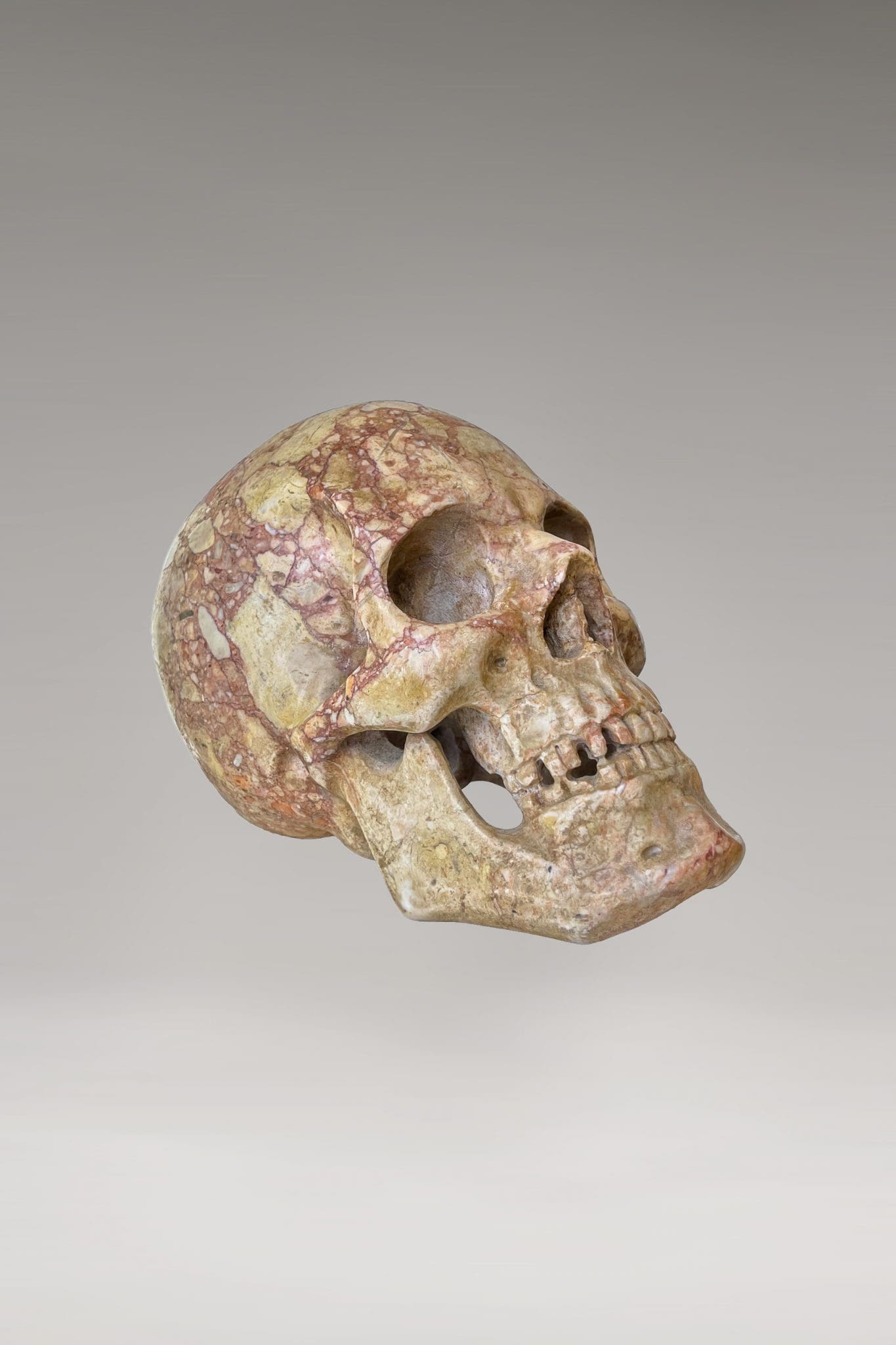
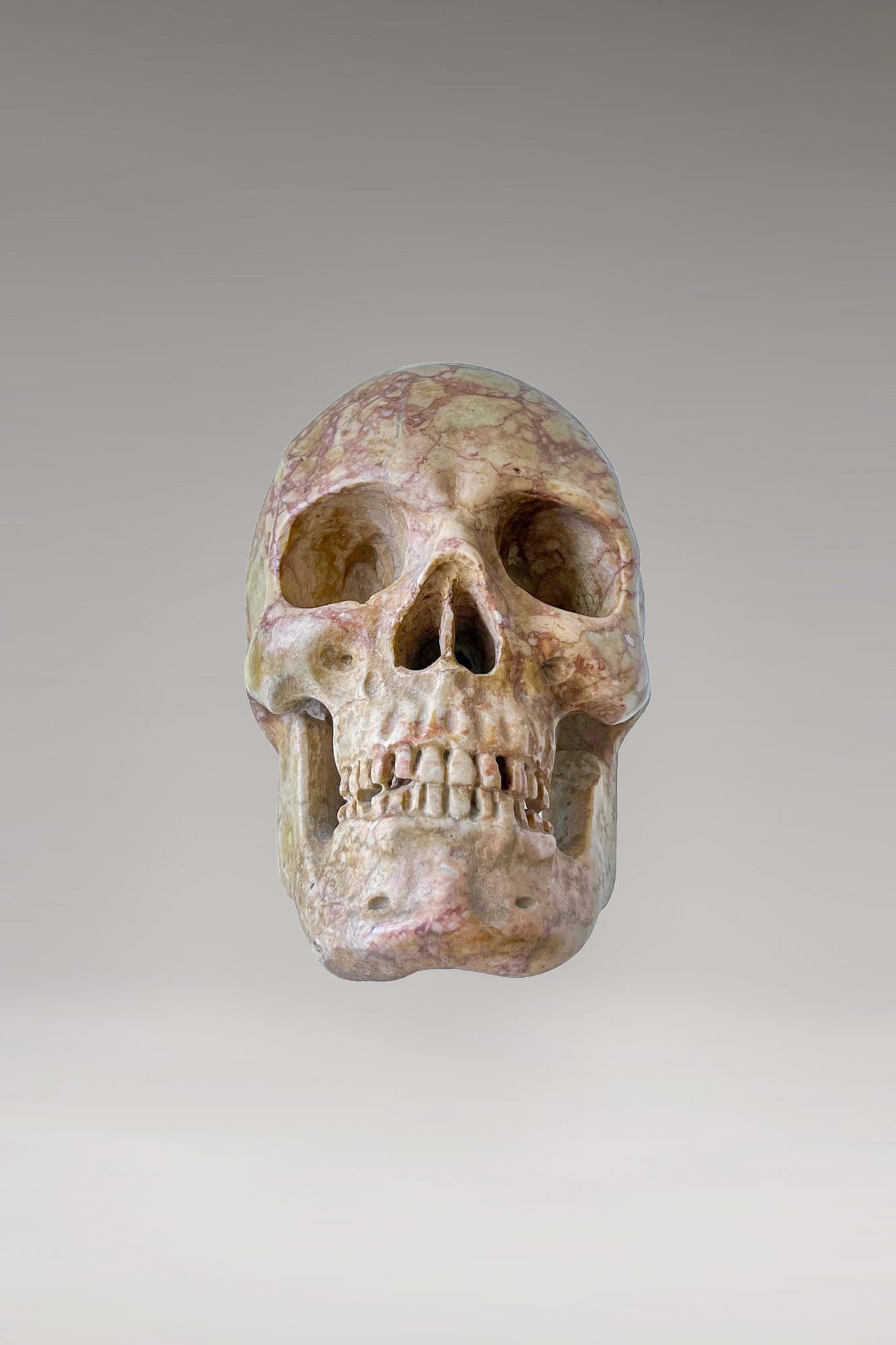
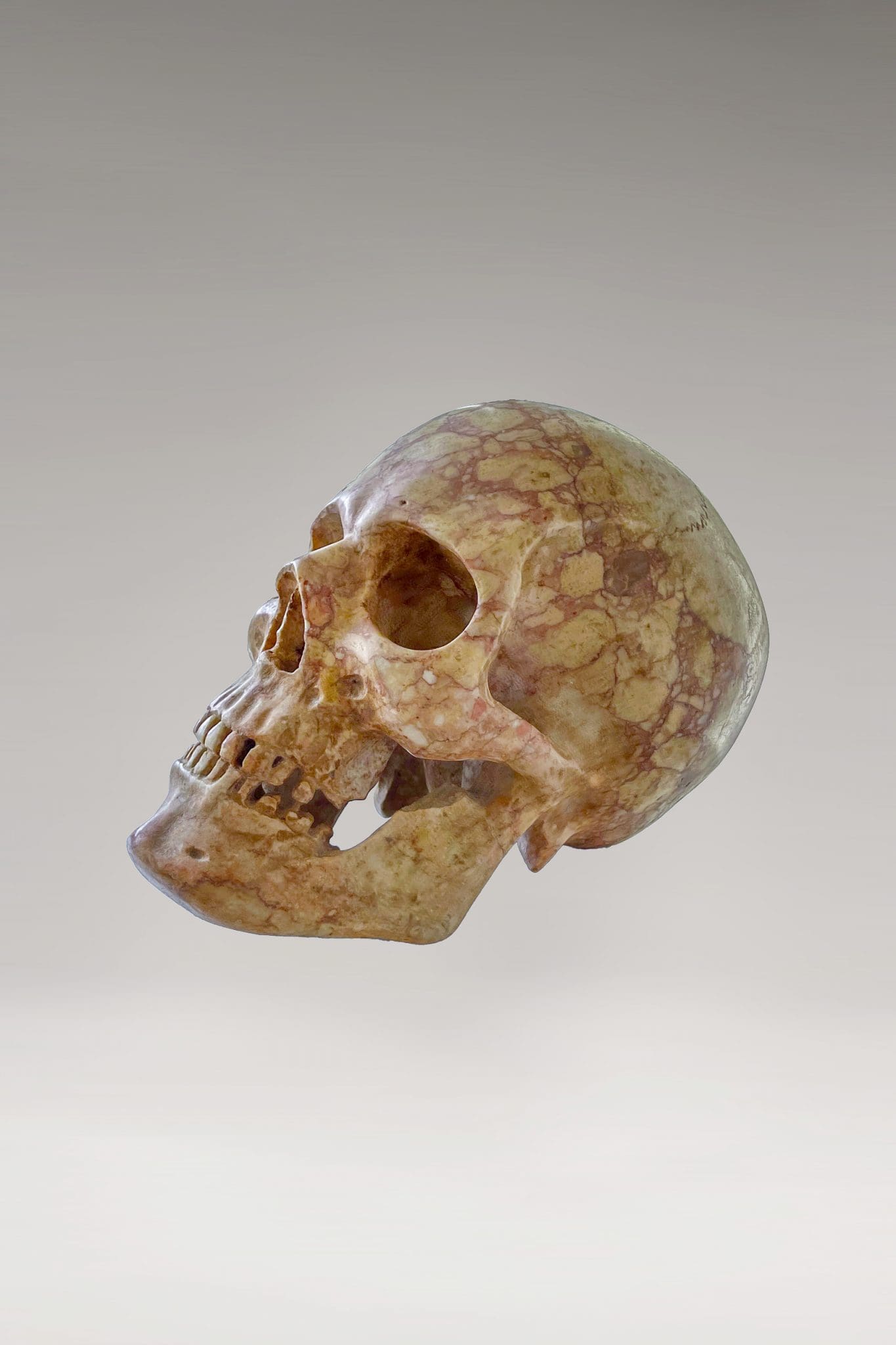
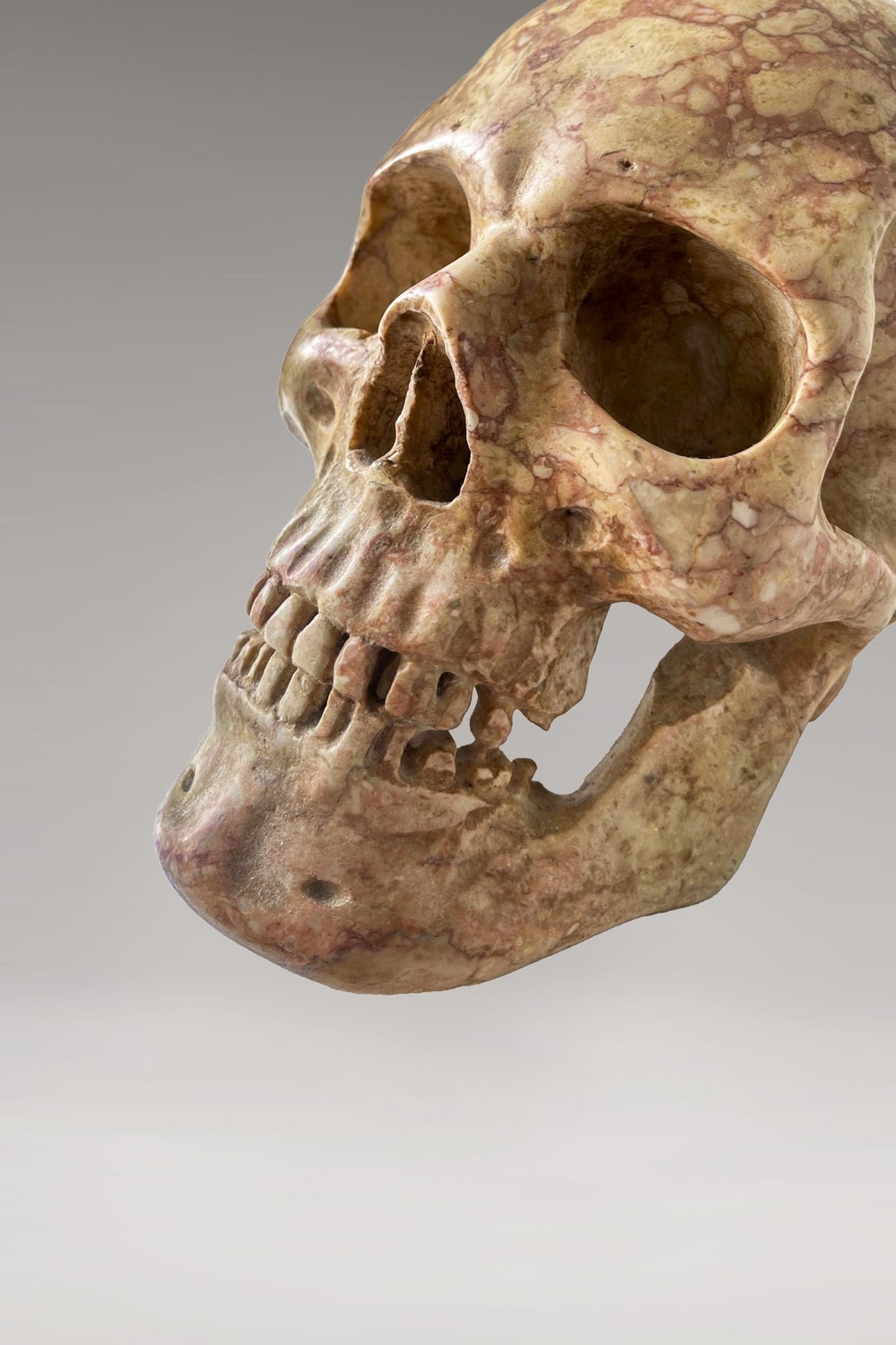
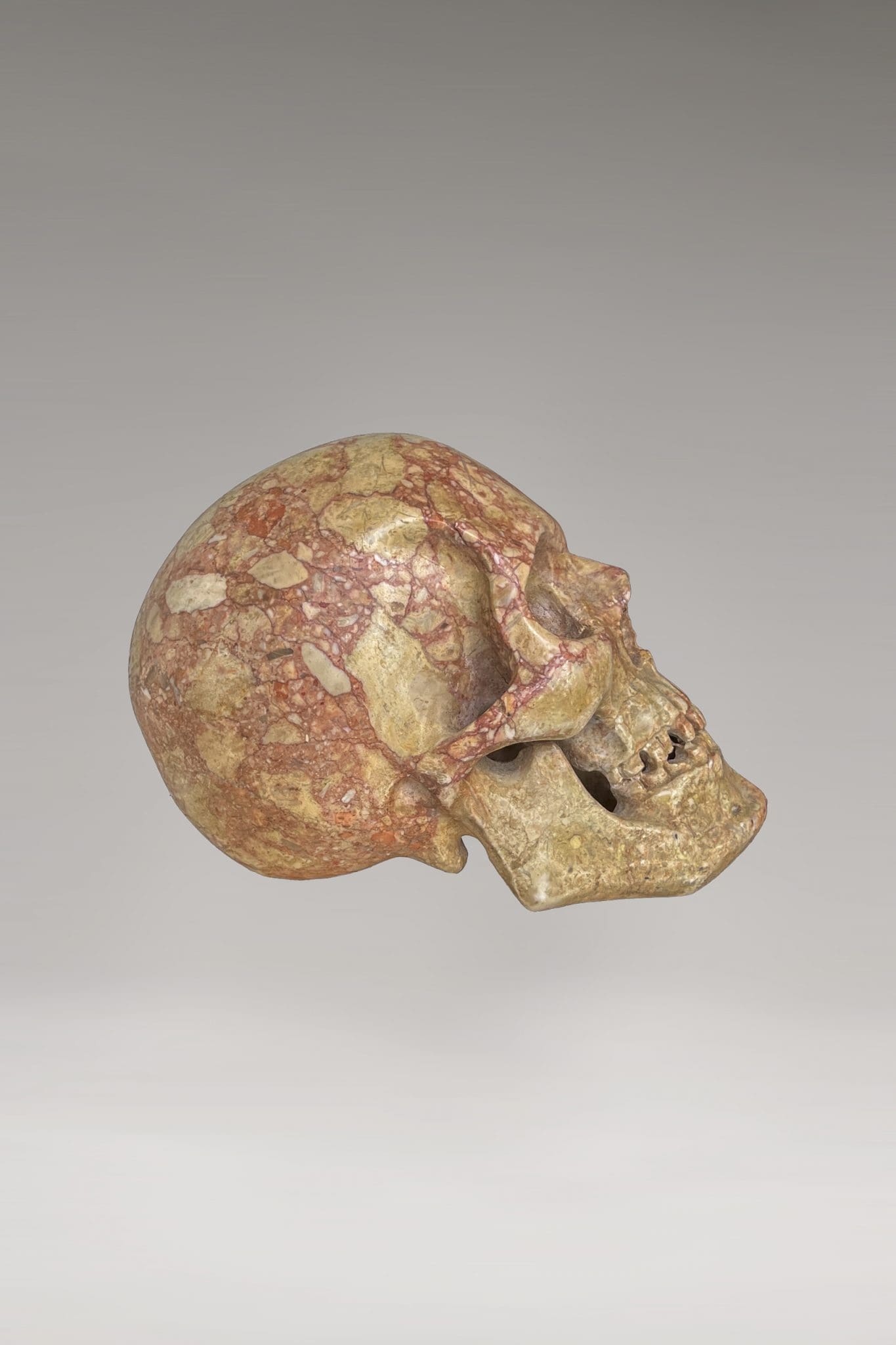
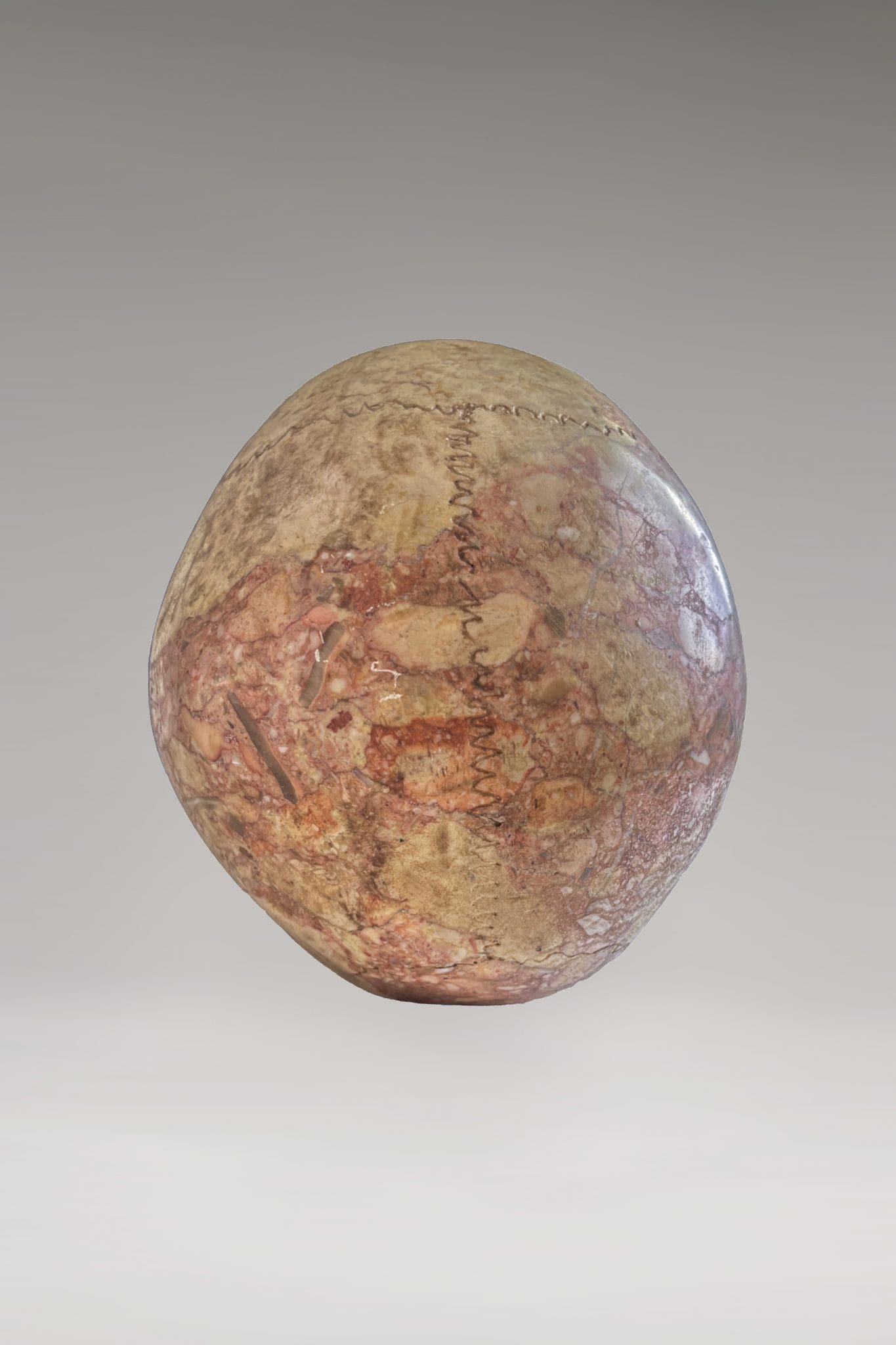
Rosso Verona — Red Verona marble — is one of Italy’s most distinctive decorative stones, quarried from the hills around Verona in the Veneto since antiquity. Its characteristic colour ranges from deep burgundy to pinkish red, shot through with white, grey, and cream veining that gives each block a unique internal landscape. Unlike the pure whites of Carrara marble, which lend themselves to the smooth, luminous surfaces of classical sculpture, Rosso Verona is a material of drama and density: its colour gives it weight, its veining gives it movement, and its high polish gives it a reflective surface that catches and holds light. To carve a skull from this material is to make a formal and conceptual choice simultaneously: the colour of dried blood, the density of bone — but also the luxury of polished stone, the craft of the carver, the durability of marble against the fragility of the life it represents. The skull as vanitas object is usually made from perishable materials precisely to reinforce its message; a marble skull reverses this, producing a memento mori designed to outlast not just one life but many.
The Skull in the Collection
Carved skulls in stone and crystal occupy a specific position in the collecting world: they are simultaneously philosophical objects (carrying the entire vanitas tradition within them), craft objects (demonstrating the skill of the stone carver), and domestic objects (designed to be placed, handled, and lived with rather than stored behind glass). At 28 centimetres in length, this Red Verona marble skull is a substantial presence: not a desk ornament but an object that commands whatever surface receives it. Placed in a study, a library, or alongside other works in a cabinet of curiosities, it does exactly what the vanitas tradition always intended: it asks, from its position of beauty and permanence, the question that the tradition has always asked, and waits quietly for an answer.






 No products in the cart.