
Cash Coins and the Economy of Pre-Modern Vietnam
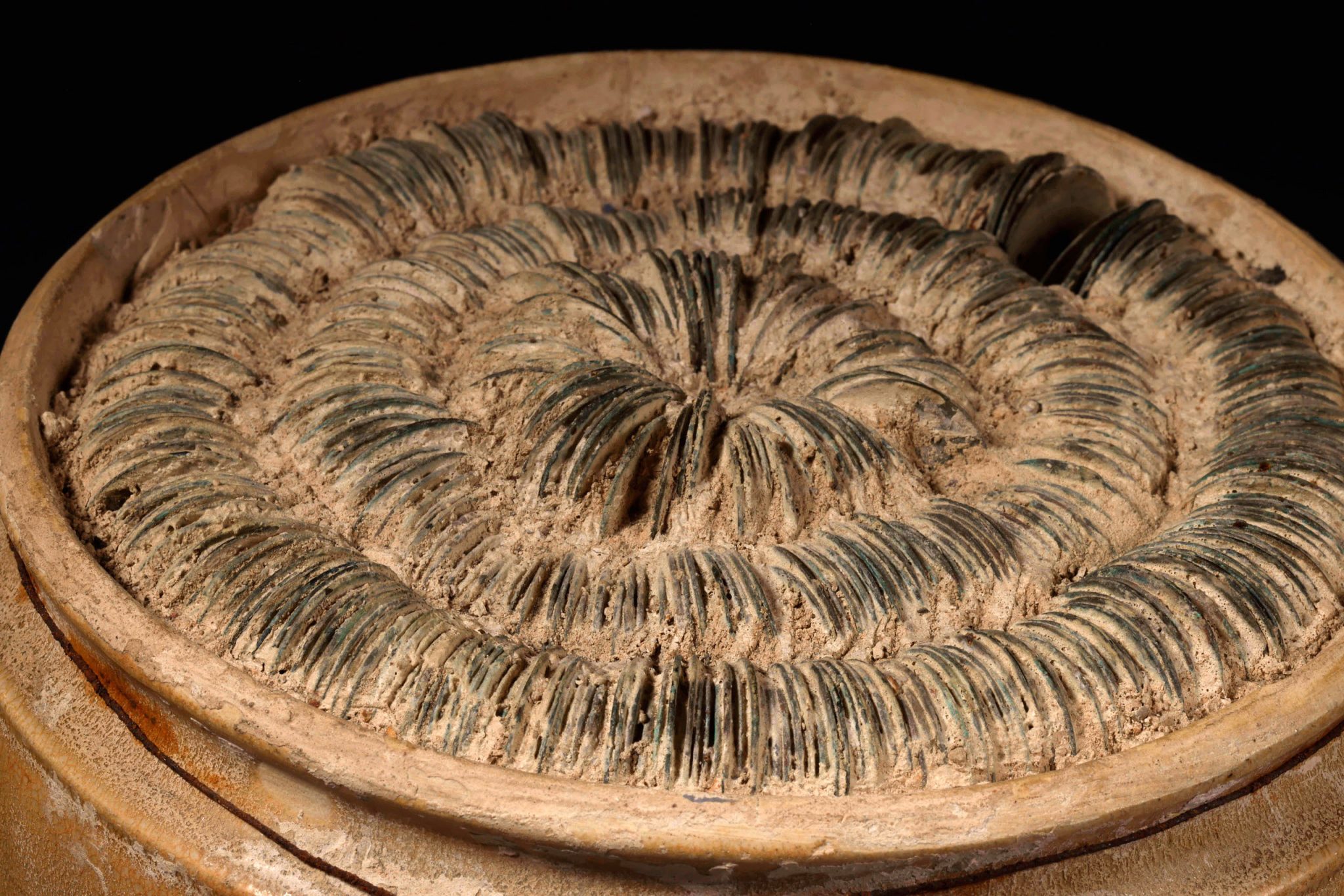
Vietnam’s monetary system in the eighteenth century was anchored by the “cash” coin — a round bronze disc pierced by a square hole at its centre — inherited from centuries of Chinese numismatic influence. These humble yet powerful objects circulated through every level of Vietnamese society under the Nguyễn lords and, later, the early Nguyễn dynasty, mediating transactions from village market stalls to imperial tax payments. Cast in bronze by state foundries and regional mints, each coin bore Chinese characters inscribed with reign titles and auspicious formulae, encoding political legitimacy within the very material of exchange. The square aperture, known as the “eye” of the coin, was both practical and cosmological: it allowed coins to be threaded onto rods for counting, storage, and transport, while symbolising the union of heaven (the circular perimeter) and earth (the square centre). This Small Treasury brings together a selection of these coins alongside ceramic objects that contextualise their original setting, forming a miniature archive of Vietnamese daily life in an era of intense cultural and commercial activity.
Material Richness in a Compact Form
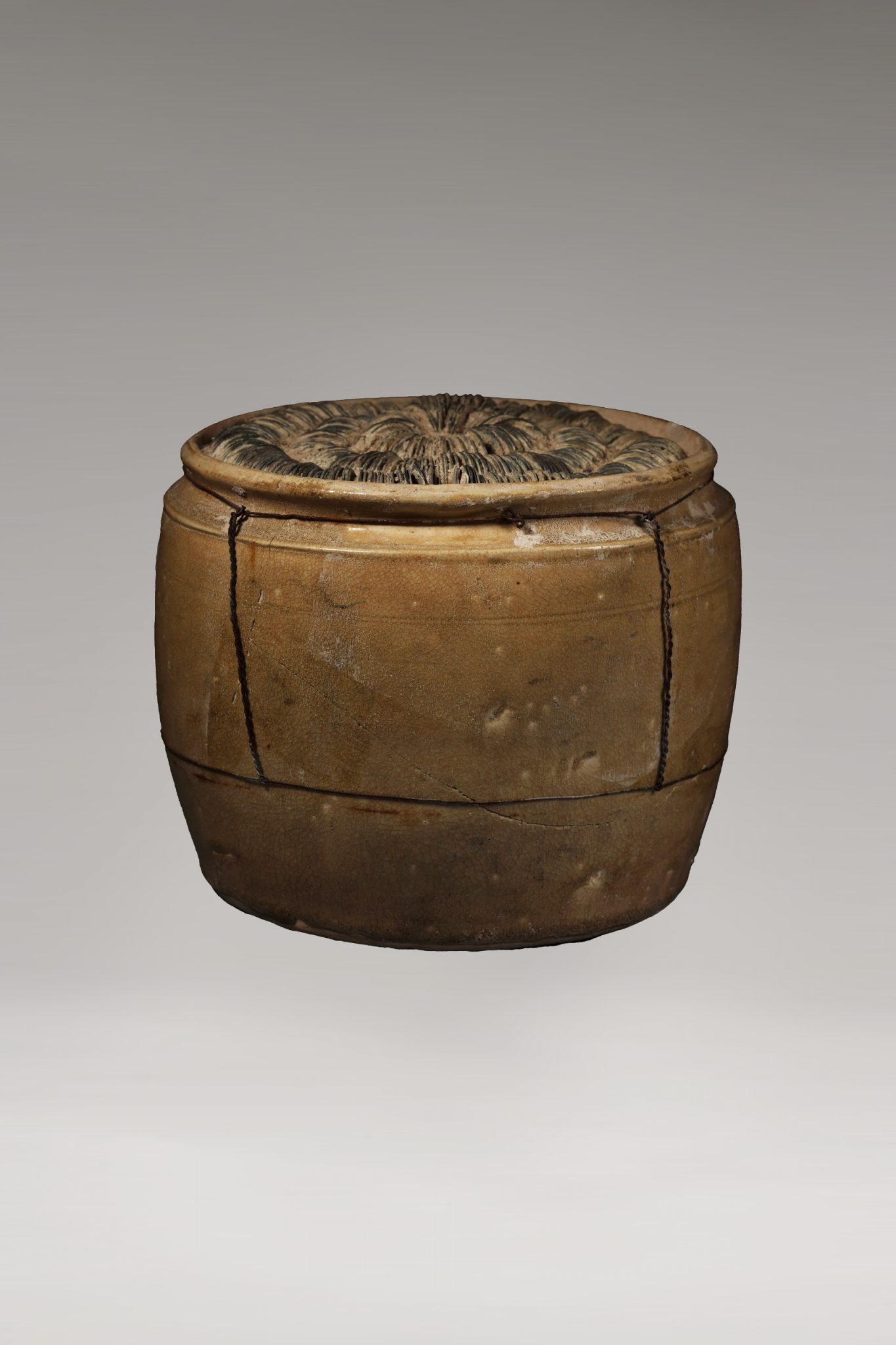
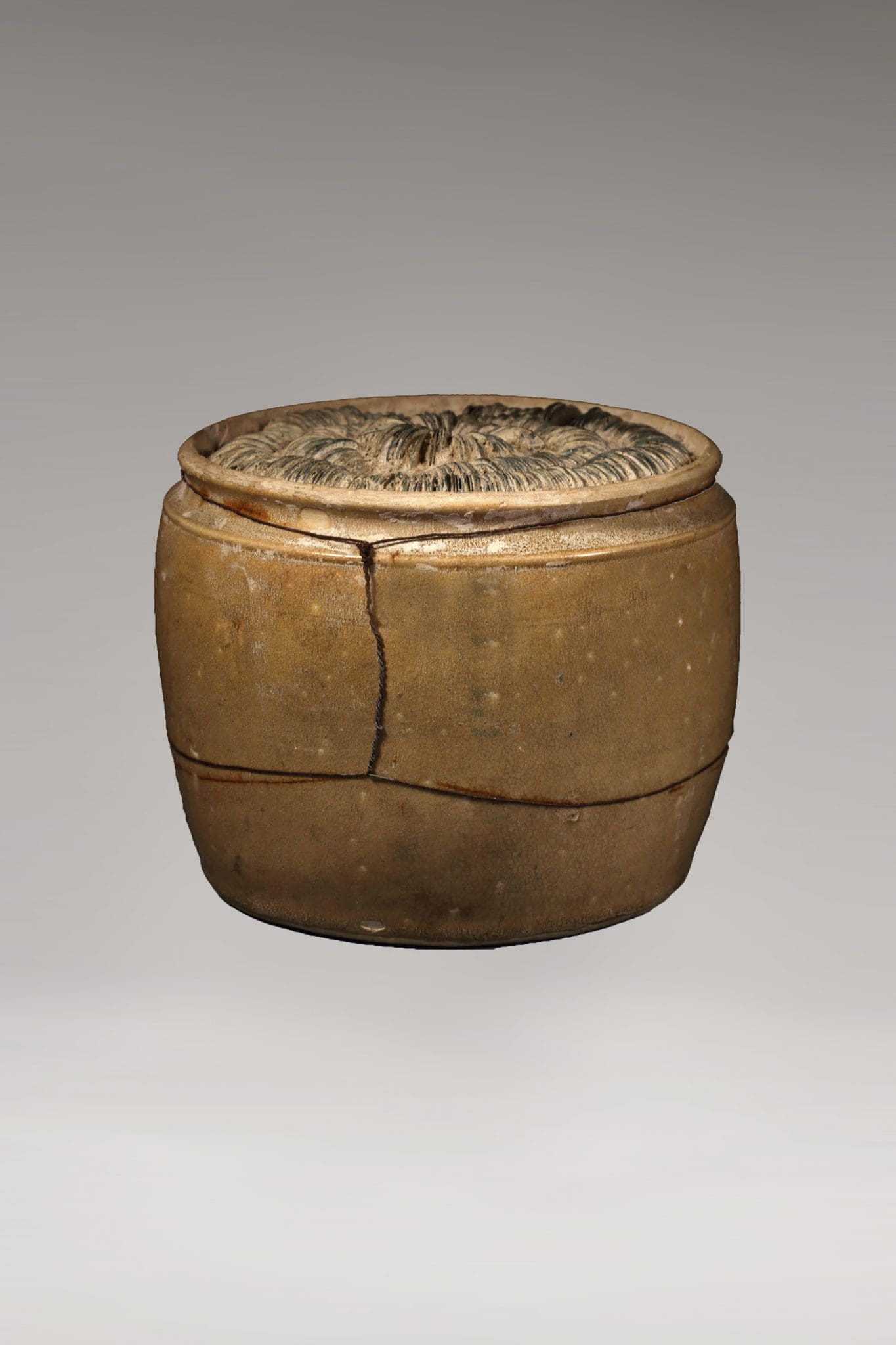
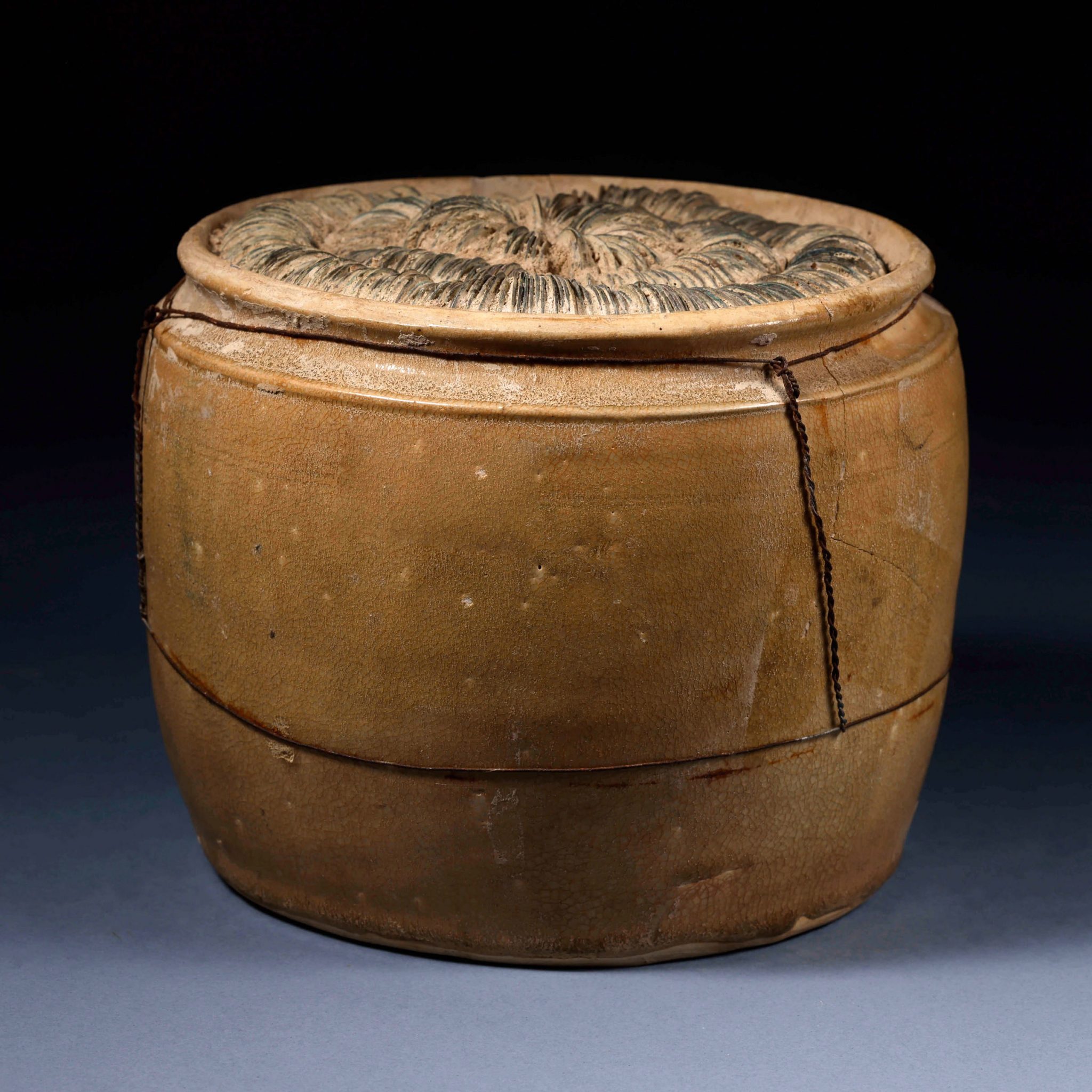
The assembly measures 20 × 20 × 10 centimetres — modest dimensions that belie the density of historical information compressed within. The bronze coins have acquired a deep patina over more than two centuries, their surfaces bearing the distinctive green oxidation that signals genuine age and burial context. Alongside them, ceramic elements — likely small vessels, tiles, or votive pieces associated with domestic or funerary ritual — add textural and chromatic variety to the group. Vietnamese ceramics of this period drew on both indigenous craft traditions and the refined porcelain aesthetics of neighbouring China, resulting in wares that were at once functional and aesthetically assured. The juxtaposition of metal and fired clay within a single treasury chest mirrors the layered material culture of eighteenth-century Vietnam, where Chinese, Cham, and indigenous Kinh traditions intersected. The small chest itself, acting as container and frame, transforms individual objects into a coherent collection — a private archive that once belonged to a household of means, where the past was stored alongside the practical necessities of daily life.
A Collector’s Window into Vietnamese Material History
For collectors of Asian antiquities, this Small Treasury offers an unusually intimate point of entry into Vietnamese material culture — a field that remains less well-known in Western collections than its Chinese or Japanese counterparts, despite its extraordinary richness. The cash coin is one of the defining artefacts of pre-modern Southeast Asian economies, and a curated assembly such as this provides a tangible link to the commercial networks and social structures of Nguyễn-era Vietnam. The ceramics amplify this narrative, situating the monetary objects within the broader domestic and ritual sphere from which they were inseparable. Pieces of this kind, combining numismatic interest with ceramic archaeology and the added dimension of the ensemble’s original container, are rarely preserved in their entirety; most coins and sherds survive in isolation, stripped of the context that gives them biographical depth. This treasury preserves that context, making it a document as much as a decorative object — a small but eloquent witness to a world of commerce, ritual, and material beauty.


 No products in the cart.