

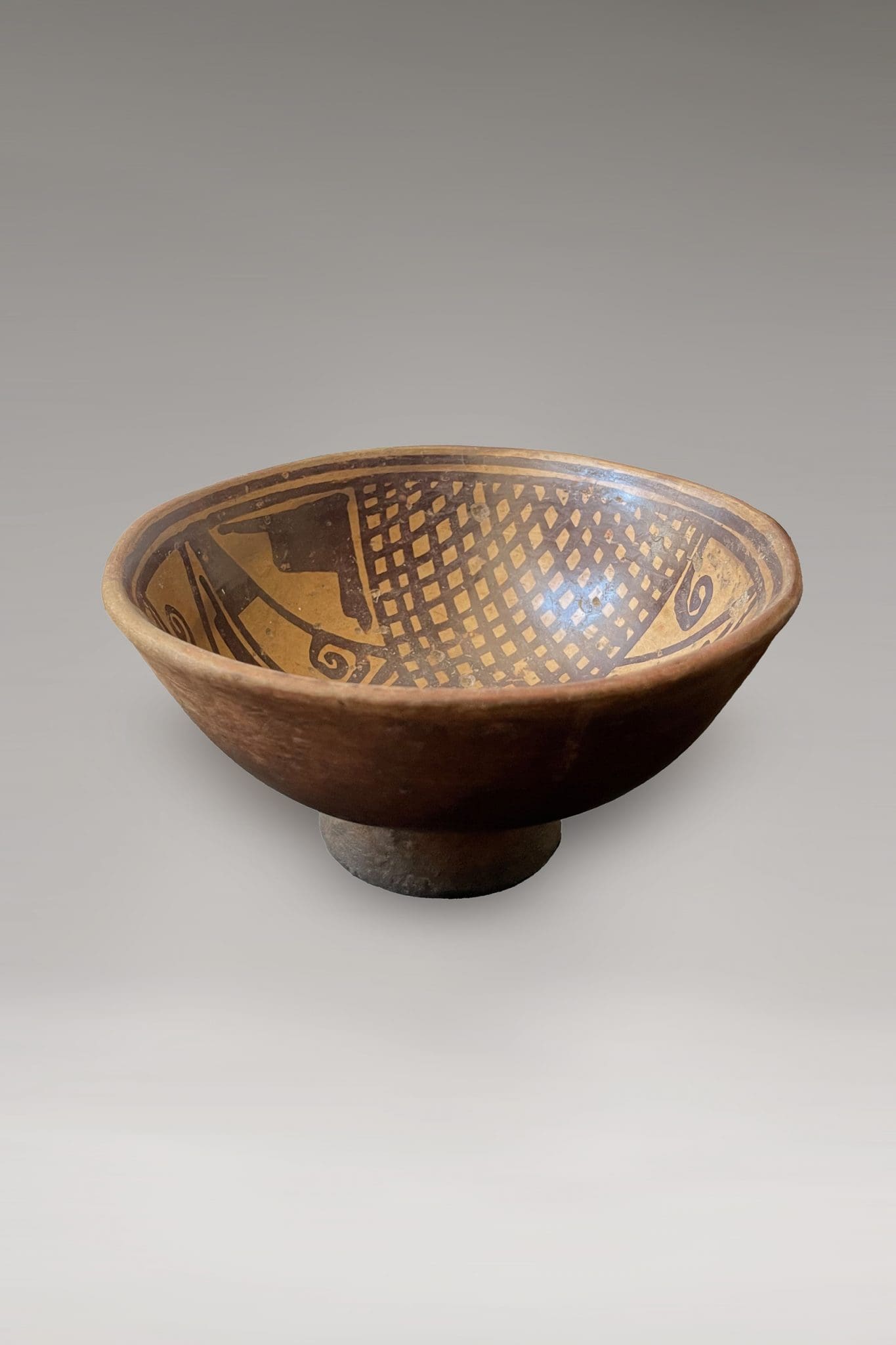
The Mucawa: A Vessel at the Centre of Amazonian Ceremonial Life
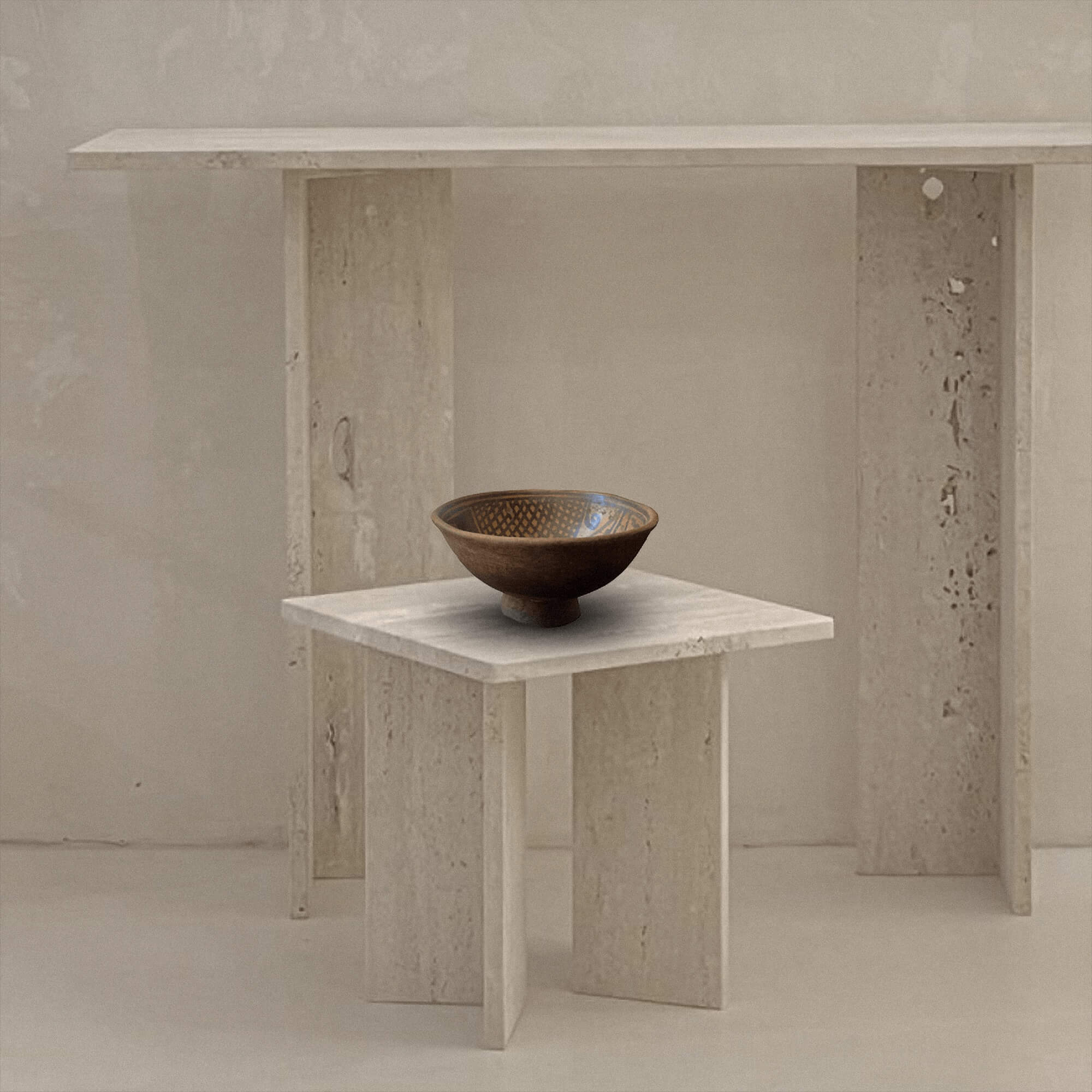
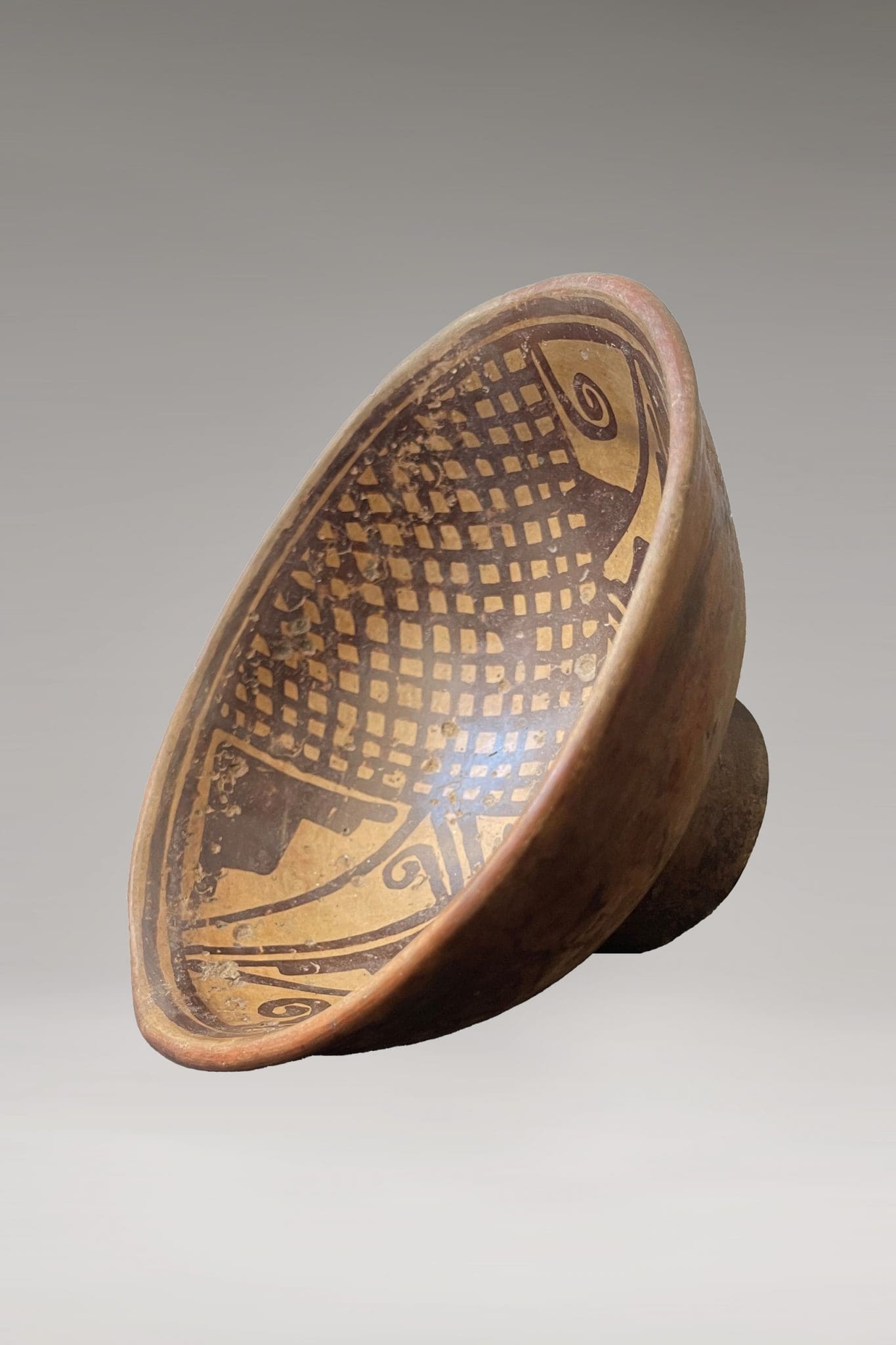
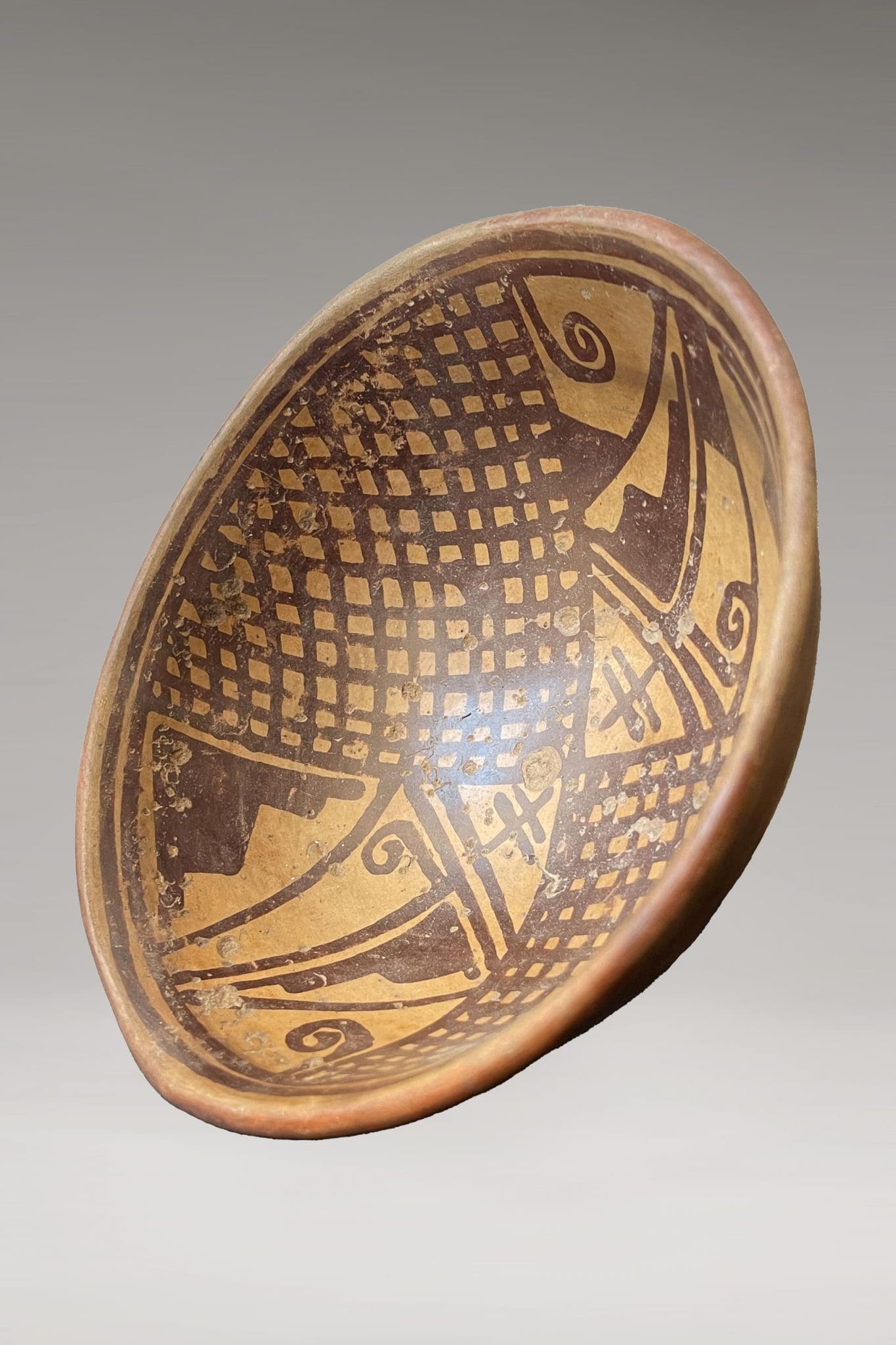
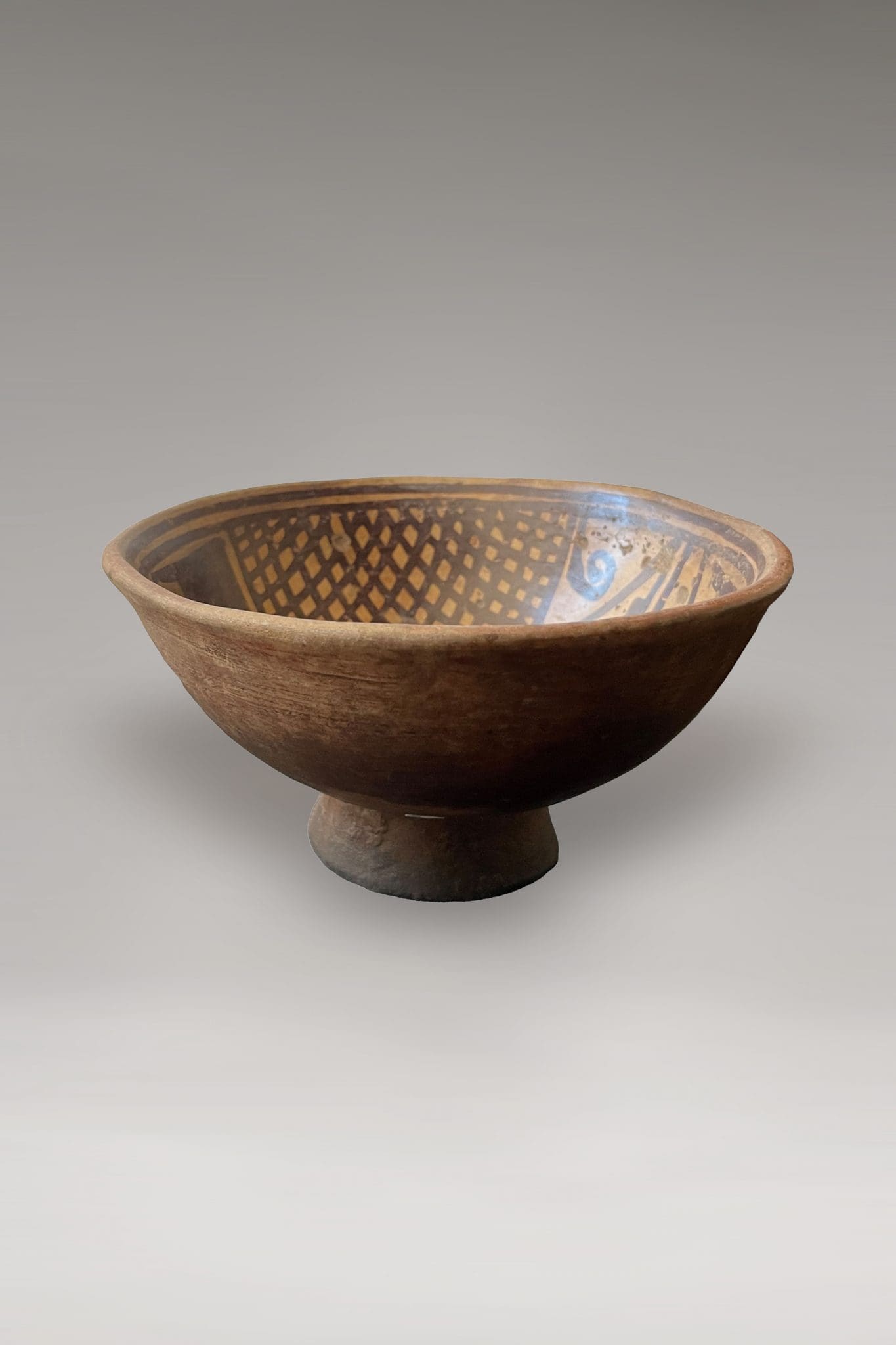
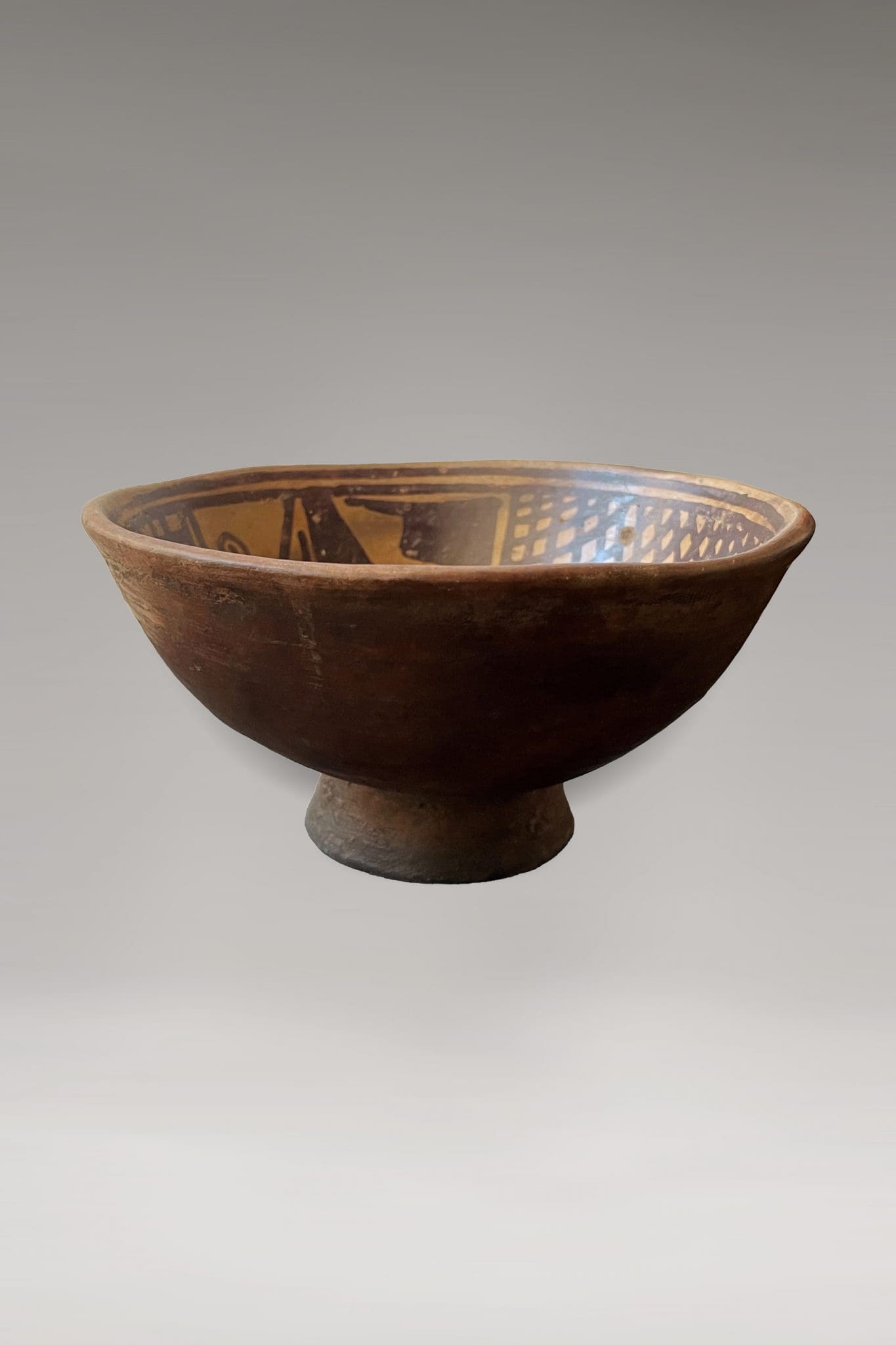
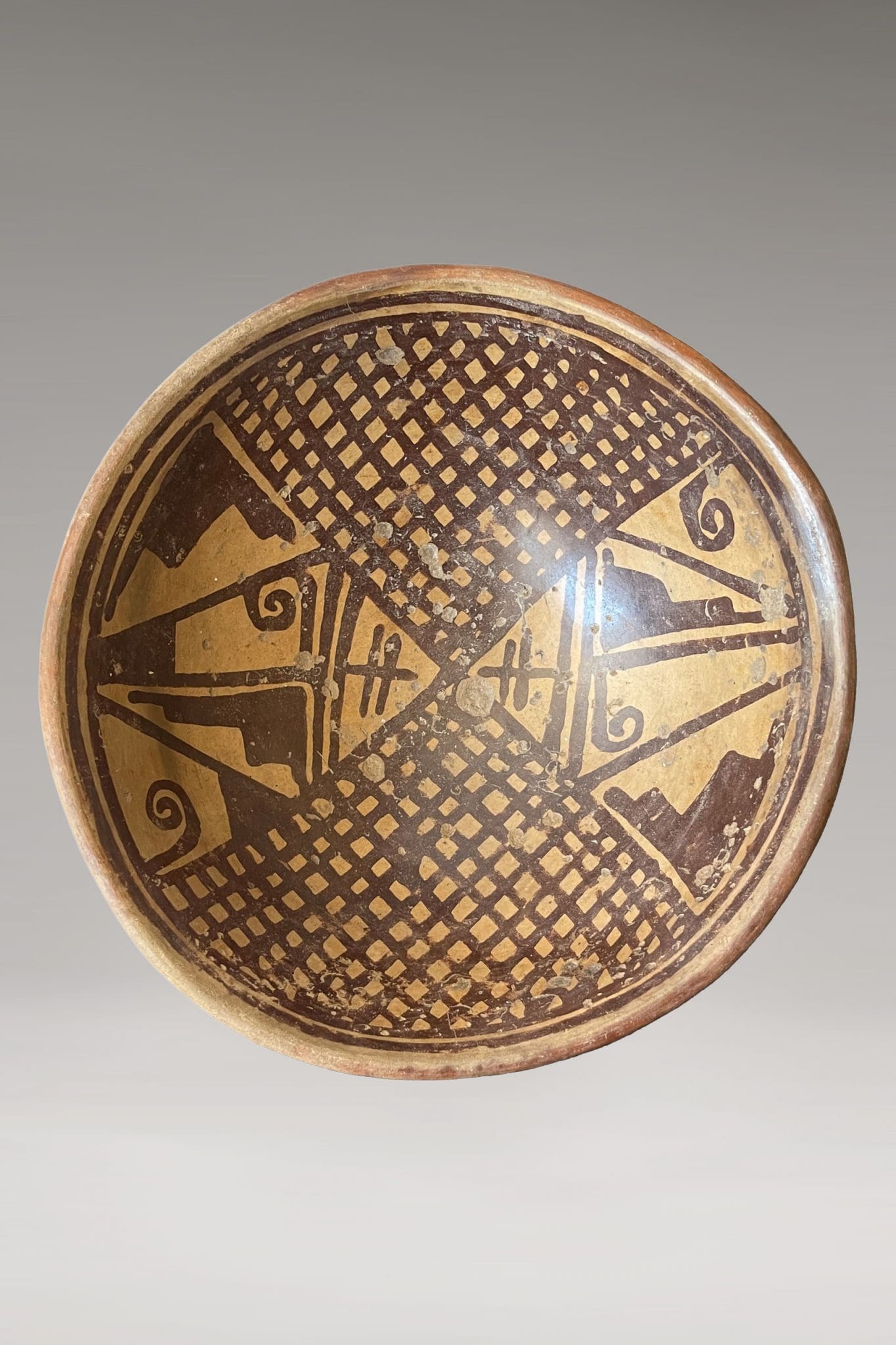
In the ceramic traditions of Amazonian South America, the mucawa — a wide, shallow bowl with a gently curved profile — occupied a central place in social and ceremonial life. Known across Kichwa-speaking communities of Ecuador and Peru as the vessel from which chicha, the fermented maize or manioc beverage central to ritual gathering and communal exchange, was served and drunk, the mucawa is at once an everyday object and a charged ceremonial presence. Its form is deceptively simple: the wide mouth admits the face fully; the shallow body allows the colour and surface of the beverage to be seen; the rounded base invites cradling in two hands. This Pre-Columbian example, dated to the 4th–10th centuries AD, predates the Inca period by several centuries and belongs to the long tradition of Amazonian ceramic production that preceded and continued alongside the highland civilisations to its west.
Ceramic as Cultural Record
The ceramics of pre-Columbian Amazonia have received less sustained attention from scholars and collectors than the more spectacular wares of the Andean highland cultures — the Moche portrait vessels, the Nazca polychromes, the Chimu black wares. Yet Amazonian ceramic traditions carry their own distinctive intelligence: an attention to form over decoration, a sensitivity to the physical relationship between vessel and user, and a continuity across time that speaks to cultural stability and technical confidence. This mucawa, measuring 19 centimetres in diameter and 8 centimetres in height, displays the proportional control and surface treatment of an established tradition: the clay prepared and fired with knowledge accumulated over generations, the form arrived at through long trial and refinement. Archaeological ceramics of this age bear in their fabric and surface the literal marks of their making — fingerprints in the clay, tool marks, the specific orange-brown colour of local iron-bearing earth.
Time in Clay
Objects recovered from archaeological contexts carry a particular kind of time. The mucawa was made by a specific person, for a specific community, within a specific cultural moment that is now recoverable only through inference and material evidence. Its survival across fifteen centuries — through burial, discovery, and the long journey into private collection — is itself a kind of argument: that the human impulse to make beautiful, well-proportioned, useful things is durable enough to outlast the world that produced it. To hold this vessel is to complete a circuit across more than a millennium: the hands that shaped it, the hands that now receive it, connected by a clay form that carried its world forward in silence through all the centuries between.
 No products in the cart.