

Michel Hosszù and the Language of Transgression
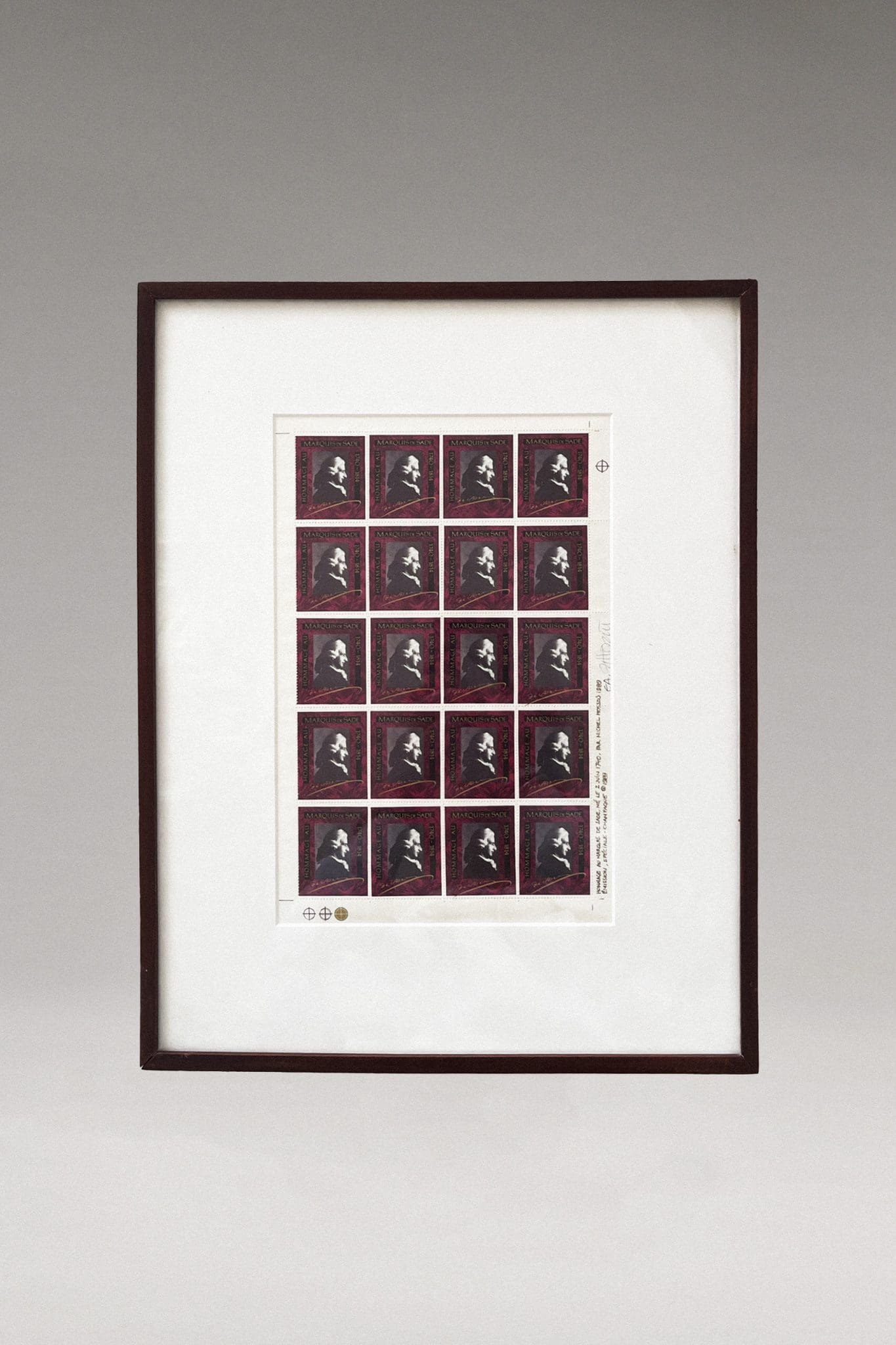
Few graphic works so cleanly situate themselves at the intersection of art history, literary provocation and printmaking craft as this Hommage au Marquis de Sade by Michel Hosszù. Issued as a single sheet composed of twenty stamp-format compositions, the piece transforms the vernacular format of the postage stamp — universally legible, intimate in scale — into an arena for erotic imagery drawn from the tradition of the Marquis de Sade’s writings. The choice of format is not incidental: stamps travel, carry messages across borders, and bear the official endorsement of institutions. Hosszù turns that authority on its head.
Technique and Materiality
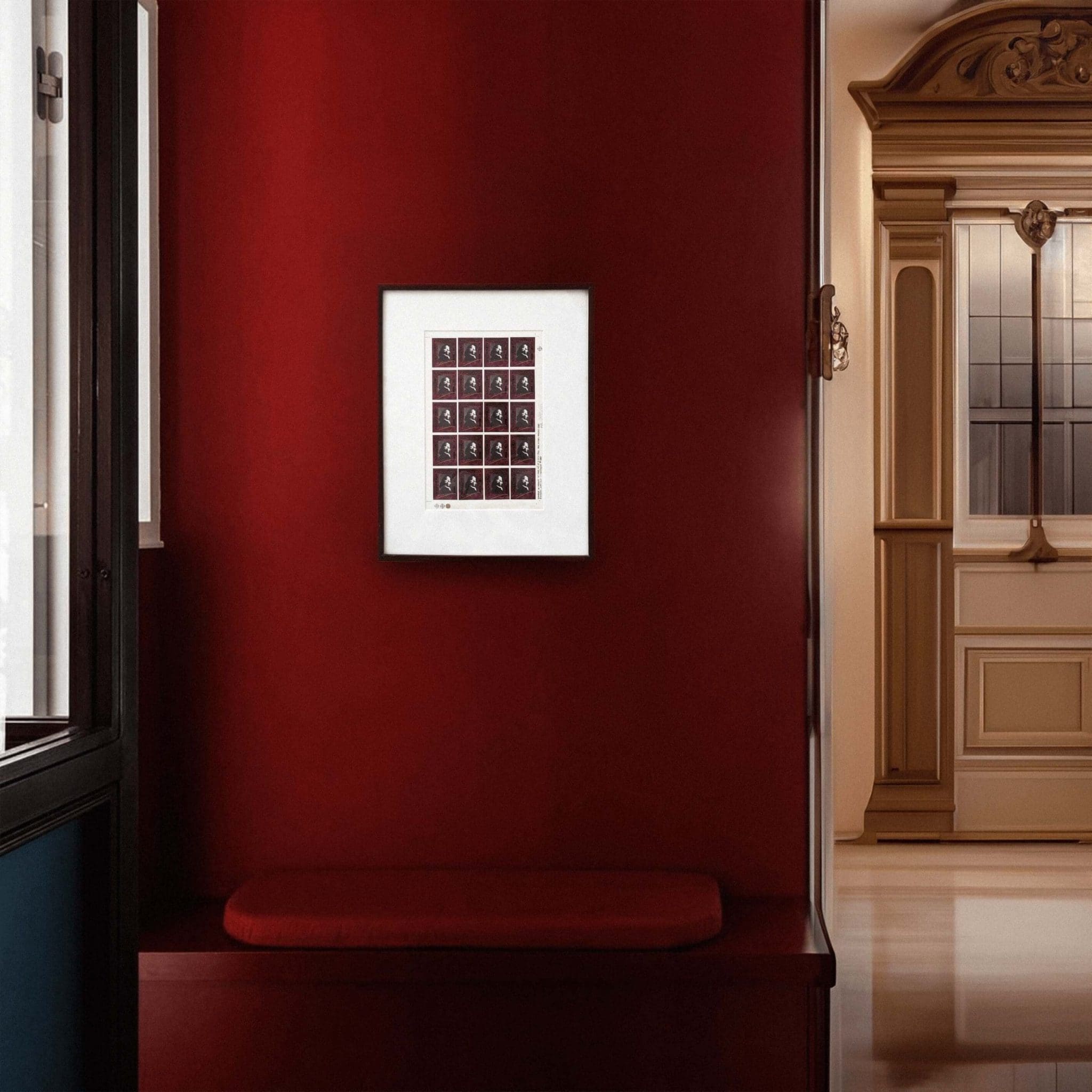
The work is produced using a silkscreen-offset method that gives the colours their characteristic density, a warm crimson and burnished gold palette that references eighteenth-century bookplate illustration while remaining unmistakably contemporary. Each of the twenty compositions functions independently as a miniature, but the full sheet operates as a unified statement — a cabinet of desire arranged with the precision of a zoological plate. The piece is presented as an Artist Proof, signed and dated by the artist, and comes framed in a format that allows the entire sheet to be read at once.
Exhibition History and Context
The work was shown at Osadías. Maya Pixelskaya, held at Matadero Madrid in 2016, one of the capital’s most important contemporary arts venues. Prior to entering the Spanish collection that subsequently offered it here, the work had been documented at the Musée de l’Erotisme in Paris, a collector institution dedicated to the artistic representation of sexuality across cultures and centuries. That provenance lends the piece an art-historical seriousness that transcends the merely provocative. This is a work that belongs in a conversation about the history of censorship, the body in art, and the persistent relevance of Enlightenment transgression to contemporary visual culture.


 No products in the cart.