

The Dignitary Figure in Ming Dynasty Sculpture
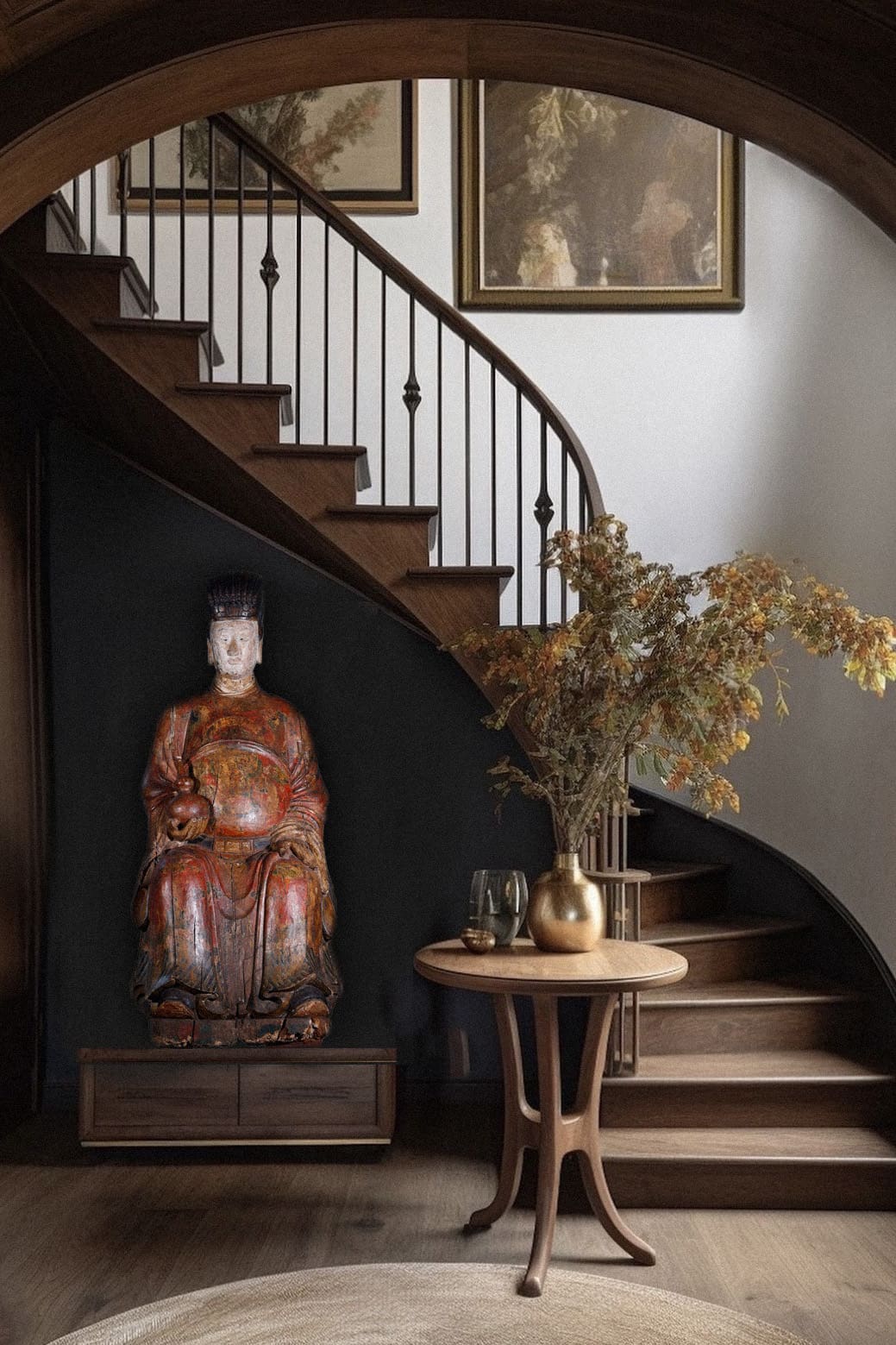
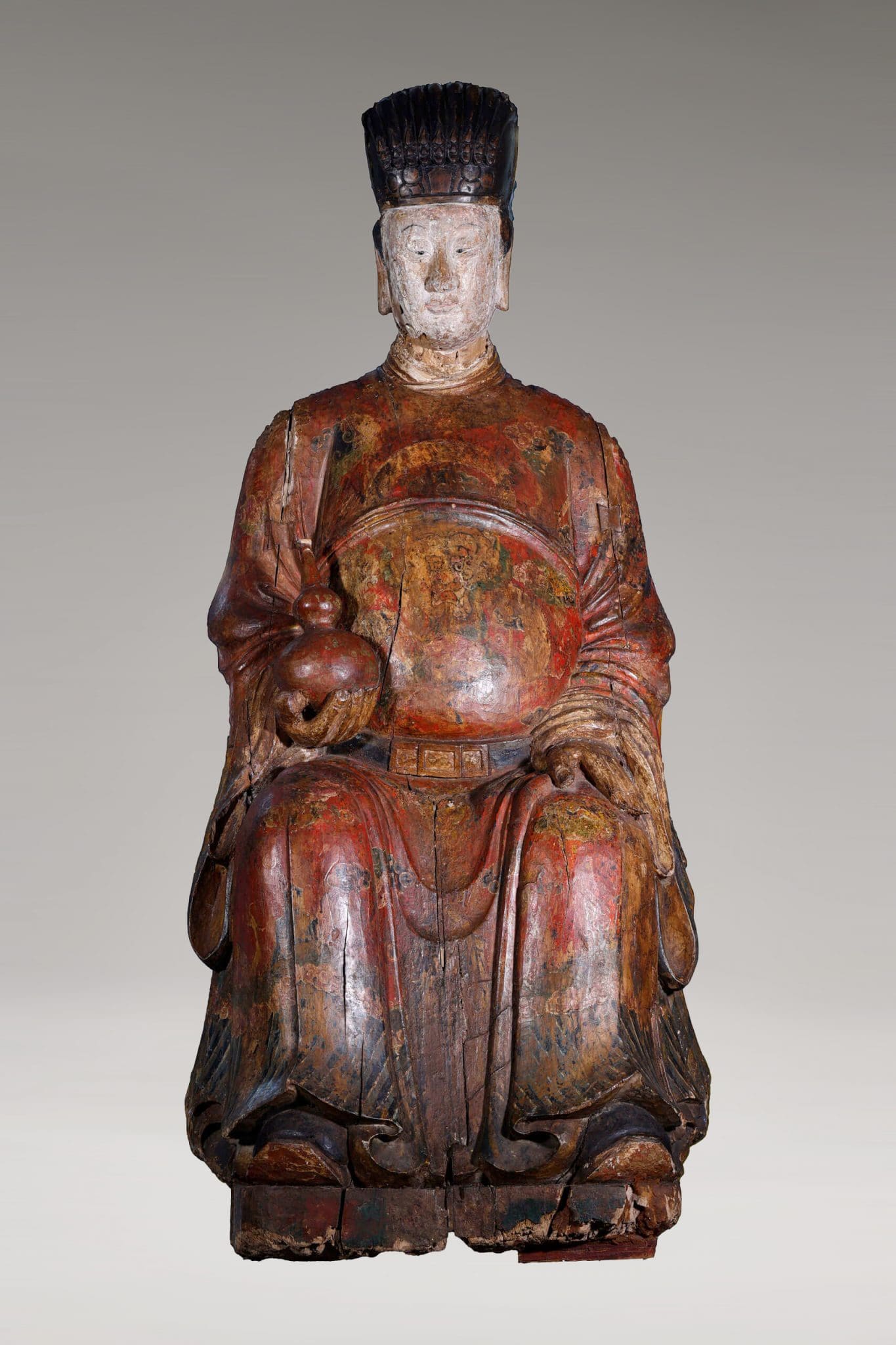
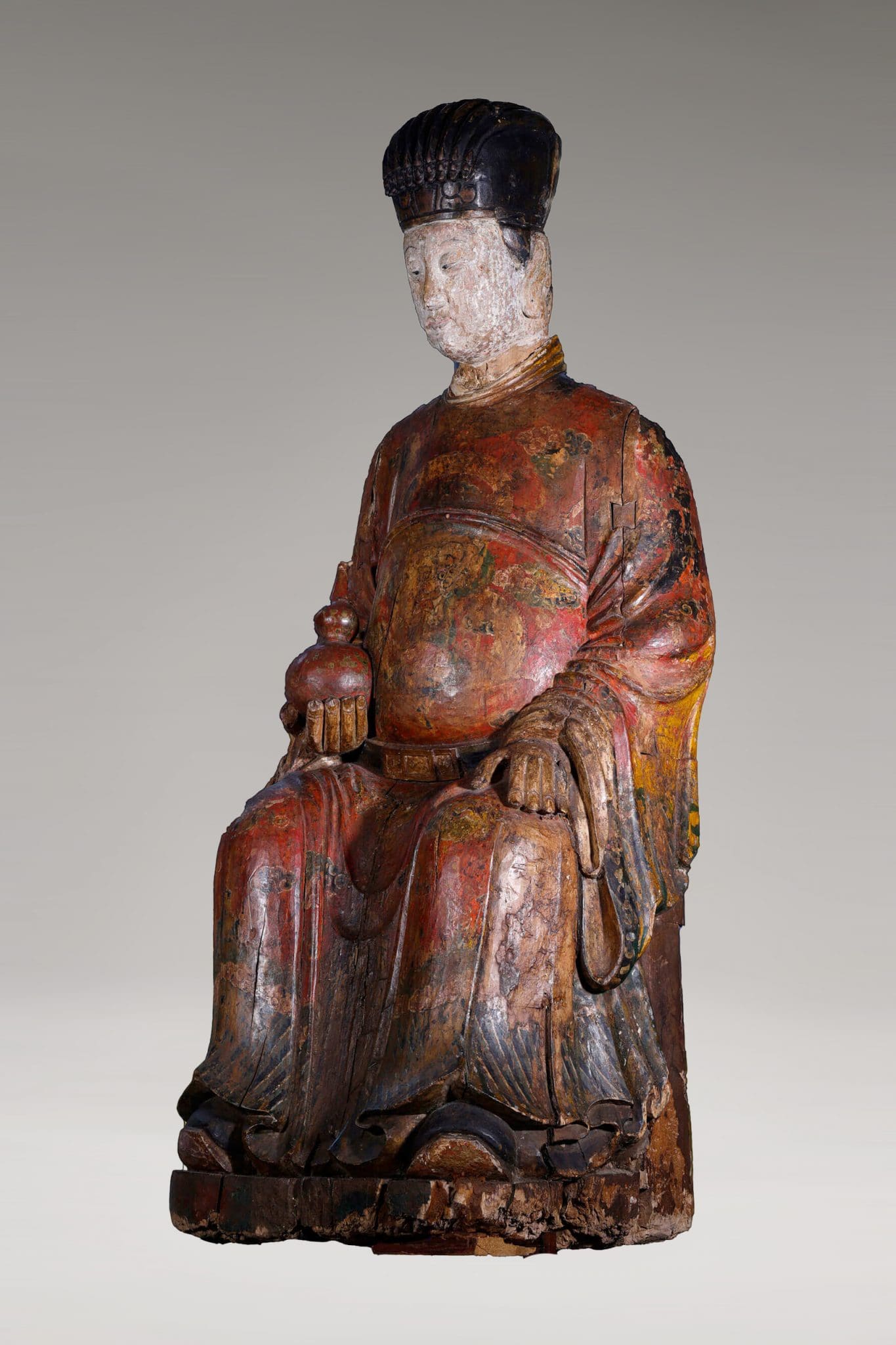
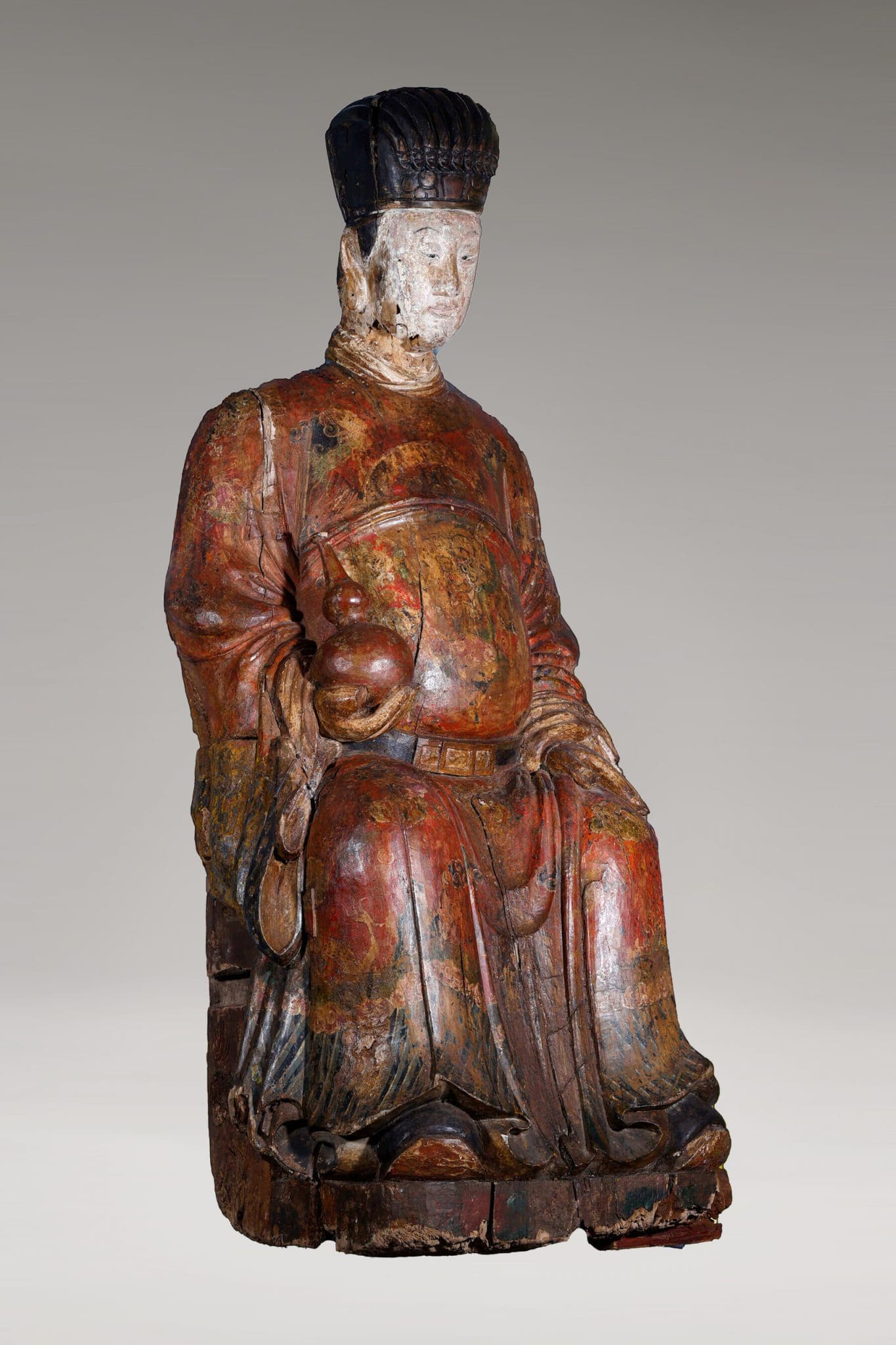
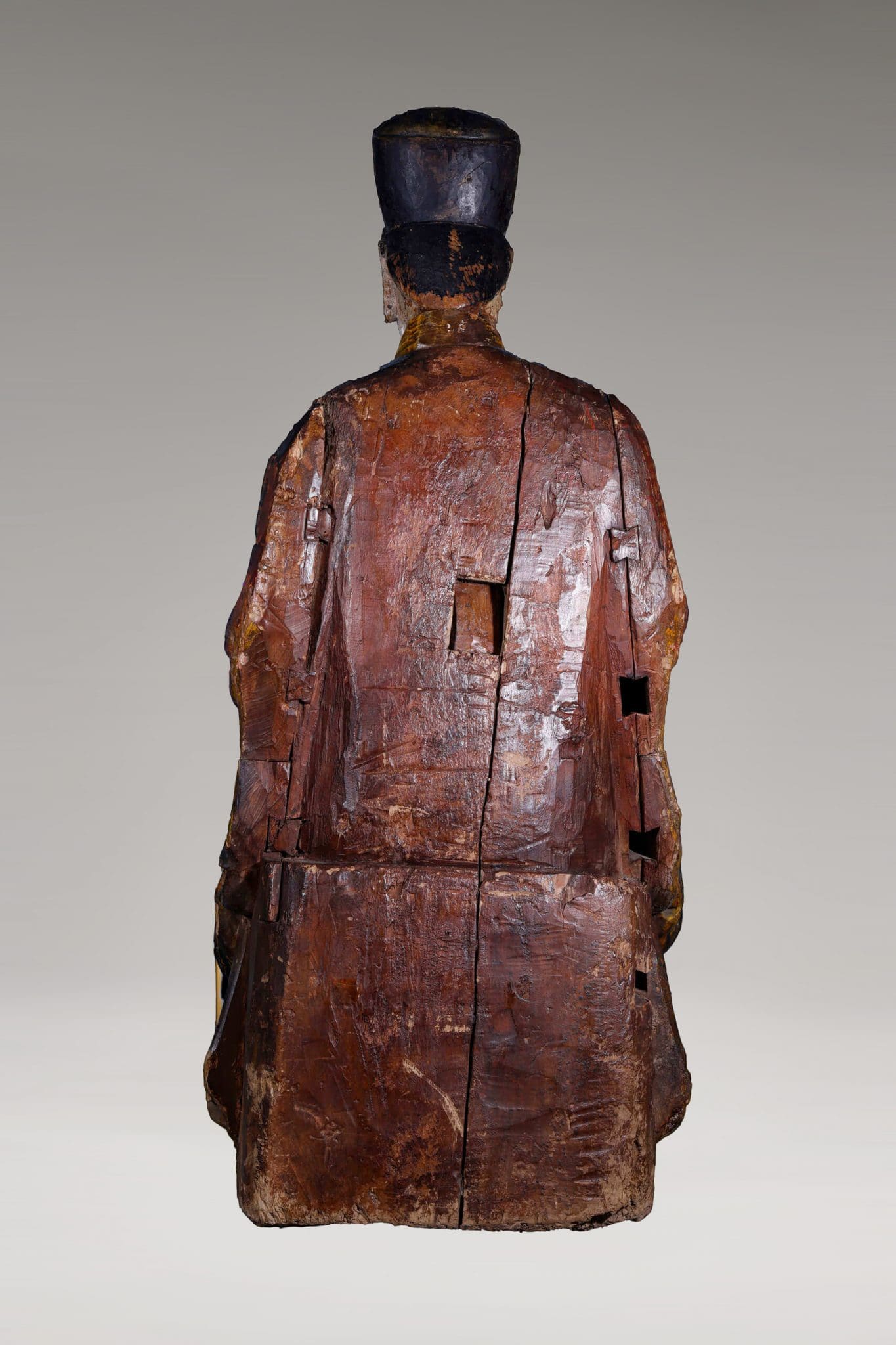
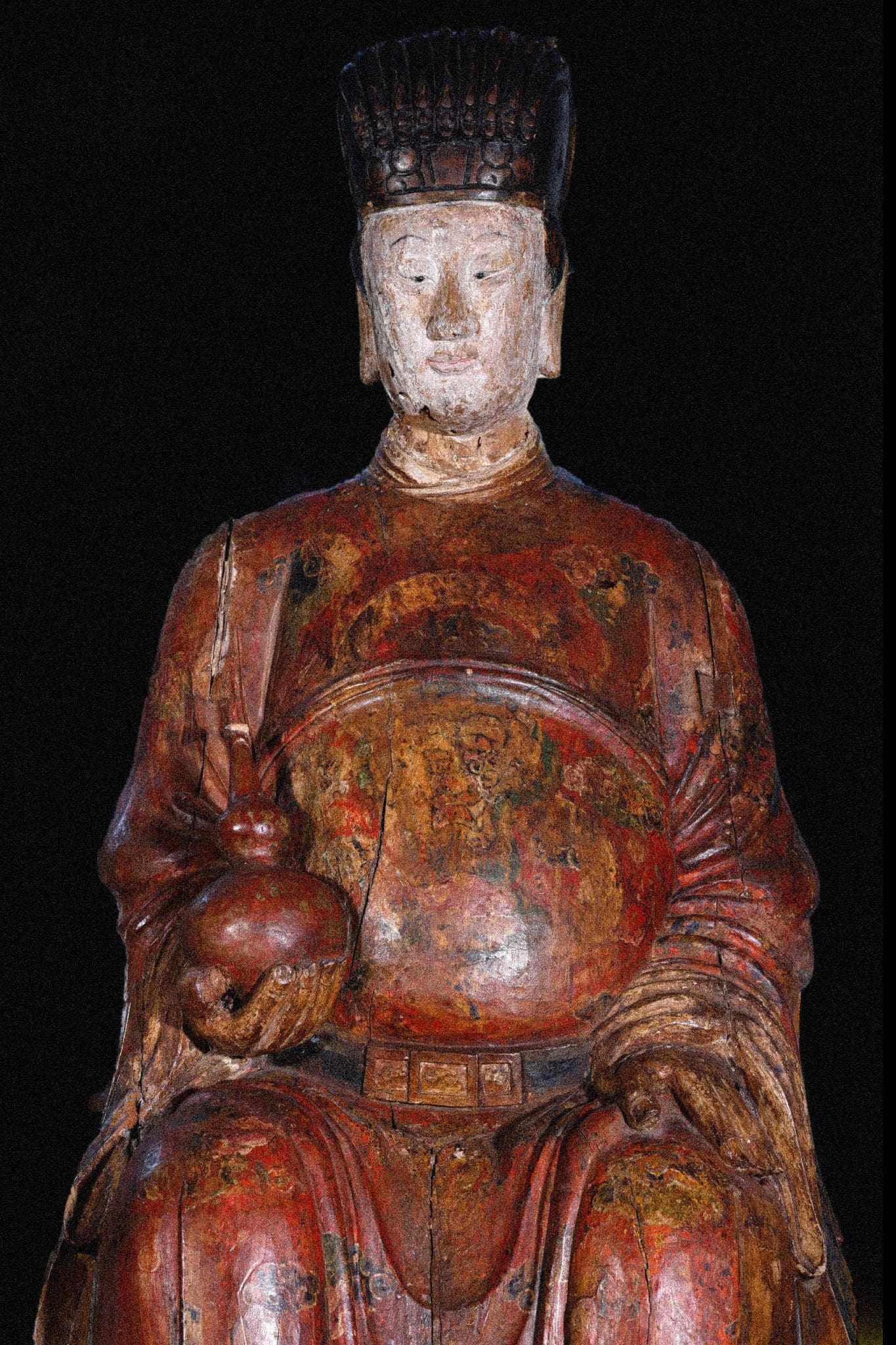
The representation of high-ranking civil and military officials in sculptural form was a deeply embedded practice in Chinese art from the Han Dynasty onwards, reaching a peak of refinement during the Ming period (1368–1644) and the decades immediately following its collapse. Temple and funerary sculptures of dignitaries served multiple functions: they populated the altar arrangements of official and popular religious spaces, embodied the continuing authority of deceased officials within ancestral halls, and gave physical form to the Confucian ideal of the gentleman-scholar whose virtue manifested in outward dignity and correct ceremonial bearing. At 120 centimetres in height — a commanding scale that places this figure well above the merely devotional — this sculpture would have been a centrepiece of its original setting, its polychrome surface engaging the viewer across distance and drawing attention through the carefully differentiated treatment of robes, belt, headdress, and facial features.
Polychrome Woodcarving and its Techniques
Ming Dynasty polychrome wooden sculpture represents one of the summits of Chinese decorative art, combining the skills of the carver, the lacquer worker, and the painter in a collaborative process that transformed plain timber into objects of extraordinary chromatic and formal richness. The carver first blocked out the primary volumes in hardwood, articulating the broad masses of the robe, the arms, and the head before refining the surface into finer passages of drapery folds, facial modelling, and decorative detail. A ground of lacquer or gesso was then applied, providing both a sealing layer and a surface receptive to the mineral pigments — azurite blues, malachite greens, cinnabar reds, lead whites — that gave these figures their characteristic palette. The result, in well-preserved examples, is a surface of extraordinary complexity: flat colours that function almost heraldically from a distance, resolving at close range into passages of layered pigment, incised ornament, and gold leaf that reward sustained examination. This figure’s good conservation reflects the quality of the original materials and the stable conditions of its Spanish collection.
Ming Dynasty Sculpture in the Western Collection
Monumental Ming Dynasty polychrome wooden sculpture of this scale and quality occupies a well-defined position in the international art market, with comparable examples held in the permanent collections of major museums including the Victoria and Albert Museum in London, the Musée Guimet in Paris, and the Asian Art Museum of San Francisco. The dignitary typology — less frequently encountered in European collections than the canonical Buddhist deity figures of the same tradition — offers collectors an entry into the secular and Confucian dimension of Chinese art, a sphere whose aesthetic achievement is equally remarkable. At 120 centimetres, this sculpture constitutes a major presence in any interior and a significant scholarly resource: a document of Ming carving and polychrome technique at the highest level of ambition, preserved in a readable and intact state.

 No products in the cart.