



Vanitas and Its Modern Heir
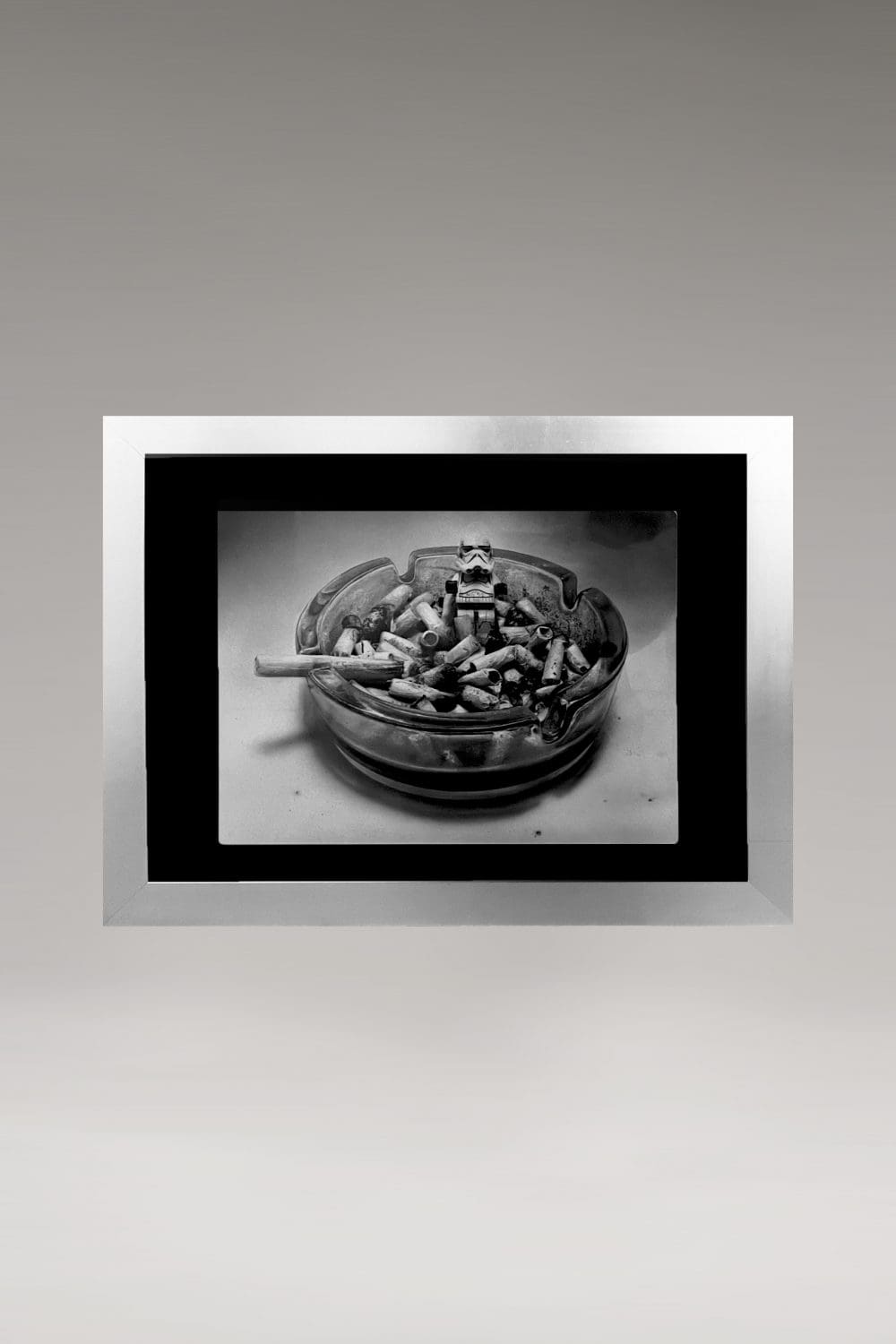
The vanitas still life is one of the most philosophically charged genres in the history of Western painting. Originating in the Netherlands in the early 17th century, it gathered into a single composed space the objects that 17th-century Protestant theology associated with the transience of earthly existence: the human skull, the extinguished candle, the hourglass, the wilting flower, the overturned vessel. The term derives from the Book of Ecclesiastes — “Vanity of vanities, all is vanity” — and the genre’s function was simultaneously aesthetic and didactic: beautiful paintings that reminded their viewers of death. Luis Feo’s “Vanitas and Stormtrooper” brings this tradition into contact with one of contemporary popular culture’s most recognisable icons. The Stormtrooper helmet — white, blank, mass-produced, the face of anonymous military authority in the Star Wars universe — carries its own set of associations: conformity, disposability, the subordination of individual identity to a totalising system. Placed within a vanitas composition, it becomes something more than either its art-historical referent or its pop-cultural origin: a reflection on the forms that death and power take in contemporary imagination.
Graphite and the Photographic Impulse
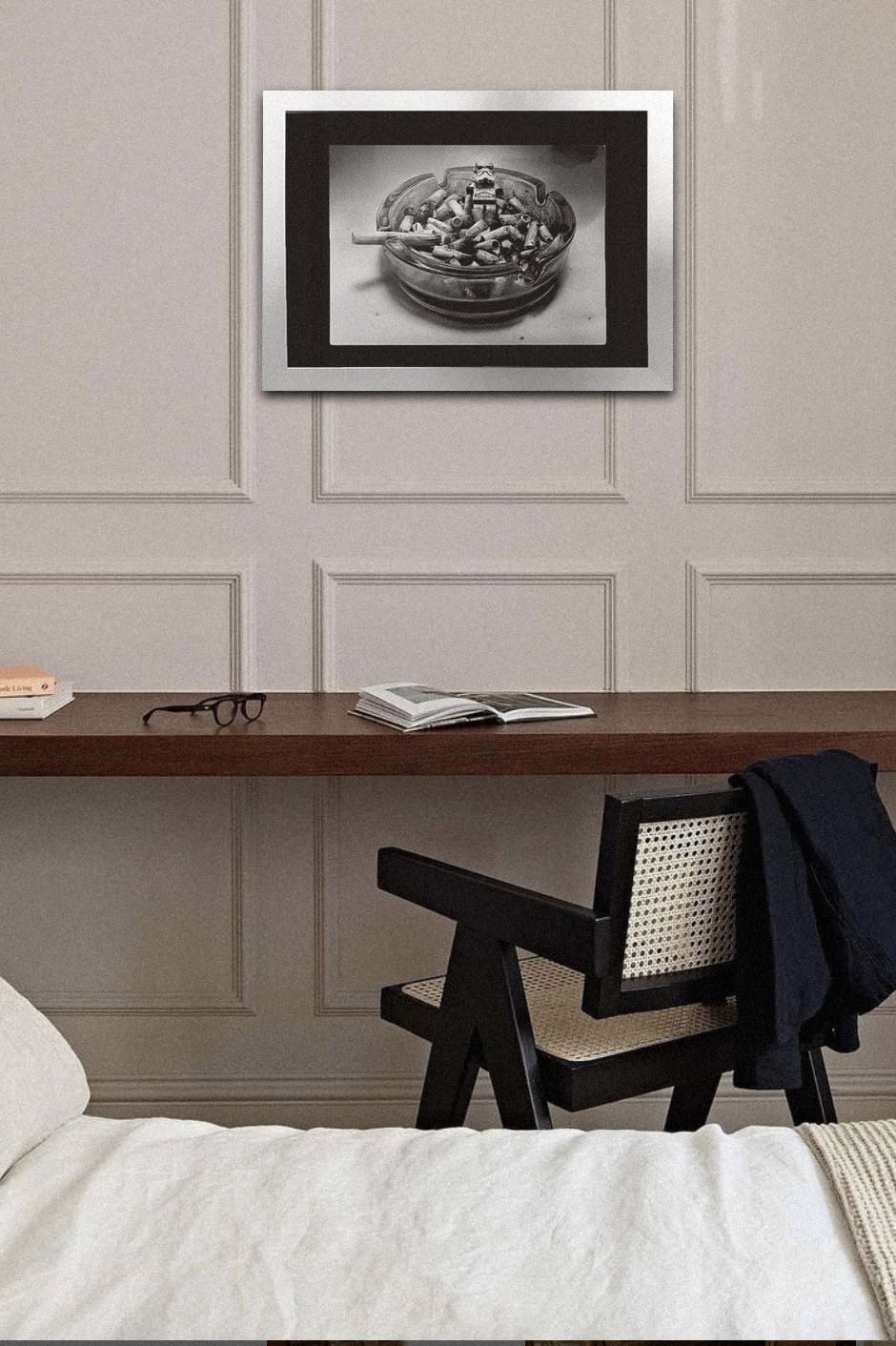
Luis Feo works in graphite at a level of precision that challenges photography’s assumed monopoly on tonal accuracy. The technique of hyperrealist graphite drawing — building tone through layers of pencil stroke so fine and so densely layered that the paper’s surface becomes a continuous tonal field — requires an understanding of light, shadow, and surface reflection that is essentially photographic in its attention but entirely hand-made in its execution. The result is a drawing that reads, at a distance, like a monochrome photograph, and reveals, at close examination, the traces of sustained human attention: the evidence that every shadow and highlight was placed by a specific hand making specific decisions. In a square format — 42.5 × 42.5 centimetres — “Vanitas and Stormtrooper” gains a visual weight and stillness that reinforces its subject: this is not a dynamic composition but a meditation, the format itself a kind of contemplative frame.
A Contemporary Still Life for the Age of Mechanical Reproduction
The vanitas genre emerged at a moment when European culture was grappling with the implications of mass production — the printing press, the replication of images, the circulation of identical objects across a trading world. The Stormtrooper is the 20th century’s answer to the 17th century’s anxiety: a figure made to be identical, replicated without variation, the individual subsumed entirely into the type. To place the Stormtrooper helmet among the vanitas objects is to suggest that what changes, across the centuries, is not the anxiety but its costume — that the fear of death, meaninglessness, and anonymous power is perennial, and that each era finds the objects that best express it. Luis Feo’s graphite makes this argument not through text or statement but through the patience of the hand: the same patience that 17th-century Dutch painters brought to rendering the texture of a skull.

 No products in the cart.