

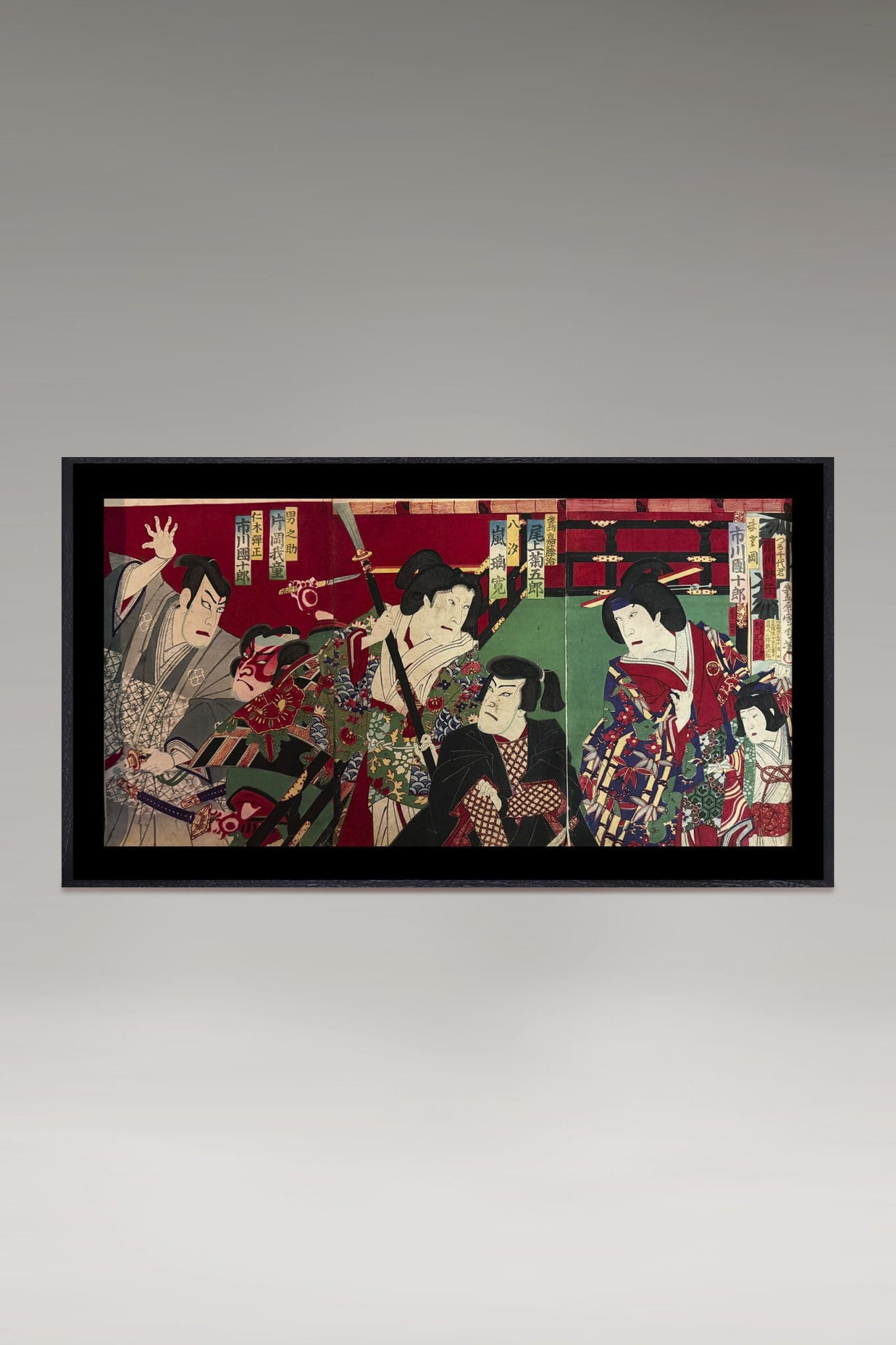
Kunichika Toyohara and the Last Golden Age of Yakusha-e
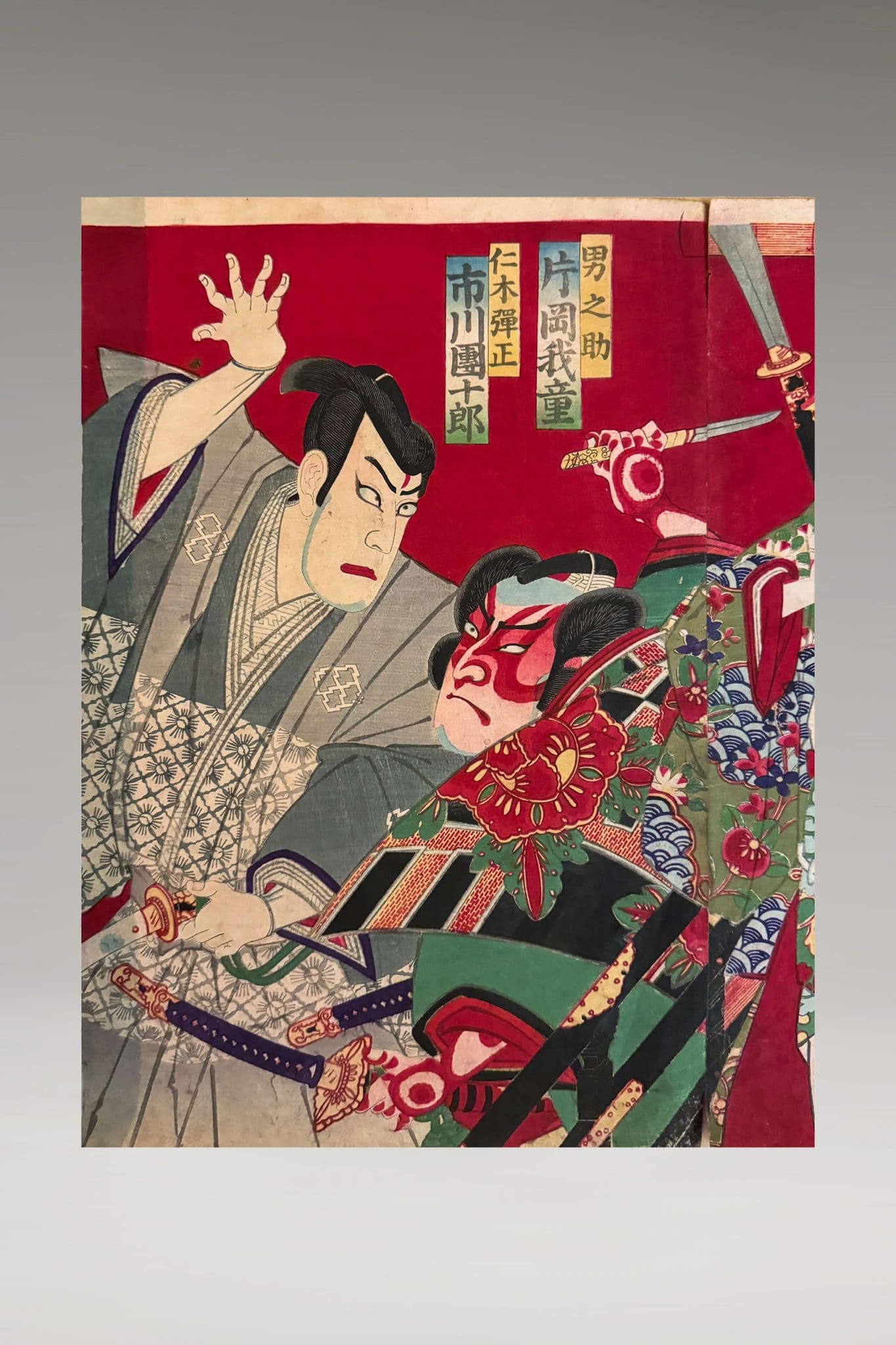
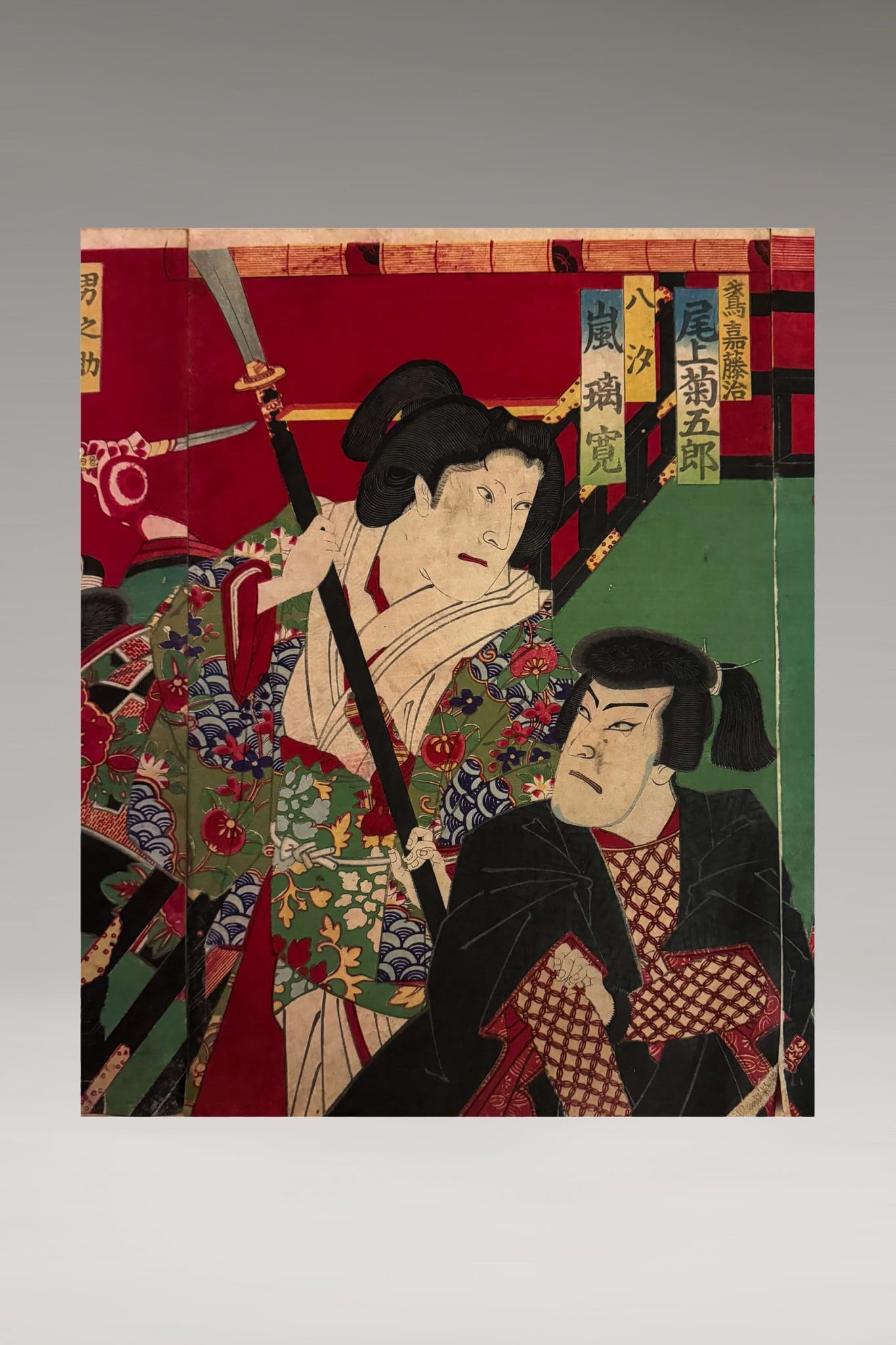
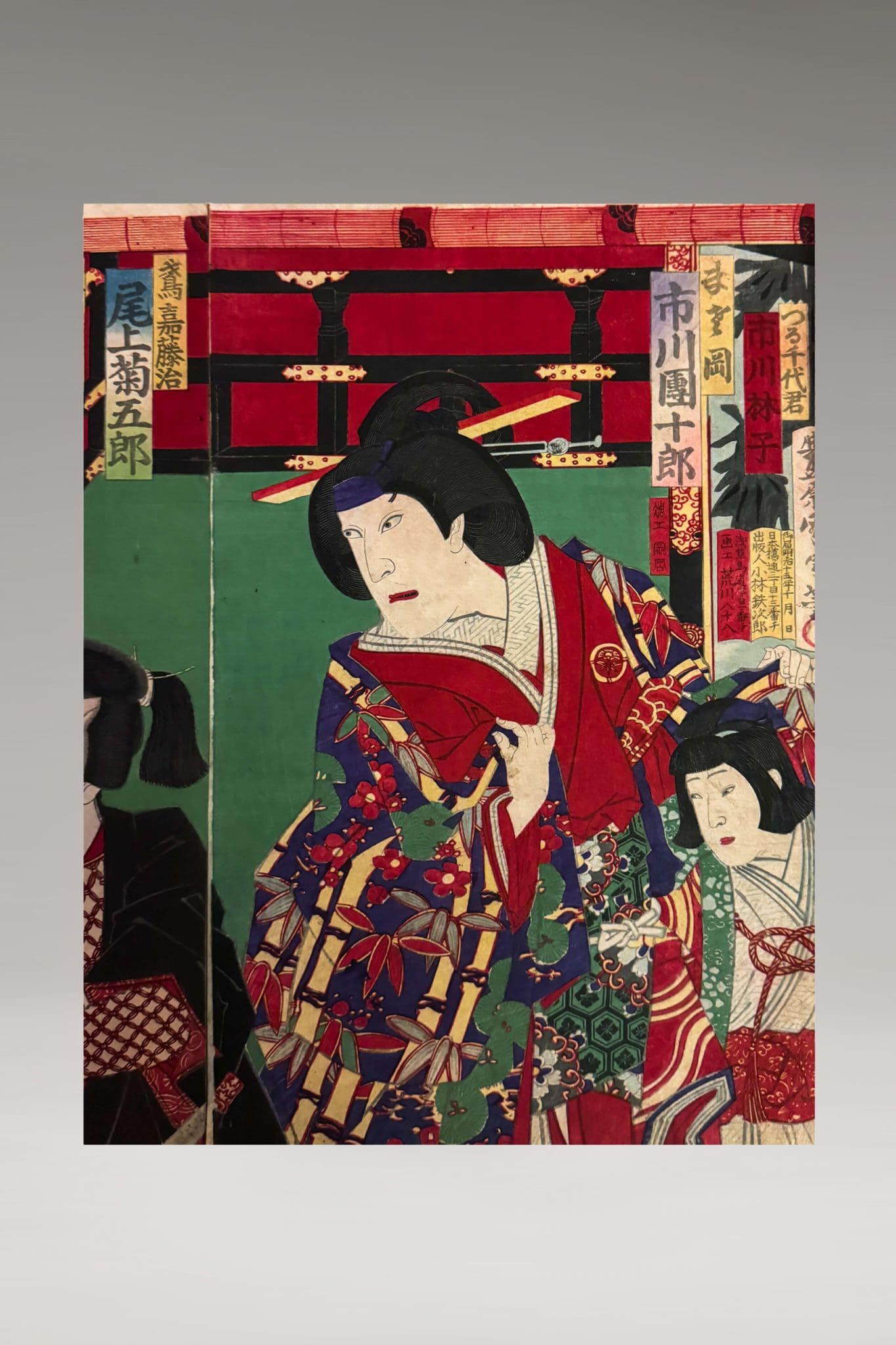
In the history of Japanese woodblock printmaking, Kunichika Toyohara occupies a distinctive and sometimes underappreciated position: the last major master of yakusha-e, the genre of actor prints that had been one of the dominant forms of popular urban art since the 18th century. Born in Edo (present-day Tokyo) in 1835, Kunichika trained under Utagawa Kunisada — the most prolific and commercially successful printmaker of the early 19th century — and went on to produce a body of work characterised by psychological intensity, bold compositional choices, and a colour palette that pushed toward the vivid synthetic dyes newly available in the Meiji era. Where earlier yakusha-e artists celebrated the idealised beauty of the onnagata (male actors playing female roles), Kunichika brought a sharper, more individuated gaze to his subjects. His prints are records of specific performances, specific faces, specific moments in the theatrical life of Tokyo — documents of a popular culture at once ancient and rapidly modernising.
The Triptych Form: Three Sheets, One Vision
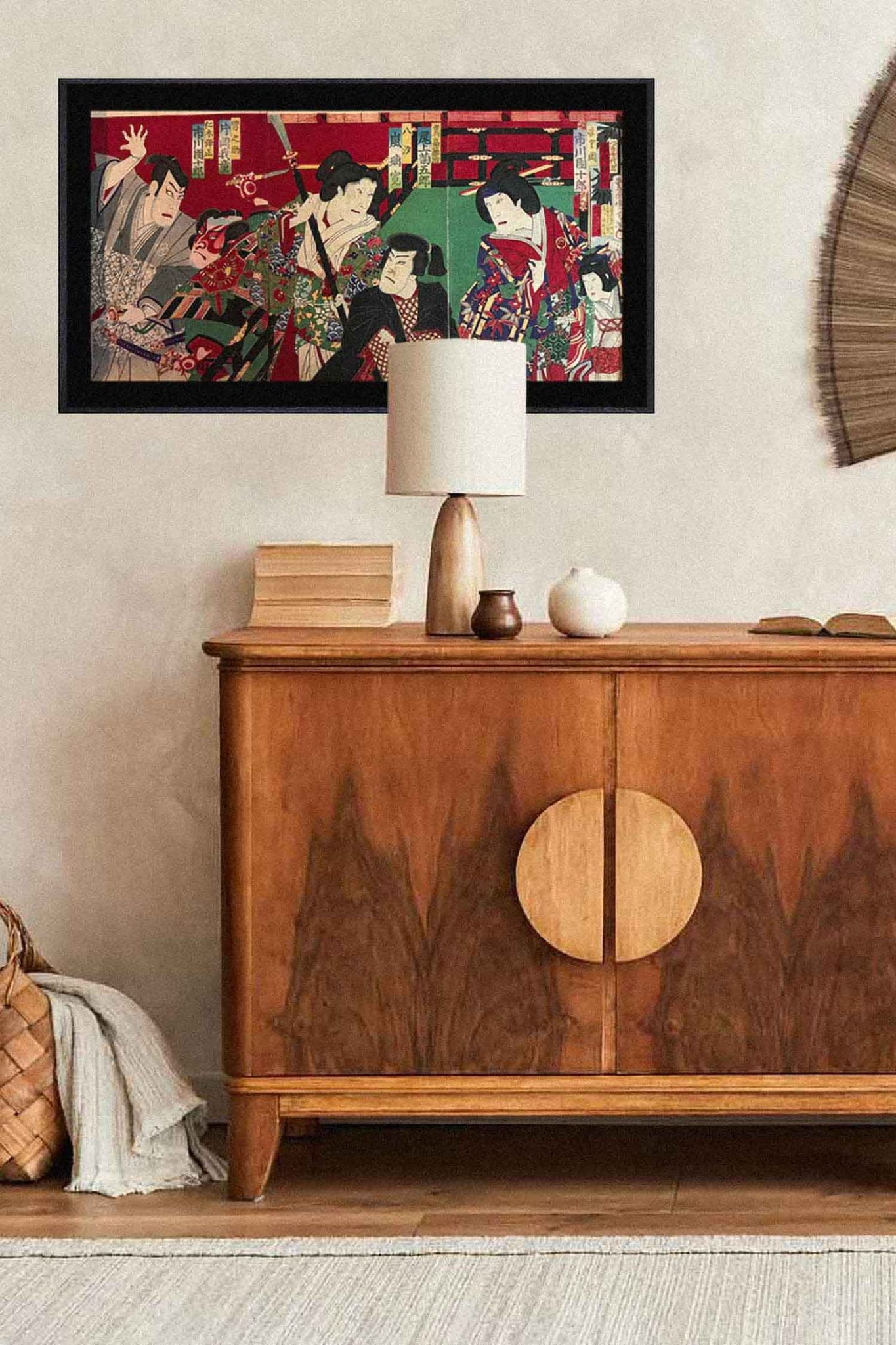
The triptych format — three vertically oriented sheets assembled into a single horizontal composition — was one of the primary large-format expressions of the woodblock print tradition. A yakusha-e triptych allowed the artist to represent a full stage scene: multiple actors in a dramatic confrontation, an elaborate interior setting, or a landscape backdrop that spread across all three panels. The format also multiplied the craft required: each of the three sheets passed through the same sequence of block-cutting, colour mixing, and printing, and the registration between sheets — the precision with which they aligned when assembled — was a mark of the printer’s skill as much as the artist’s. The triptych as a physical object has a particular presence: assembled, it measures a space that commands a wall; separated, each sheet retains its own compositional integrity. Kunichika’s triptychs are among the most sought-after works in his output precisely because the format gave his dramatic instincts the room they required.
Ukiyo-e in the Age of Meiji
Kunichika worked through one of the most turbulent periods in Japanese cultural history. The Meiji Restoration of 1868 — which ended the Tokugawa shogunate and opened Japan to Western influence — transformed not only politics and economics but the entire landscape of cultural production. Western-style painting, photography, and lithography arrived as potential competitors to the woodblock tradition. The kabuki theatre itself was reforming, its subject matter and aesthetics adapting to a modernising audience. Kunichika navigated all of this, continuing to produce prints for a popular market that still wanted the familiar pleasures of yakusha-e even as the world around it changed. His late work in particular shows an artist aware of tradition’s precariousness — prints made with the care of someone who understood he might be among the last to practice something irreplaceable. A Kunichika triptych in good condition, with well-preserved colours, is a significant work on paper: a document of both individual genius and a cultural moment that cannot be recovered.
 No products in the cart.