
The Sepik: A River and Its Art
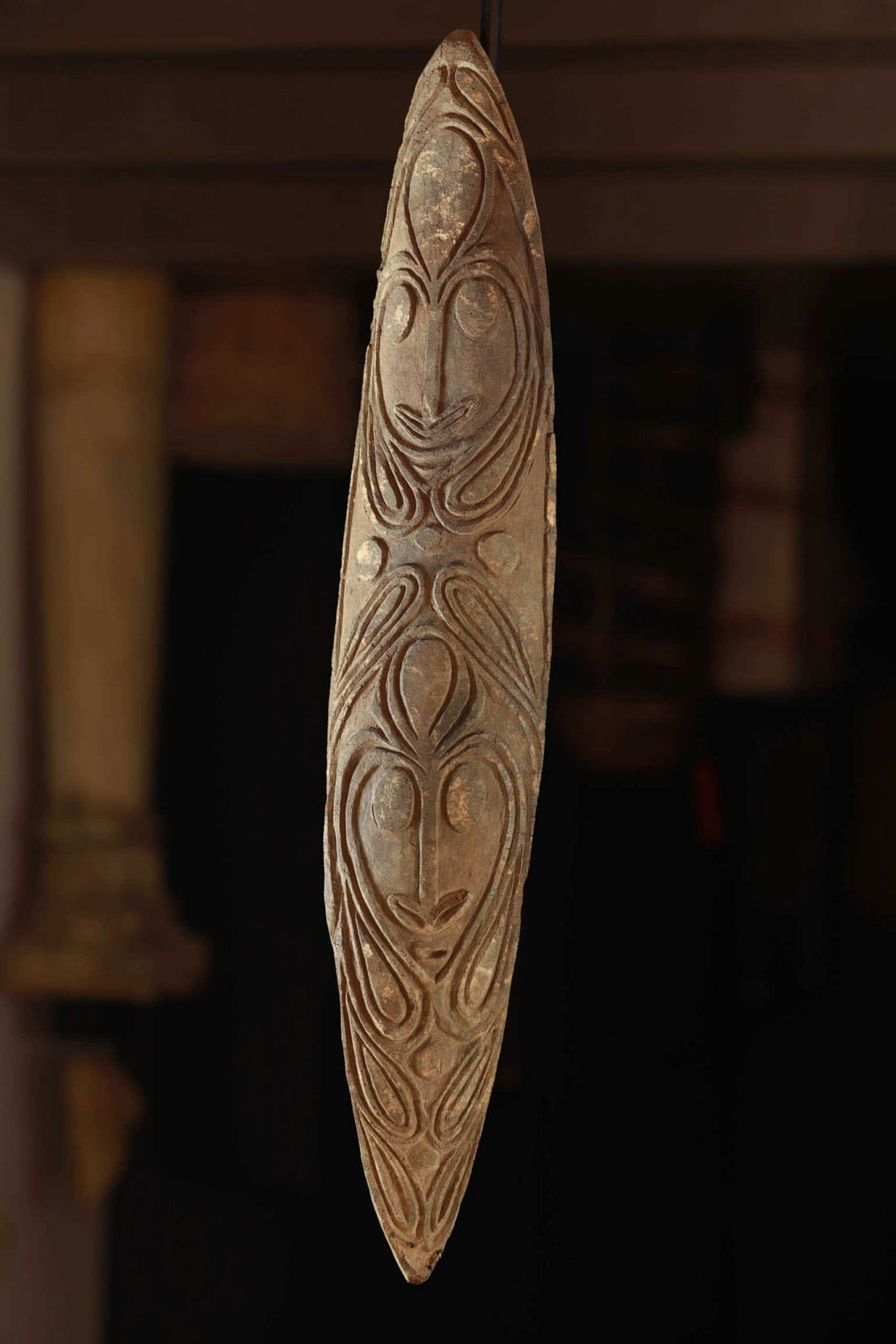
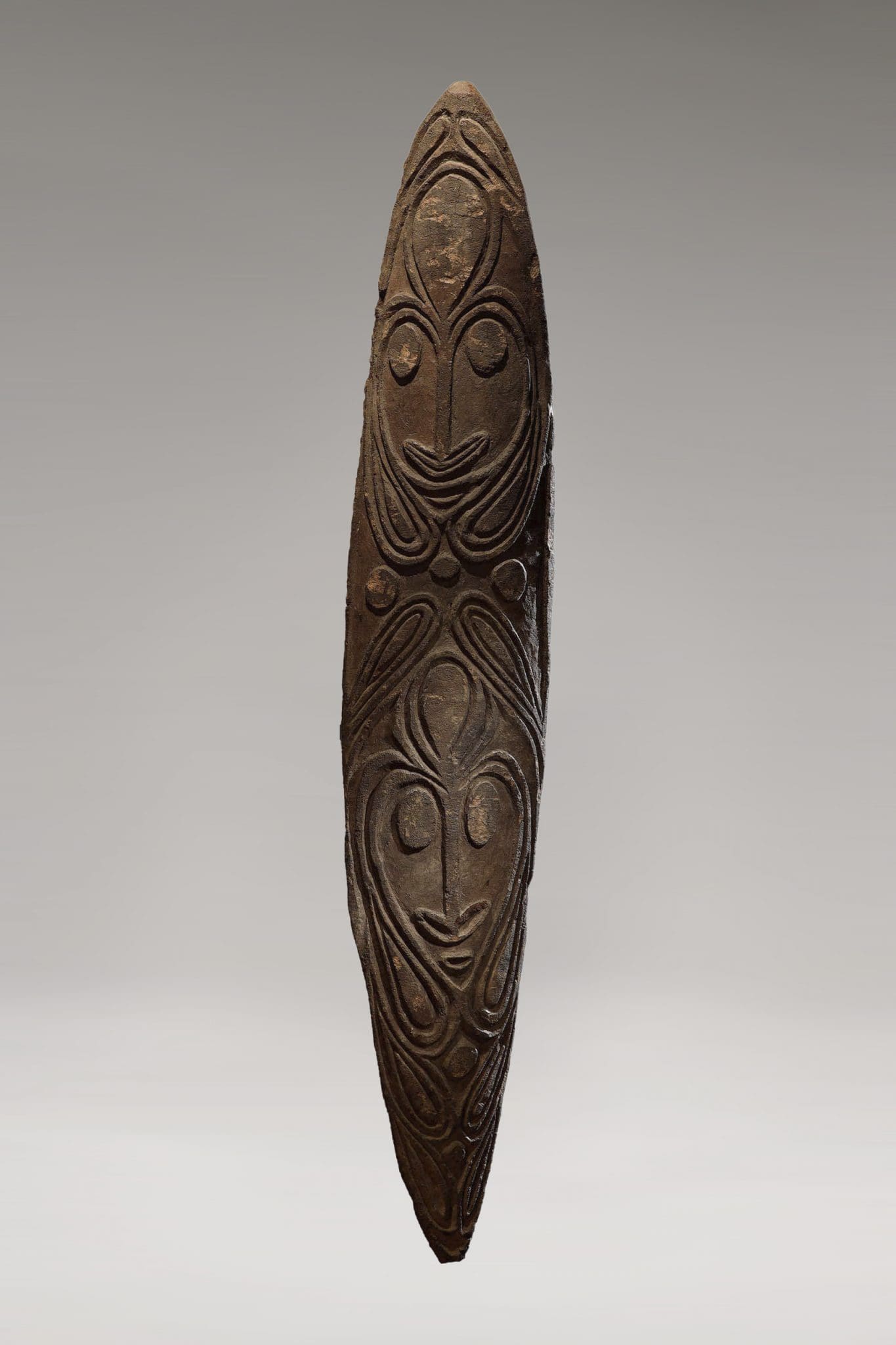
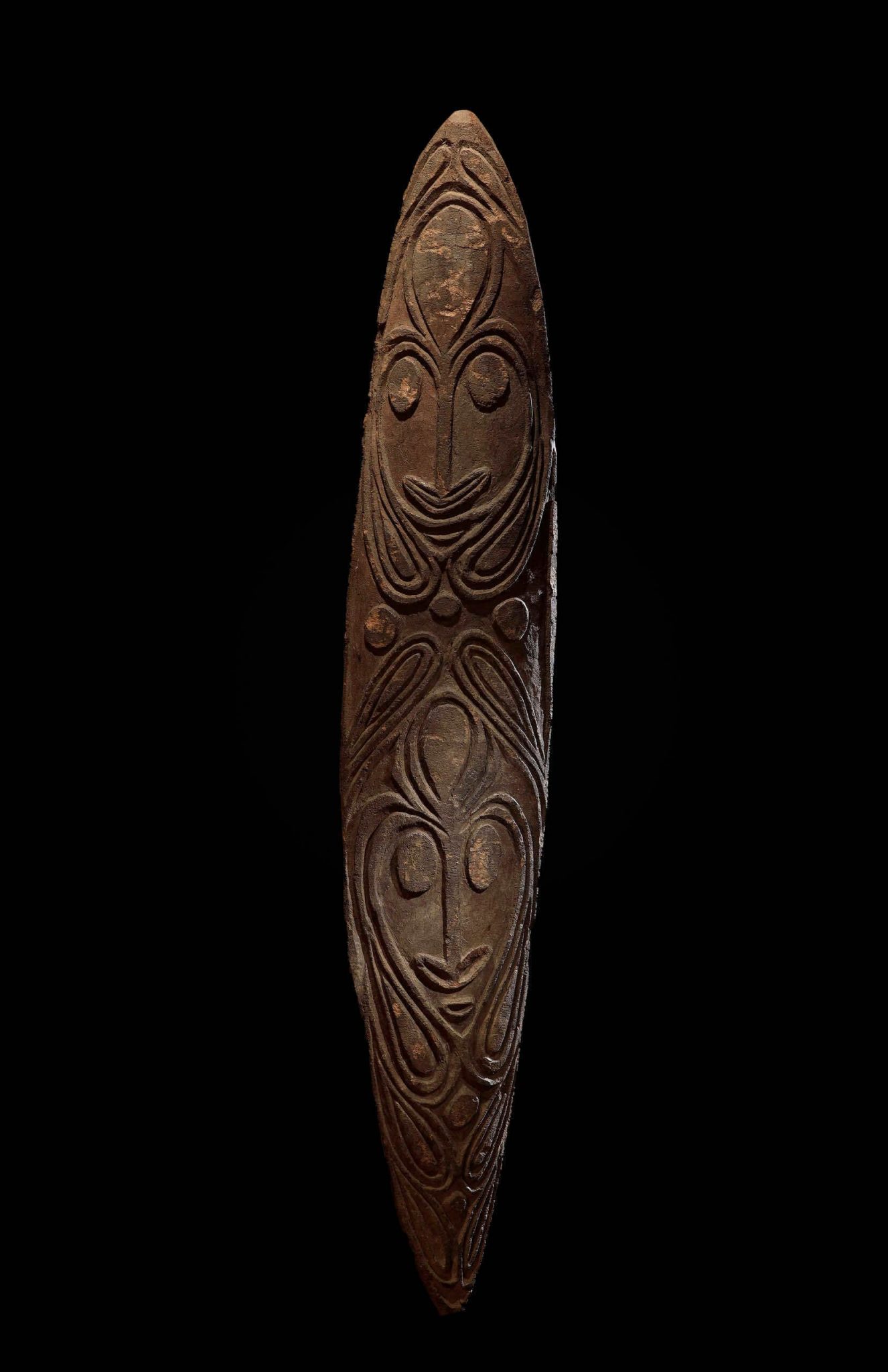
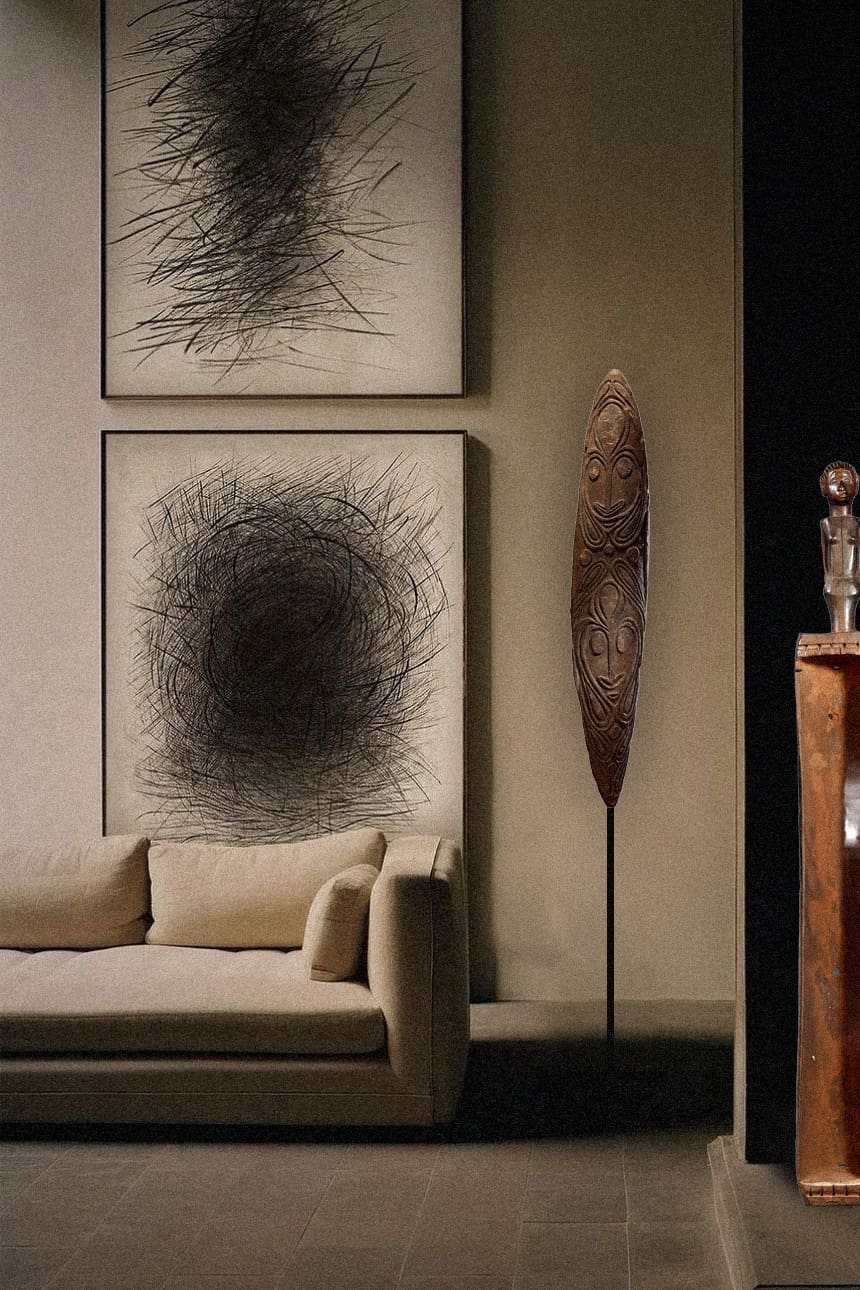
The Sepik River — 1,126 kilometres of lowland waterway cutting across the northern interior of Papua New Guinea — is one of the great axes of human artistic production in the world. Along its banks and those of its tributaries, dozens of distinct language groups developed sculptural and ceremonial traditions of extraordinary variety and sophistication, making the Sepik basin the most intensely studied artistic region in the Pacific. The Iatmul, the Sawos, the Mundugumor, the Aibom, the Kwoma, and many other peoples each contributed to a visual environment that produced, over centuries, some of the most formally ambitious sculpture in the world: figures, masks, hooks, canoe prow ornaments, and ceremonial boards carved to house ancestral spirits and manage the dangerous boundary between the world of the living and the world of the dead. A Gope Kiwai ancestral spirit board represents one branch of this tradition: the flat, elongated board form through which the Kiwai people of the Fly River delta — neighbours and in some respects cousins to the Sepik carving traditions — engaged with the ancestral world.
The Spirit Board: Form and Function
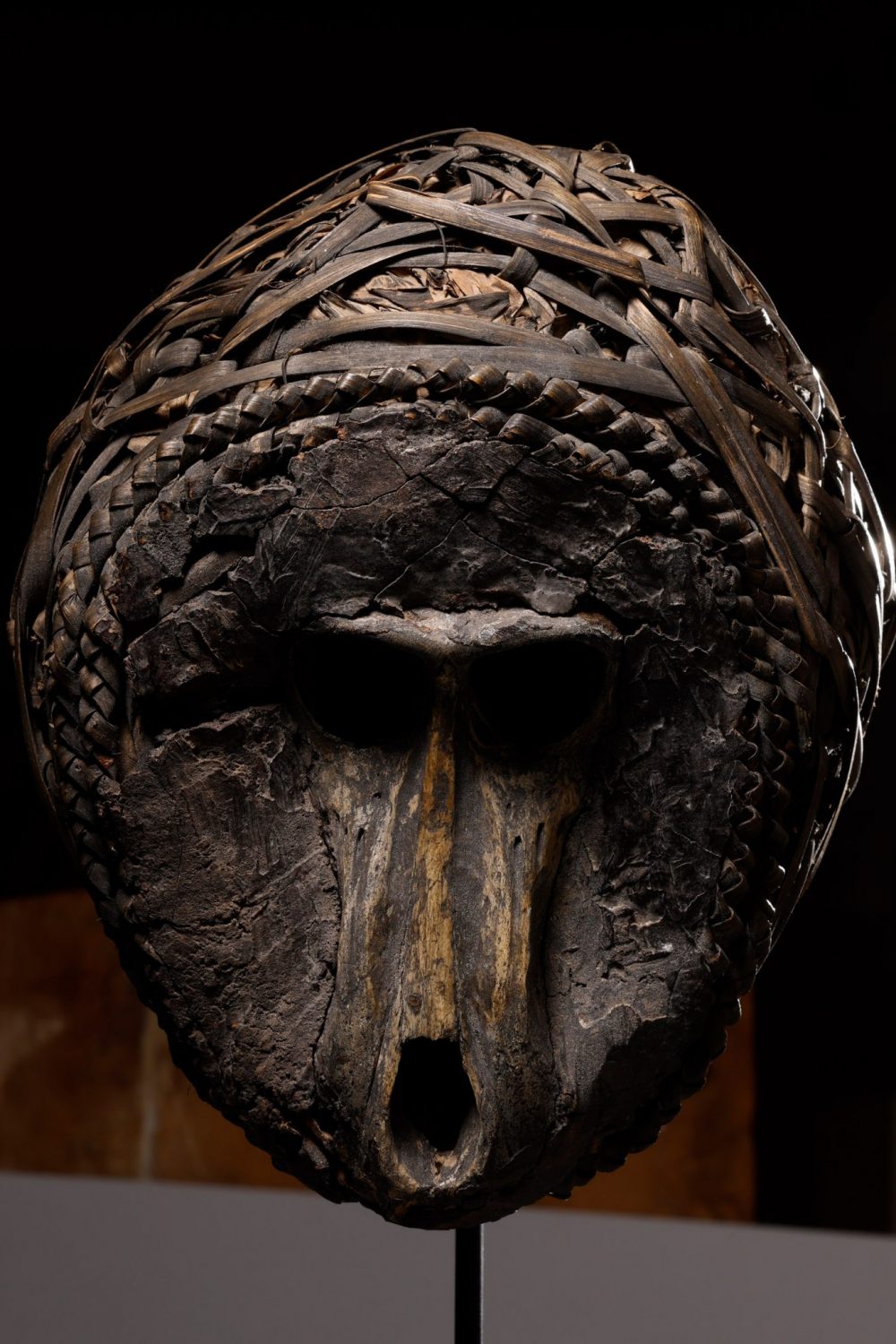
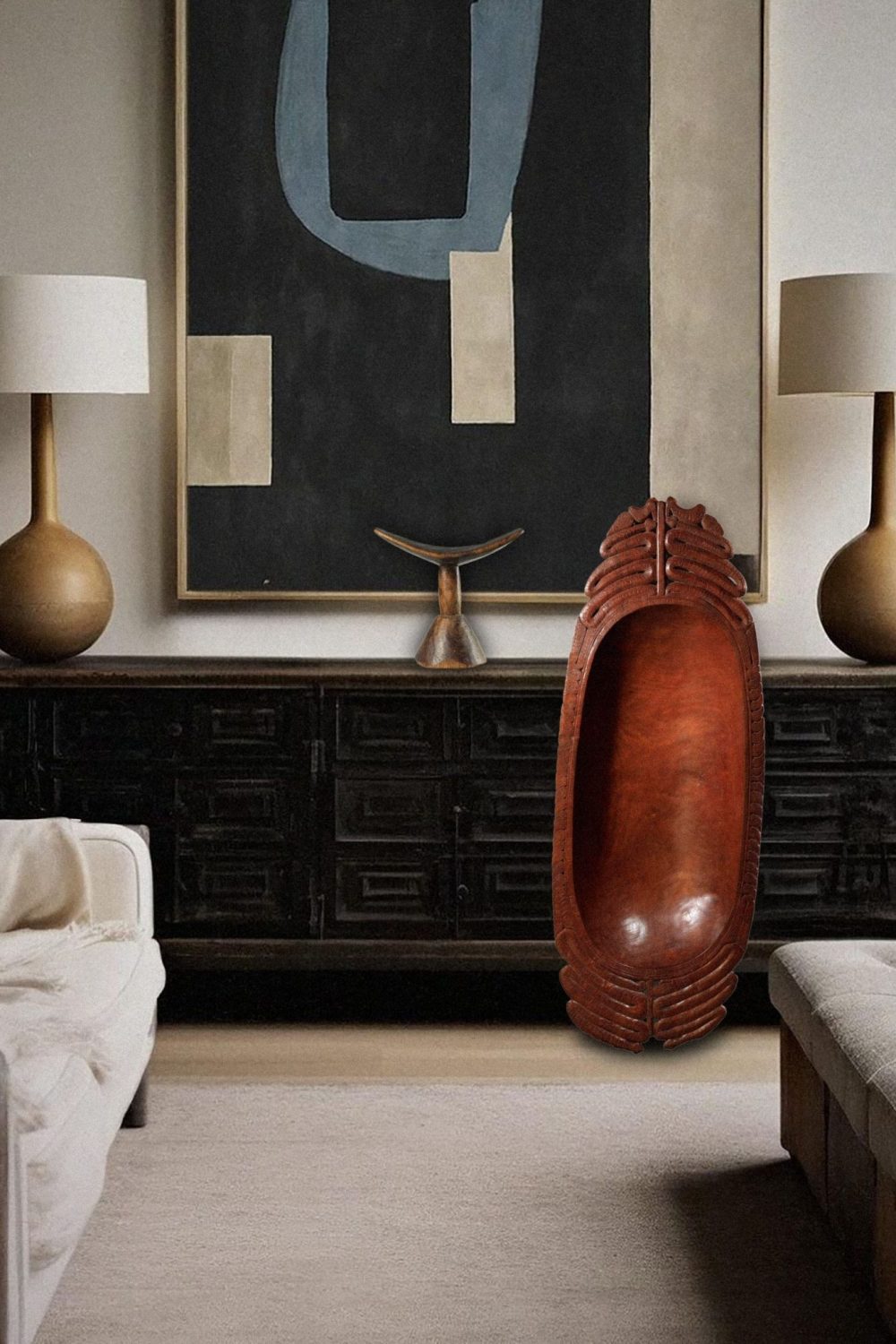
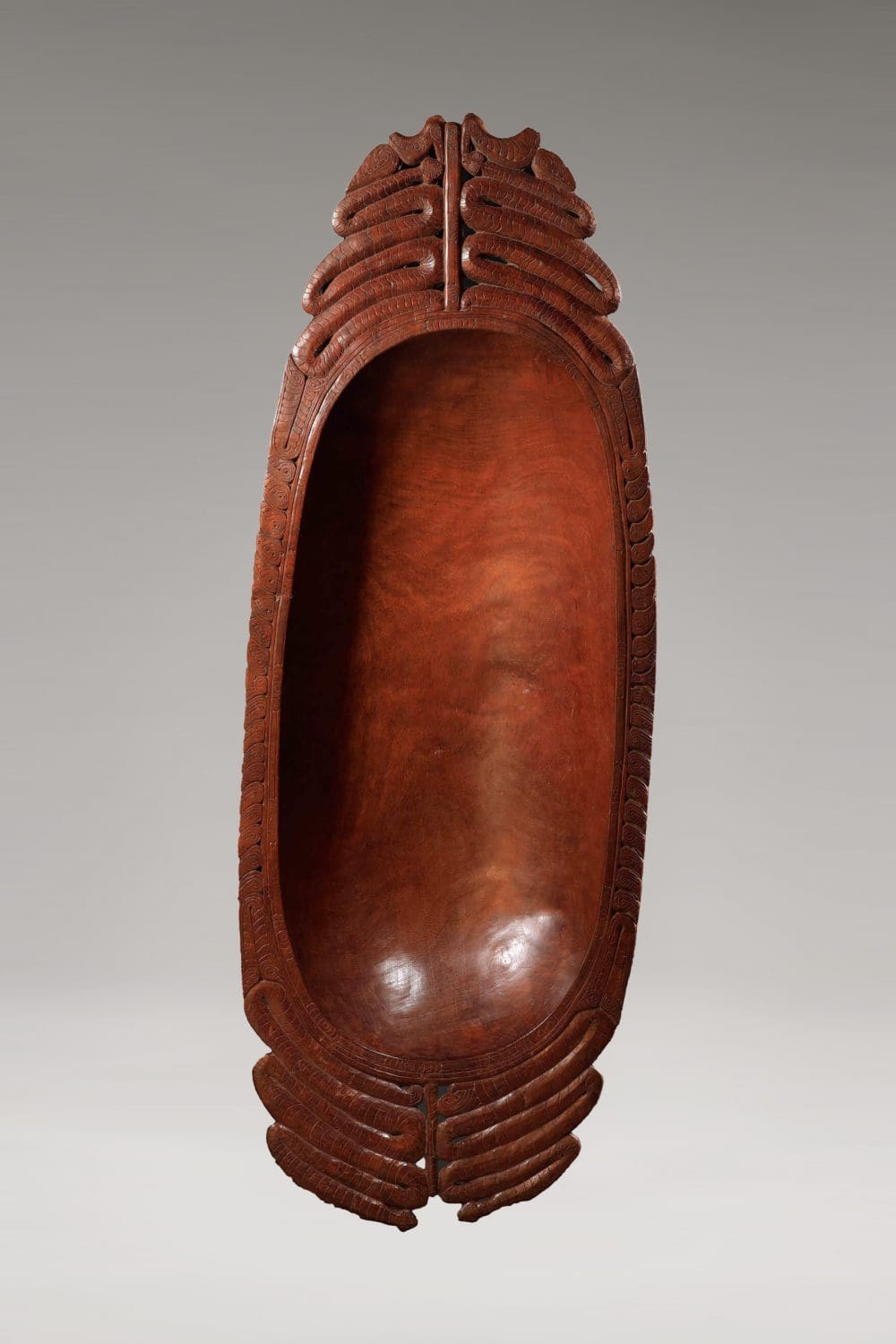
The gope board is a flat, oval or elongated wooden panel on which an ancestral spirit is believed to reside. Carved with the features of the ancestor — stylised face, abstracted body, geometric decorative fields — and treated with ochre, charcoal, and lime pigments, the gope was kept in the men’s ceremonial house and brought out during specific rituals to be addressed, consulted, and appeased. The spirit that resided in the board was understood to be a specific ancestor, identified by name and lineage, whose power and knowledge could be accessed through the object. At 107 centimetres in length and 19 centimetres wide, this example occupies the scale typical of individual ceremonial boards — large enough to be leaned against the wall of the ceremonial house, small enough to be handled by a single man during ritual. The carved surface condenses the ancestor’s identity into a formal vocabulary that is at once highly specific (this ancestor, this lineage) and formally universal (the human face reduced to its essential geometry).
Papuan Art and the Western Collection
The art of Papua New Guinea entered Western awareness in waves, beginning with the German colonial ethnographers of the late 19th century and accelerating through the great museum expeditions of the early 20th century. The Sepik and Fly River traditions attracted particular attention — both for the formal sophistication of the objects collected and for the ceremonial systems that produced them. Today, Sepik and Kiwai carved objects occupy permanent collections in the Berlin Ethnologisches Museum, the Musée du quai Branly in Paris, the Metropolitan Museum of Art, and the Australian Museum in Sydney. A gope Kiwai ancestral spirit board in good condition, carrying its natural patina from ceremonial handling, represents one of the Pacific’s most significant sculptural traditions in its most characteristic form: the human face, abstracted to its essential charge, given material residence in carved wood.
 No products in the cart.