

Nkisi: The Architecture of Spiritual Power
In the religious traditions of the Kongo people — one of the great civilisations of Central Africa, whose political and cultural reach extended across the lower Congo River basin long before European contact — the concept of nkisi (plural: minkisi) describes a category of object unlike anything in Western religious experience. An nkisi is a material container in which spiritual force is concentrated and made available: not a representation of the divine but a dwelling for it, a technology for gathering power into a physical form that can then be directed, consulted, and managed by a specialist practitioner (nganga). The materials that constitute an nkisi — its outer form and, crucially, its inner contents (bilongo, the sacred medicines packed within) — are not incidental to its function but are the means by which the spiritual force is attracted and held. A nkisi without its bilongo is an empty shell; it is the specific combination of materials, chosen and assembled by a knowledgeable nganga, that makes the object what it is.
Bumba / Mbwiiba: The Skull-Based Nkisi
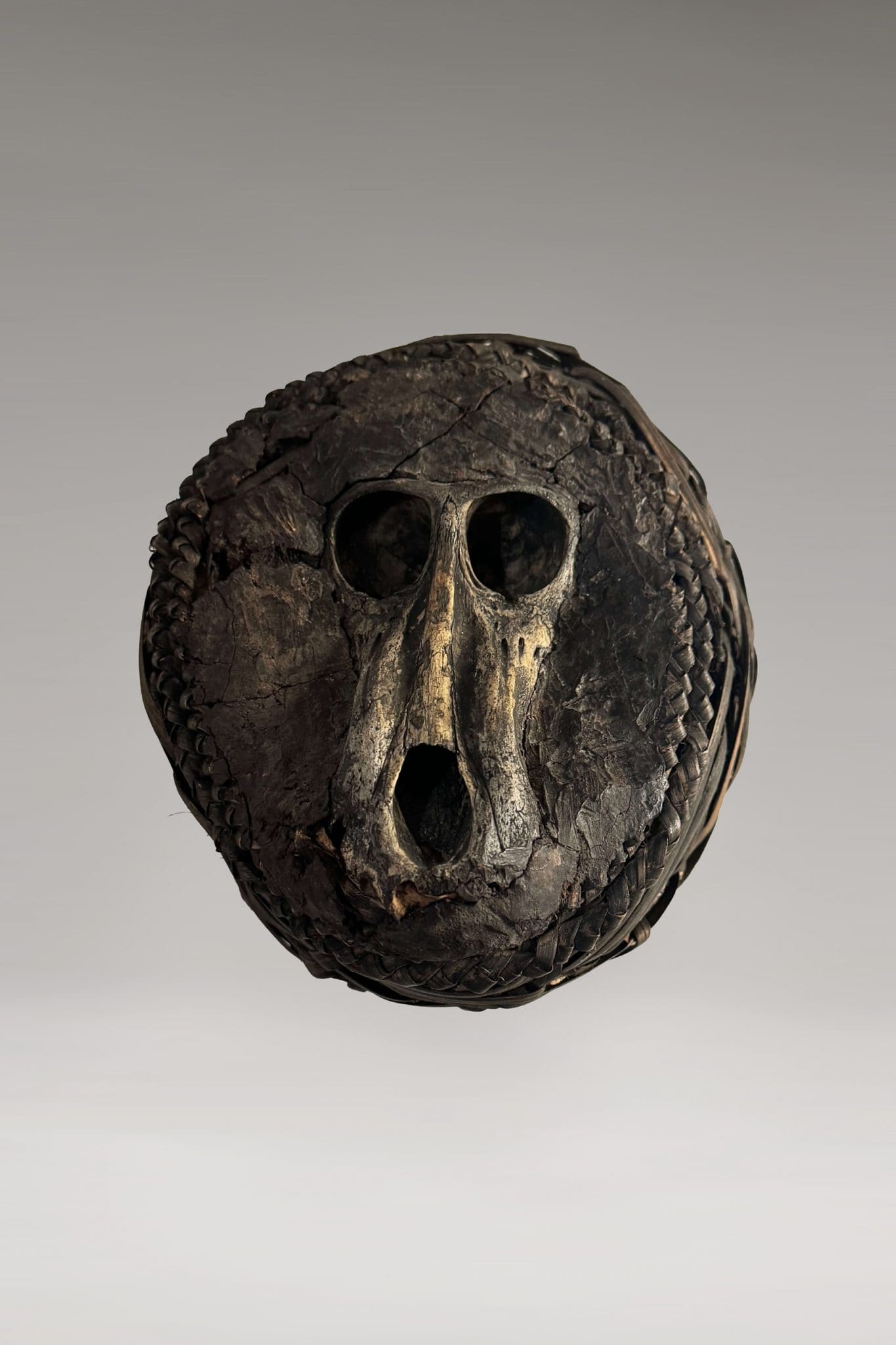
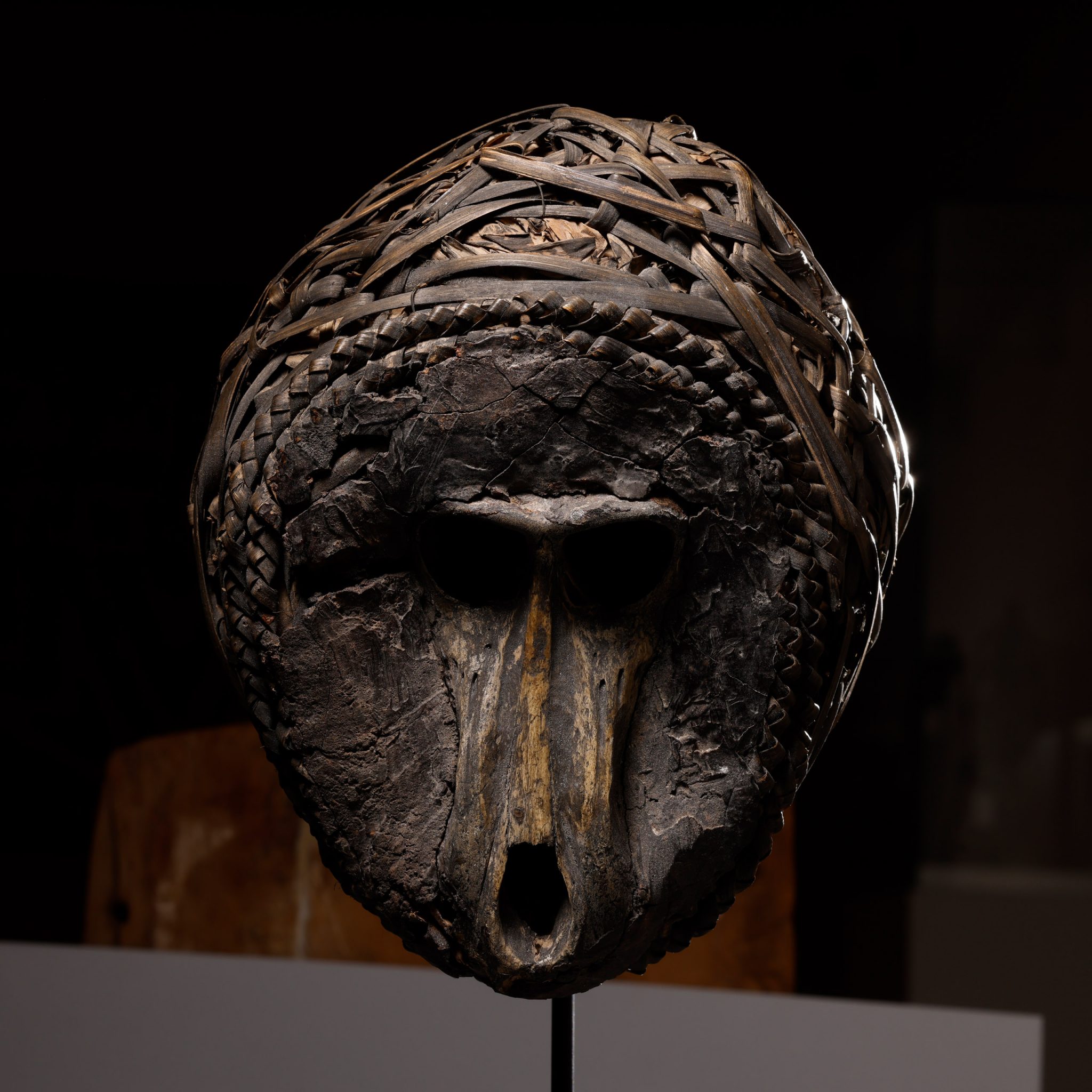
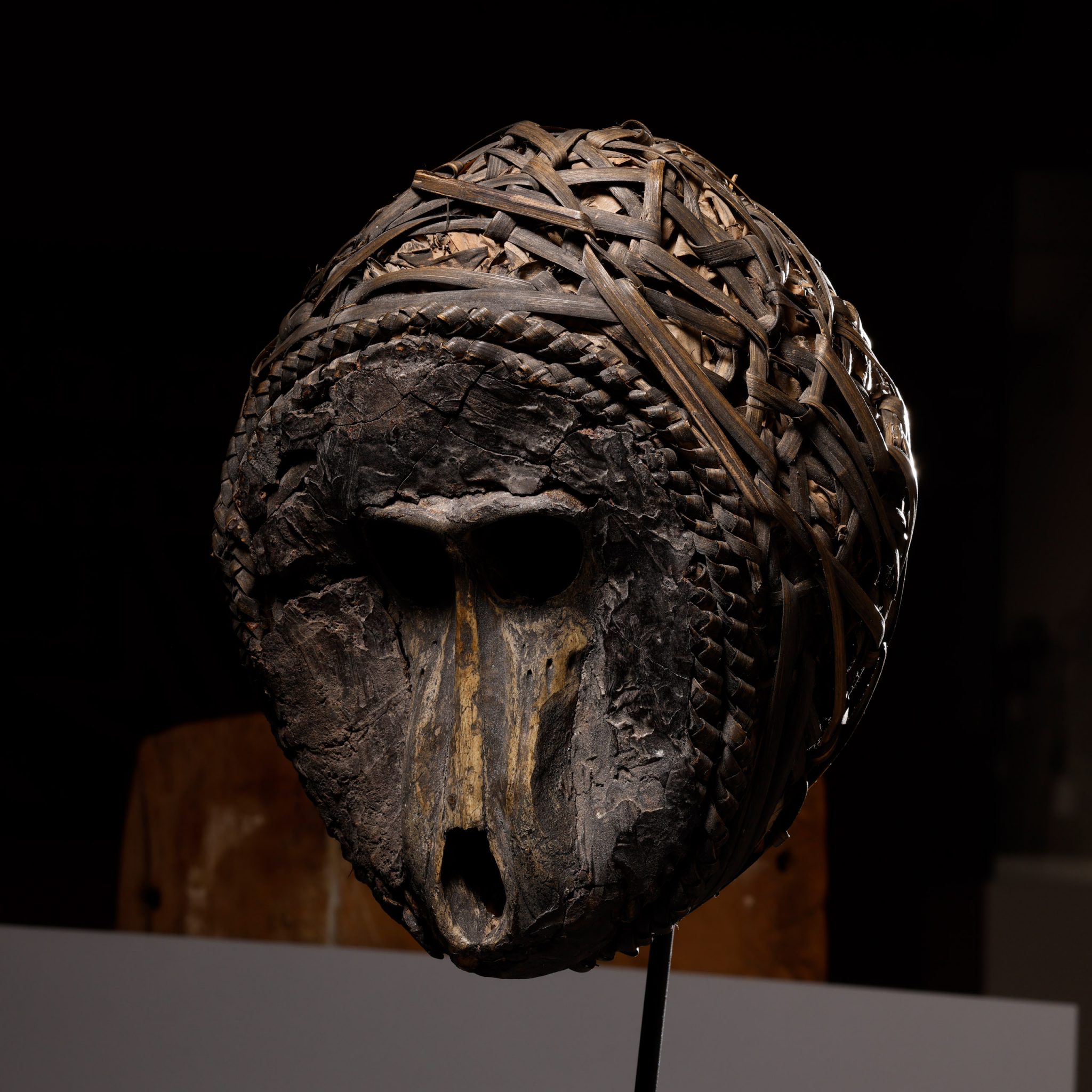
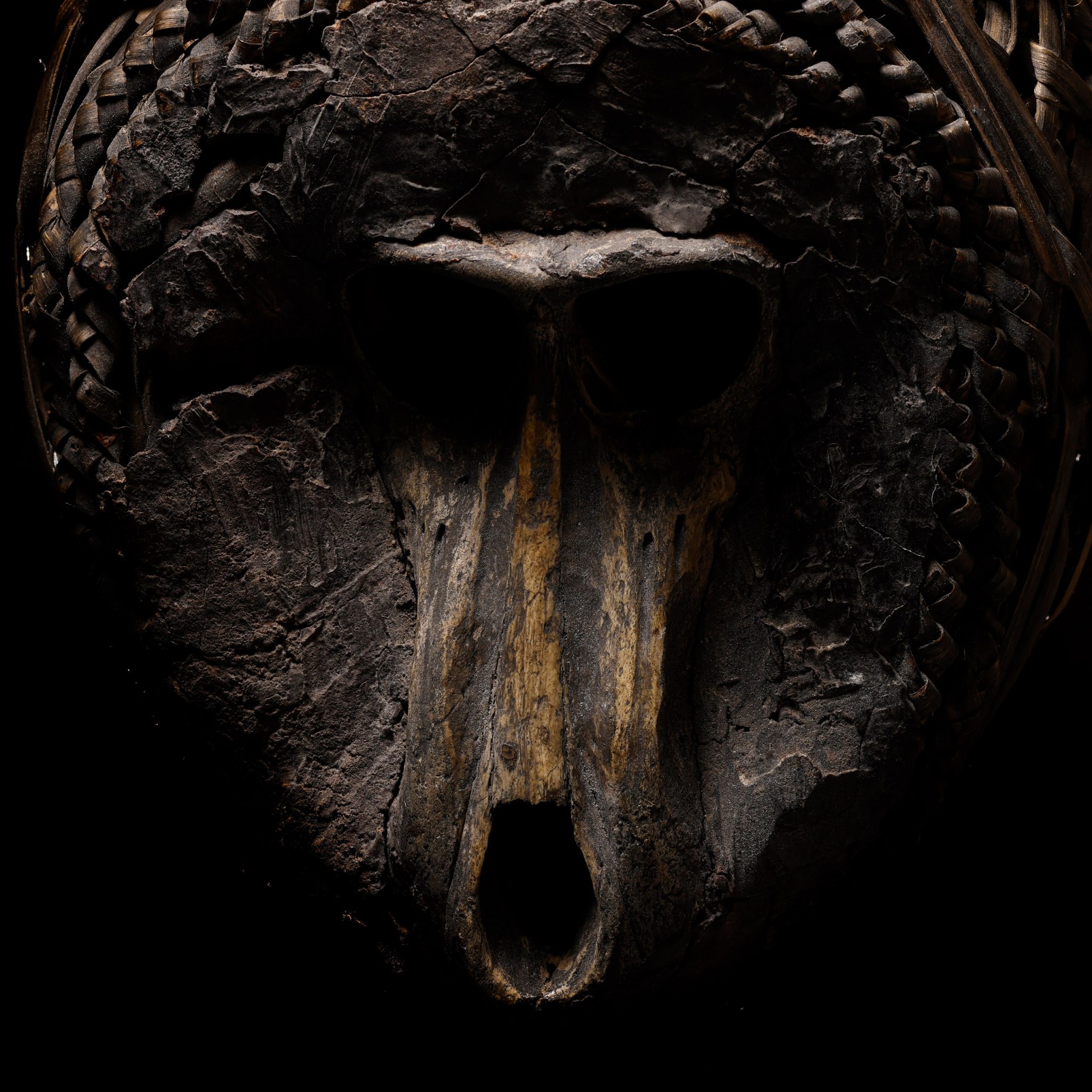
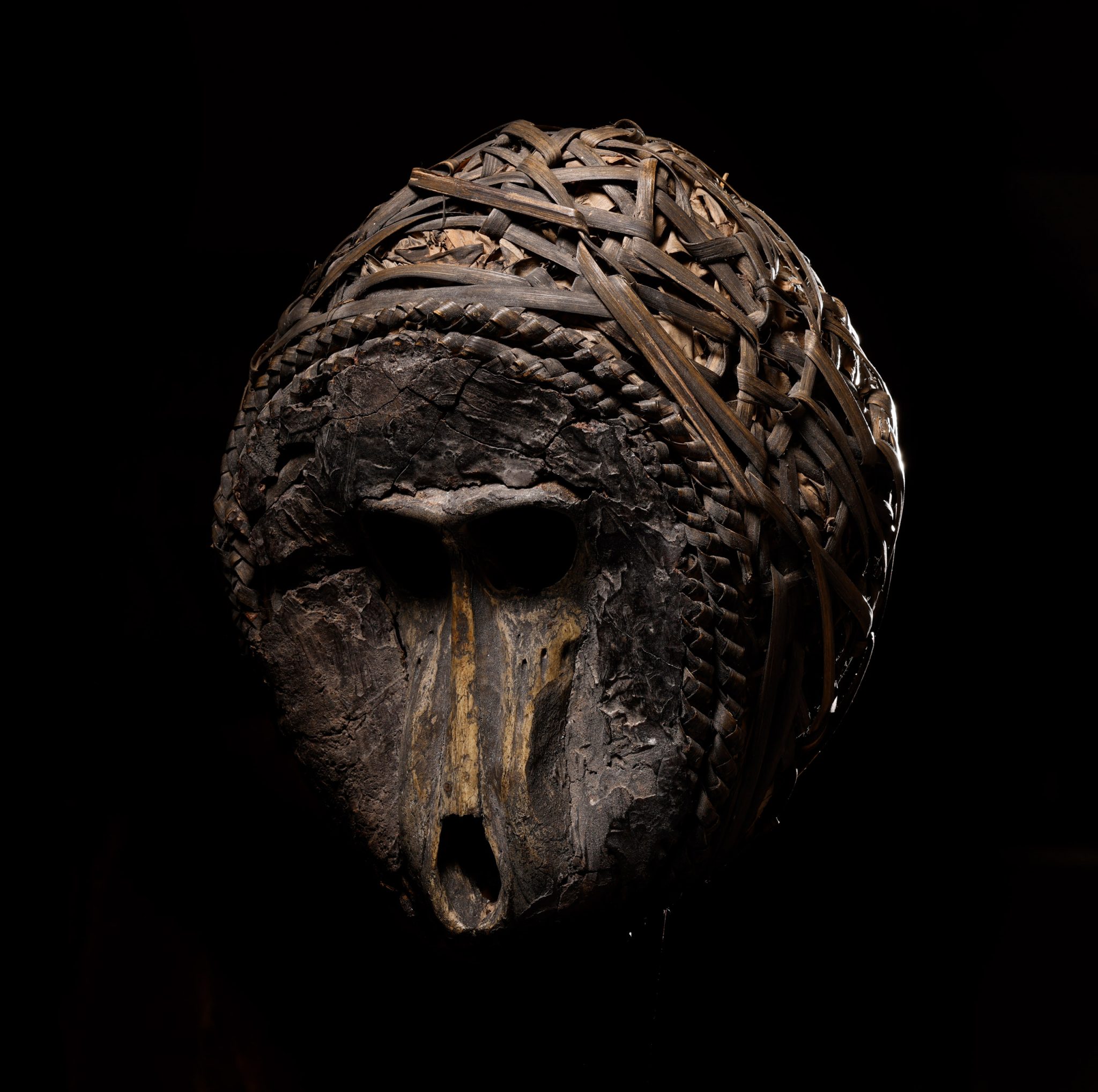
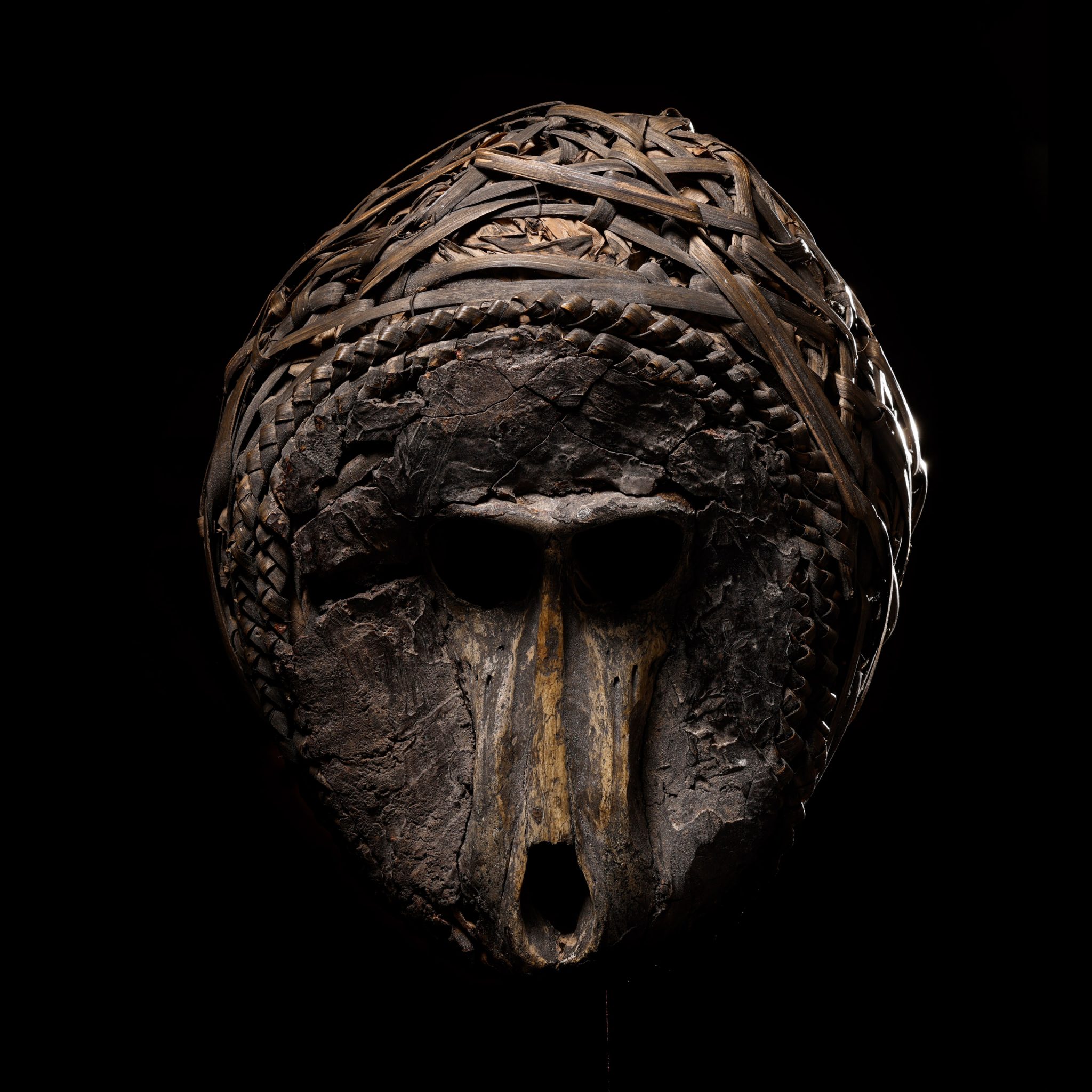
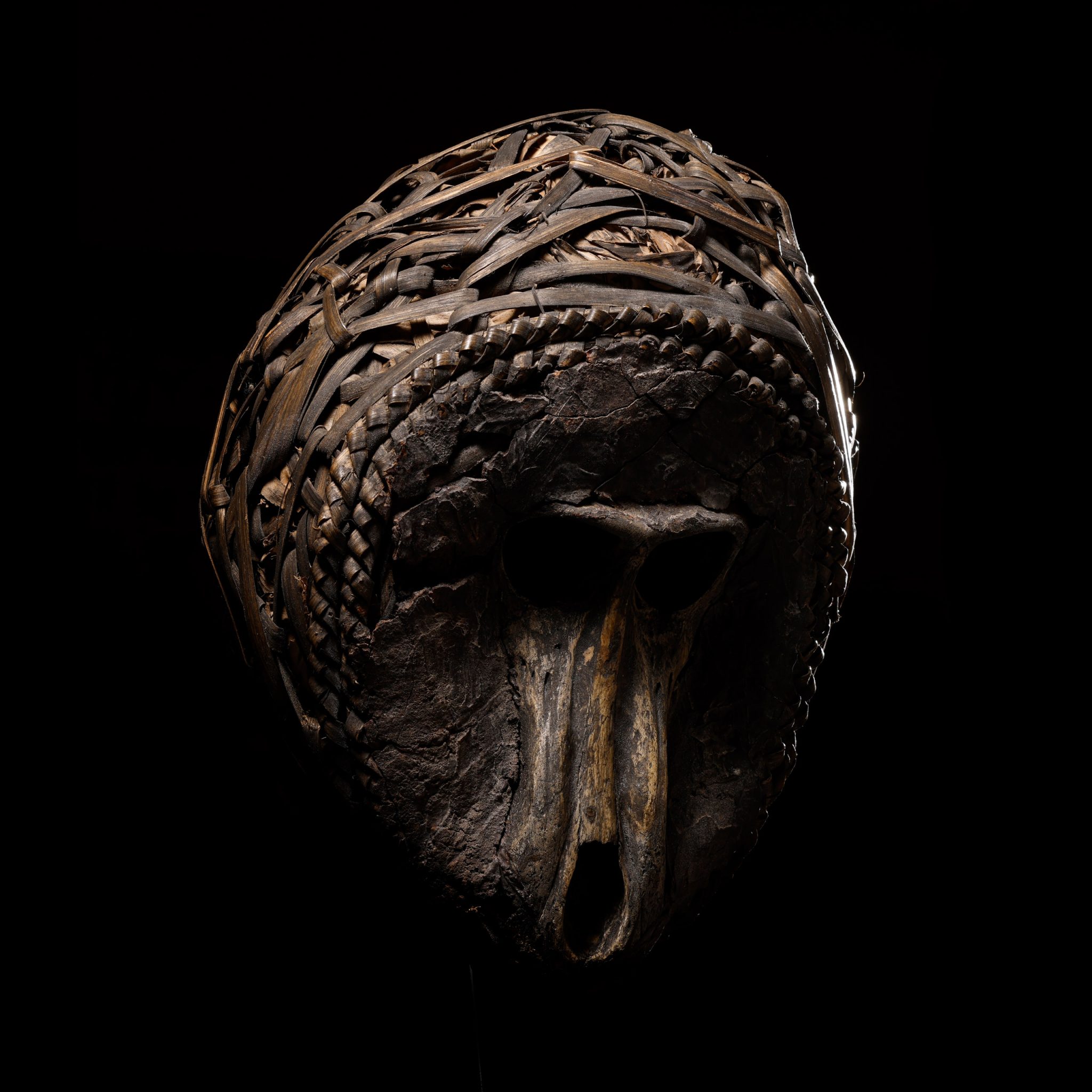
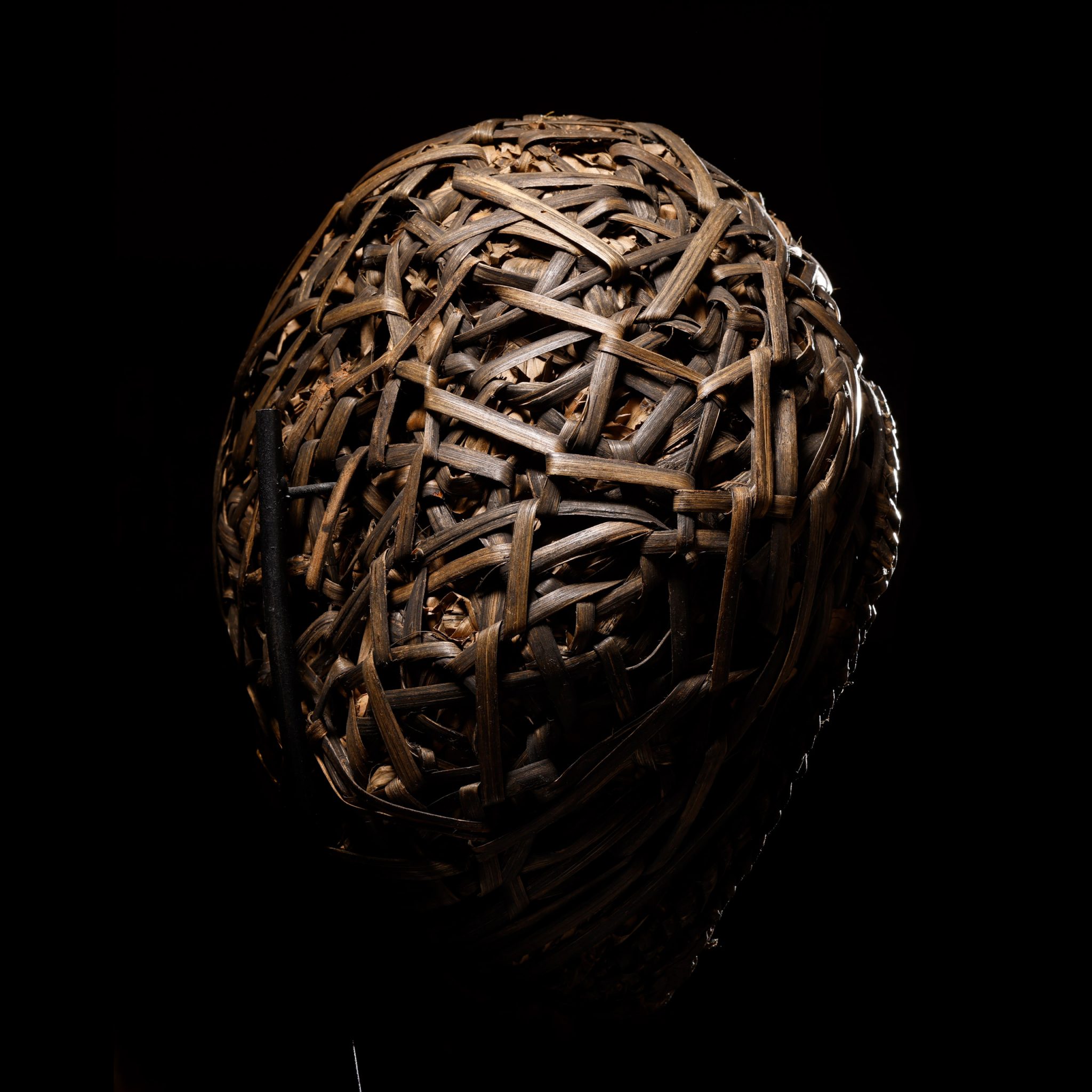
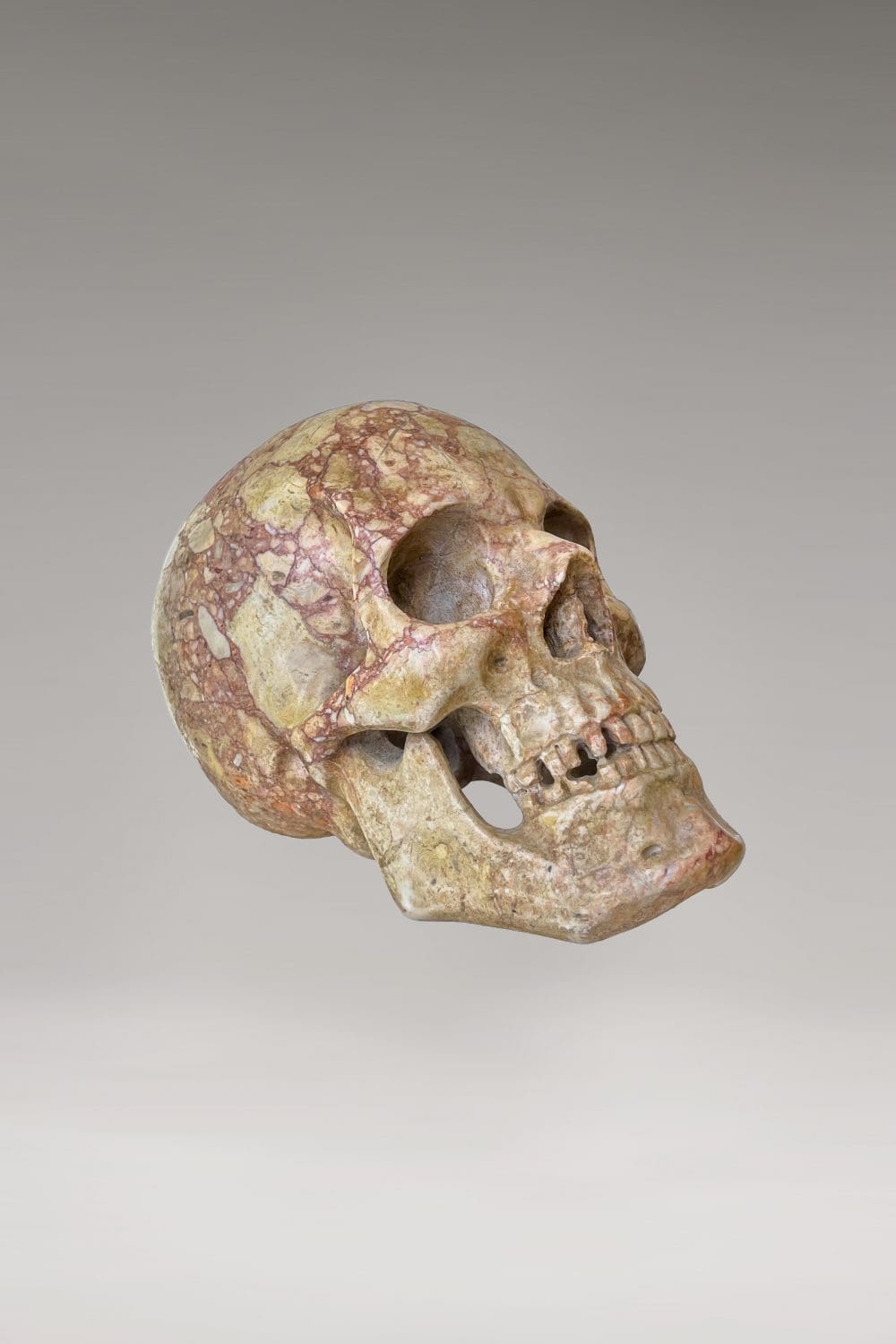
Among the many types of nkisi produced in the Kongo tradition, the Bumba or Mbwiiba represents one of the most materially striking and spiritually potent categories. Built around a skull — most commonly that of a human being, though animal skulls appear in some traditions — and wrapped or covered in wicker basketry, this type of nkisi drew on the Kongo understanding of skull as the seat of individual spiritual power. In Kongo cosmology, the skull persists after death as a concentrated locus of the life force that animated the person; to incorporate a skull into an nkisi was to recruit that concentrated force for specific purposes — healing, protection, or the redress of wrong. The wicker wrapping that typically covers a Bumba is not merely structural but ceremonial: it seals and concentrates the bilongo packed within, making the whole a dense, compressed form of spiritual architecture.
An Object Between Two Worlds
This example, dated to approximately 1960–1970, belongs to a period in which Kongo religious practice was navigating the sustained pressures of colonial administration, Christian missionary activity, and eventually Congolese independence (1960). The nganga tradition did not disappear under these pressures but adapted: practitioners continued to make and activate minkisi within communities where Christianity was nominally dominant, meeting needs that neither colonial authority nor church could address. An nkisi Bumba made in this period carries both the deep continuity of a tradition whose roots extend to the pre-colonial Kongo Kingdom and the specific historical conditions of its making. For the collector and the curator, it is among the most charged categories of African material culture: an object whose function, materials, and cosmological context are entirely internal to a Kongo understanding of reality, and which resists translation without remainder.

 No products in the cart.