

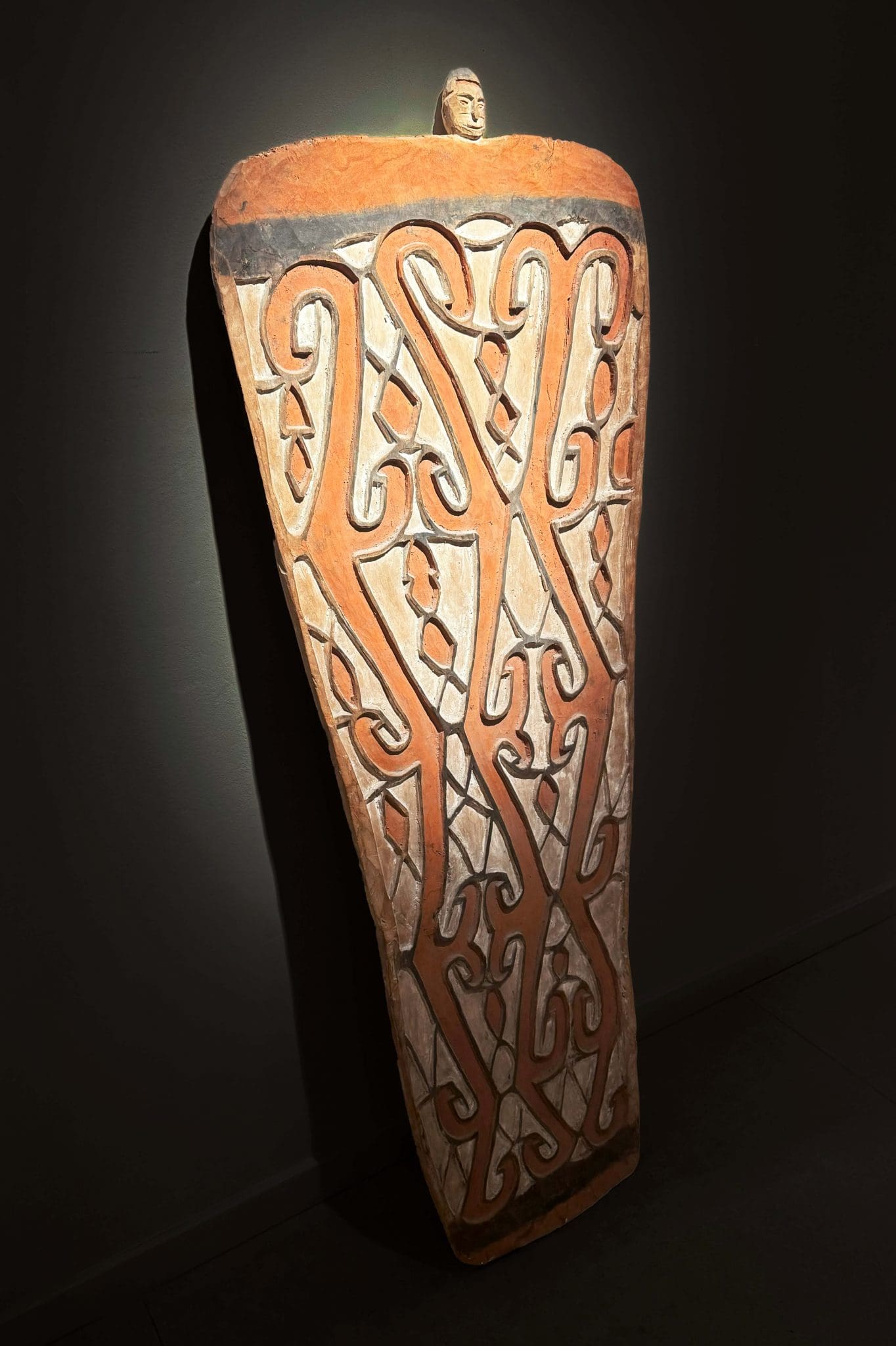
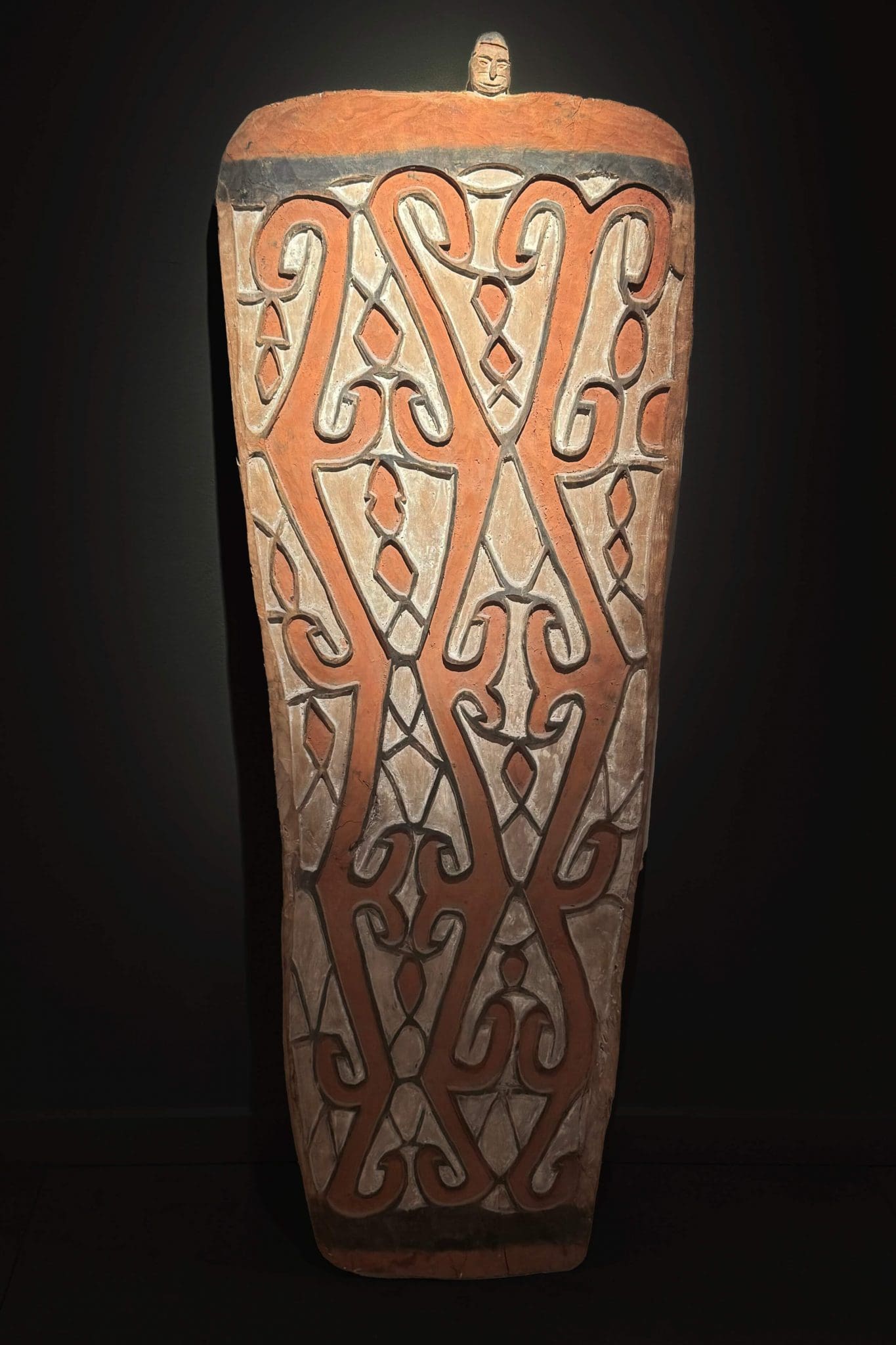
The Asmat and the Art of the War Shield
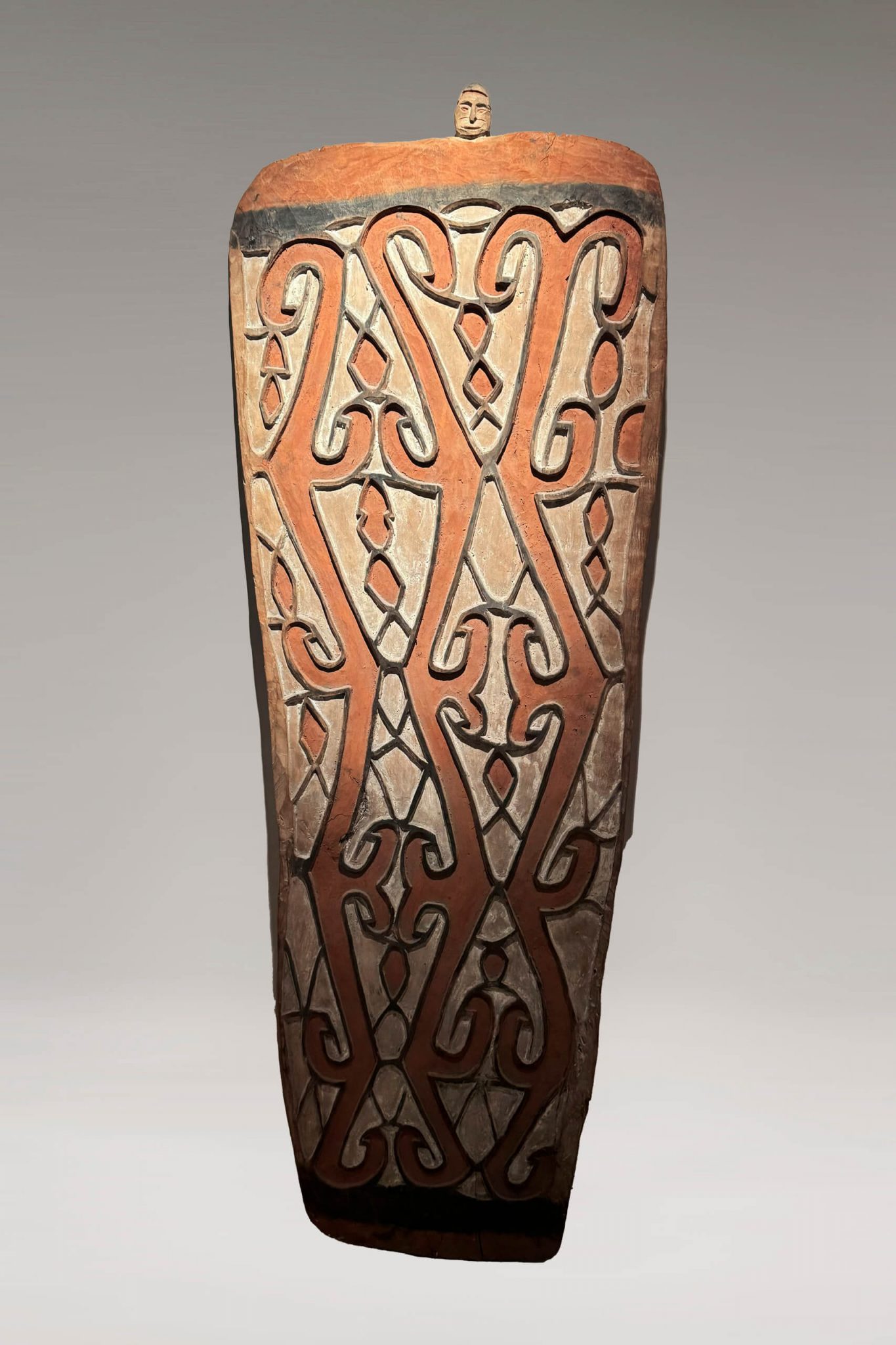
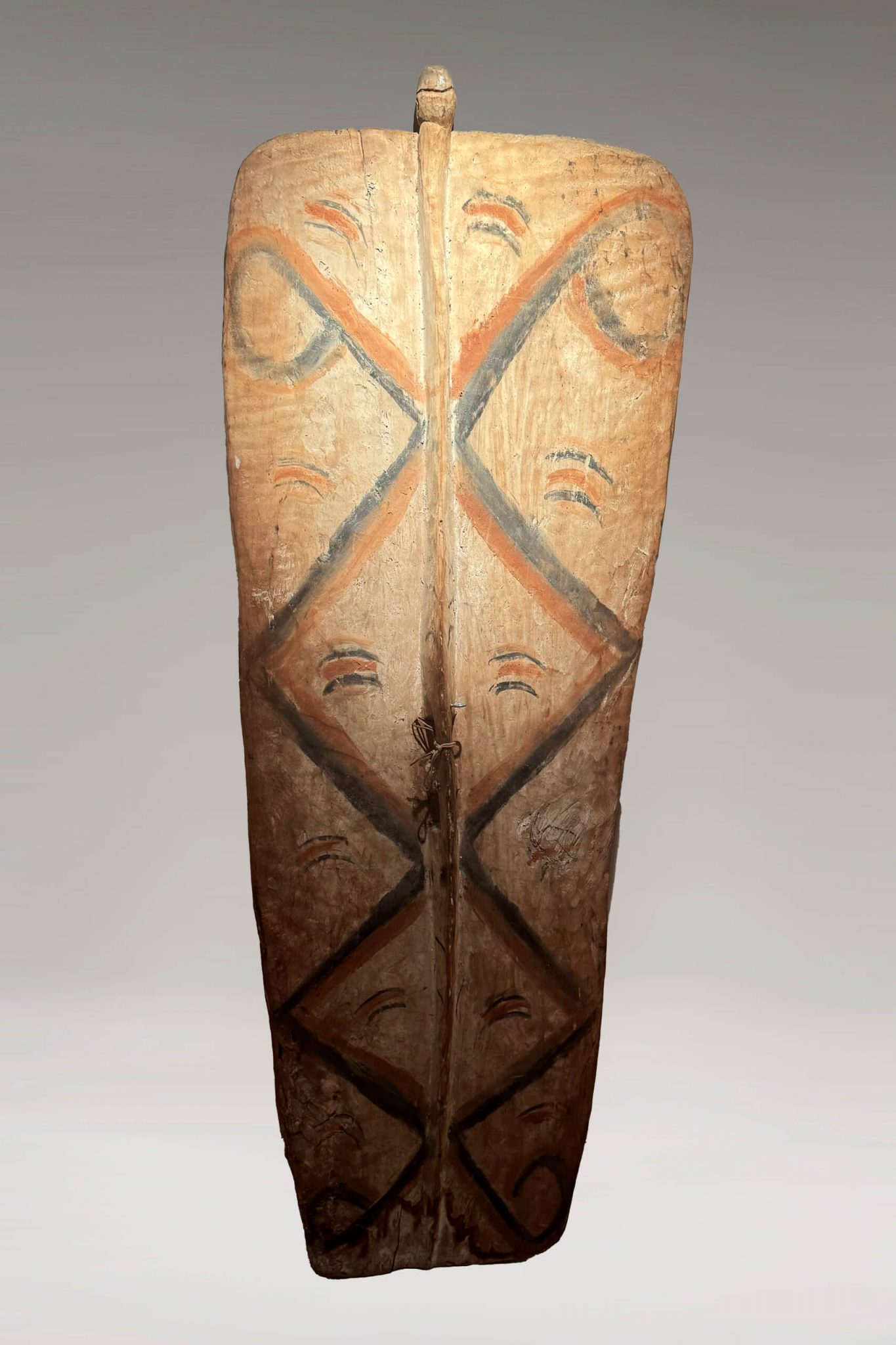
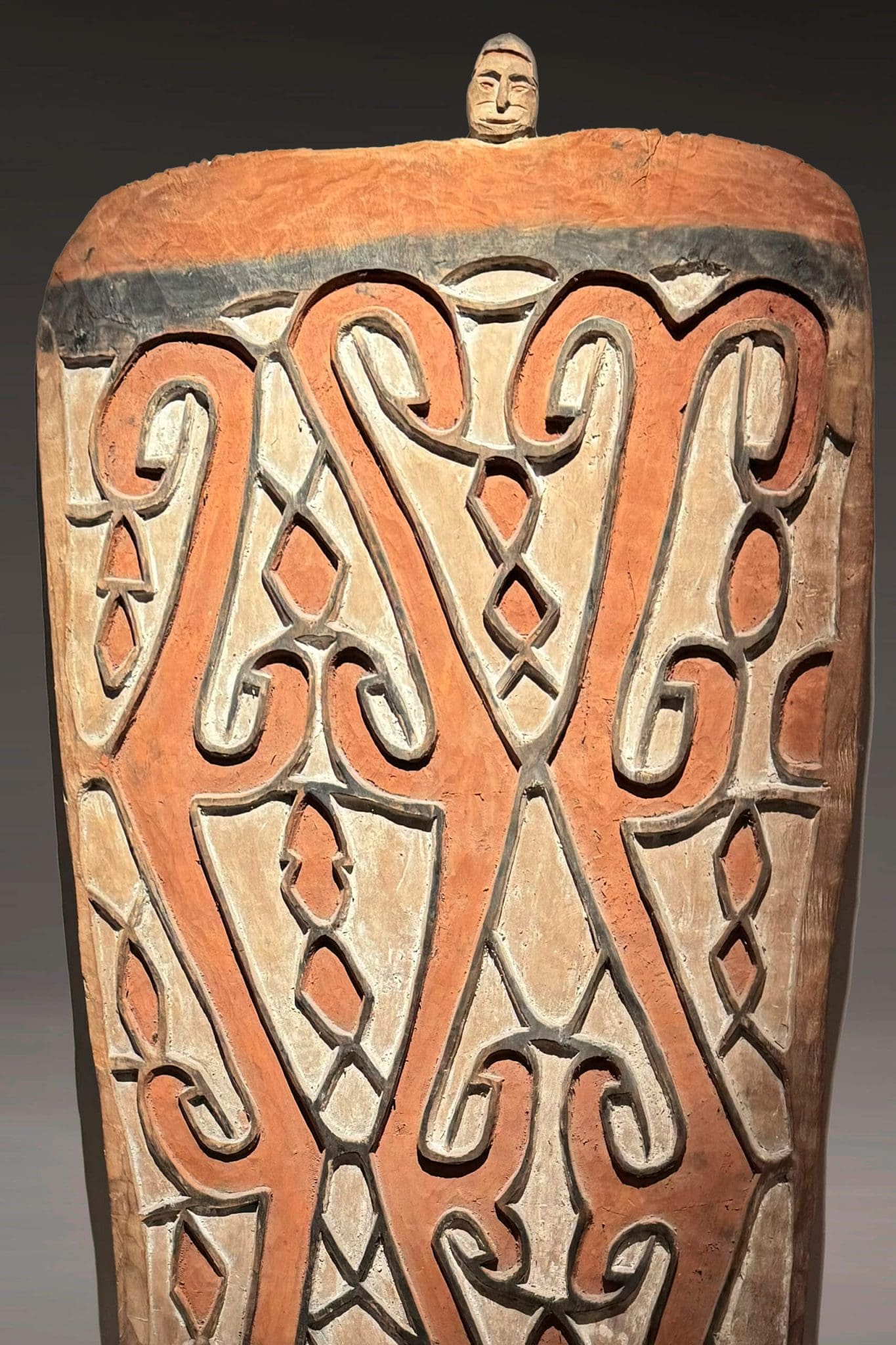
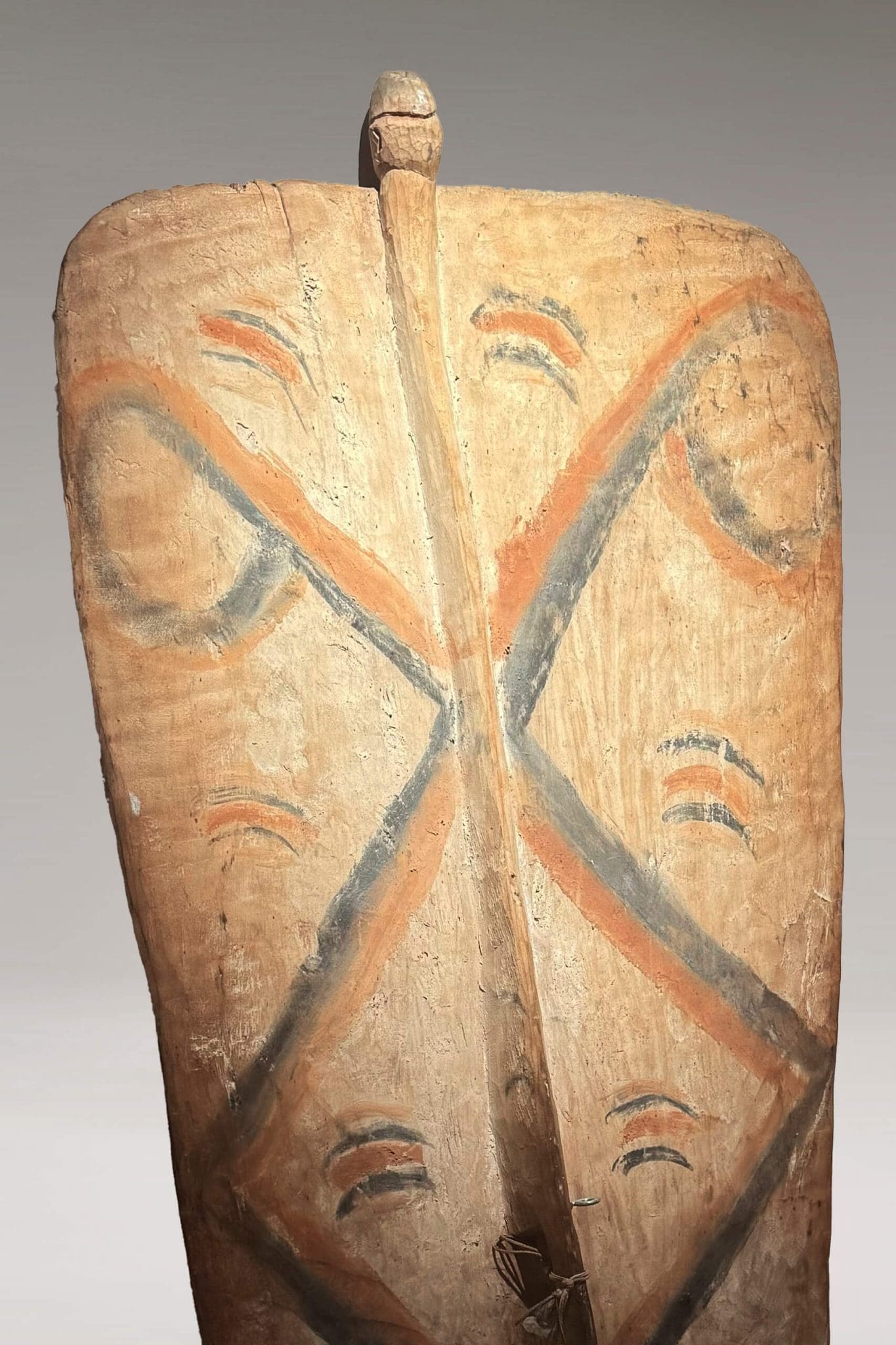
The Asmat people of the southern coastal lowlands of Papua, Indonesia, have produced one of the most remarkable sculptural traditions in the world — a body of work so distinctive in its formal vocabulary and so deeply integrated with cosmological belief that it has drawn ethnographers, collectors, and institutions from every continent. At the centre of this tradition stands the war shield, known in the Asmat language as jamasj. More than a protective implement, the Asmat war shield was a charged cosmological object: carved to invoke the power of specific ancestors, painted with pigments prepared through ritual process, and carried in combat as a visible extension of the spiritual forces backing the warrior who held it. This example, from the Central Asmat region — the heartland of the tradition — measures an imposing 156 centimetres in height and retains traces of the polychrome decoration that once animated its carved surface in red ochre, white clay, and black charcoal.
Reading the Surface: Iconography and Cosmology
The carved surface of an Asmat shield is never merely decorative. The motifs cut into its face — spiralling praying mantis forms (called cemen), flying fox figures, ancestor faces, bisected bodies — constitute a visual language tied to specific beliefs about the relationship between the living, the dead, and the powers that move between them. In Asmat cosmology, death by violence required a response: the soul of the killed could not rest until avenged, and the shield carried into combat was literally inscribed with the names and forms of those whose deaths demanded redress. The Central Asmat region, with its deep forest interstice between coastal lagoons, developed particularly elaborate formal conventions for these motifs, characterised by a compression of figures and a rhythmic interlocking of positive and negative space that gives the carved surface an almost musical quality.
Asmat Art and the World
The Asmat came to international attention in dramatic circumstances: in 1961, Michael Rockefeller — son of New York Governor Nelson Rockefeller and a Harvard-trained collector — disappeared while crossing the Beilip River in the Asmat region after his catamaran capsized. He was never found. The collection he had assembled for the Museum of Primitive Art (later absorbed into the Metropolitan Museum of Art) helped introduce Asmat sculpture to Western audiences at the highest institutional level. Today, Asmat shields occupy permanent collections in major museums including the Met, the Musée du quai Branly in Paris, and the Tropenmuseum in Amsterdam. An Asmat war shield in field condition — bearing traces of its original polychrome and showing evidence of actual use — is among the most significant objects in the ethnographic art market. It is an instrument of war, a theological statement, and one of the great achievements of human sculptural invention.



 No products in the cart.