

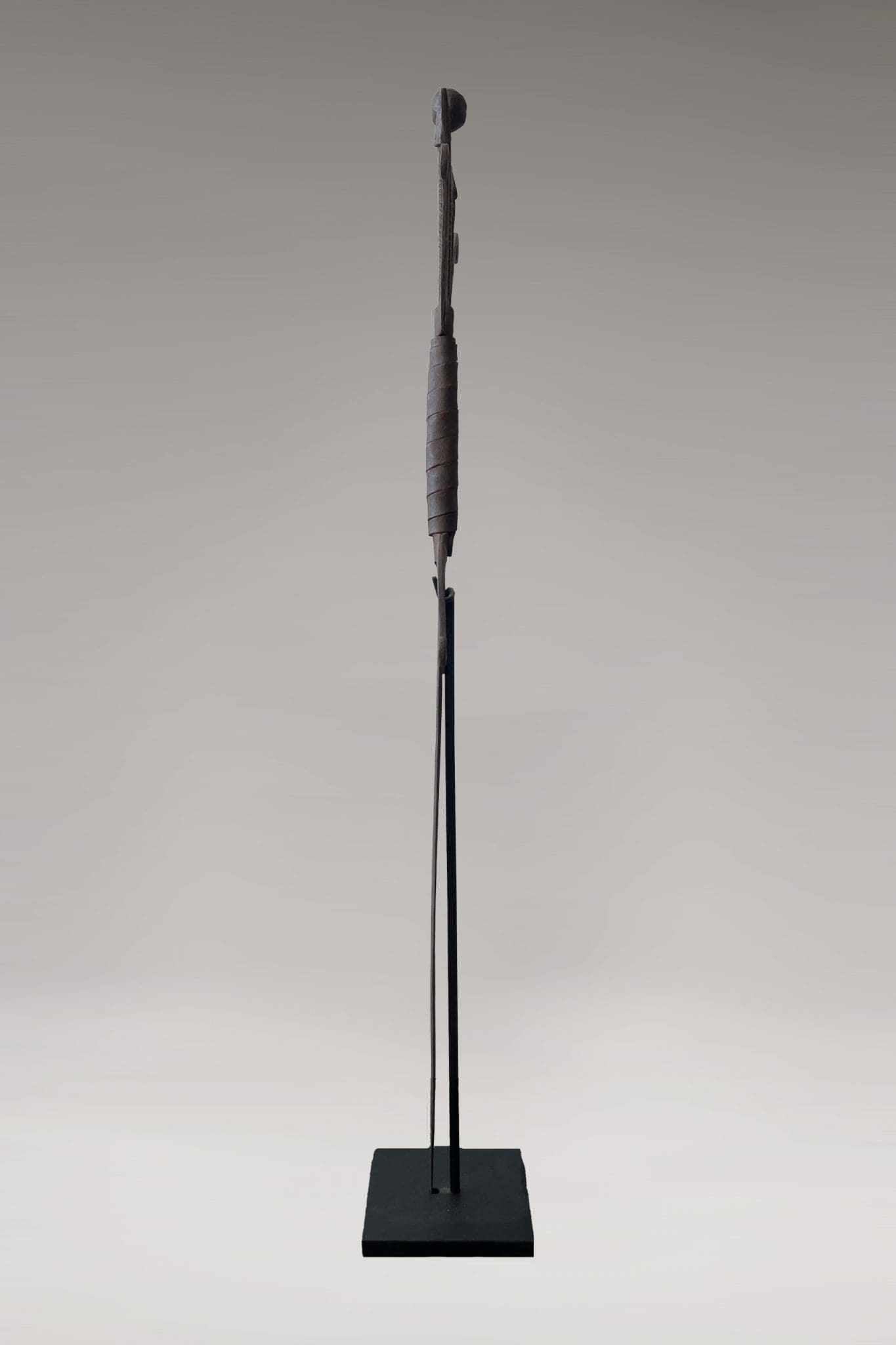
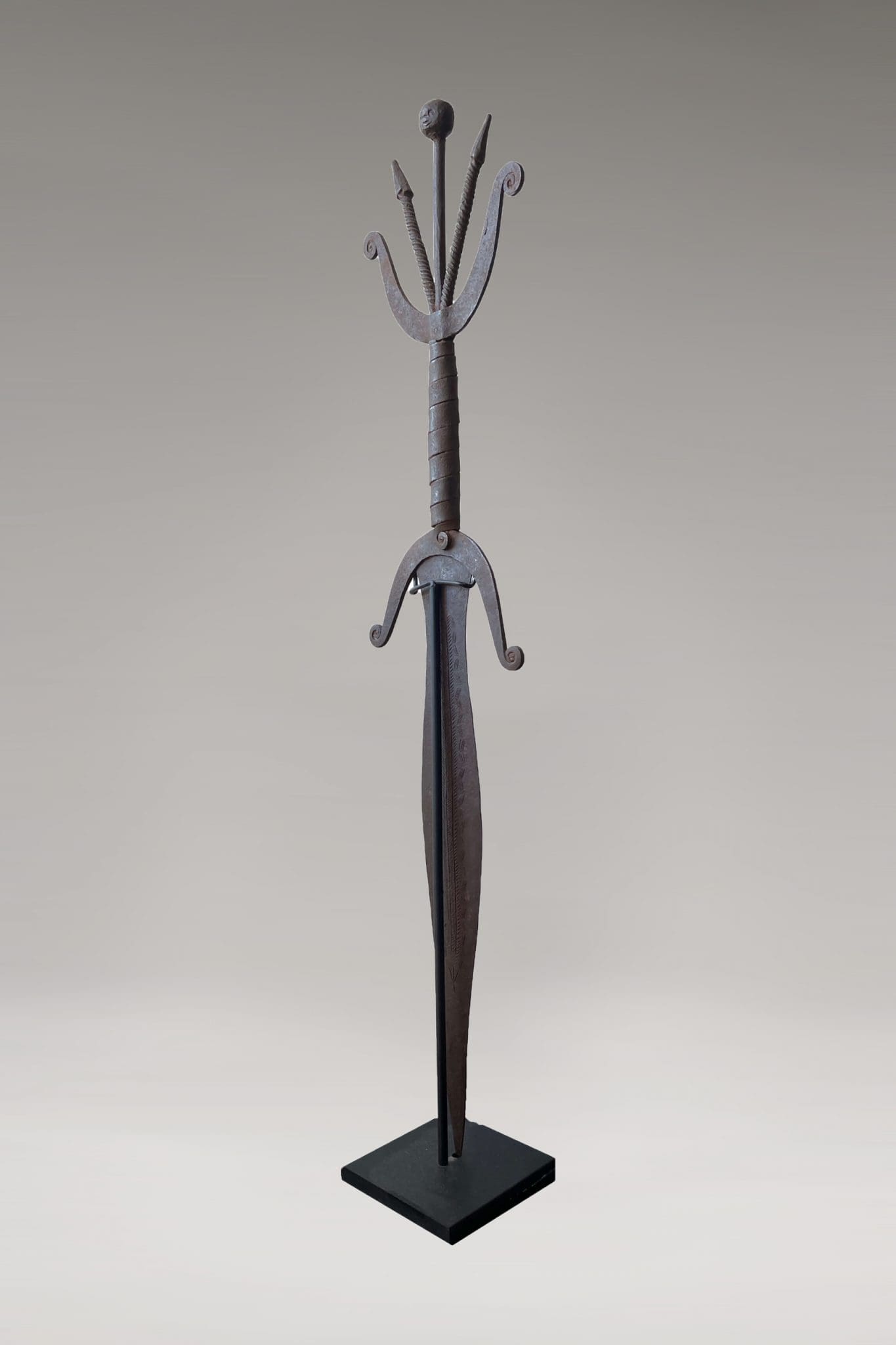
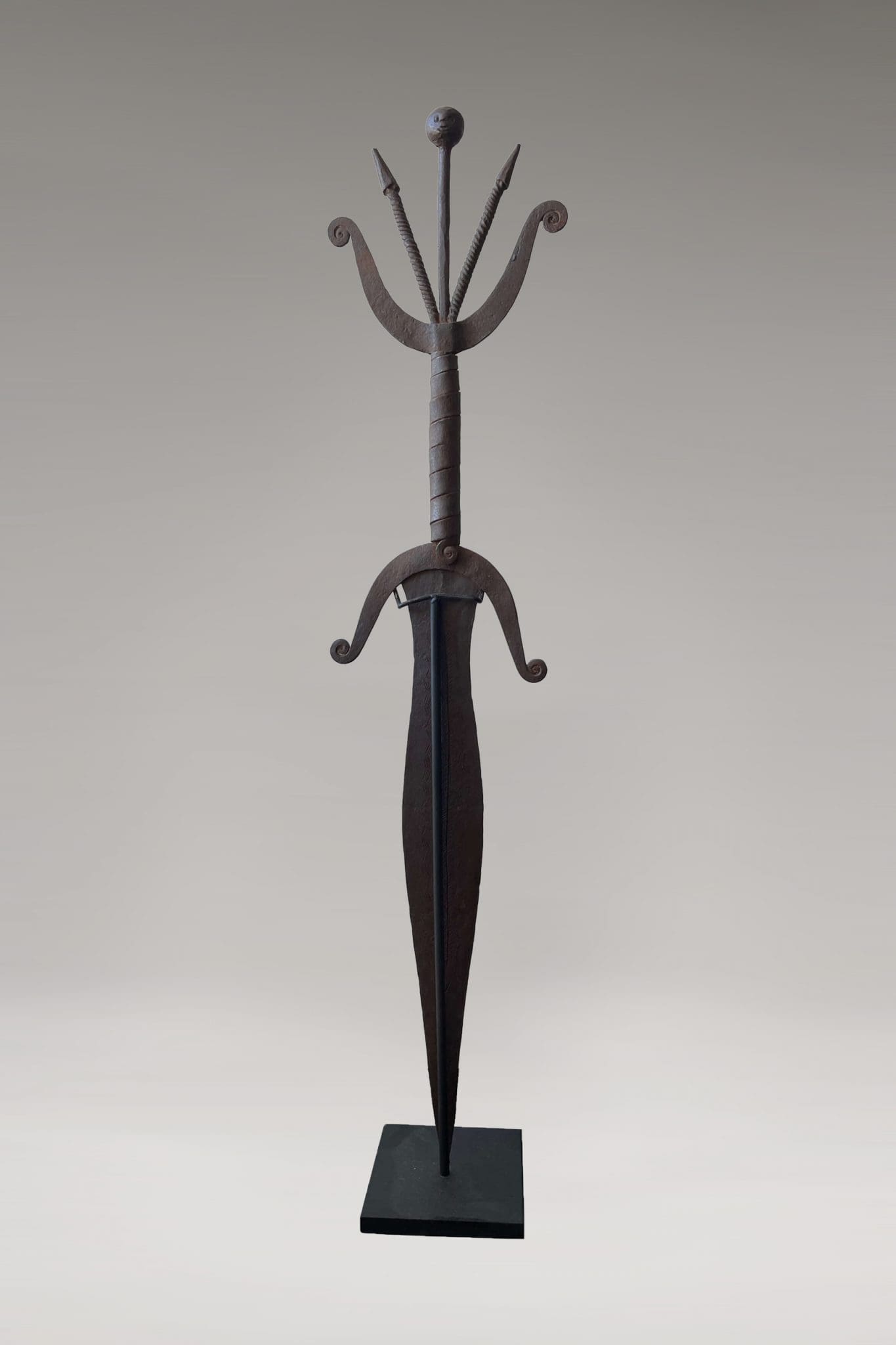
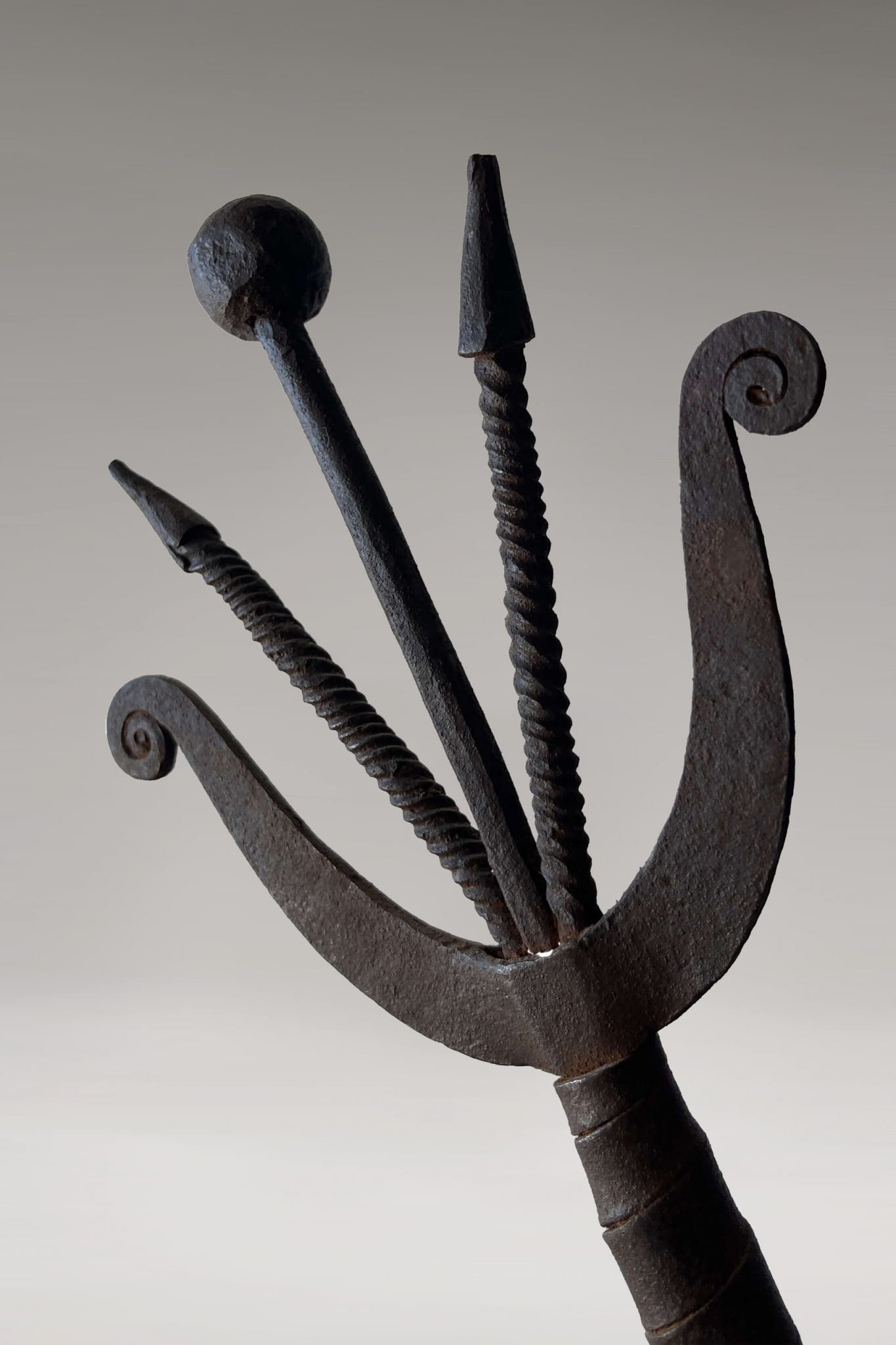
Iron, Authority and Exchange in West Africa
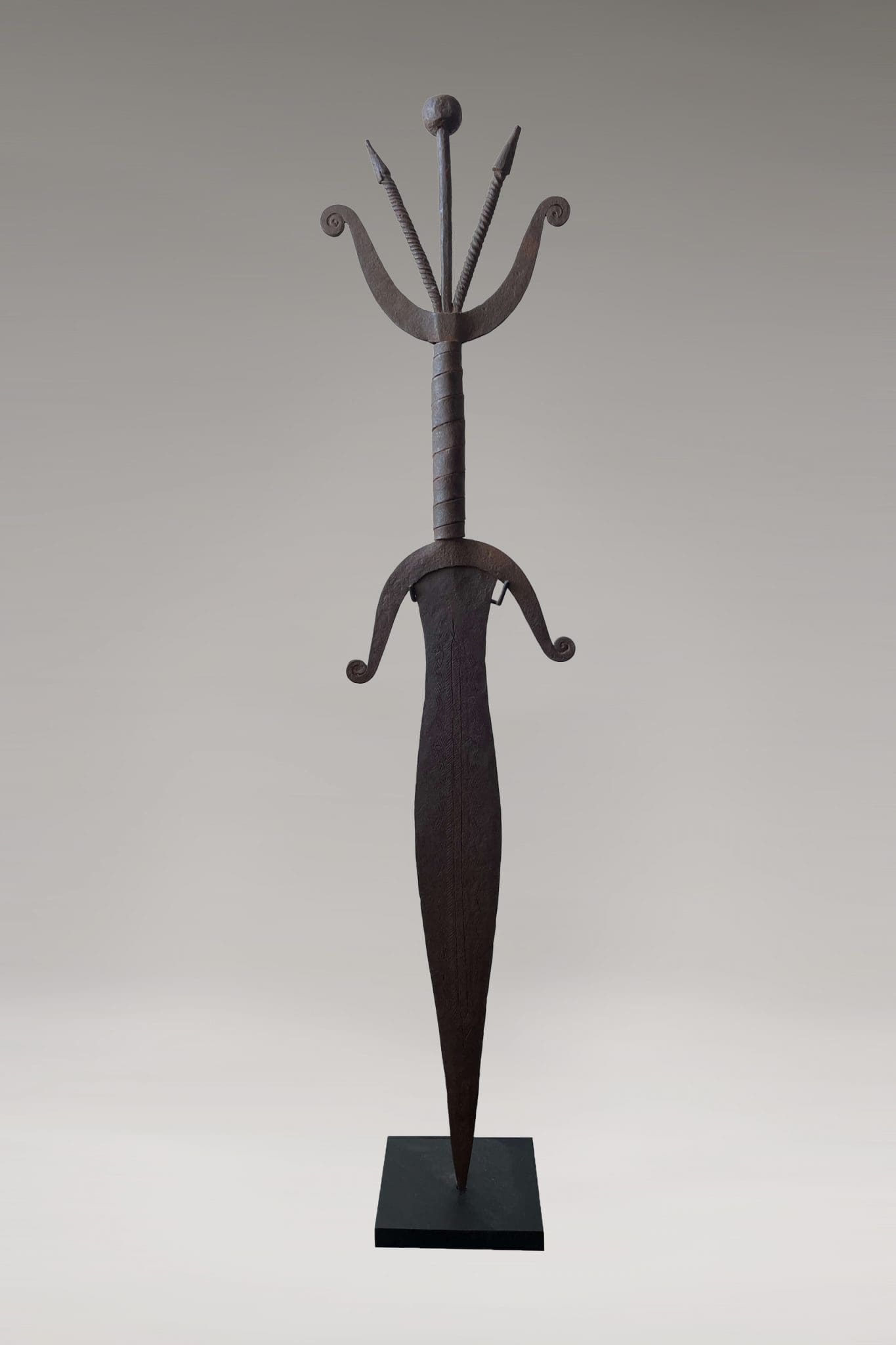
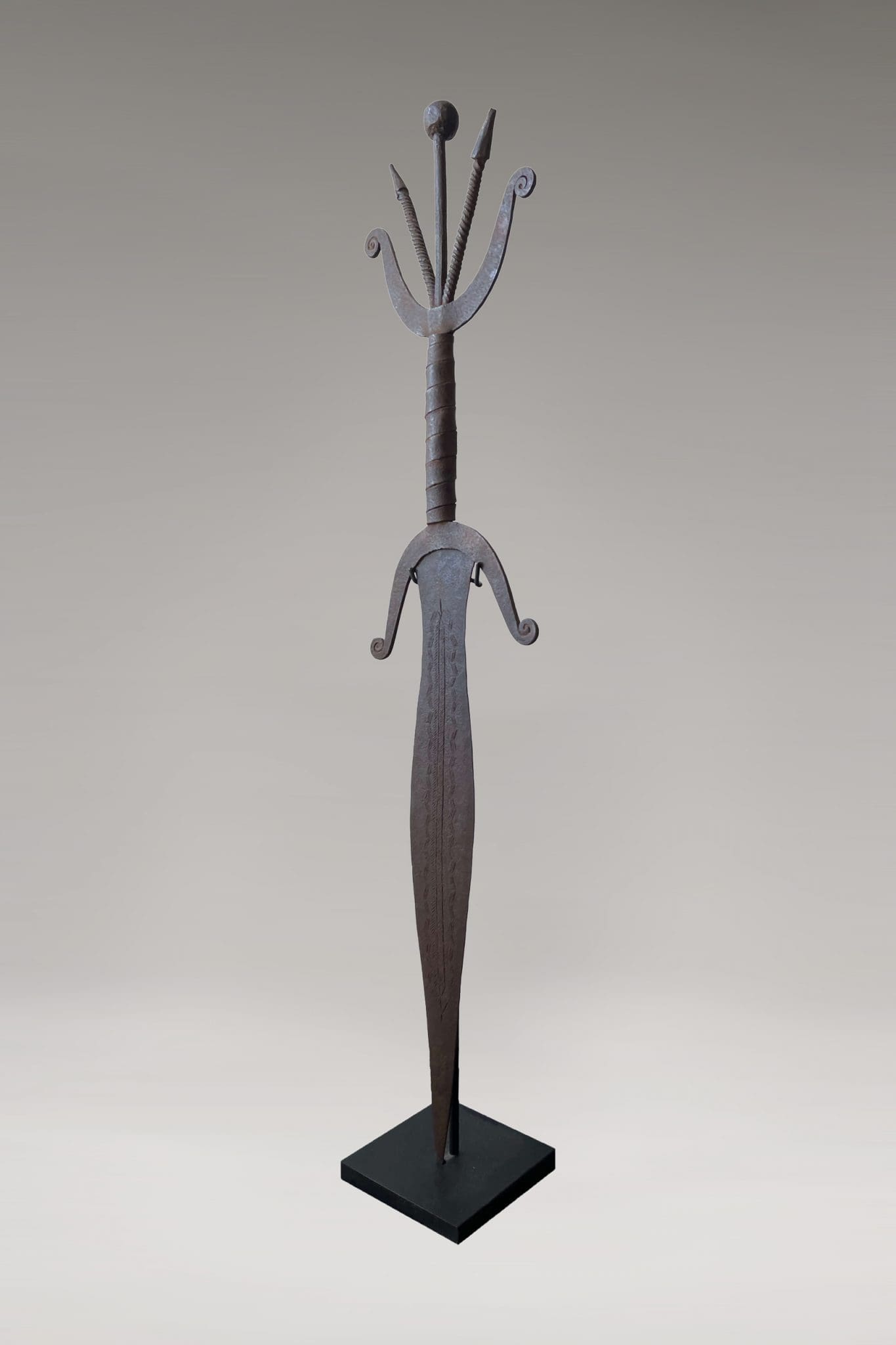
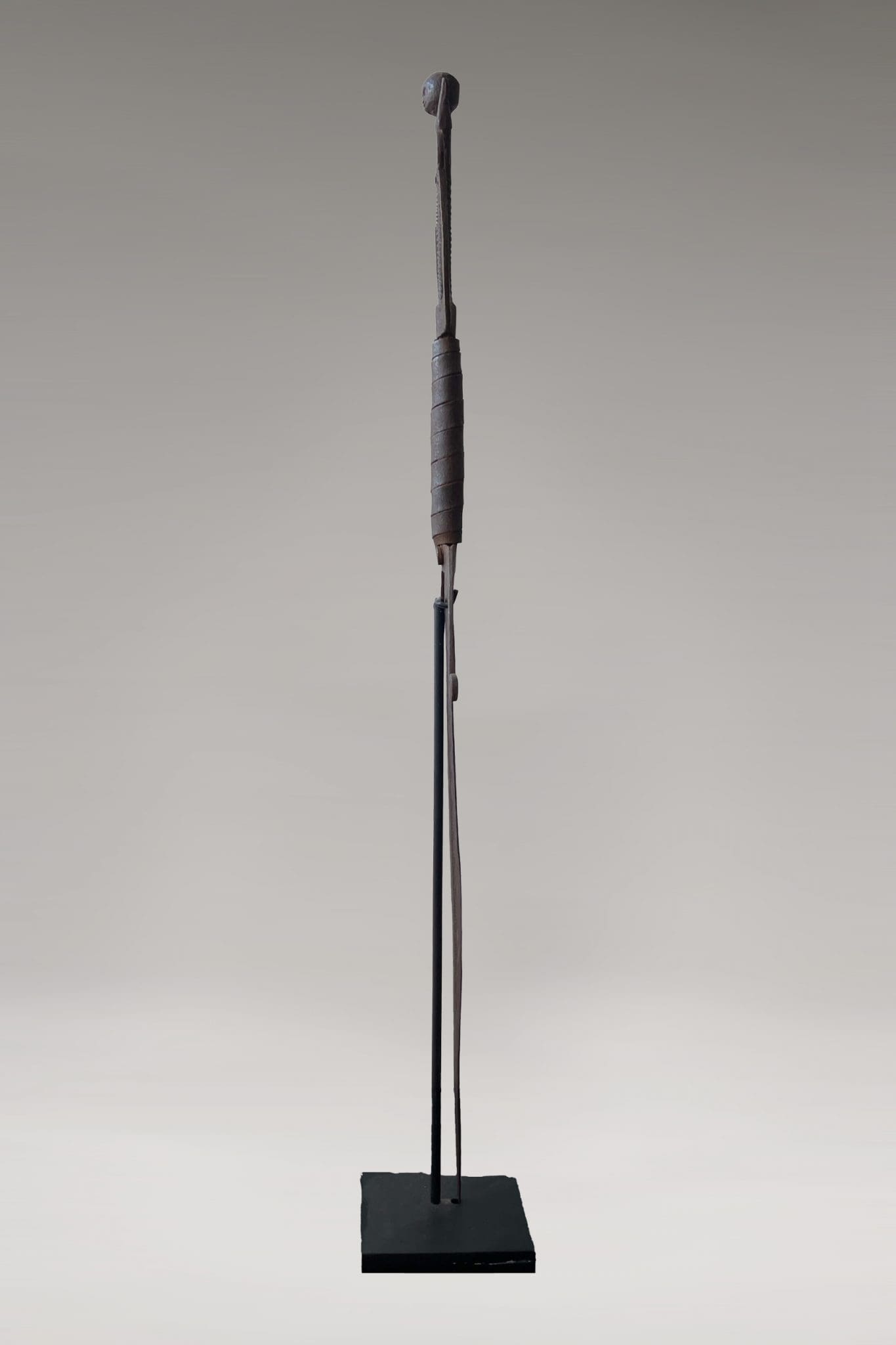
Long before the arrival of European coinage, West African societies developed elaborate systems of prestige currency — objects whose value was not purely economic but deeply embedded in social, ritual and political life. This forged iron piece from Nigeria represents one of the most enduring traditions in that history: the use of worked metal as a medium of exchange, gift, bride wealth and ceremonial tribute. Unlike the standardised discs of western currency, African prestige metalwork was valued precisely for the skill visible in its making — every mark of the hammer a testament to the smith’s knowledge and the object’s status.
The Smith as Cultural Authority
In many West African societies, iron-working occupied a position of sacred ambiguity. The blacksmith stood at the boundary between the human world and the forces of transformation — able to extract metal from rock, to reshape it with fire and water, to give it a form that would outlast any individual life. Objects produced by master smiths carried that aura into their social circulation. A piece offered as bride wealth was not merely a transaction; it was a statement about lineage, skill and the capacity of one family to produce objects of enduring worth. This Nigerian iron coin, with its crisp forged edges and compact, purposeful form, embodies that tradition with quiet authority.
Collecting African Metalwork
The global market for African prestige metals has grown significantly in recent decades as institutional collections and informed private collectors have come to understand these objects not as curiosities but as primary documents of sophisticated economic and aesthetic systems. Iron currency forms from Nigeria — particularly those from the early twentieth century, before industrial metals displaced traditional smithing practices — are increasingly rare in good condition. The example offered here, preserved in excellent state with no restoration, represents a genuine opportunity to acquire a piece of West African cultural history.





 No products in the cart.