

Carving as Currency: The Trobriand Prestige Object
In the material culture of the Trobriand Islands — the small coral archipelago in the Solomon Sea that became one of ethnography’s most studied communities through the work of Bronisław Malinowski in the early 20th century — carved wooden objects occupied a central place in the ceremonial and social economy. The kula ring, the great inter-island exchange network that Malinowski described in Argonauts of the Western Pacific (1922), was built around the circulation of shell valuables: armlets (mwali) travelling counterclockwise and necklaces (soulava) clockwise around a ring of island communities. But surrounding this core of high-prestige exchange was a broader economy of carved objects that also moved, were gifted, and accumulated social meaning through their trajectories. Carved spatulas, bowls, and trays were among the objects that Trobriand carvers produced at the intersection of functional craft and ceremonial display — objects whose quality announced the skill of their maker and the wealth of those who commanded them.
The Carver’s Hand: Ornament and Meaning
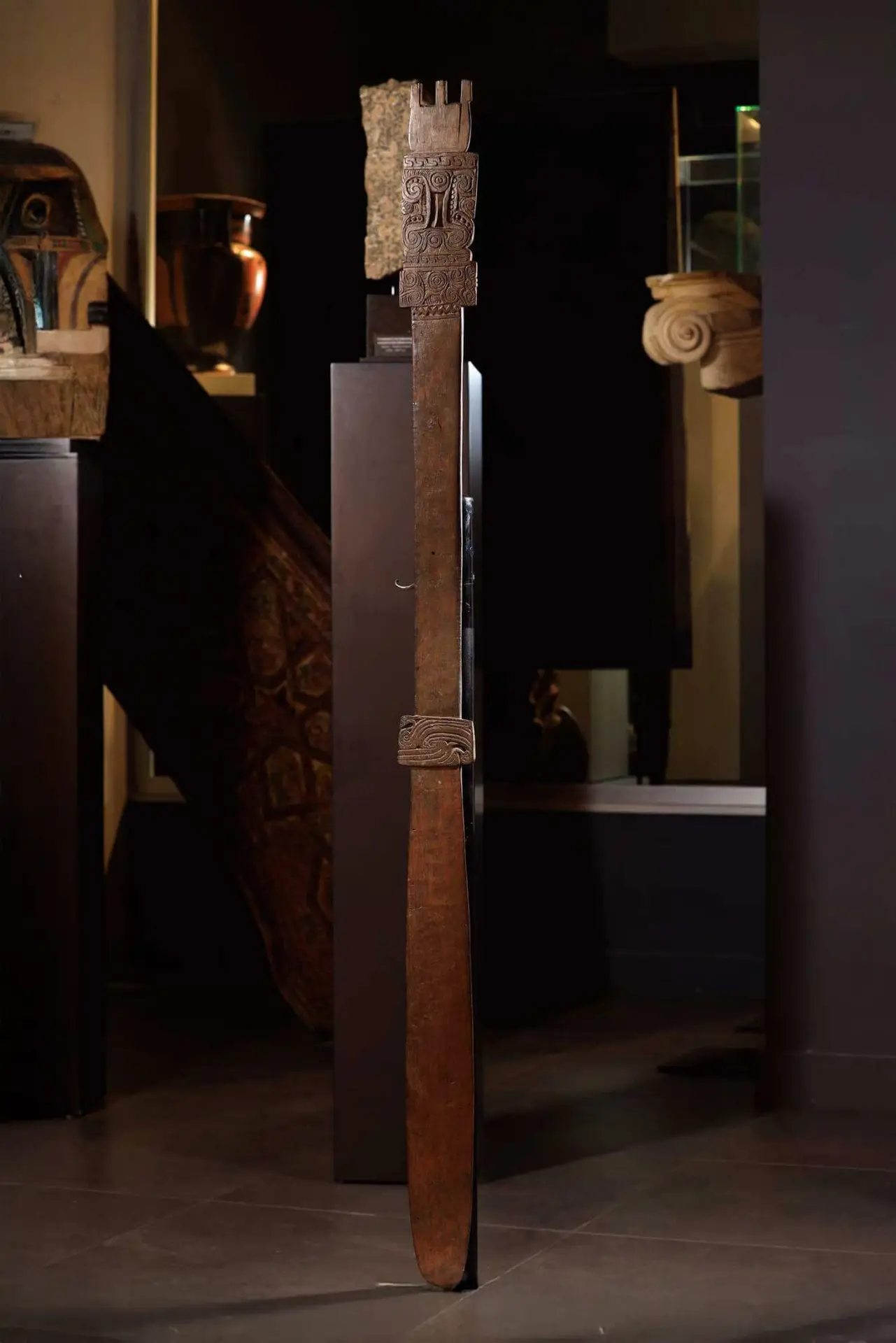
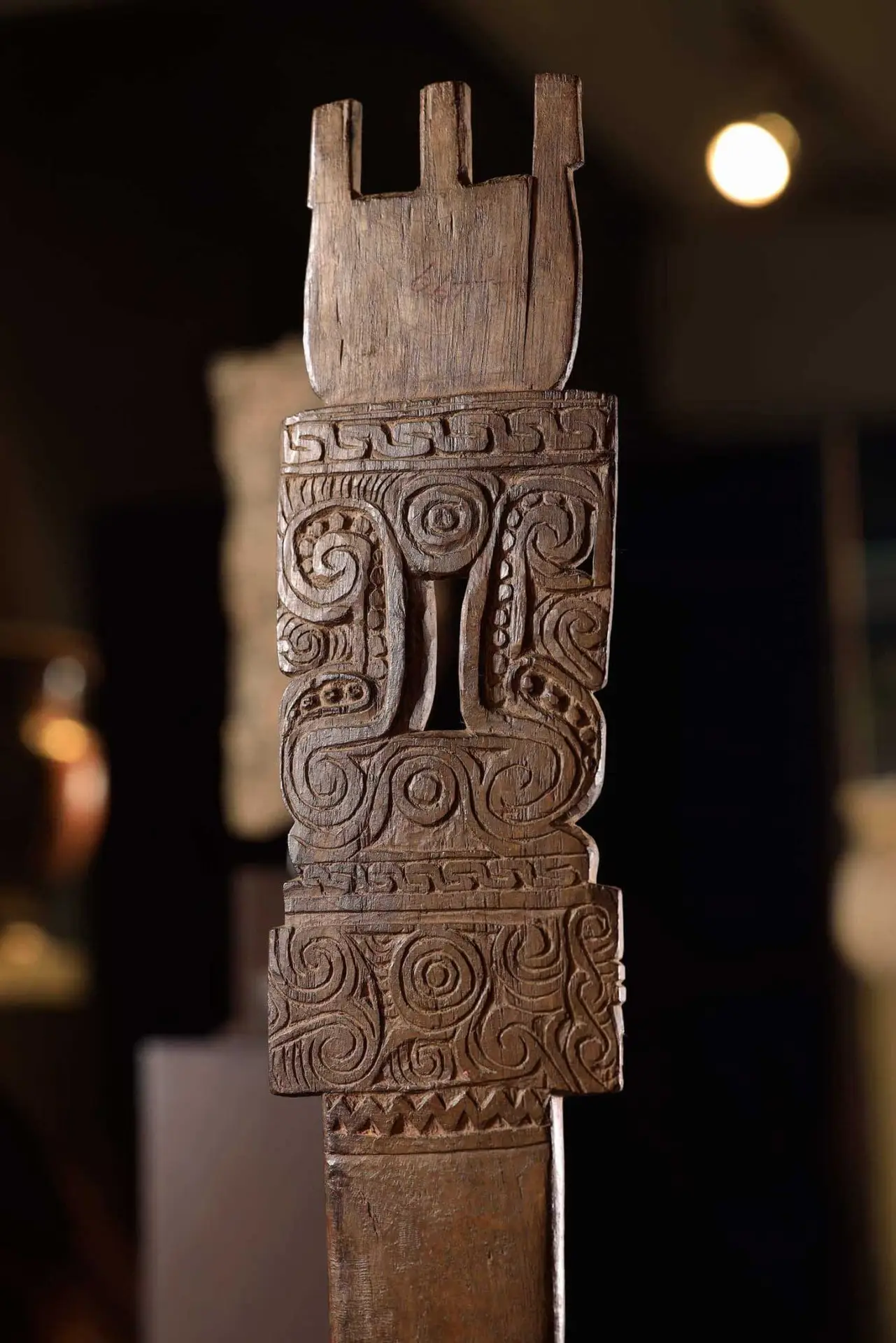
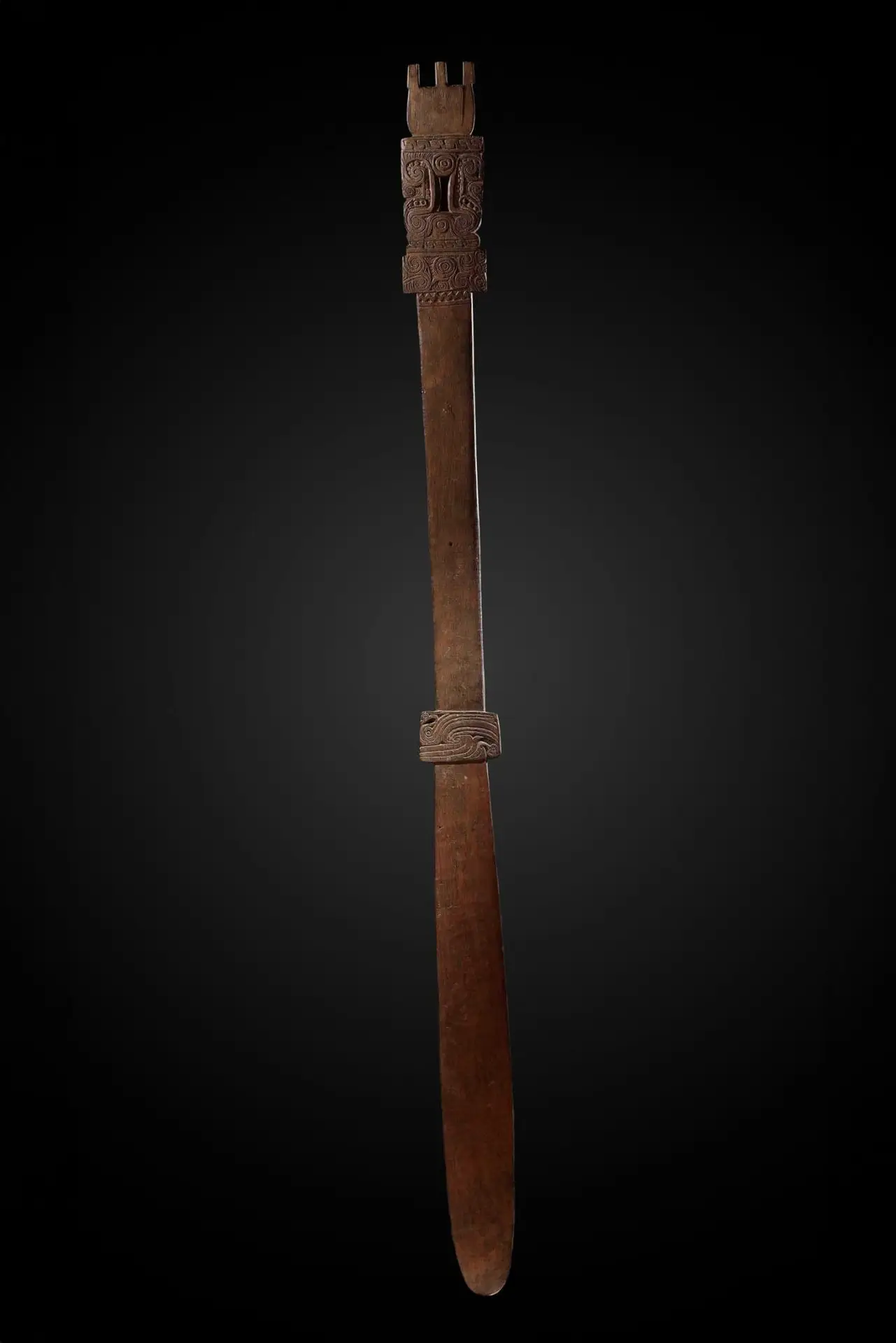
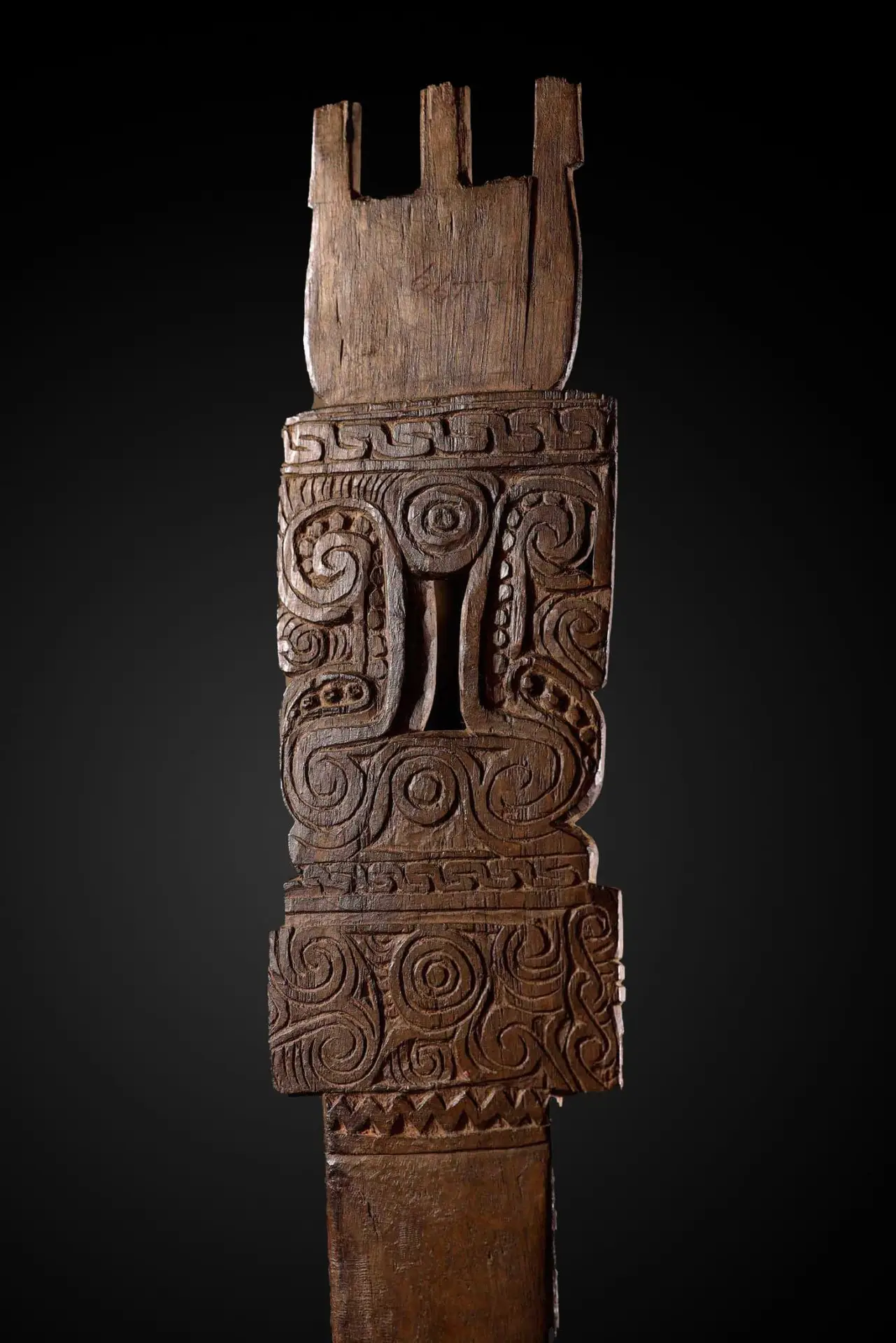
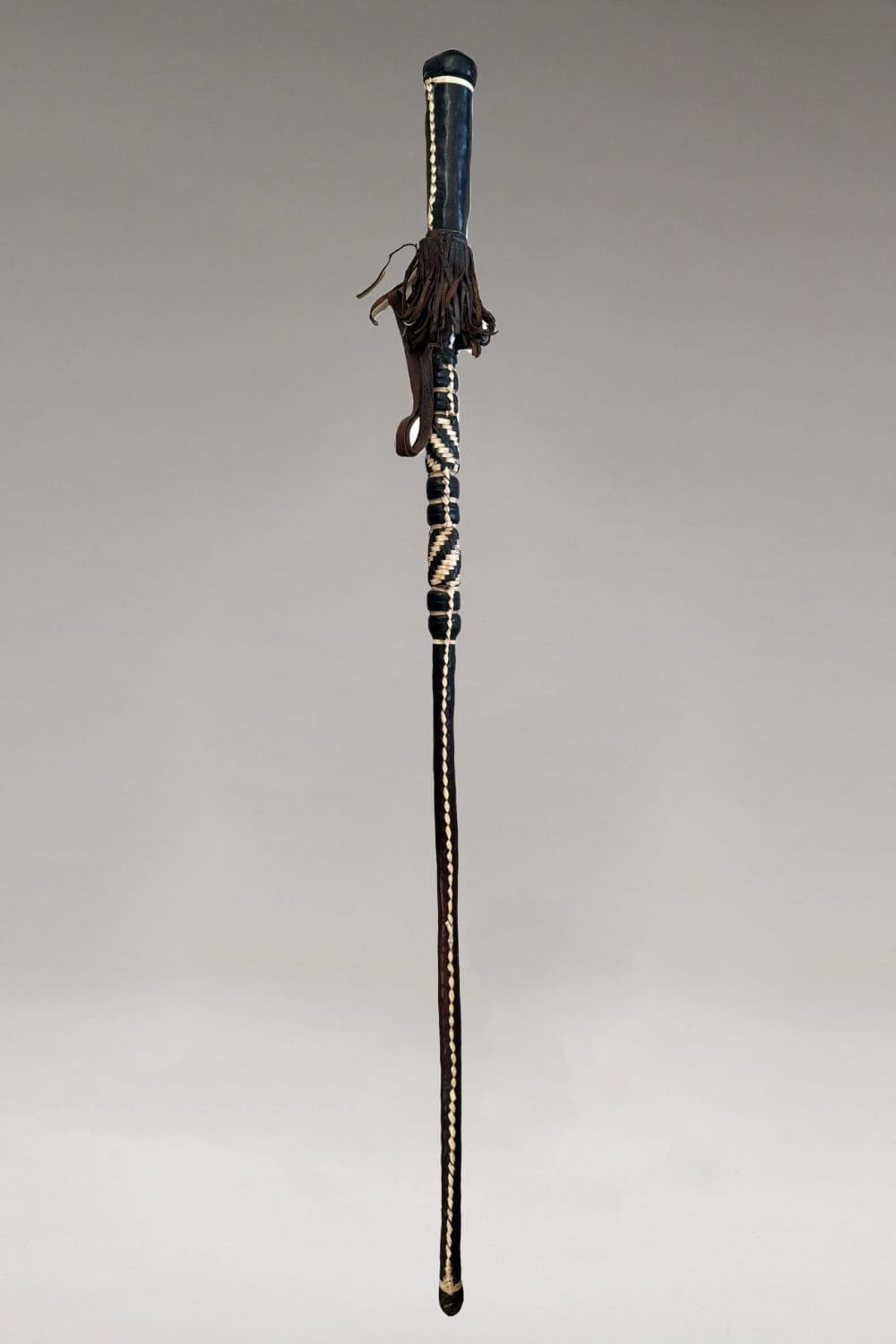
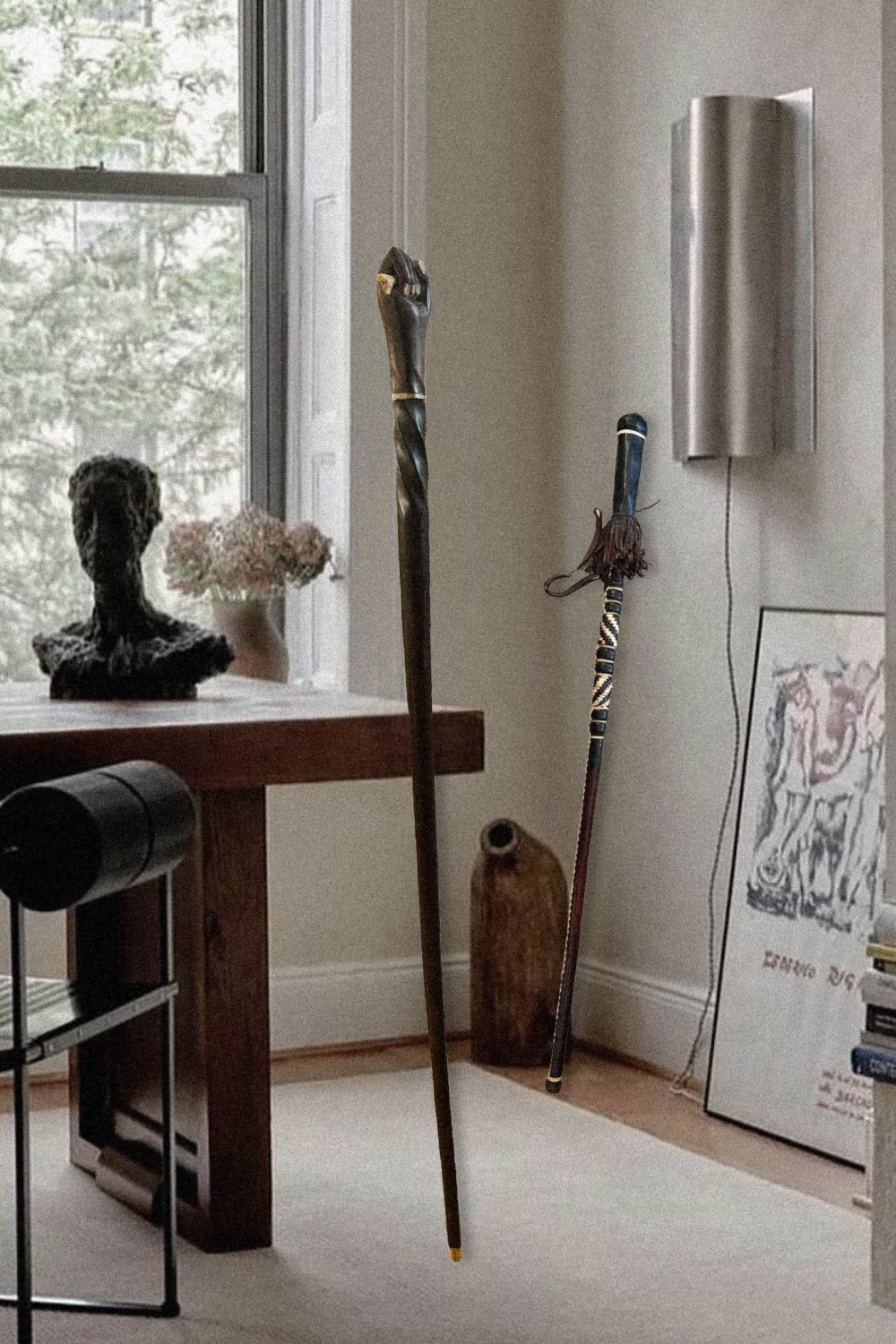
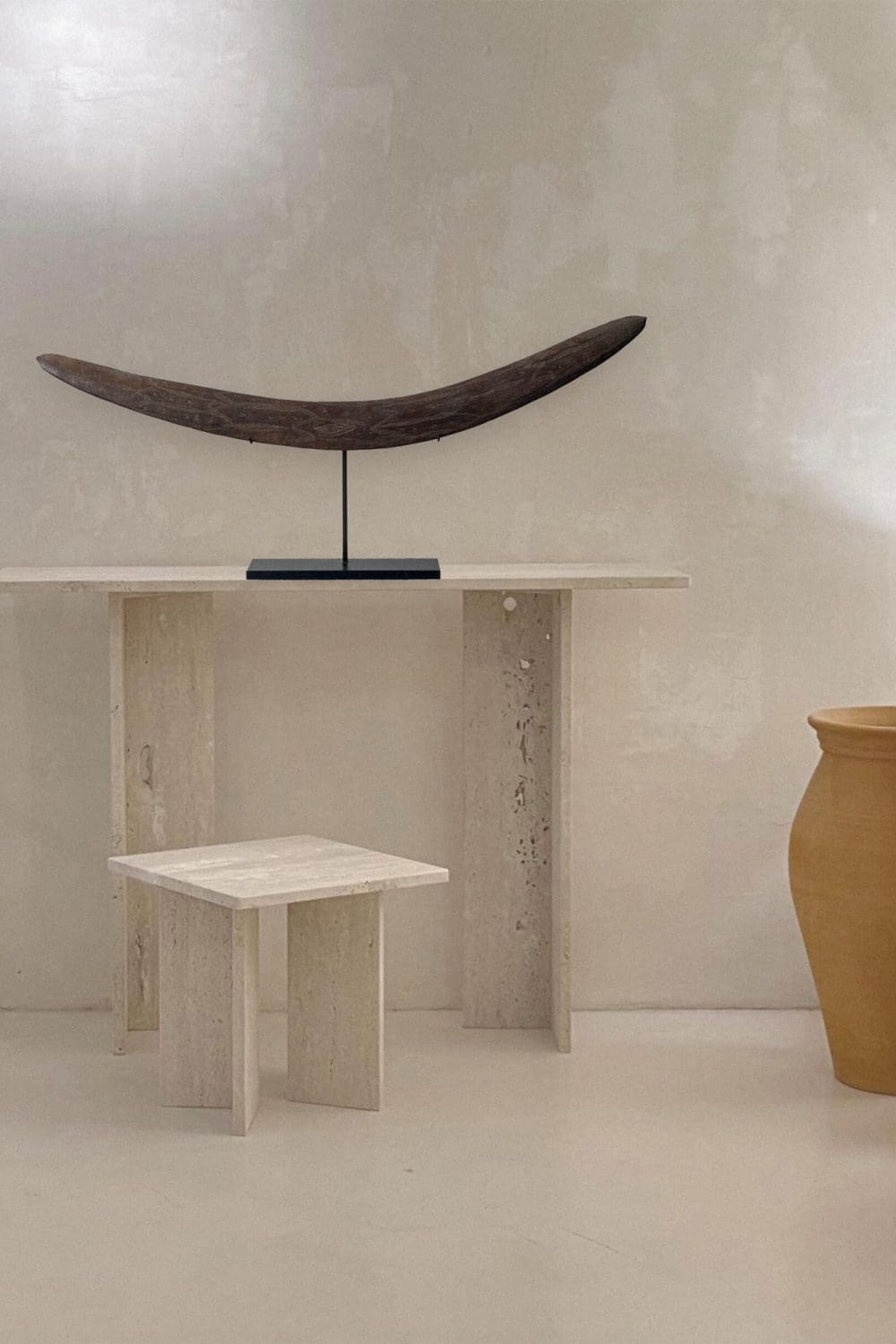
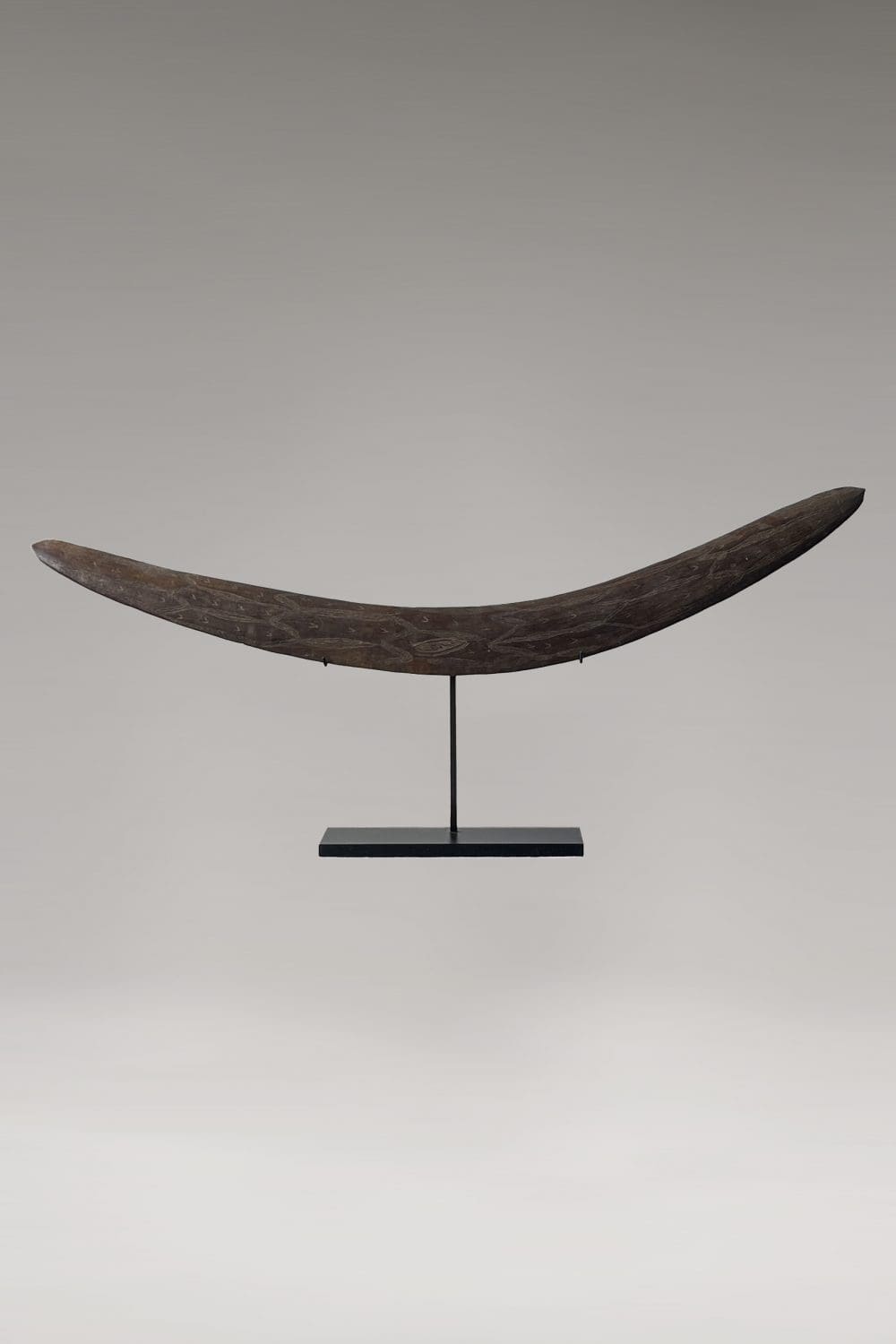
At 130 centimetres in length, this spatula occupies the large end of the Trobriand carved implement spectrum — a scale that required sustained application of the carver’s tools and that results in an object imposing enough to command attention in any space. The ornamental incisions that cover a Trobriand carved object are not arbitrary decoration: the spirals, chevrons, and interlocking geometric fields that characterise Kiriwina carving constitute a visual language with roots in canoe prow decoration, yam-house ornament, and body art. In Trobriand aesthetics, the term megwa encompasses both the spell sung over a newly carved canoe and the visual beauty of a carved surface — beauty and efficacy were not distinct categories but aspects of the same quality, the quality of something made with complete attention and knowledge. A carver who could produce this density and precision of ornamental incision across a 130-centimetre surface was demonstrating a mastery that the Trobriand community recognised and valued in ways that translated directly into social prestige.
A Living Tradition, Documented by Malinowski
Trobriand carving was one of the traditions that Malinowski documented most attentively during his fieldwork of 1915–1918. His descriptions of the carvers’ workshops, the social organisation of production, and the relationship between carved objects and the kula exchange provide a context for objects from this period that is unusually rich. The first half of the 20th century — the period in which this spatula was made — was a time when Trobriand communities were under the administration of the Territory of Papua, yet maintaining the ceremonial life, the gardening cycles, and the kula voyages that Malinowski had described. Carved objects continued to be made to high standards for both internal use and for the growing external market created by colonial administrators, traders, and anthropologists who recognised their quality. A Trobriand carved spatula from this period thus sits at the intersection of a living artistic tradition and its first sustained external documentation — an object made within a culture that was simultaneously being described to the world.



 No products in the cart.