

The Han Dynasty and the Art of the Funerary Model
The Han Dynasty (206 BCE – 220 CE) presided over one of the most formative periods in Chinese history, consolidating the political and cultural institutions that would define Chinese civilisation for two millennia. It was also a period of extraordinary funerary elaboration: Han aristocrats and wealthy merchants were interred with vast assemblages of mingqi — “spirit objects” — designed to replicate in miniature the world they had inhabited in life. Chariots and horses, entertainers and servants, granaries and farmyard animals, domestic utensils and bronze vessels all appear in Han tomb inventories, each object a statement of status and an insurance policy for the afterlife. Among these mingqi, architectural models occupy a special category: watchtowers, manor houses, granaries, and multi-storey buildings rendered in terracotta provide our most direct evidence for the timber architecture of the Han world, a tradition that has left almost no standing monuments. Without these funerary models, our understanding of the built environment of imperial China would be radically impoverished.
Structure and Surface of the Watchtower
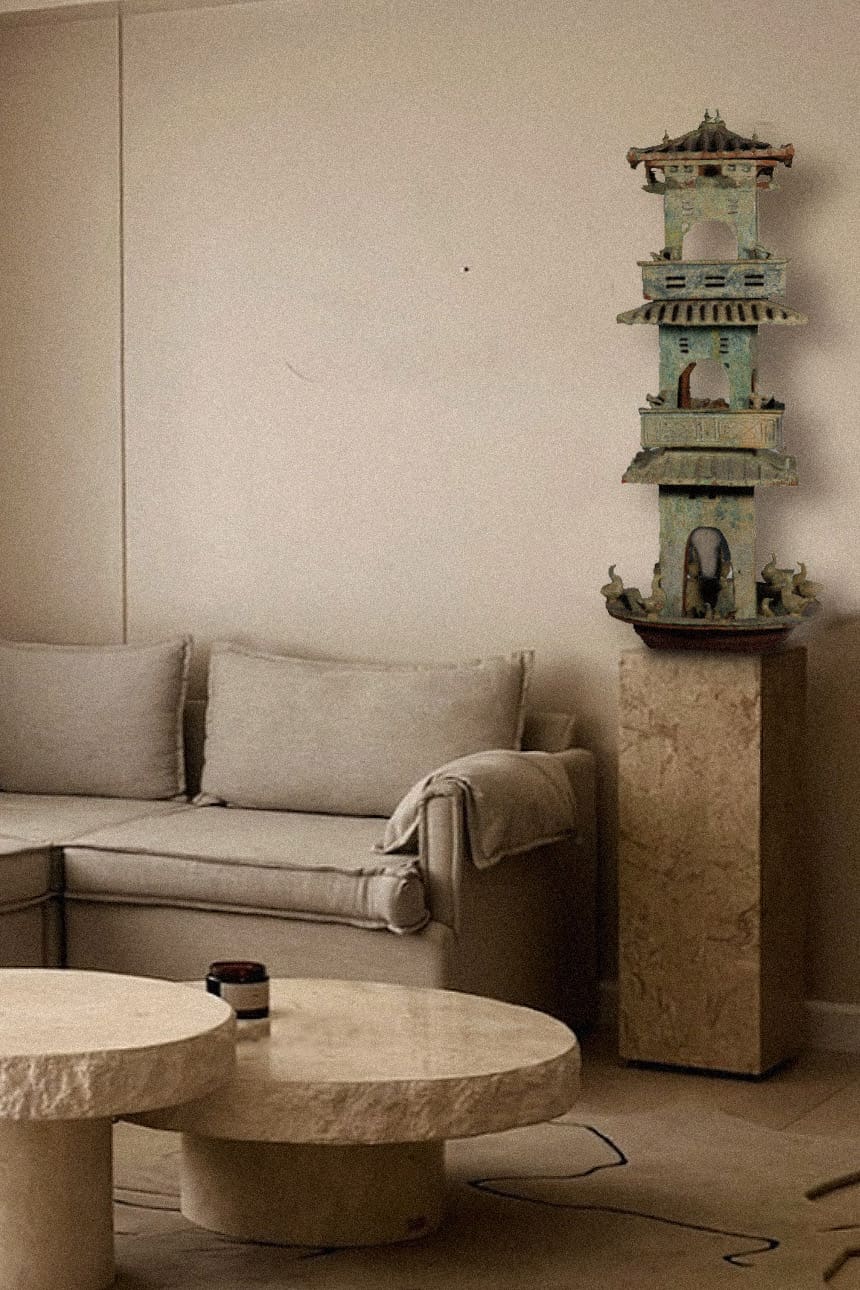
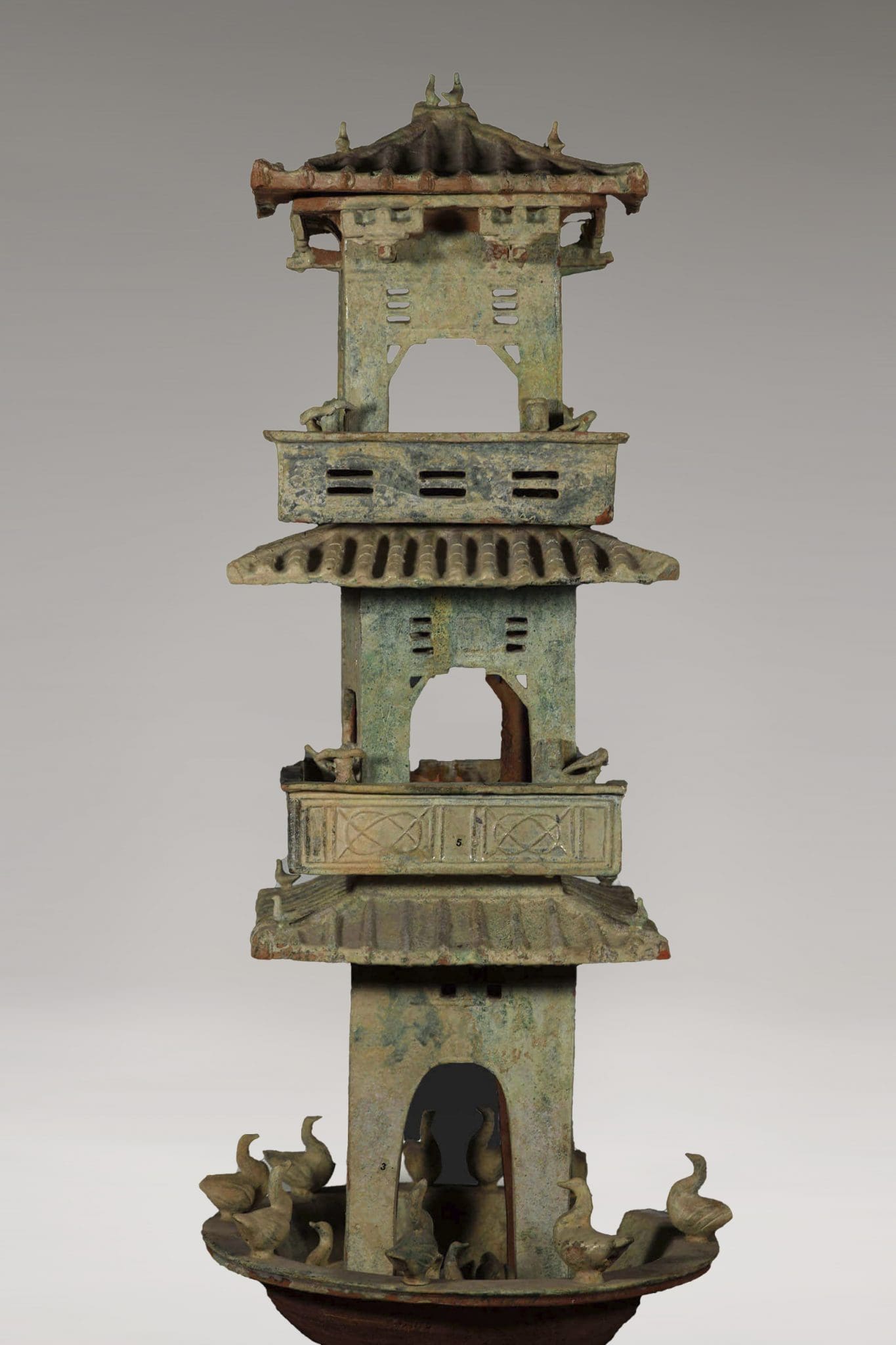
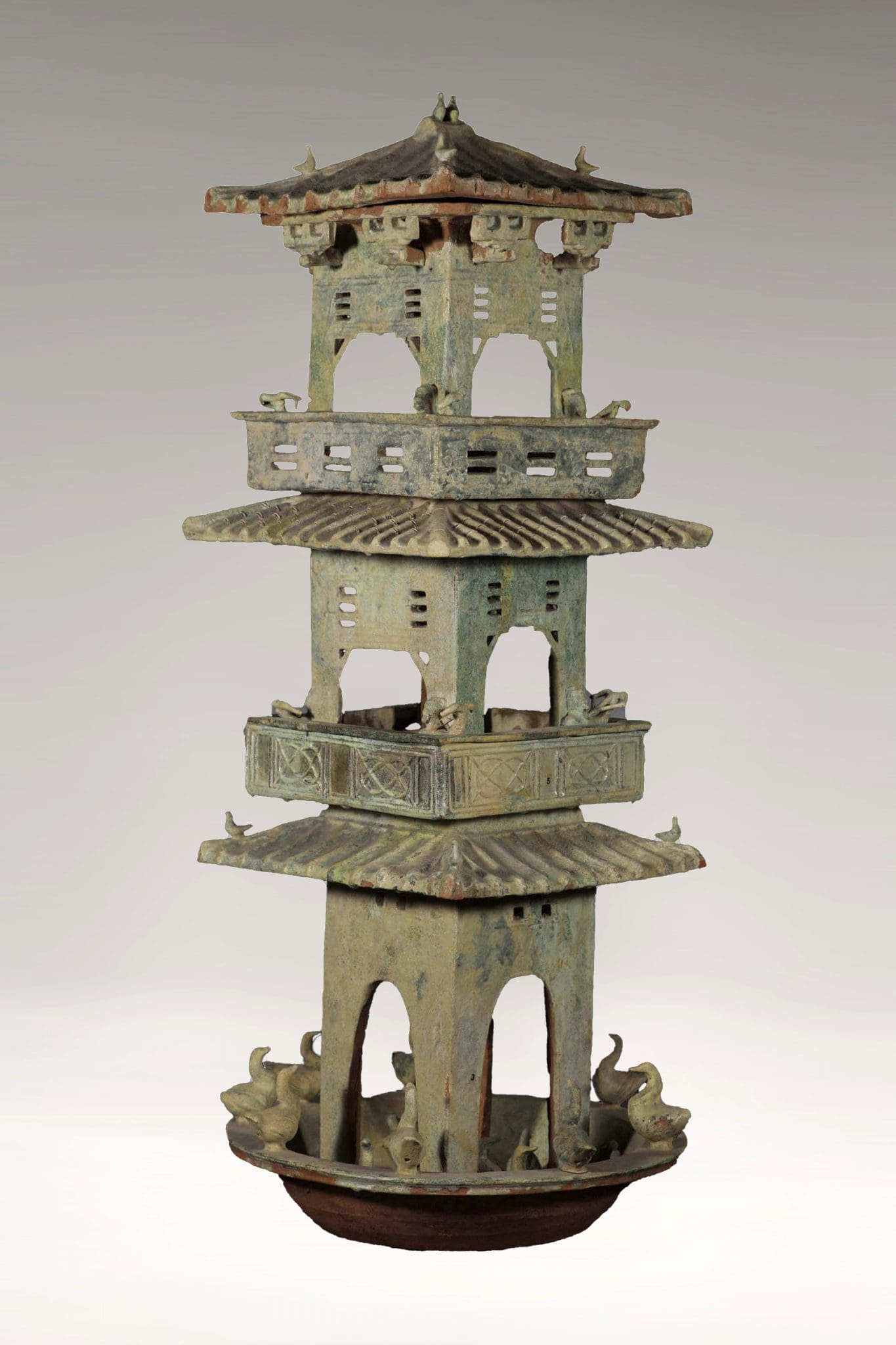
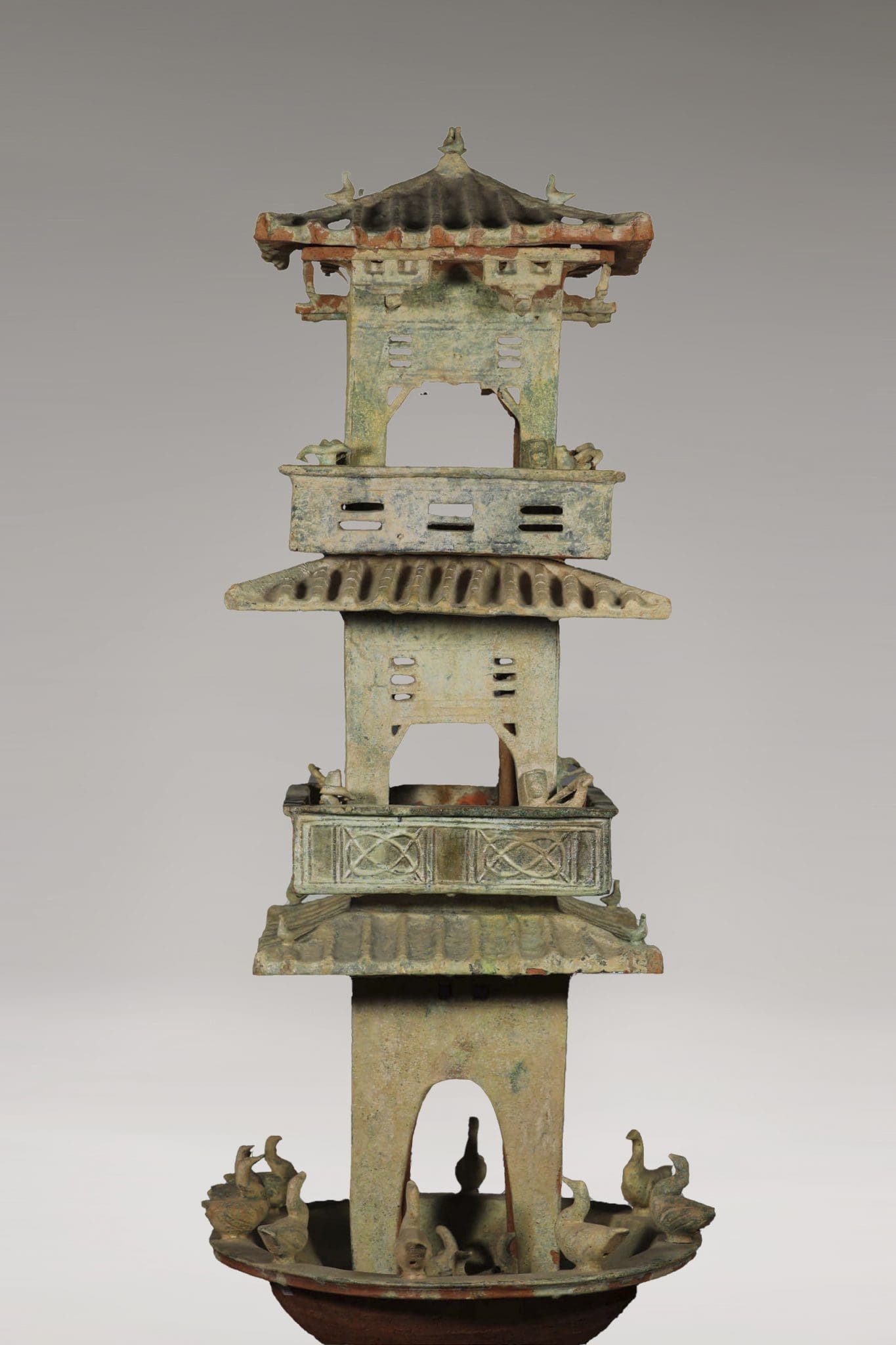
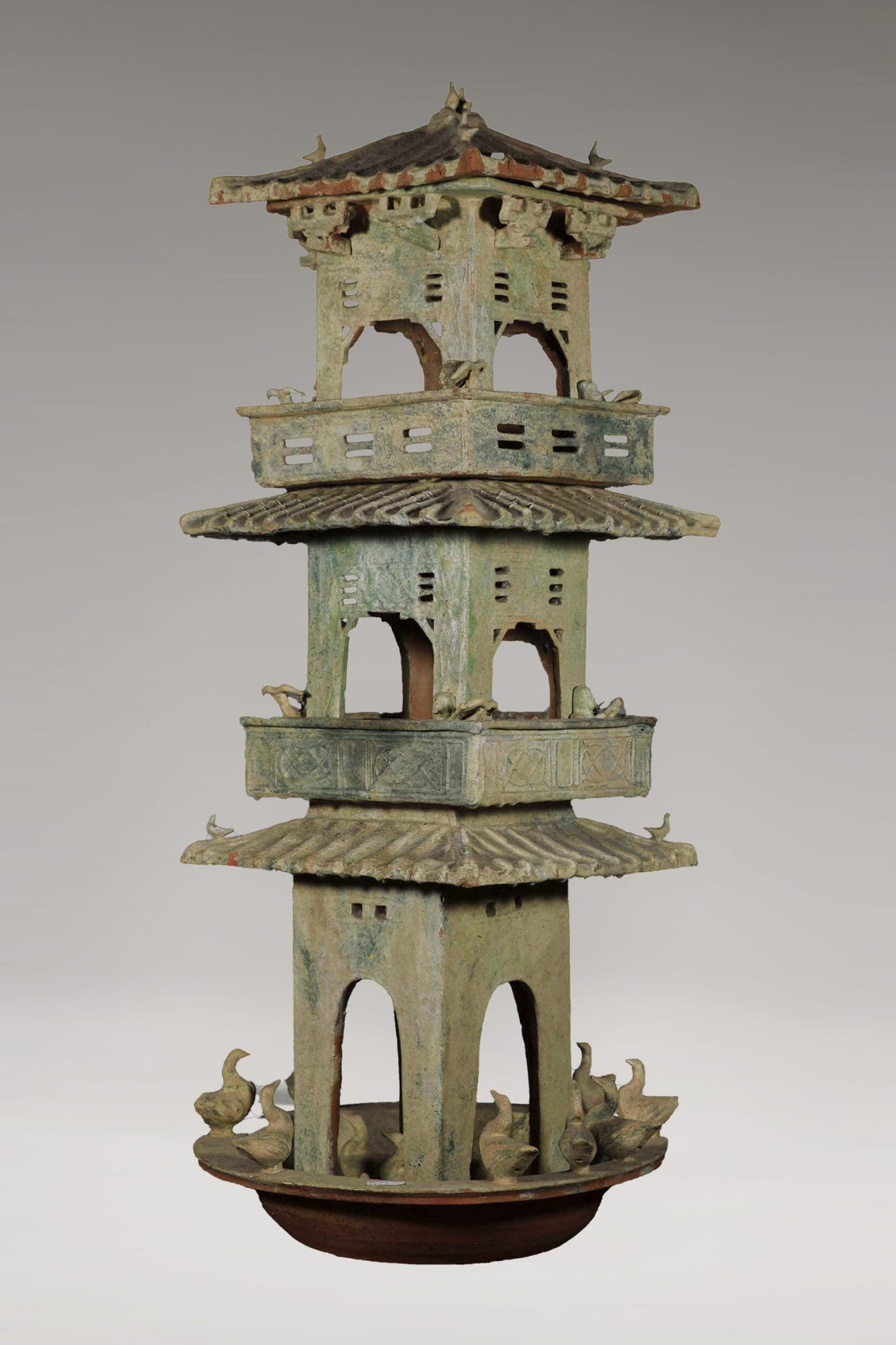
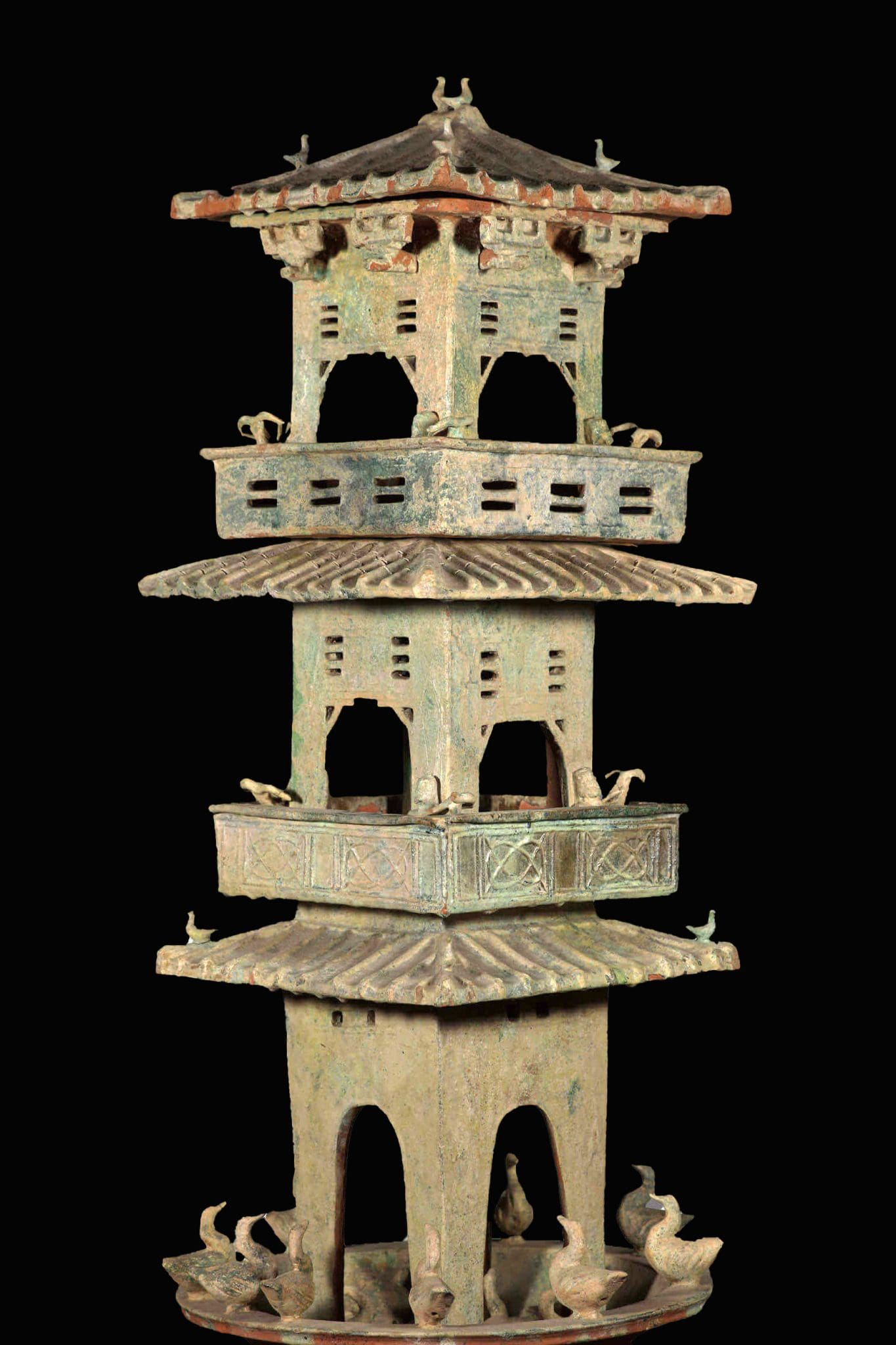
Standing at one hundred centimetres in height, this watchtower model commands presence through its vertical ambition, compressing the logic of a full-scale building — load-bearing base, intermediate platforms with galleries, and a crowning roof structure — into a unified terracotta form. The square footprint of 33 × 33 centimetres provides a stable base for the ascending tiers, each level defined by projecting eaves and decorative brackets that echo the dougong systems of full-scale Han timber construction. The polychrome surface, retaining traces of original mineral pigments, adds chromatic richness to the architectural detail: reds, blacks, and ochres that once made the model a vivid approximation of a painted building, its surfaces animated by the same palette that distinguished real Han architecture. Traces of original pigmentation are among the most fragile and prized aspects of Han terracotta funerary objects, and their preservation here adds materially to the piece’s significance. The mould-made and hand-finished construction reveals the skilled ceramic workshops that supplied Han funerary demand on an industrial scale while maintaining standards of quality that have ensured the survival of the finest examples.
Han Dynasty Ceramics in the International Collection
Han Dynasty funerary ceramics — particularly architectural models of this scale and polychrome quality — have held a distinguished place in European and American collections since the early twentieth century, when systematic excavation first brought them to international attention. Major museums from London to New York hold comparable examples, and the watchtower typology is recognised as one of the canonical forms of Han material culture, reproduced in countless scholarly publications on Chinese art and archaeology. For the private collector, a piece of this scale and condition represents an opportunity to acquire a work of genuine museum quality: simultaneously a document of lost architectural history, a testament to the ceramic skills of the Han workshops, and a supremely elegant decorative presence capable of anchoring any serious collection of Asian antiquities. Its imposing height makes it equally suited to display as a standalone work or as the centrepiece of a broader Han Dynasty grouping.


 No products in the cart.