

The Colima Tradition and the Shaft Tomb Complex
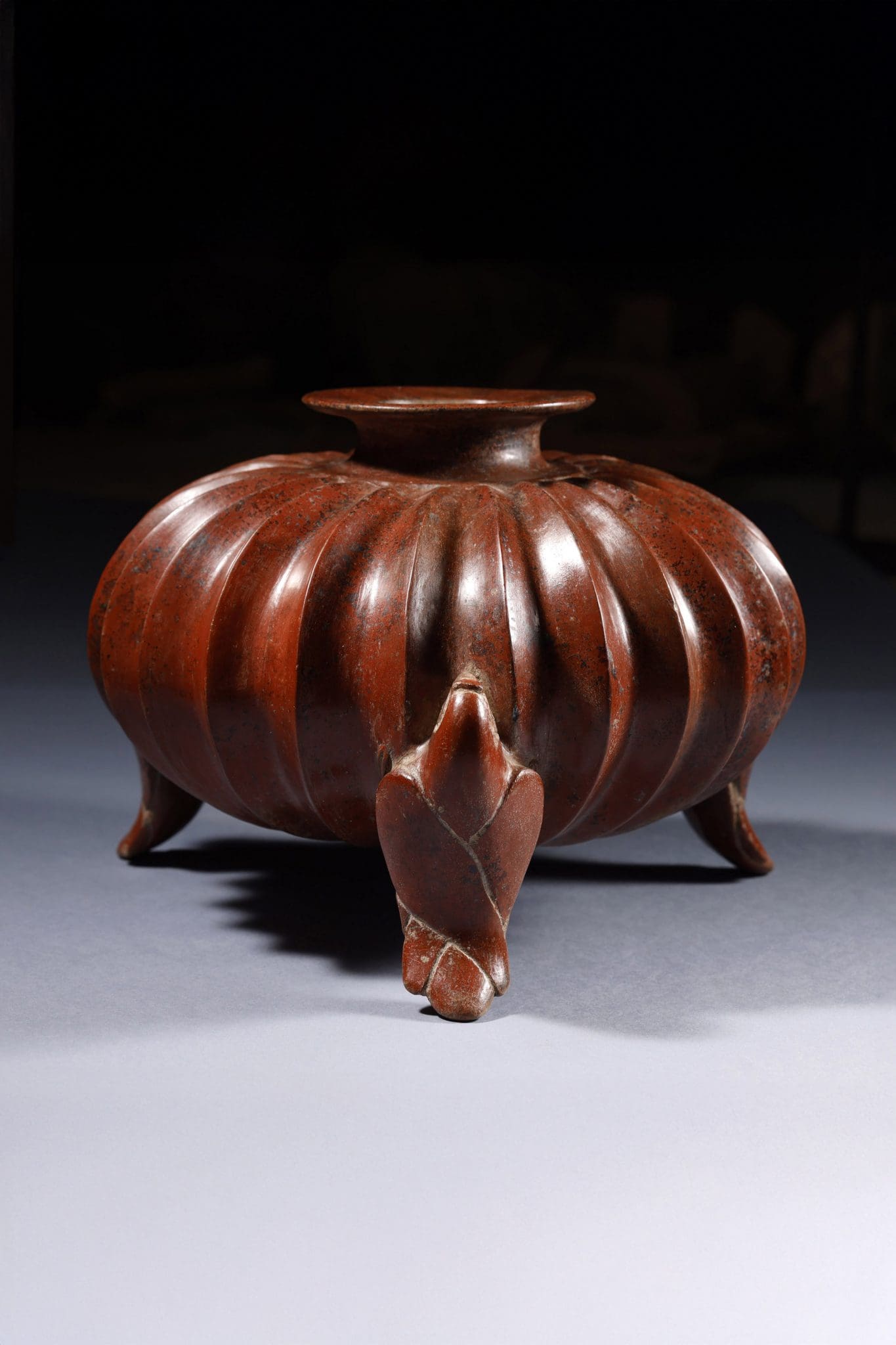
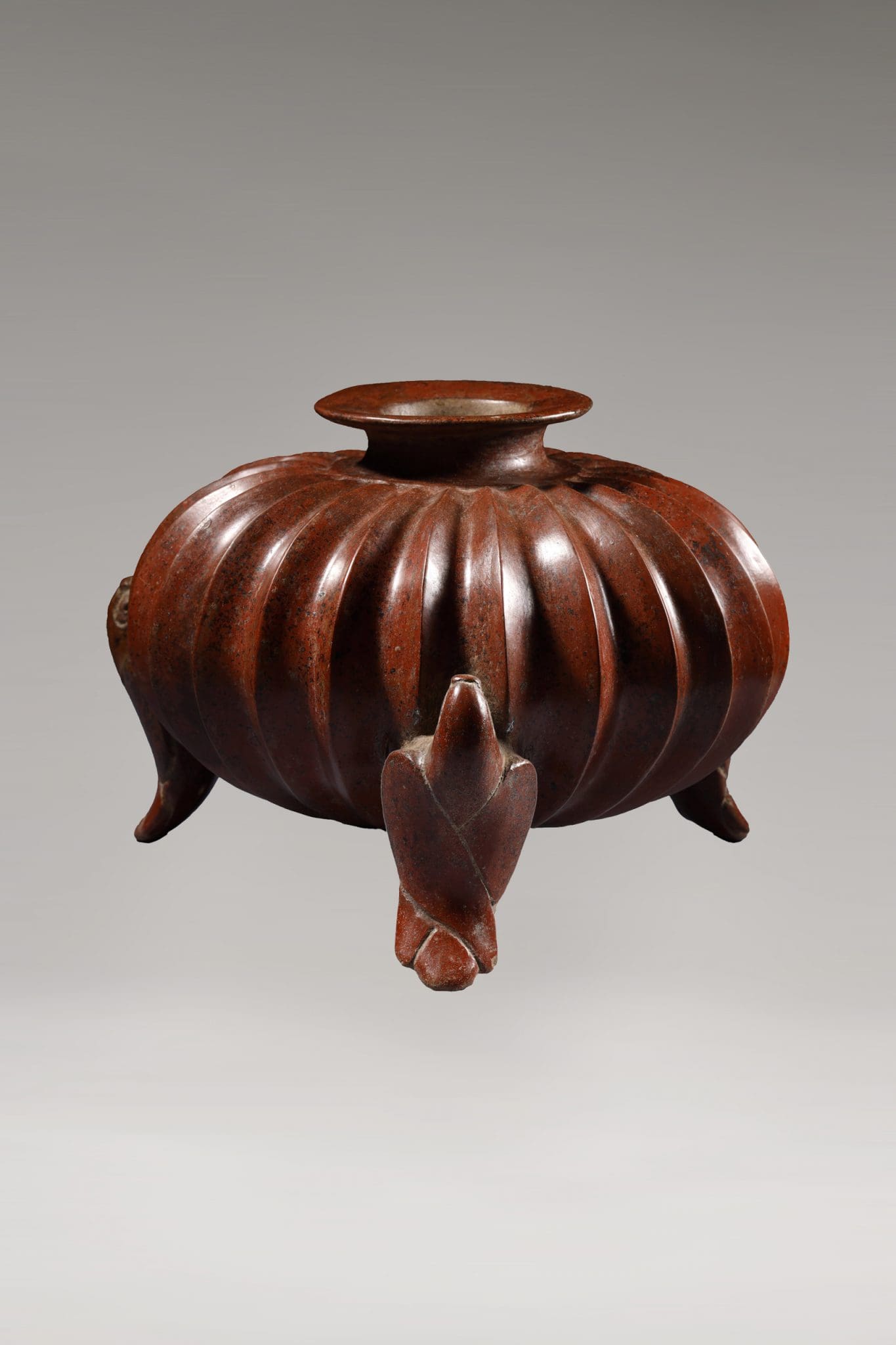
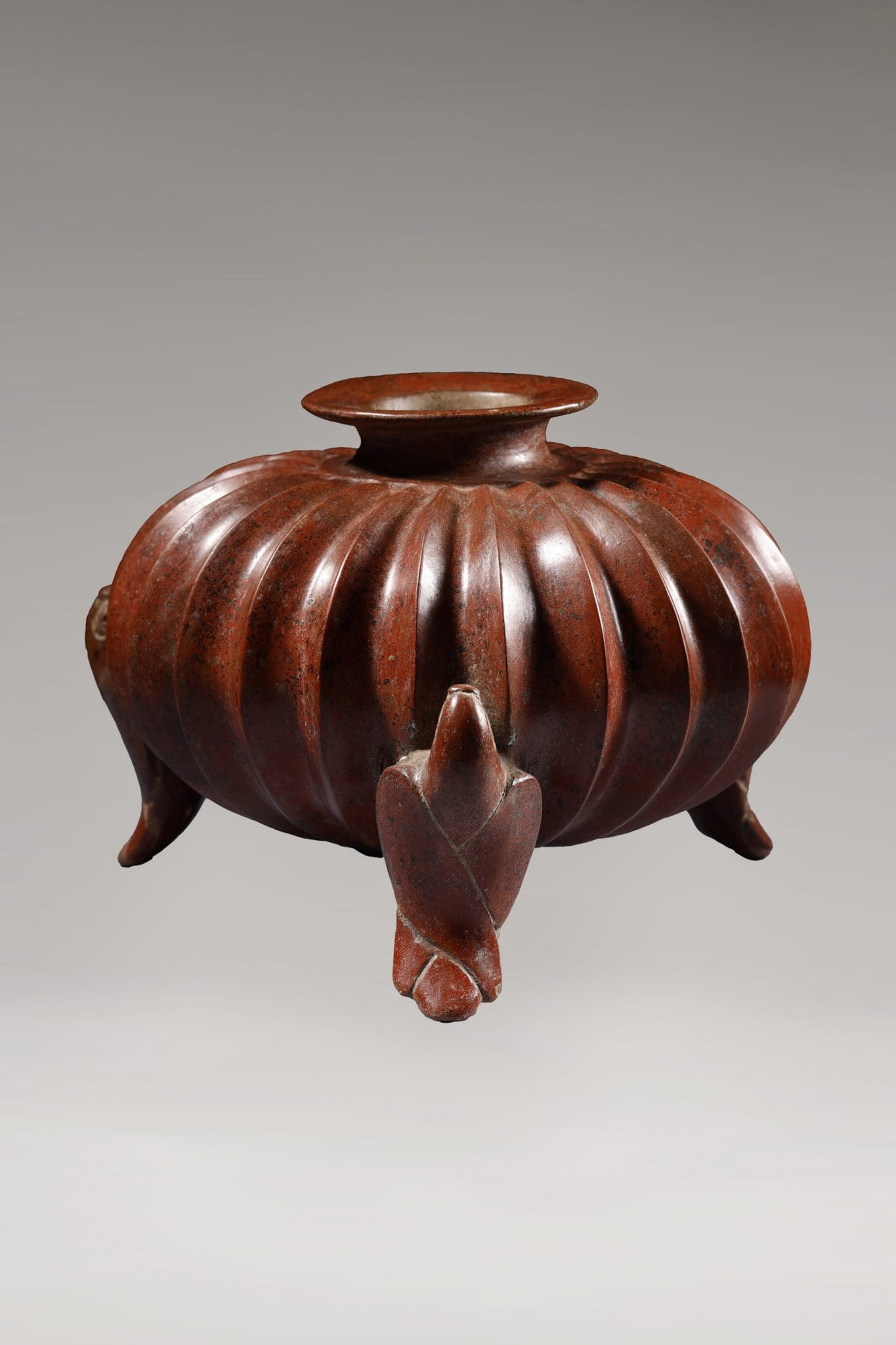
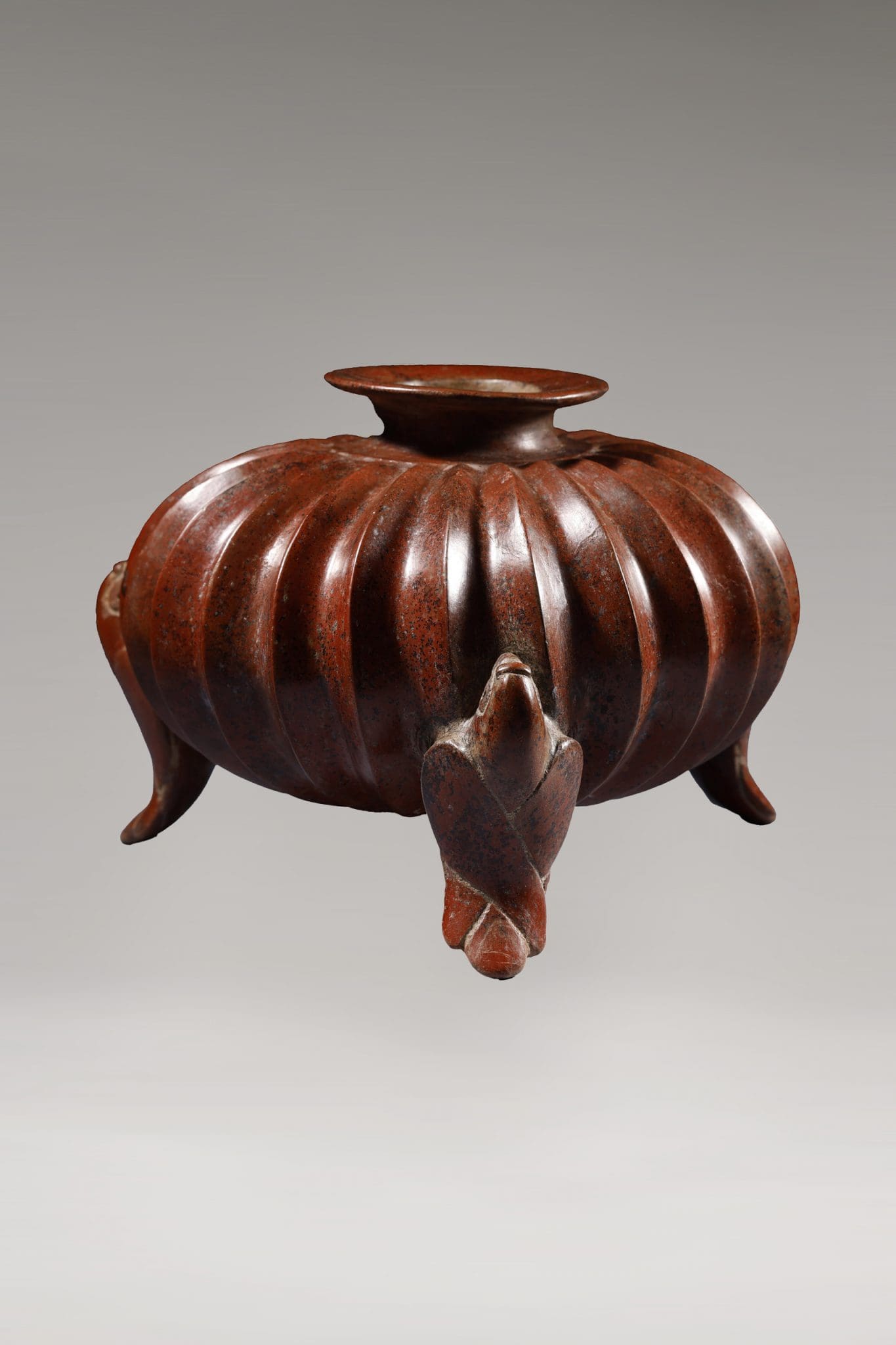
The ceramic tradition of Colima — one of the three western Mexican states whose art is grouped under the designation “shaft tomb cultures,” alongside Jalisco and Nayarit — produced some of the most immediately appealing and technically accomplished ceramic art of pre-Columbian Mesoamerica. Named for the deep shaft tombs in which they were deposited as funerary offerings, Colima ceramics date primarily to the Formative and Early Classic periods (approximately 300 BCE to 300 CE) and are distinguished by their burnished red-orange surfaces, their preference for zoomorphic and figural subjects, and a quality of observed naturalism that sets them apart from the more schematic ceramic traditions of central Mexico. Dogs — particularly the hairless Xoloitzcuintli breed — are among the most recognisable Colima subjects, but birds, armadillos, fish, and a wide range of domestic and wild animals appear with equal vivacity across the corpus. This Vessel with Birds, dating to 250–100 BCE, exemplifies the earliest and most refined phase of the tradition, its modelled avian figures demonstrating the Colima potter’s ability to integrate sculptural and functional concerns within a single cohesive object.
Form, Surface, and Avian Imagery
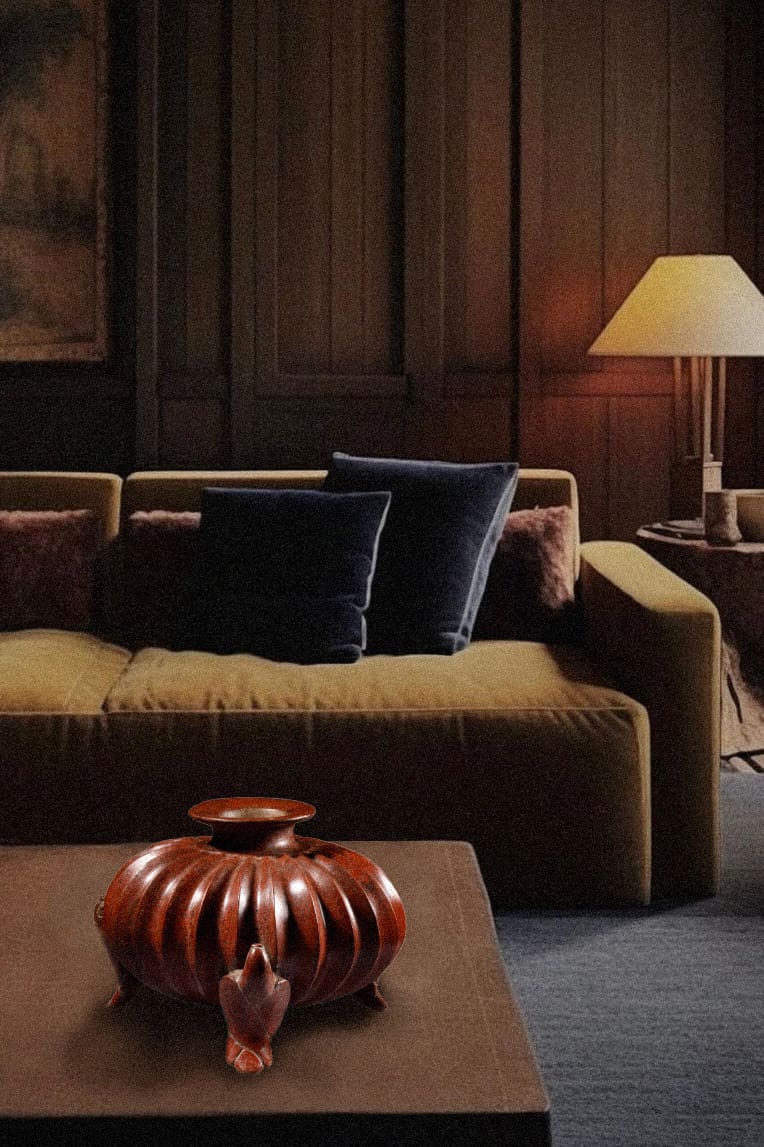
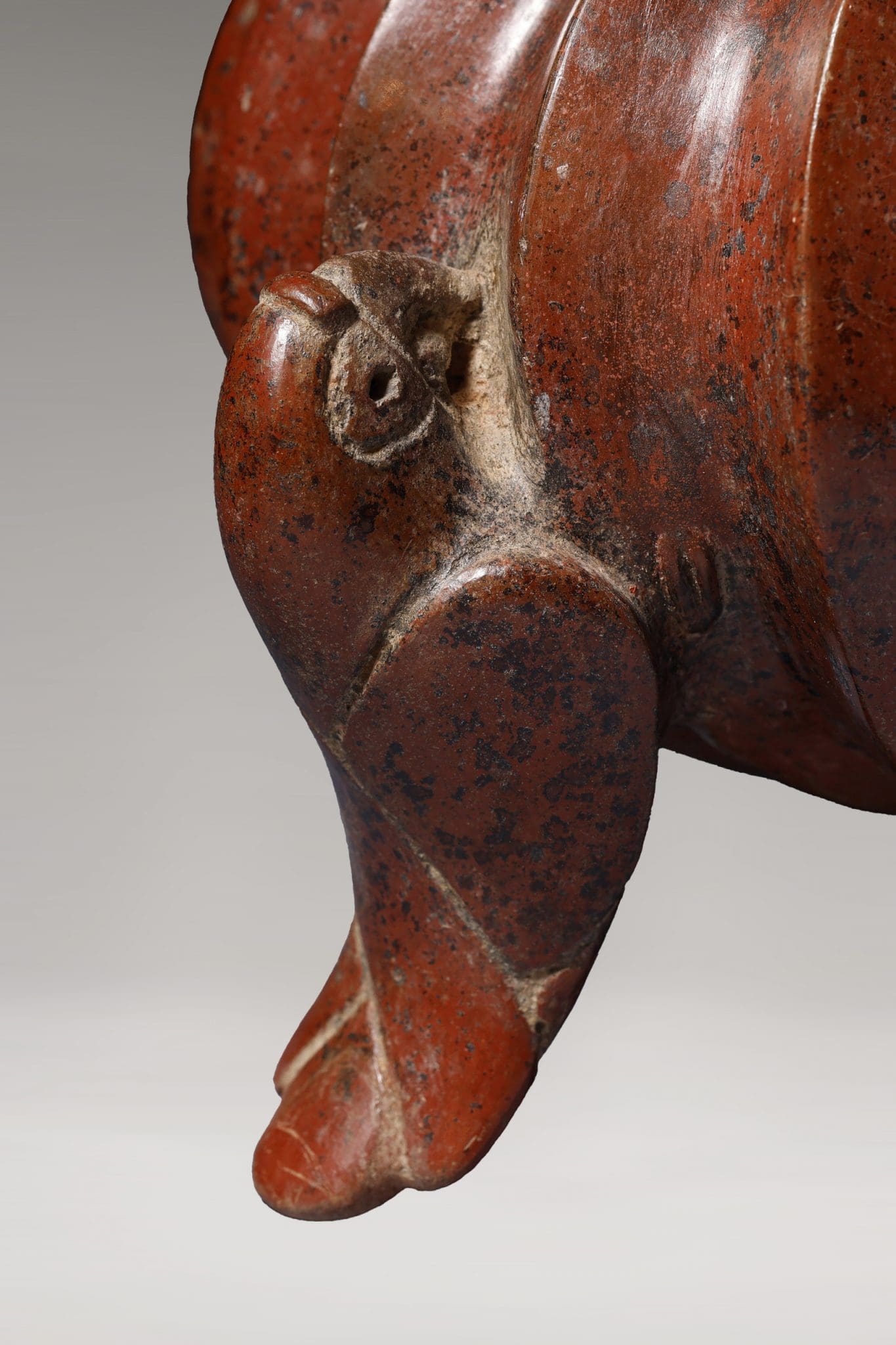
The vessel presents as a rounded terracotta form from whose surface modelled bird figures project with a three-dimensional vivacity that transforms the functional container into a sculptural ensemble. The burnished red-orange surface, achieved through careful smoothing before firing and subsequent slip application, provides a warm chromatic ground against which the sculptural details of the birds read with particular clarity: beaks, wings, and tail feathers articulated with confident economy of means. This surface treatment is the defining technical achievement of the Colima tradition, producing an effect of almost metallic lustre that has contributed greatly to the appreciation of these works by modern collectors and museum curators. At 29.5 × 29.5 × 23 centimetres, the vessel is a substantial presence — large enough to have served as a significant funerary deposit, small enough to have been placed precisely within the shaft tomb context for which it was made.
Pre-Columbian Ceramics in the European Collection
Colima ceramics have occupied a distinguished position in European and American collections since the mid-twentieth century, when their formal qualities — the smooth surfaces, the dynamic sculptural forms, the inventive zoomorphic subjects — brought them to the attention of modernist artists and collectors who saw in them a kinship with the formal language of European avant-garde sculpture. Henry Moore, Diego Rivera, and André Breton were among the admirers of western Mexican pre-Columbian ceramics, and their advocacy helped establish these works in the canon of world art. Today, pieces of the quality represented by this Vessel with Birds — in perfect conservation, with a solid Spanish private collection provenance, and dating to the earliest phase of the tradition — are rarely encountered outside institutional collections. For the collector of pre-Columbian art, this vessel offers the combination of formal elegance, archaeological significance, and historical depth that defines a serious acquisition.




 No products in the cart.