

The Suku People and the Art of the Ceremonial Vessel
Among the many peoples of the Democratic Republic of Congo, the Suku occupy a territory in the Kwango River region of Southwestern Congo — a landscape of savannahs and forest galleries that has produced some of Central Africa’s most compelling sculptural traditions. Though perhaps less internationally recognised than their Kuba or Yombe neighbours, the Suku developed a rich corpus of carved objects tied to political authority, male initiation, and ancestral veneration. Carved cups represent some of the most intimate objects in Suku material culture. Unlike monumental masks or figures meant to be displayed in public ceremony, drinking cups occupied a more personal register — used by chiefs, elders, and initiated men during specific rituals where palm wine or millet beer was consumed in carefully prescribed sequence. The act of drinking from a Suku carved cup was itself meaningful: it connected the drinker to the maker of the form, to the ancestor whose features might be rendered upon it, and to the community for whose benefit the ritual was performed.
Form Carved from a Single Block
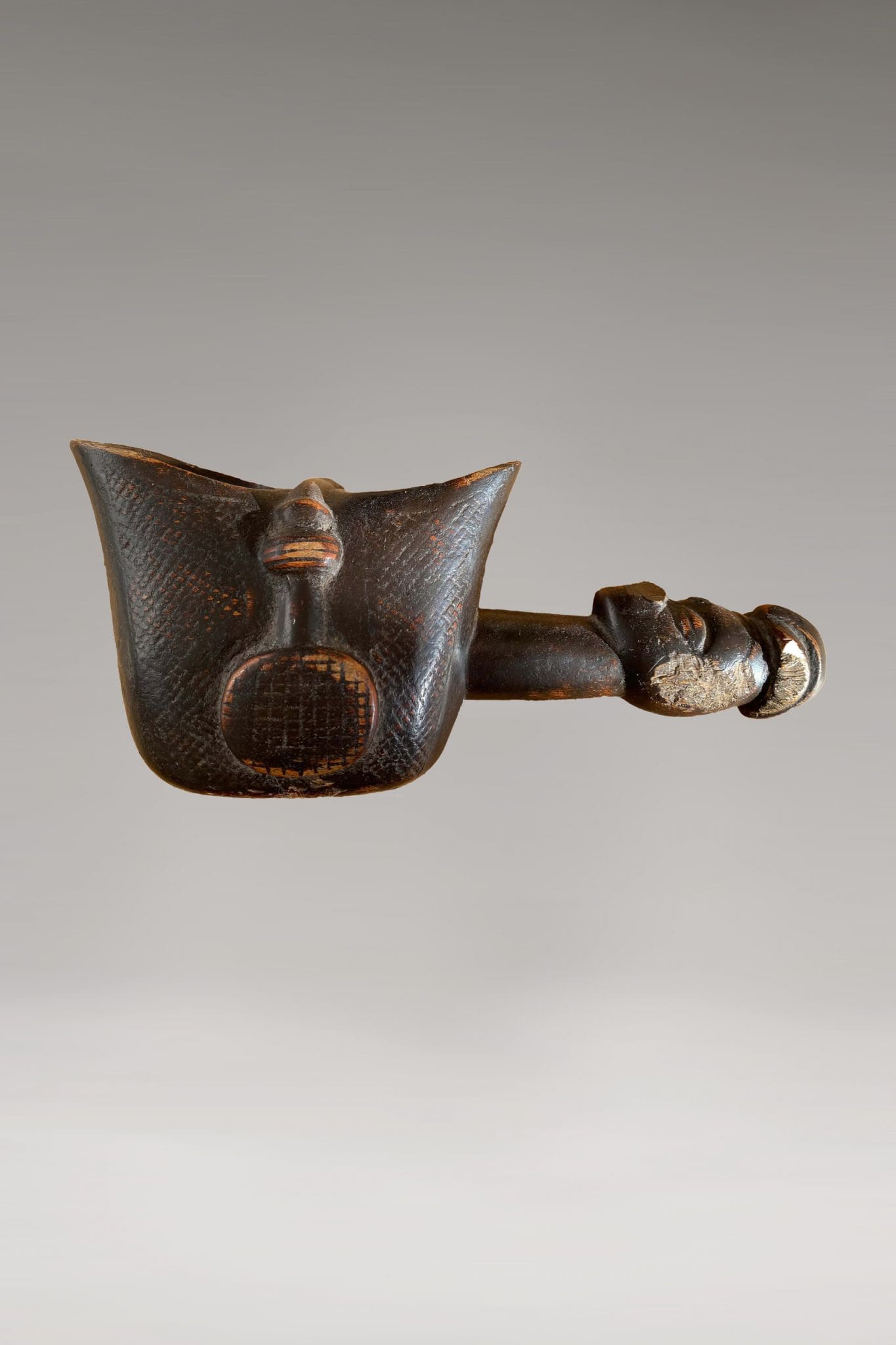
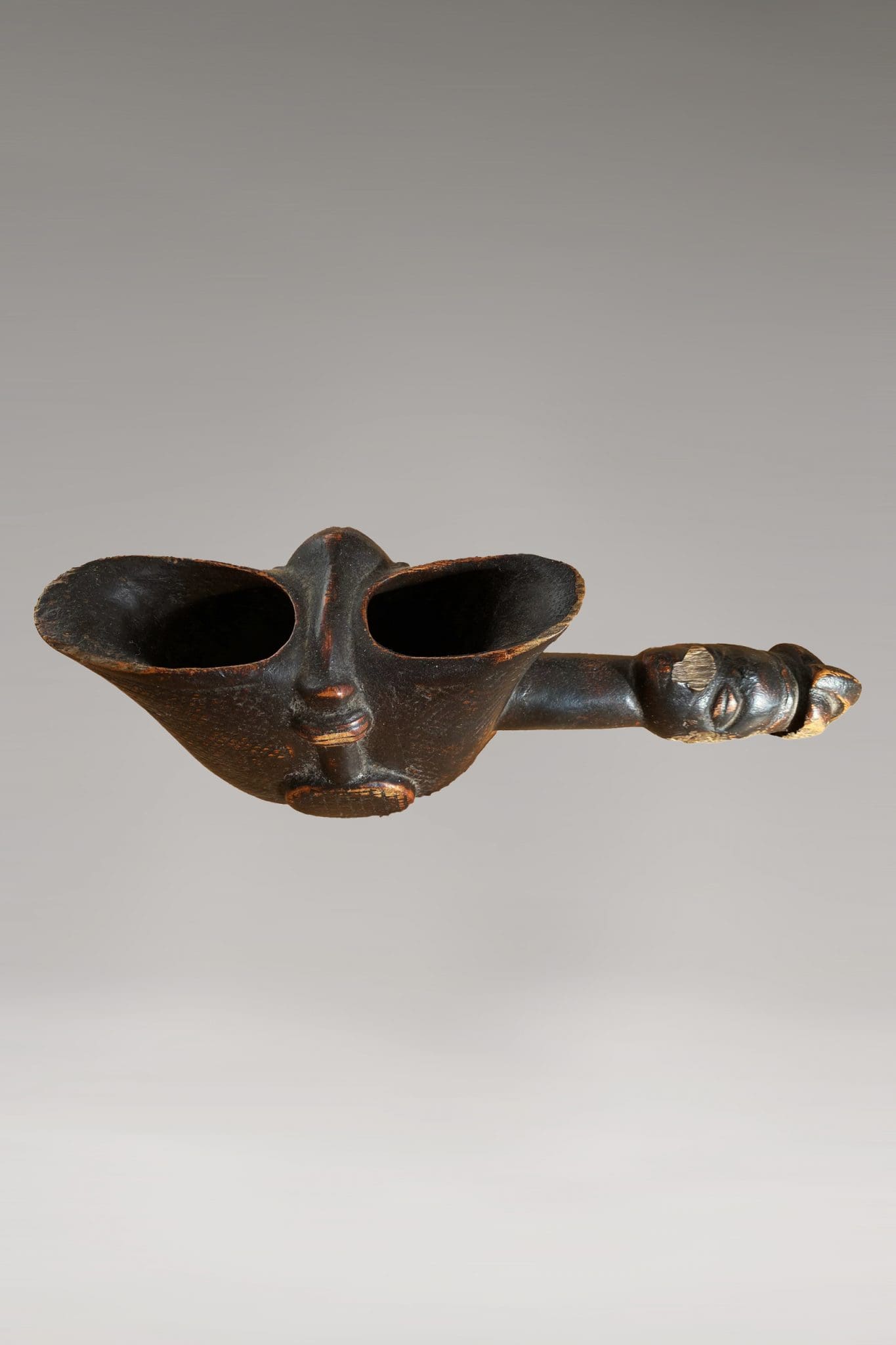
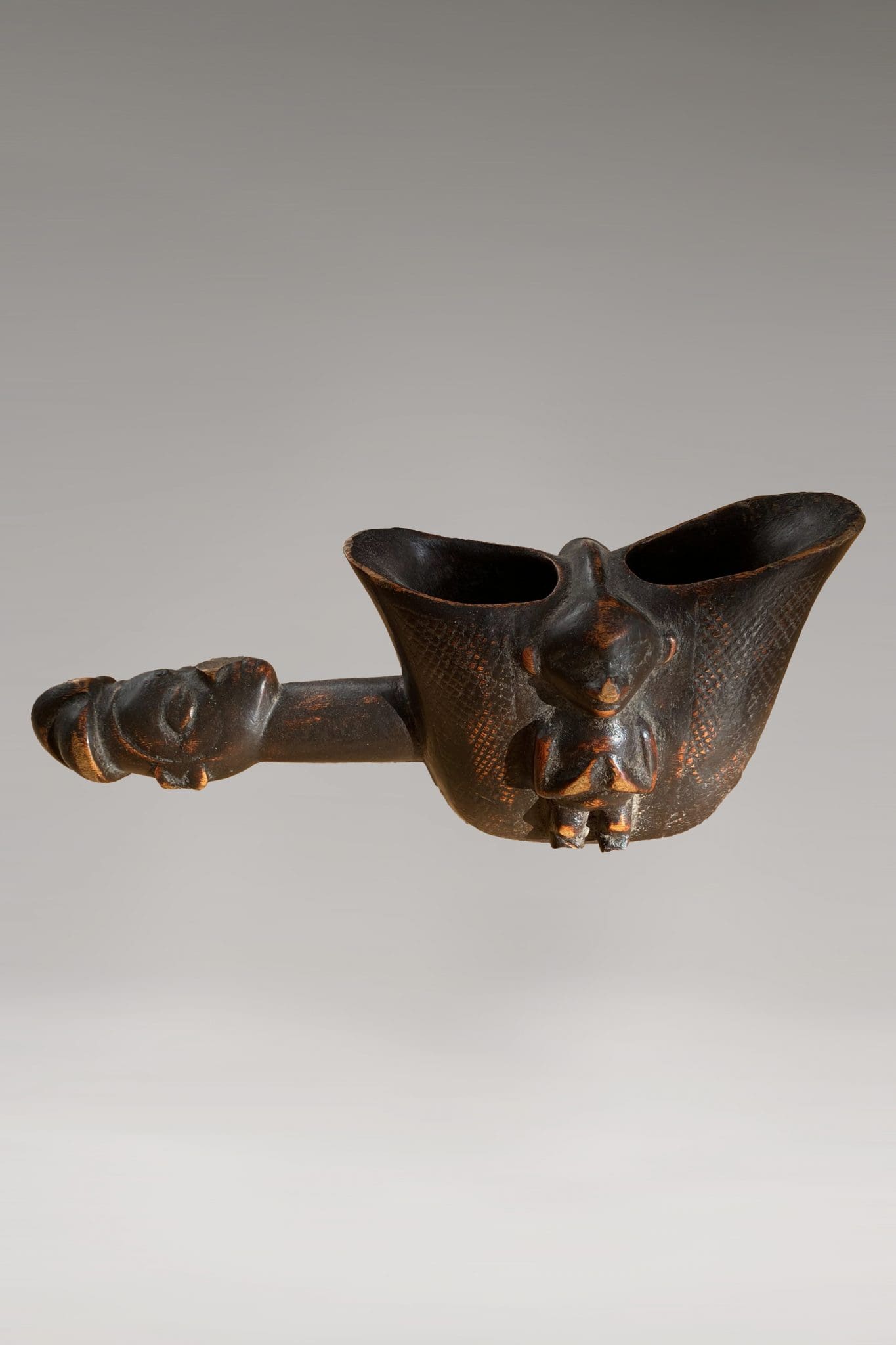
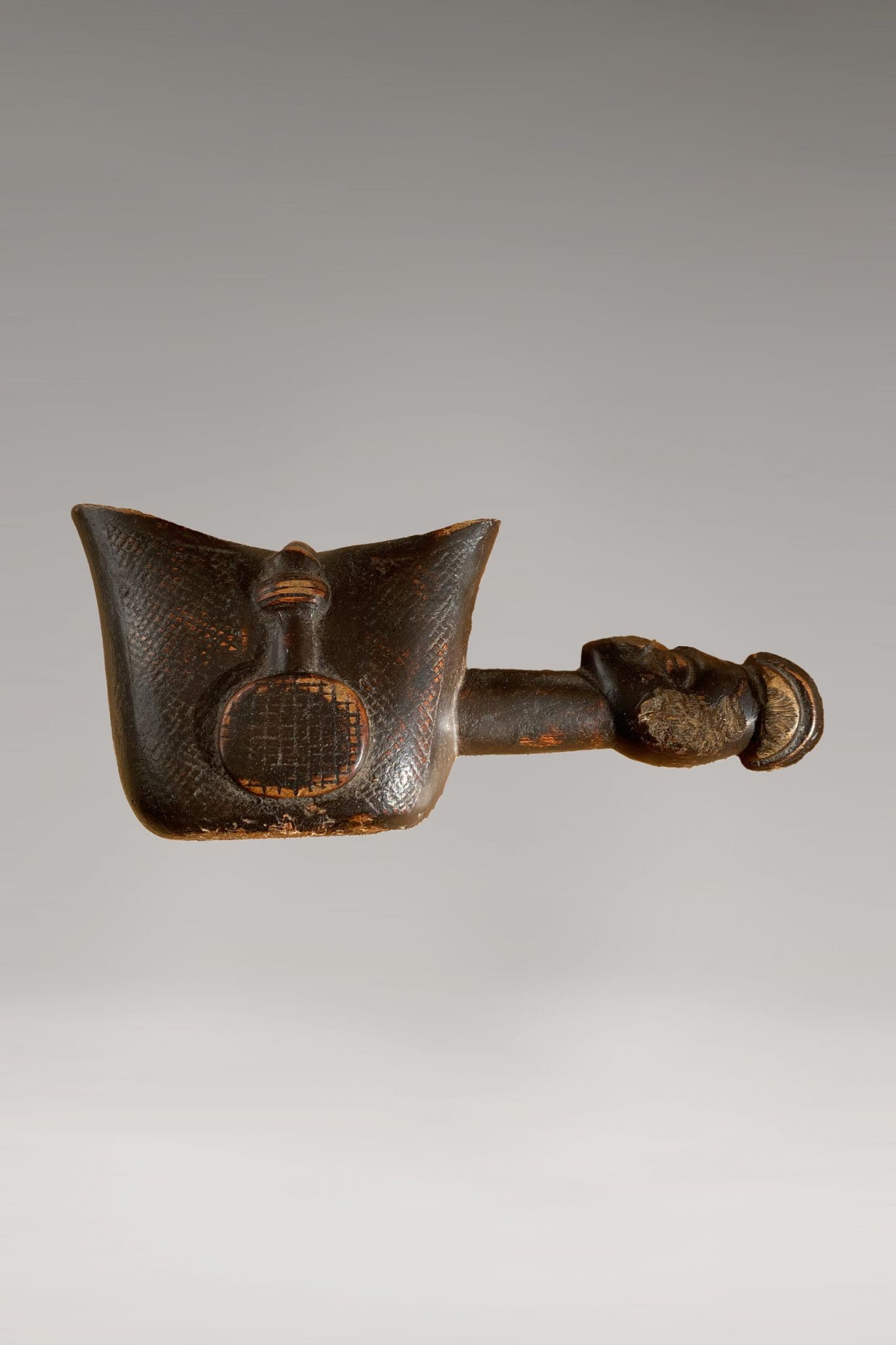
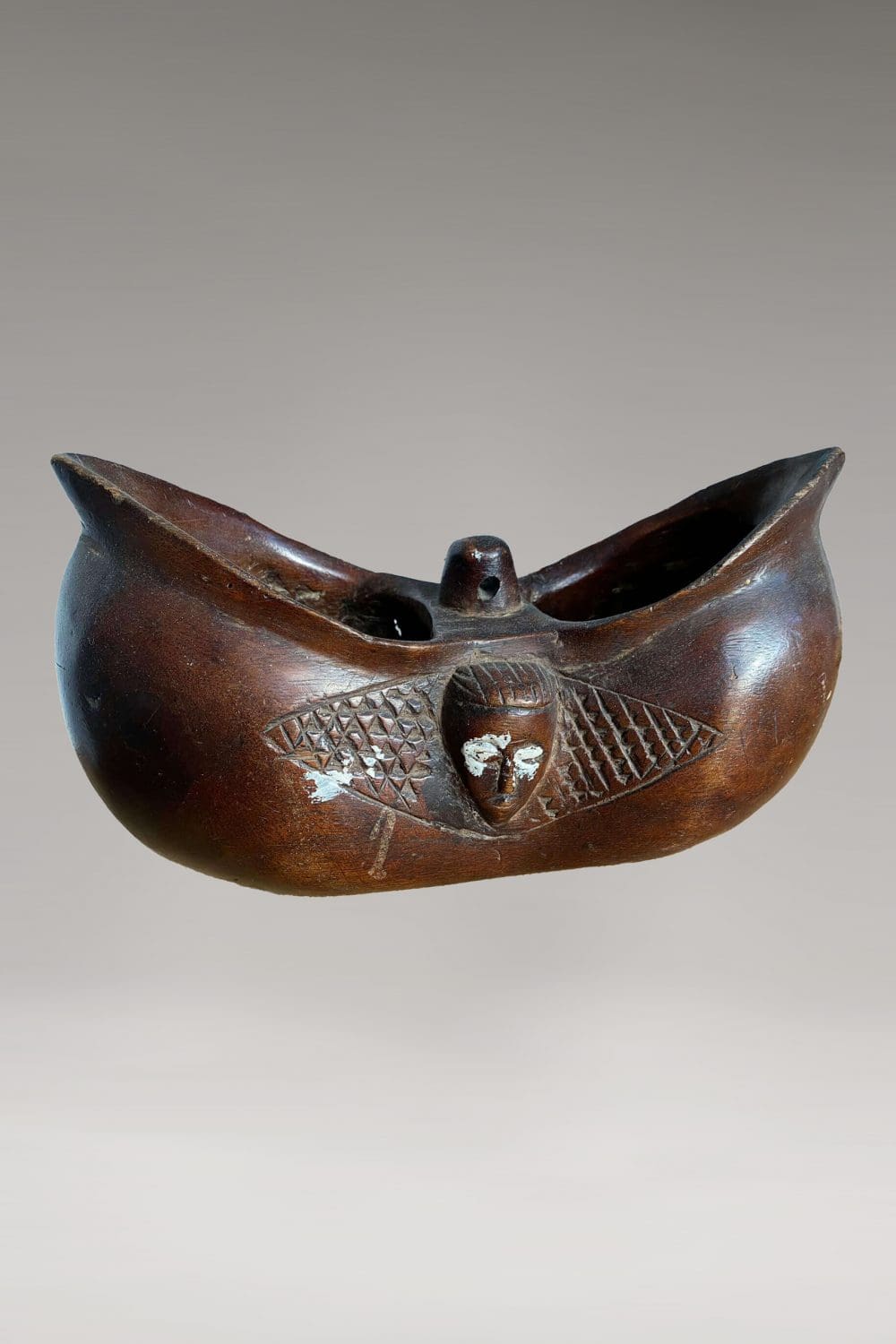
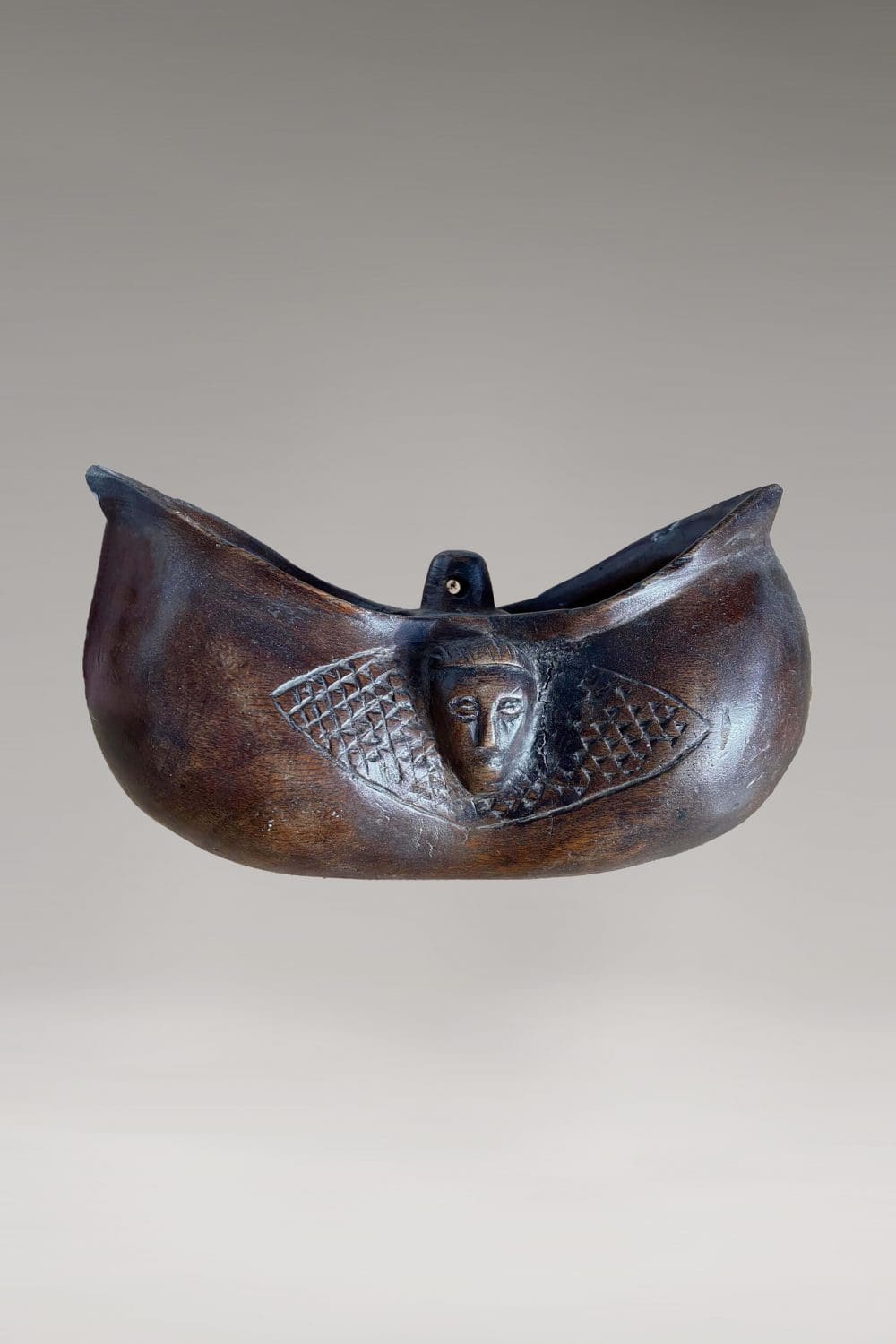
At 26 centimetres tall and carved from a single piece of wood, this Suku cup demonstrates the economy and confidence that characterise the finest African functional sculpture. African carvers working within established formal traditions were not merely craftsmen — they were practitioners of a visual language whose grammar had been developed over generations. Every decision — the depth of the relief, the angle of a handle, the treatment of a base — reflected both aesthetic choice and cultural convention. The patina on Suku cups of this kind records use: the absorption of oil, wine, and handling over time creates a surface that no restoration can replicate. This patina is among the primary markers collectors and ethnographers use to assess whether an object was made and used within its cultural context, or produced for external markets.
The Kwango Region and Its Artistic Legacy
The Kwango River basin has been a zone of artistic and political exchange for centuries. The Suku themselves are thought to have migrated southward from the Great Lakes region, absorbing and transmitting sculptural ideas as they settled their present territory. Their art shares certain formal qualities with neighbouring peoples — the Yaka, the Holo, the Pende — while retaining distinctly Suku characteristics: a particular treatment of facial features, a preference for certain volumetric proportions, and an integration of functional and ceremonial purpose that gives their carved objects an unusually direct presence. A Suku cup in good condition, bearing the marks of genuine use, is a relatively uncommon find in the international market. It represents not a trophy of conquest but an invitation into the daily and ceremonial life of a community that developed, across generations, one of Central Africa’s quieter but most genuine artistic traditions.

 No products in the cart.