

Byron and the Romantic Portrait Tradition
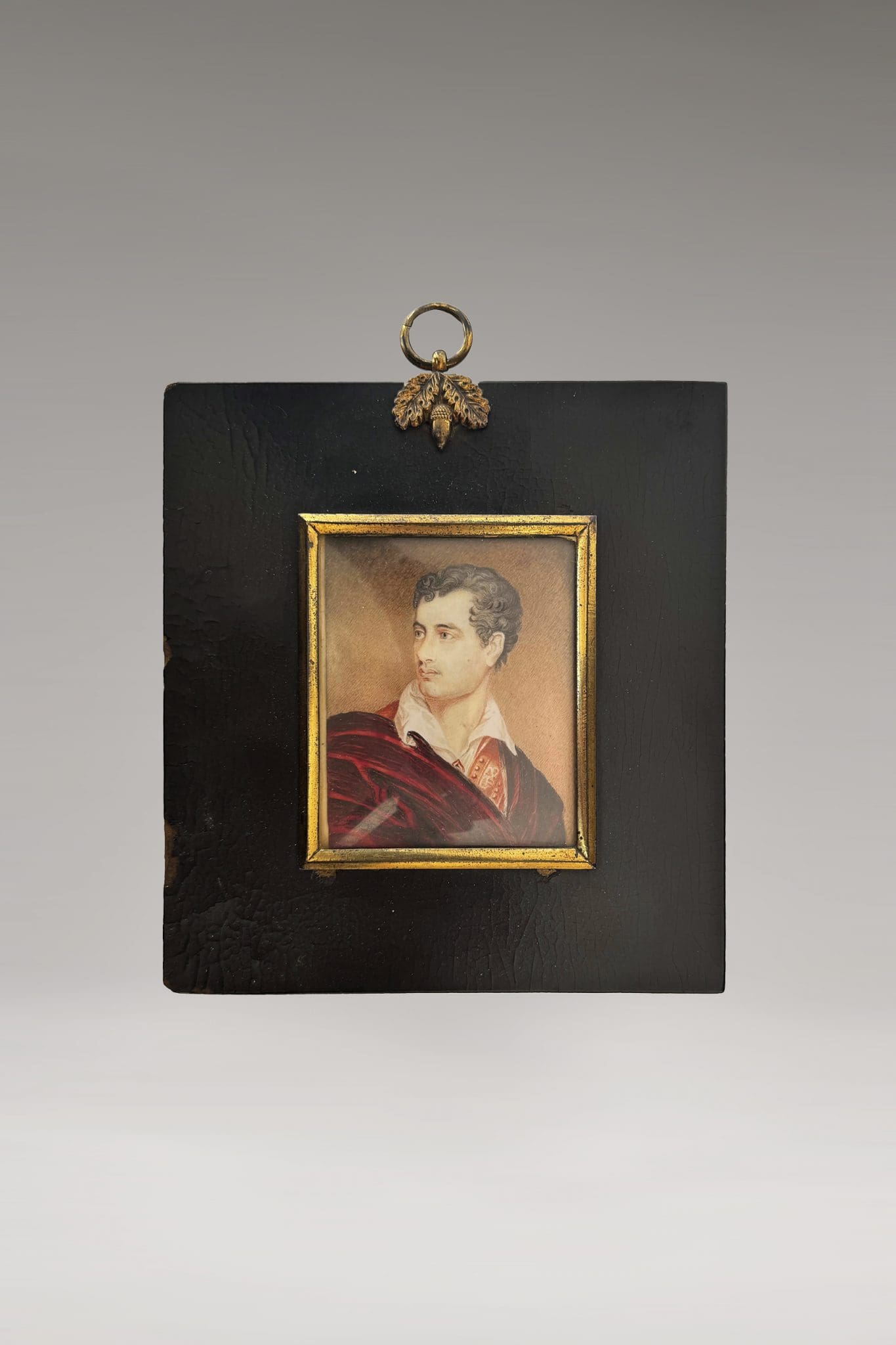
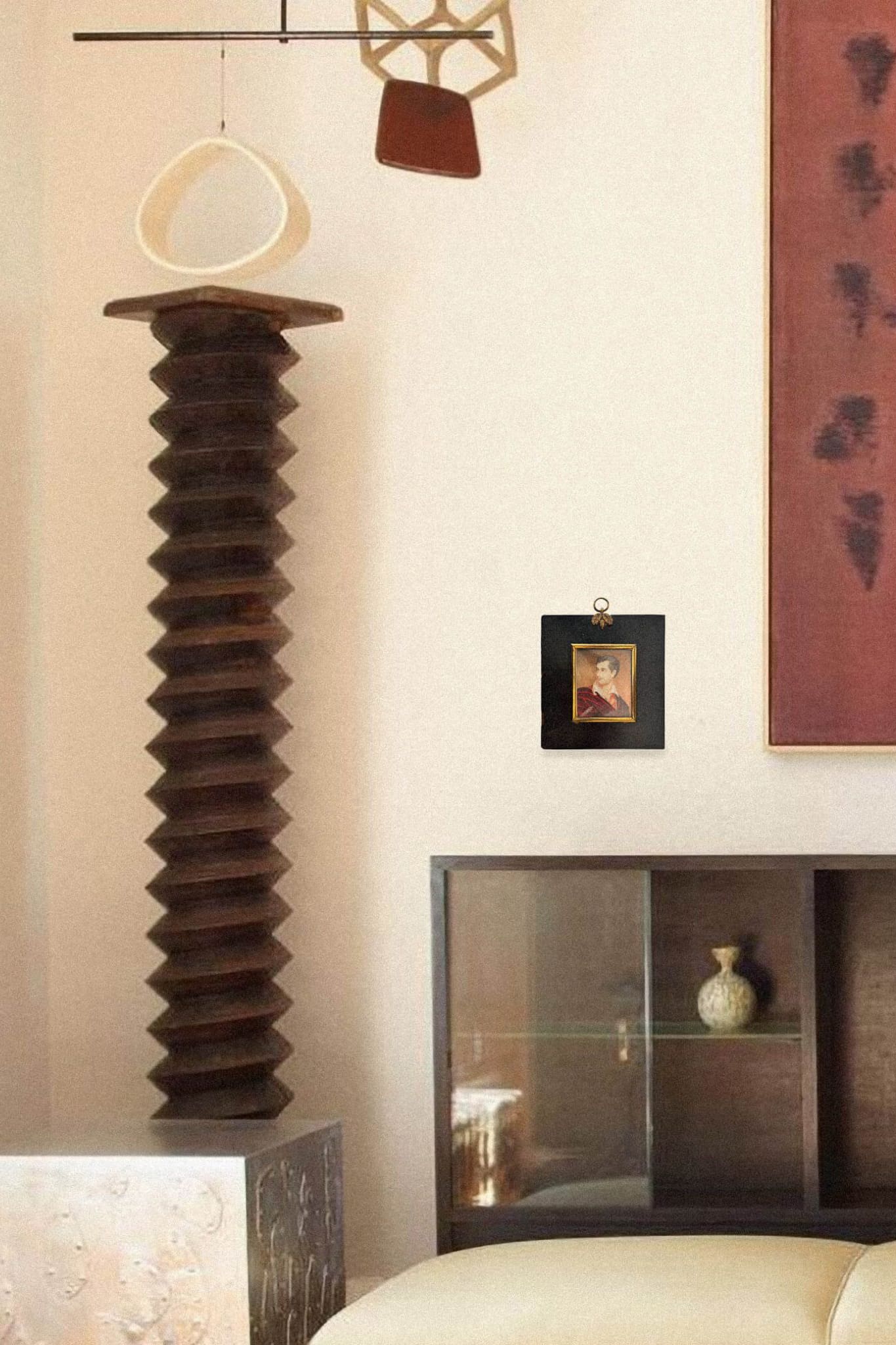
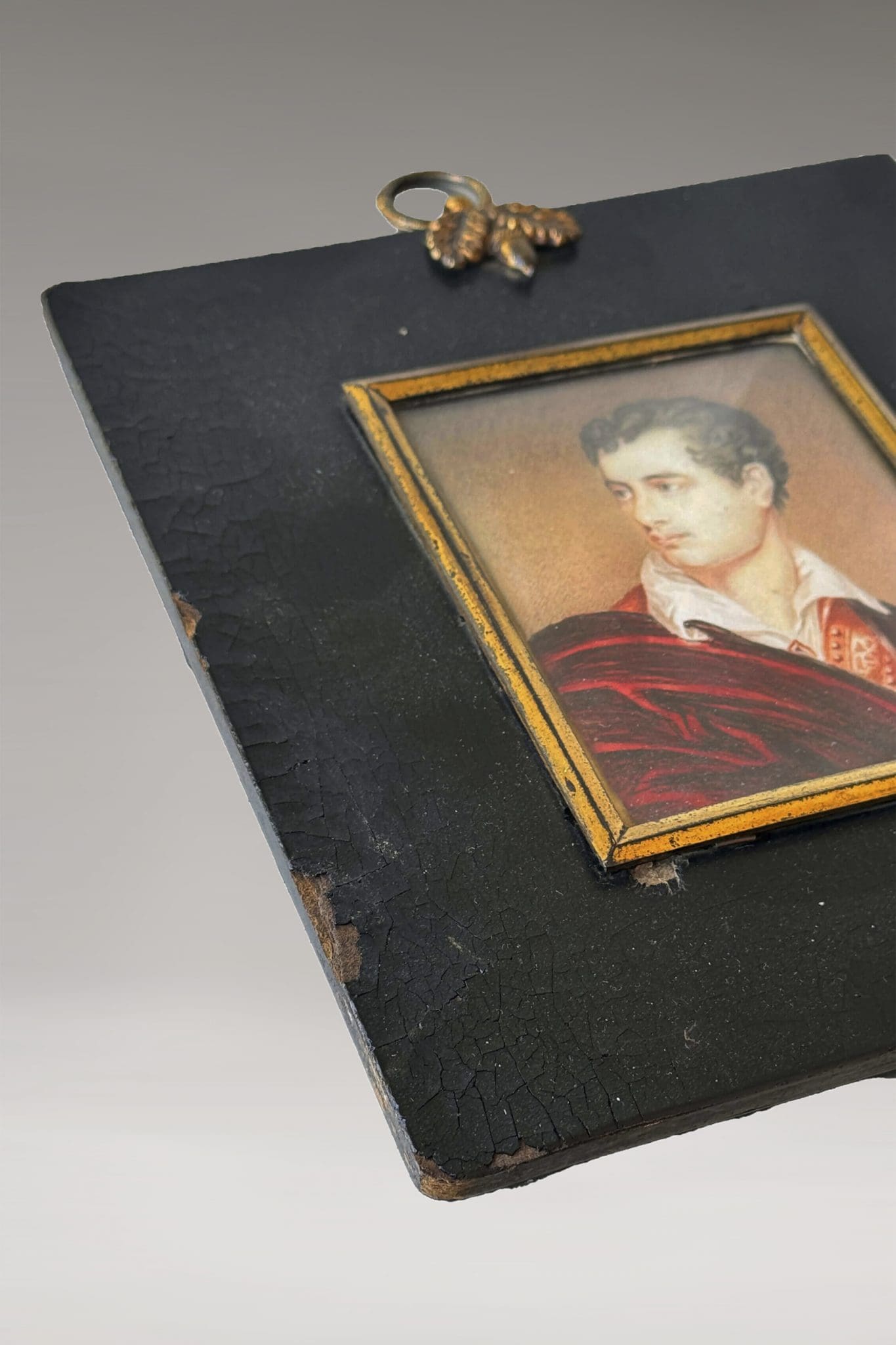
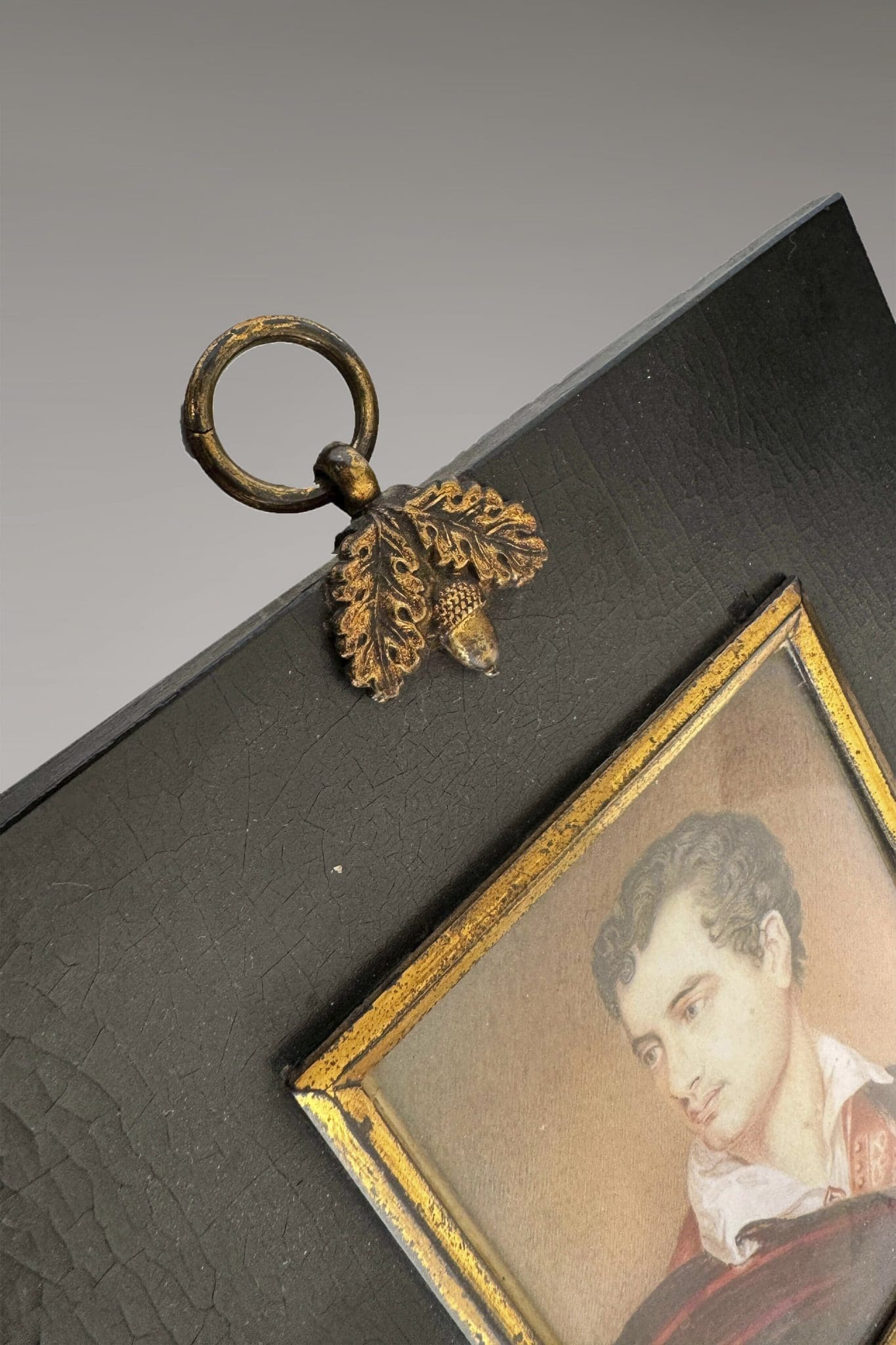
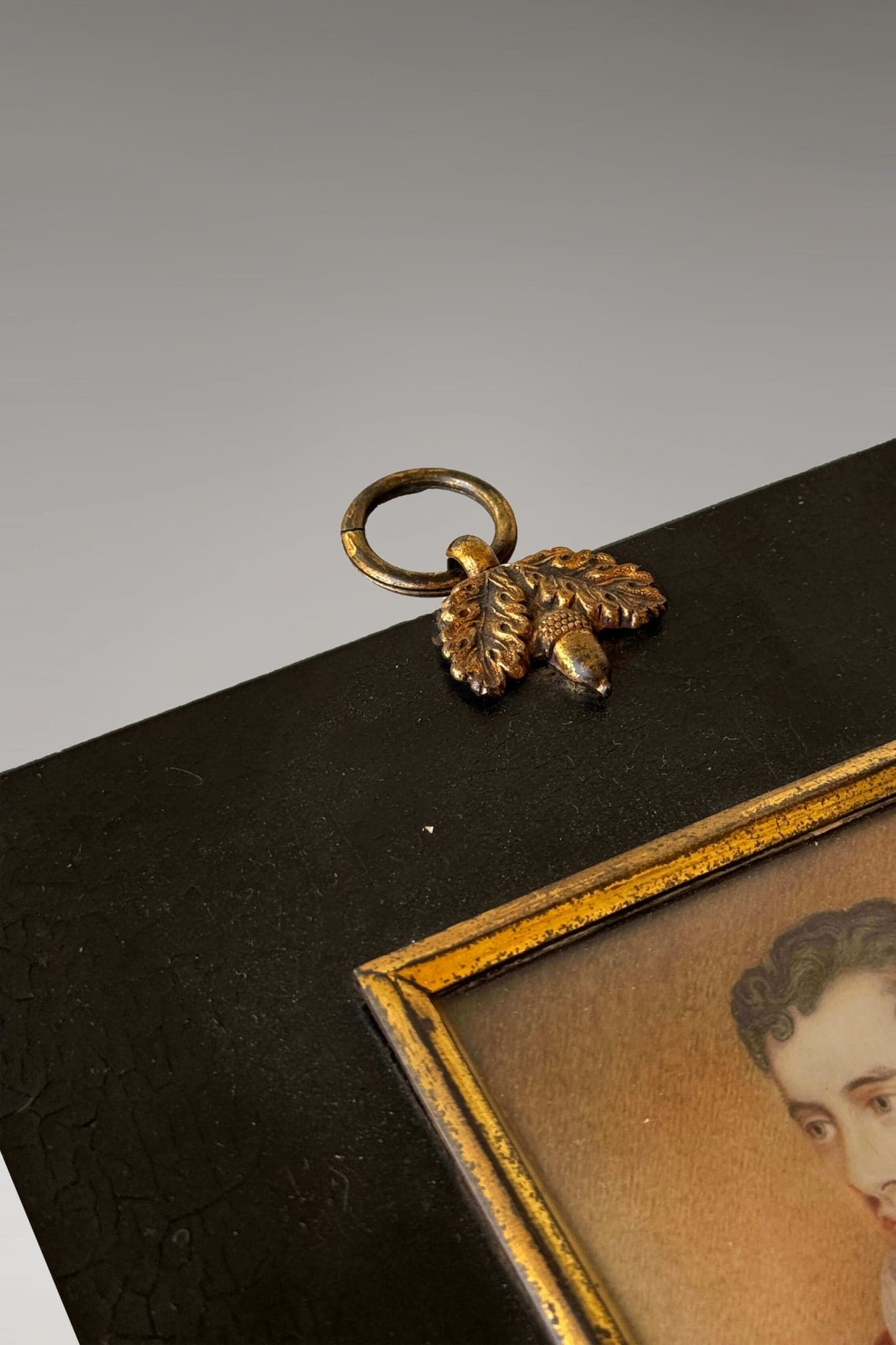
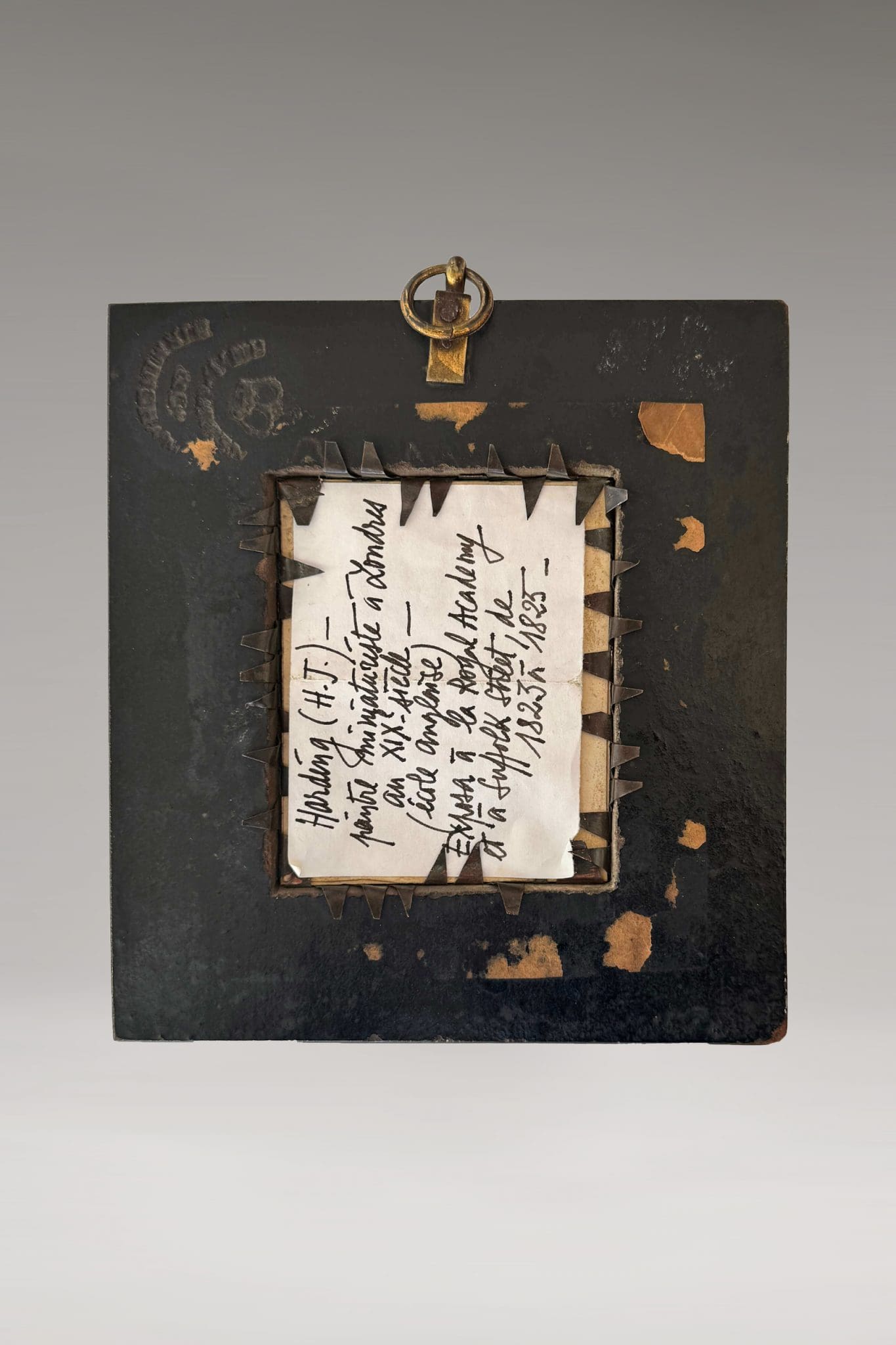
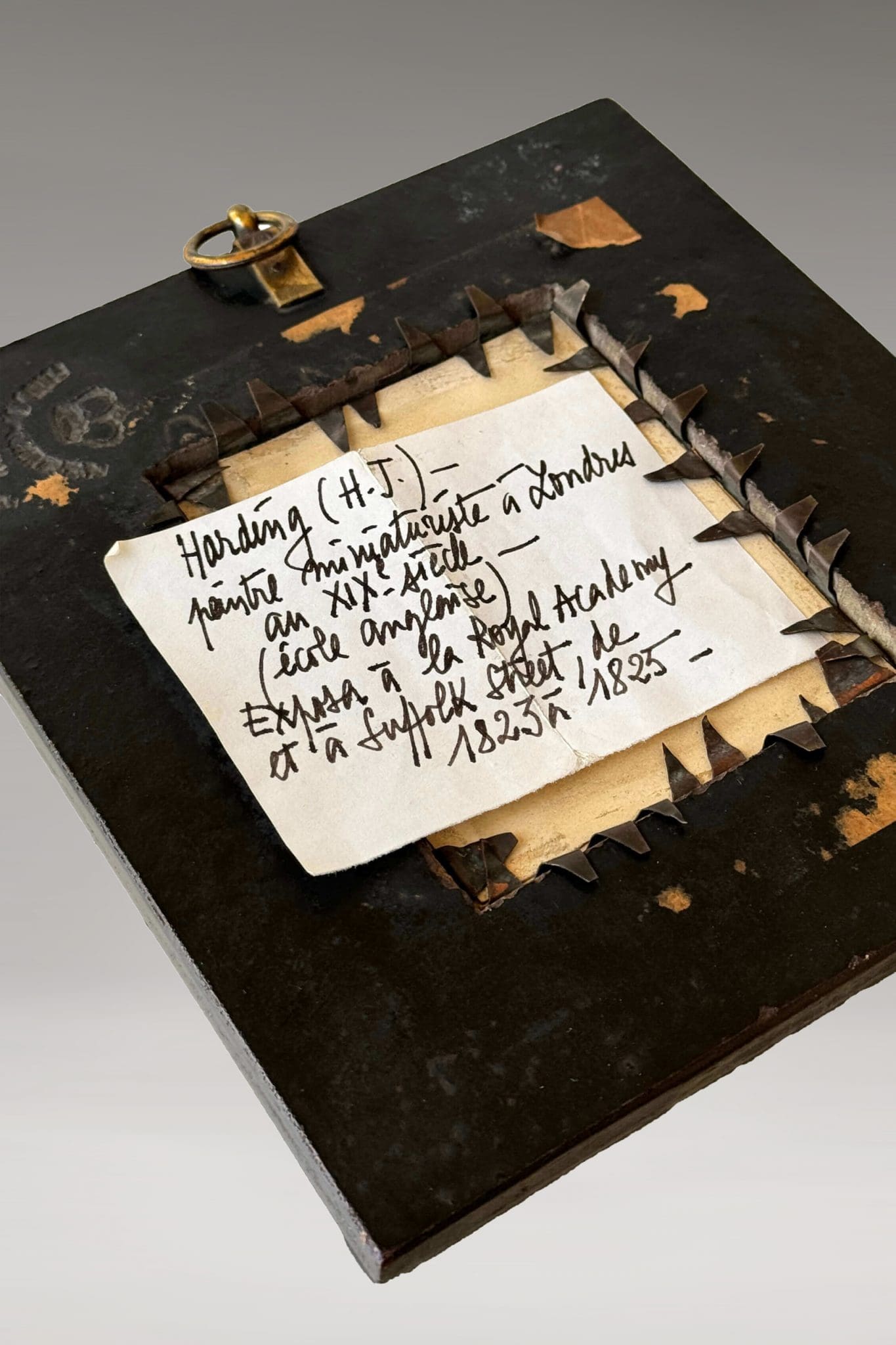
George Gordon Byron, 6th Baron Byron, died in Missolonghi, Greece, on 19 April 1824, at the age of thirty-six — having crossed to Greece the previous year to support the cause of Greek independence from the Ottoman Empire. He left behind a body of poetry that had made him the most famous living literary figure in Europe, a personal legend of spectacular scandal and self-dramatisation, and a death that instantly became one of the defining Romantic acts: the poet giving his life for freedom. In the years following his death, the demand for Byron’s image — already considerable during his lifetime — intensified into something approaching a cult. Portrait miniatures in particular circulated among admirers who wished to keep his likeness close: in a locket, on a desk, or in a private cabinet of objects associated with the people and ideas they revered. This watercolour on ivory miniature, attributed to H.J. Harding and dated to circa 1830, belongs precisely to this post-mortem devotional tradition.
Miniature Portraiture on Ivory: A Technique at Its Peak
The practice of painting portrait miniatures on ivory — introduced into English practice in the late 18th century and reaching its peak of refinement in the early 19th — represents one of the most technically demanding branches of watercolour art. Ivory presented challenges that paper and vellum did not: its surface was non-absorbent, requiring a different approach to colour application; its translucency meant that flesh tones glowed with a warmth that no paper ground could replicate; and its tendency to warp demanded careful preparation and mounting. The best miniaturists of the period — George Engleheart, Andrew Robertson, and their contemporaries — developed techniques that exploited these properties to achieve a luminosity and skin-tone realism that made ivory miniature portraiture the most sought-after format for intimate likenesses in the Regency period. A miniature attributed to H.J. Harding, working in this tradition, would have been made for a client who valued both the quality of the likeness and the material refinement of the format: a small luxury object for someone who knew what they were looking at.
Byron in Posterity
The Byron of this circa 1830 miniature is already a figure of legend: the man is dead, but the image-making has barely begun. The 1820s and 1830s would see an explosion of Byron-related imagery — prints, paintings, sculptures, theatrical productions — as European Romanticism claimed him as its martyr and symbol. A miniature portrait from this moment occupies an interesting position: it is personal enough (the format, the scale, the material) to suggest private devotion, and at the same time part of a massive cultural production of Byron images. To own this miniature was to participate in one of the 19th century’s first great celebrity cults, to keep a piece of the legend — framed in ivory and watercolour — within arm’s reach.
 No products in the cart.