

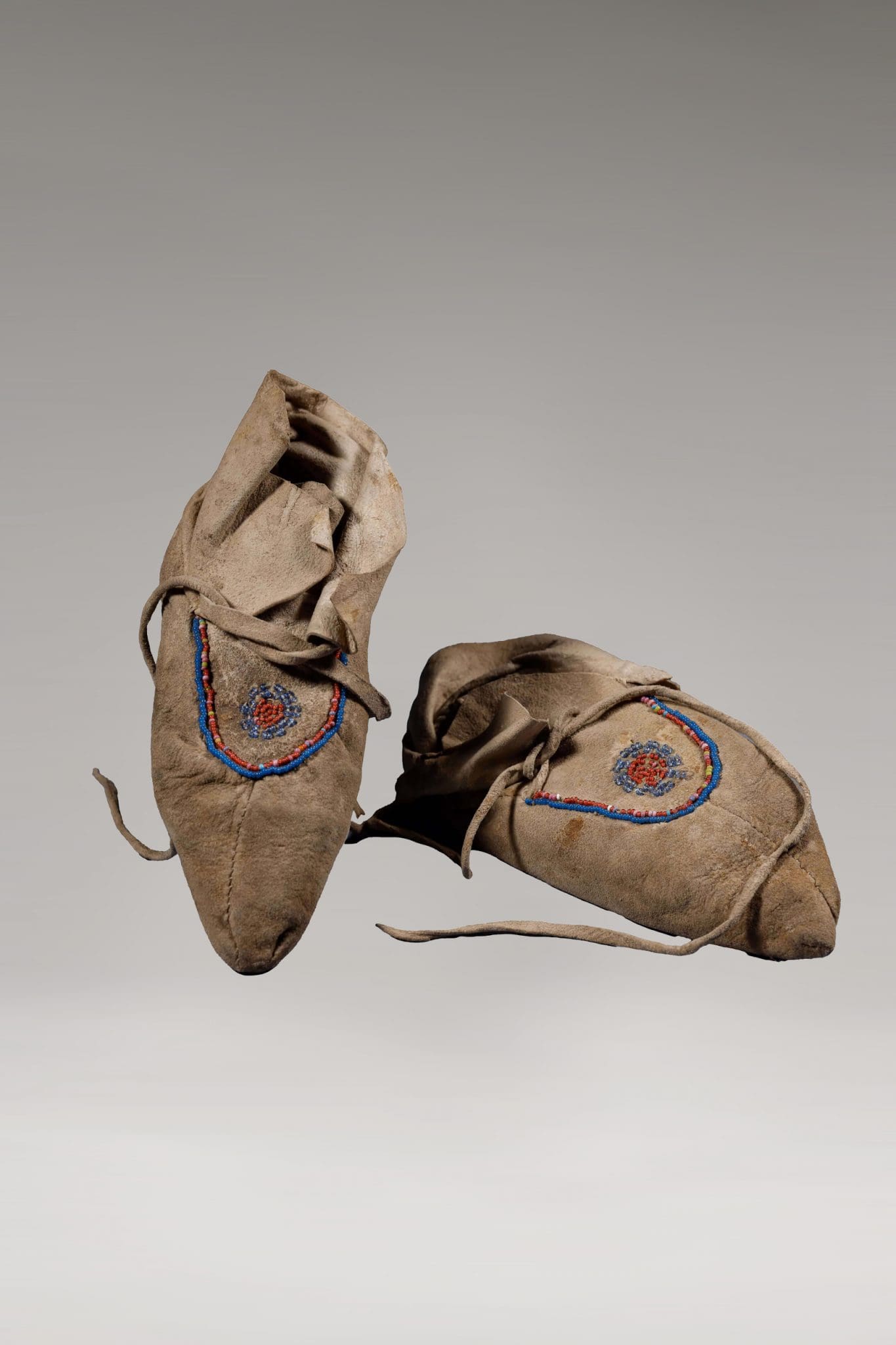
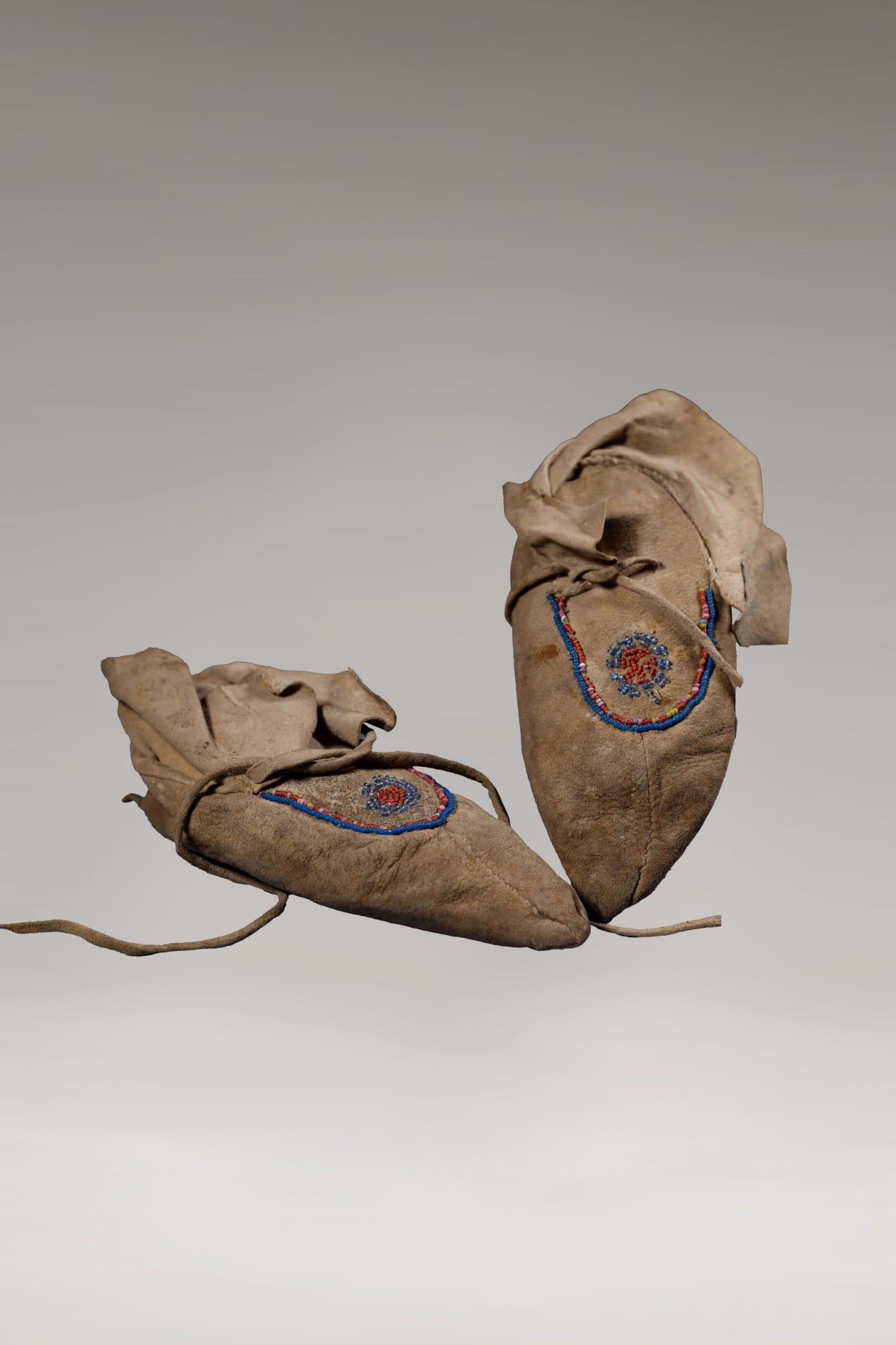
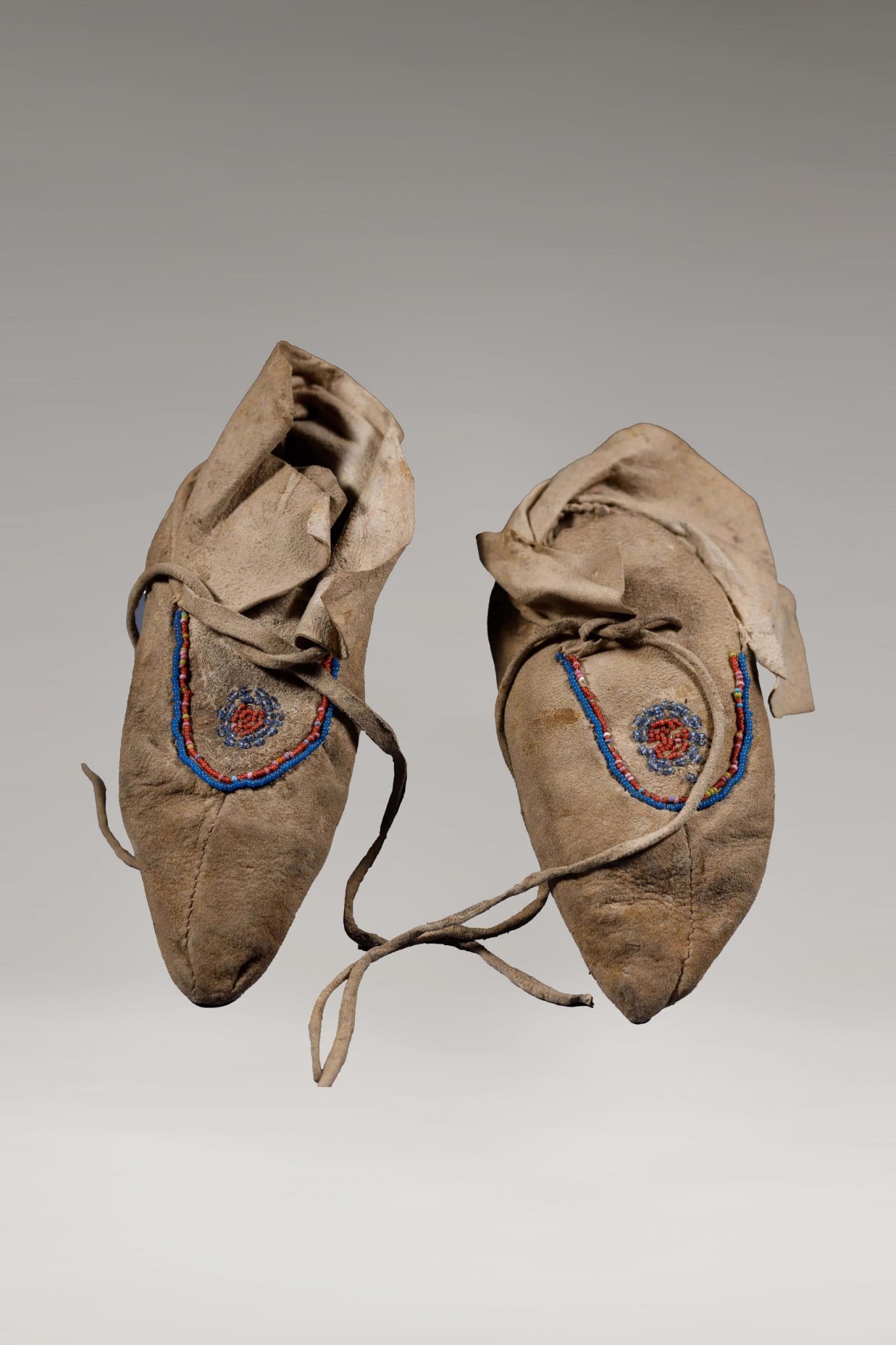
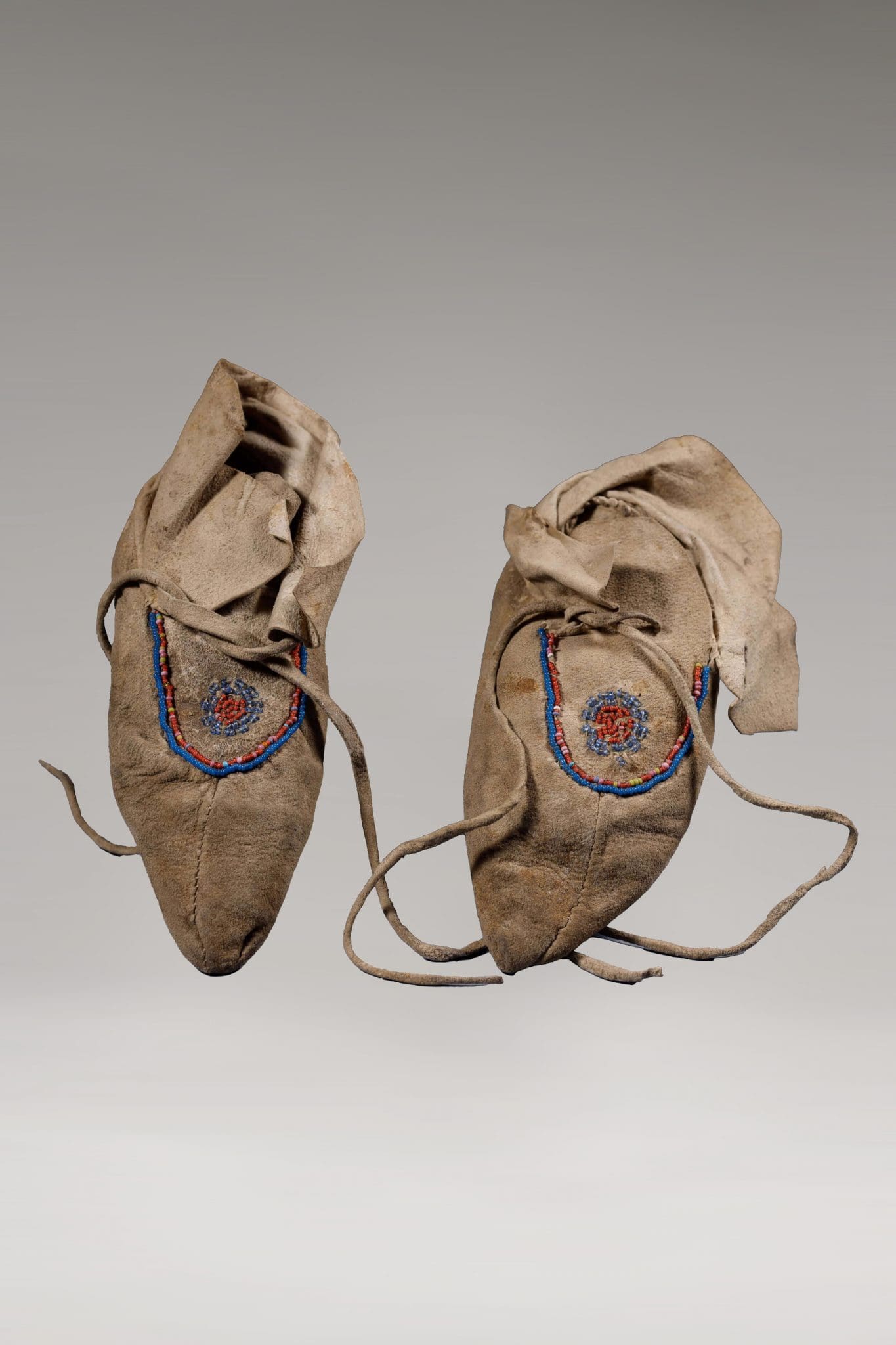
The Moccasin as Canvas and Chronicle
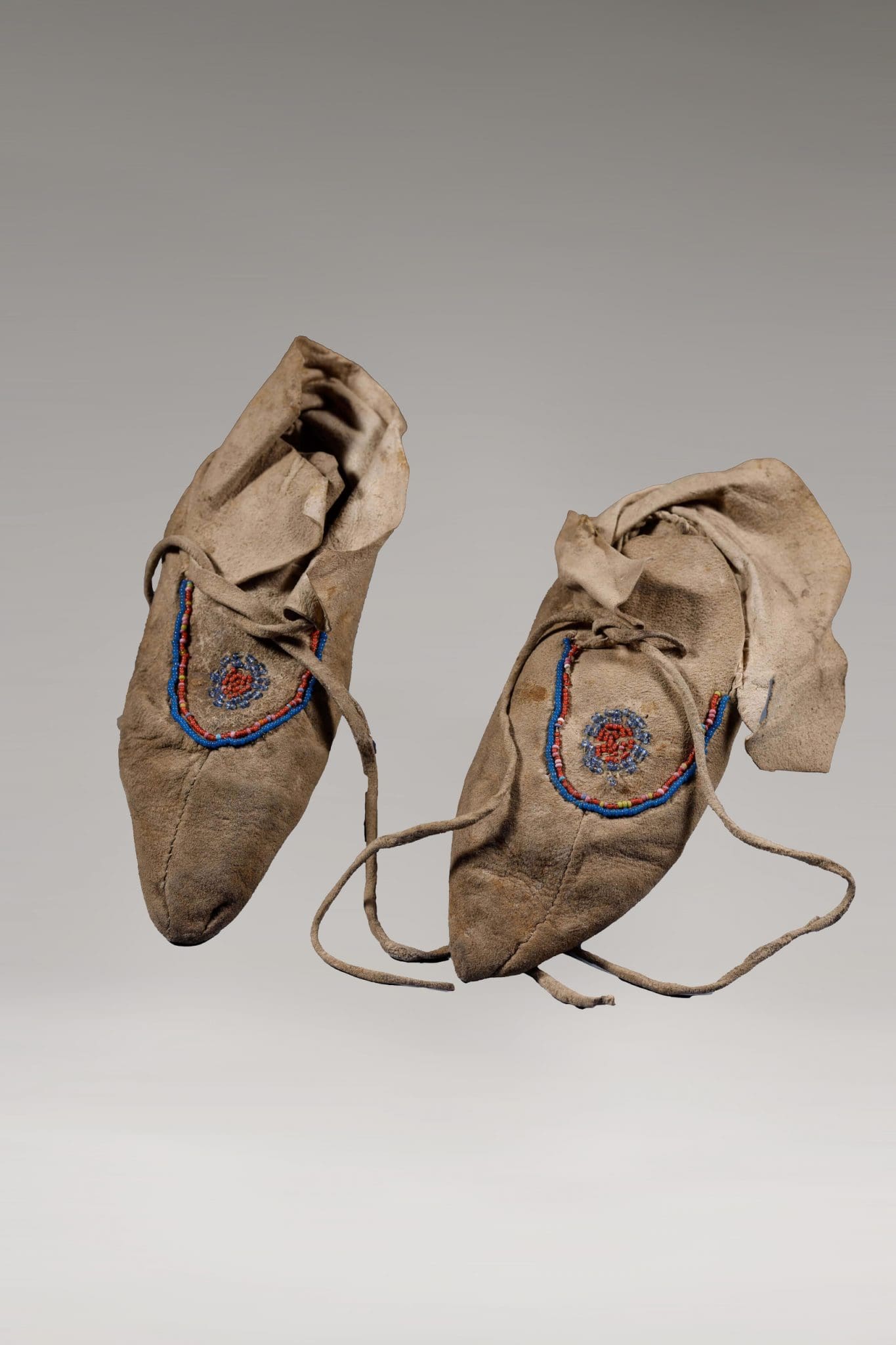
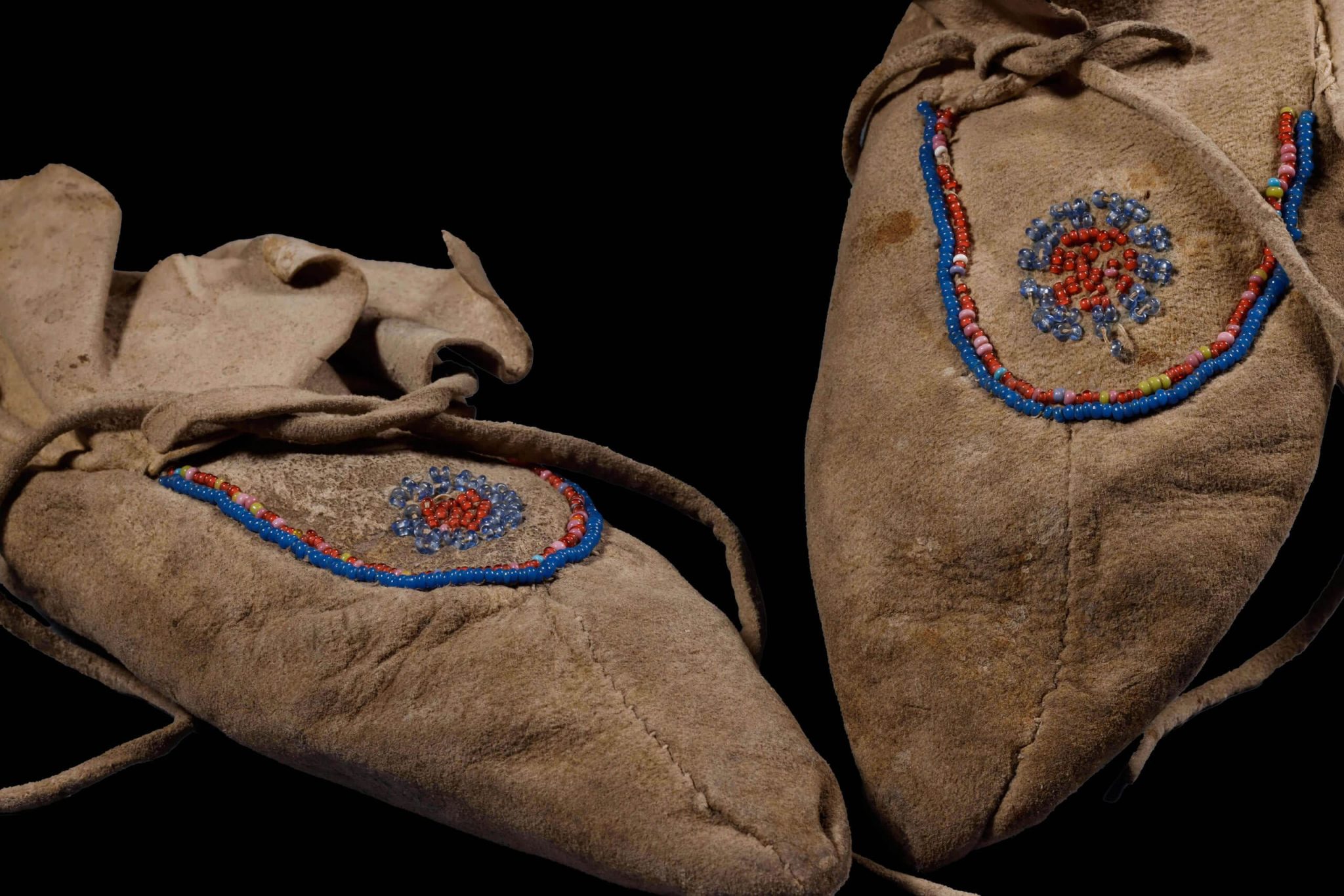
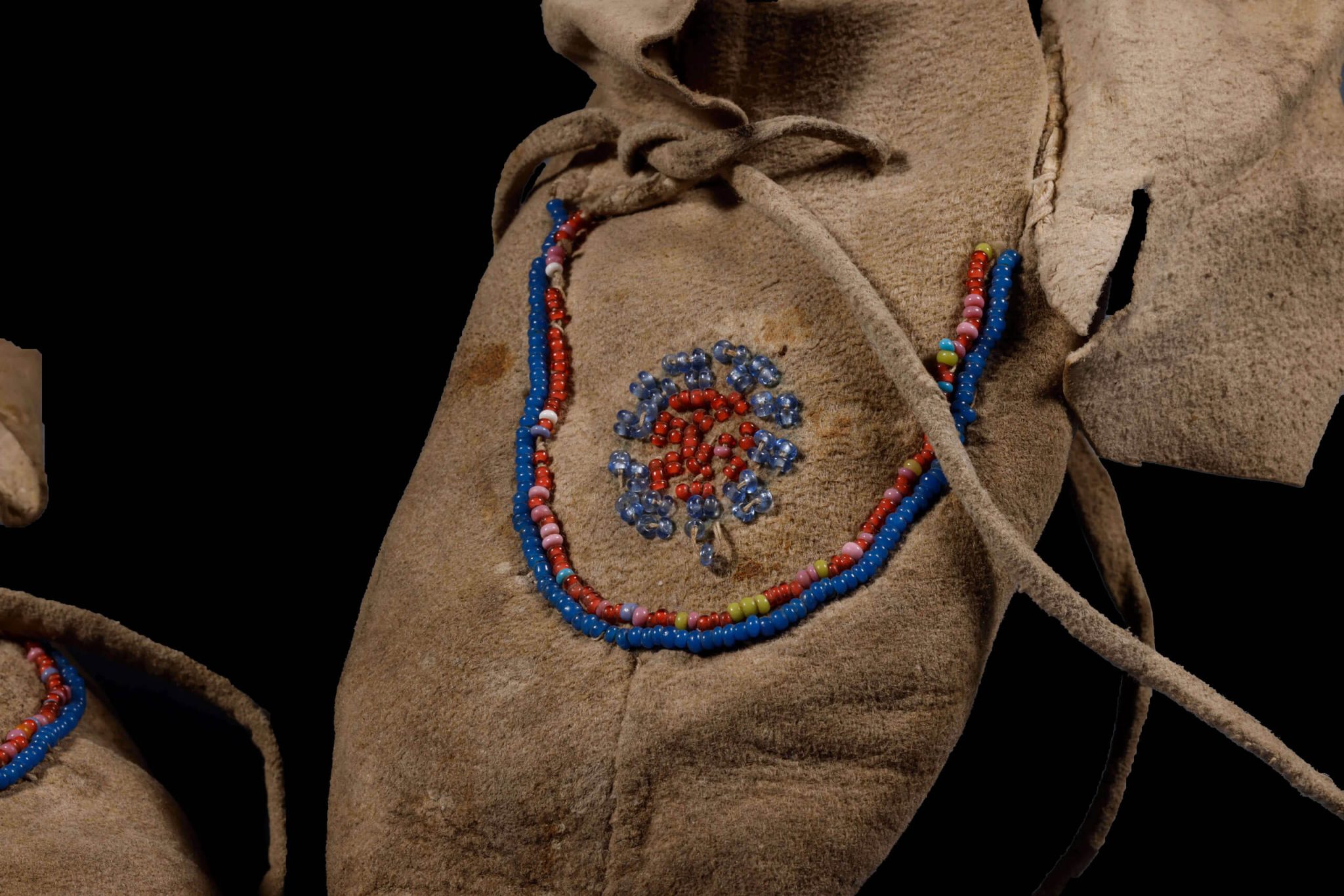
Few objects in the art of the Northern Plains speak more directly to the aesthetic world of the Sioux than a pair of carefully beaded moccasins. Functional and ceremonial at once, these soft-soled shoes were made for the living and the dead, for everyday wear and for burial, for dance and for war. Their decoration — intricate, colour-saturated, geometrically precise — was not incidental. It was the primary message. The Sioux, also known as the Lakota and Dakota, dominated the Great Plains of what are now North and South Dakota from roughly the 18th century onward, having migrated westward from the Great Lakes region under pressure from neighbouring nations. By the early 19th century they were among the most powerful nations of the central Plains, their society organised around buffalo-hunting, warfare, and a rich ceremonial life that expressed itself most visibly in the adornment of bodies and objects.
Beadwork: The Language of the Plains
The introduction of glass trade beads to the Plains via European and American fur-trade networks, beginning in the 17th and 18th centuries, transformed Indigenous needlework. Before beads arrived in significant quantities, Plains women used dyed porcupine quills — laboriously flattened, sorted, and applied by mouth — to decorate hides. Glass beads, arriving in an expanding palette of colours, did not replace quillwork but amplified its possibilities. Sioux beadwork of the late 18th and early 19th century is characterised by bold geometric designs: triangles, diamonds, chevrons, and elongated rectangles organised in compositions that encoded clan identity, personal history, or cosmological reference. A pair of Sioux moccasins dated to around 1800 places them at a pivotal moment in both Plains history and beadwork tradition. The Sioux were then at the height of their territorial expansion; the Lewis and Clark Expedition would pass through their territory in 1804–1806. These moccasins predate the catastrophic disruptions of the reservation era and belong to a period when Lakota and Dakota communities moved freely across the grasslands their seasonal round had shaped for generations.
Objects That Outlasted Their World
That moccasins of this age survive at all is remarkable. Hide and sinew are organic, fragile, susceptible to damp and insects. Those that reached European collections in the early 19th century — often as gifts or curiosities obtained through early traders, explorers, or diplomats — were preserved in conditions that the Great Plains could never have provided. In this, as in so much else, the story of their survival is also a story of displacement. What remains is the beadwork itself: evidence of hours of skilled labour, of aesthetic decisions made by a woman whose name and community are now unrecoverable, but whose craft still speaks with complete and concentrated clarity across two centuries.



 No products in the cart.