

The Morning Star in the Age of Plate Armour
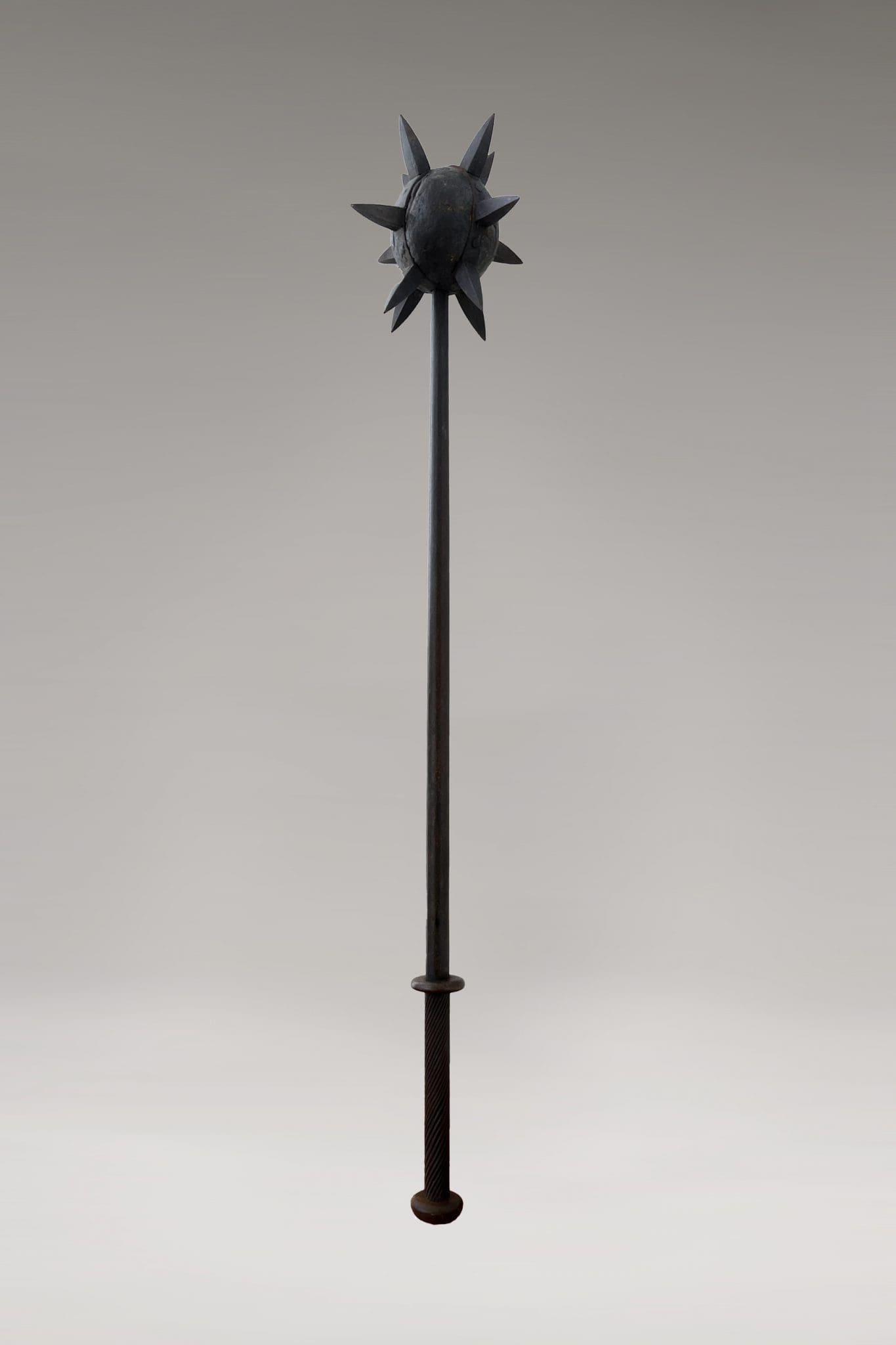
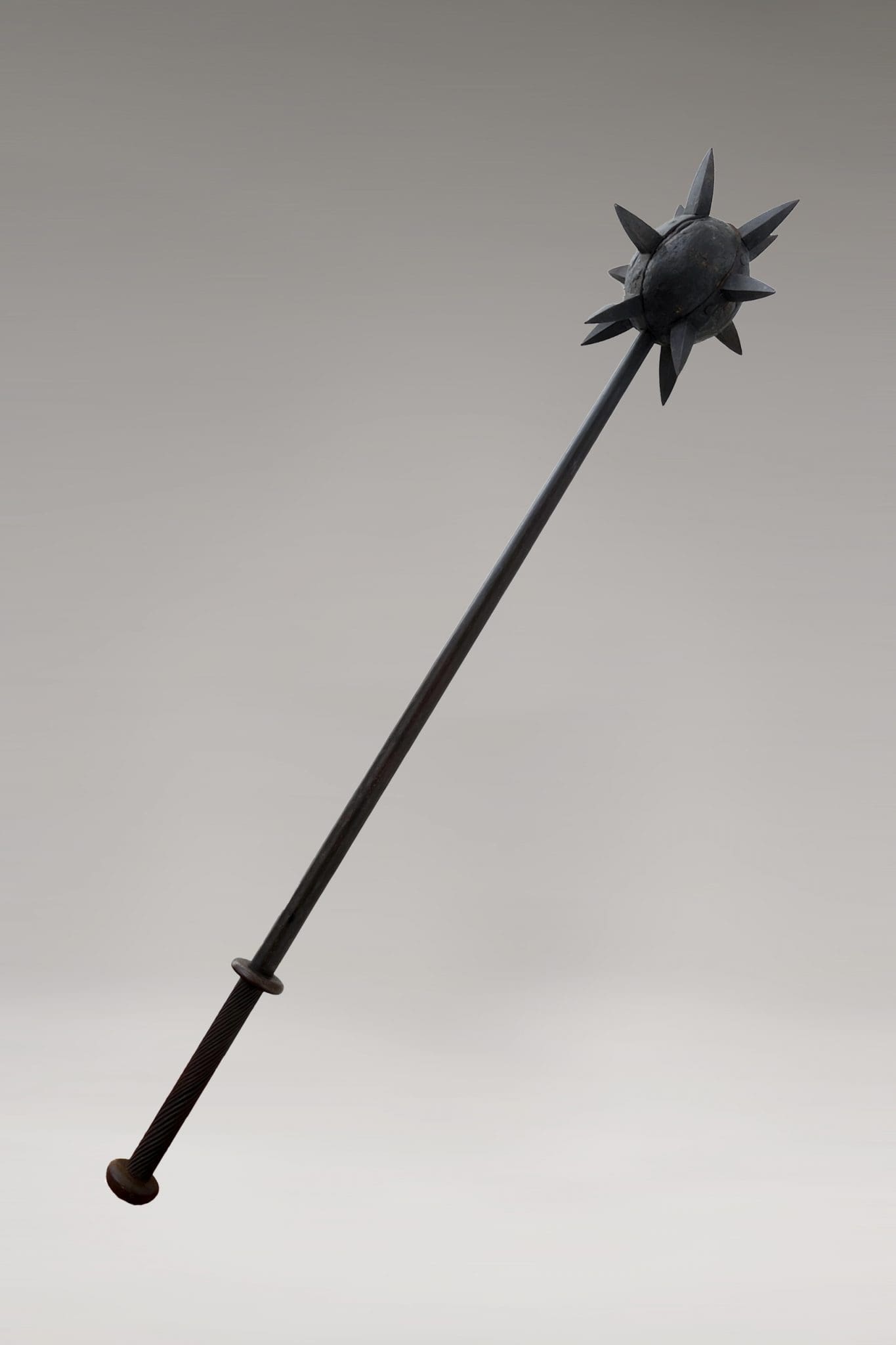
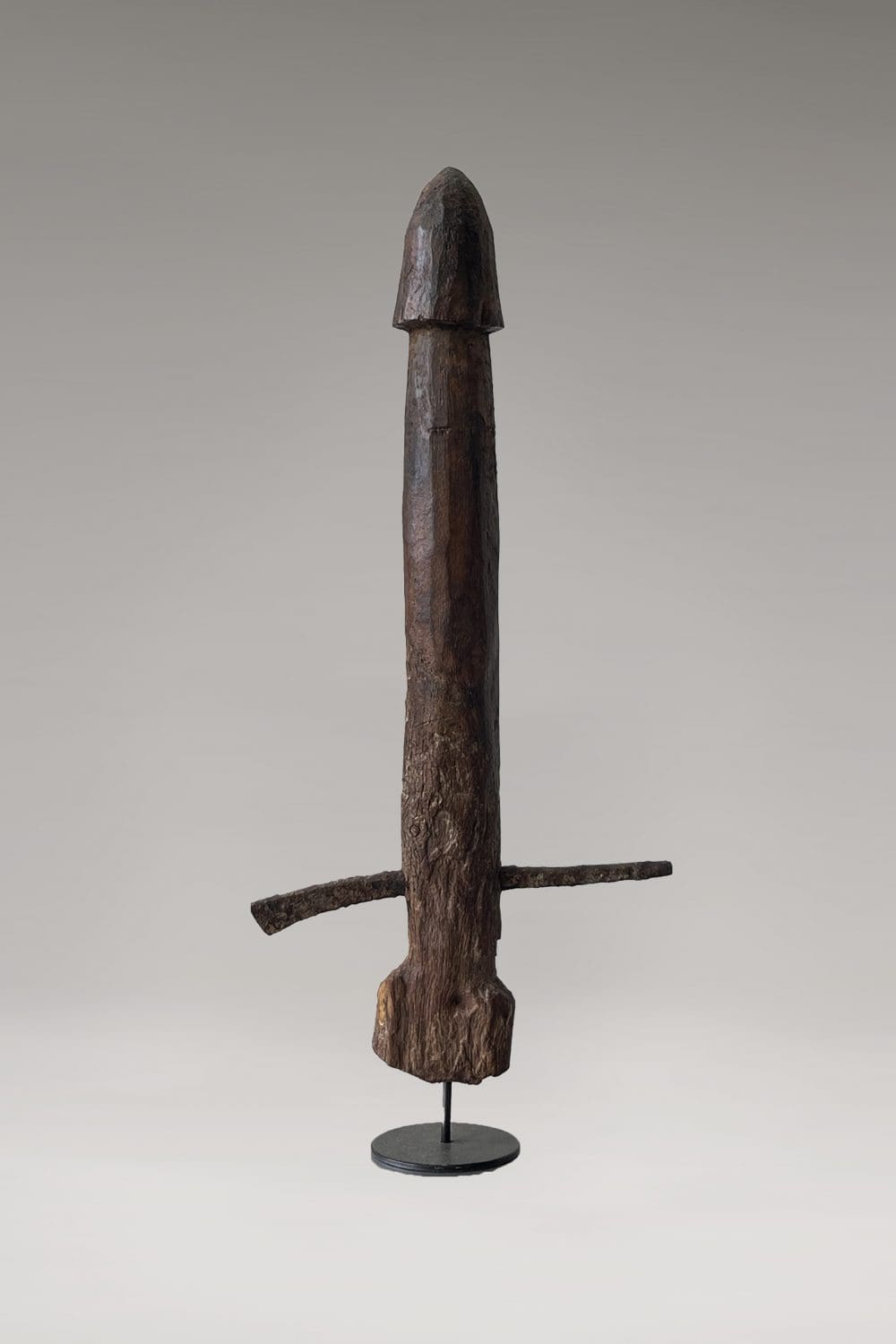
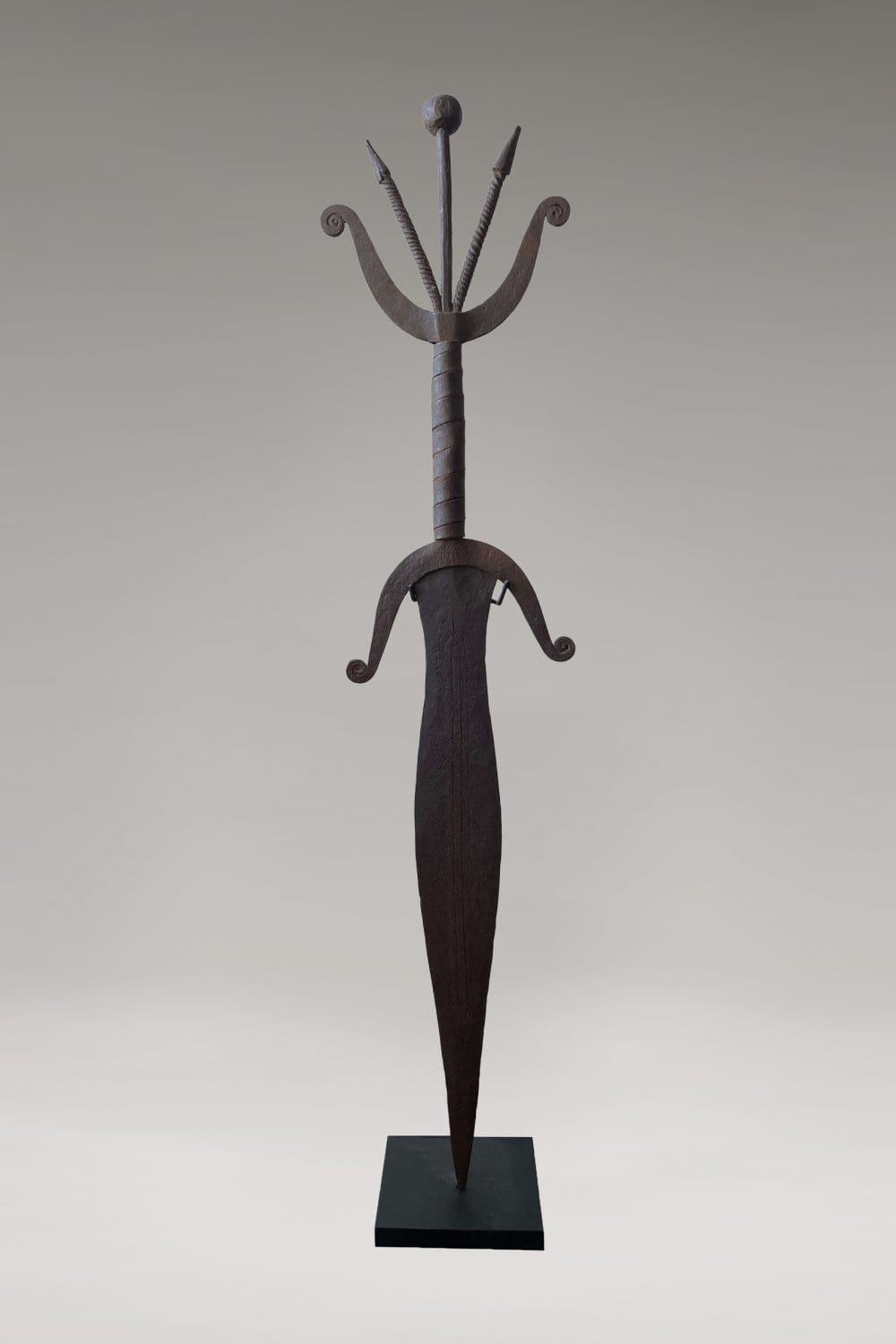
The morning star — a mace fitted with a spiked metal globe at its head — was among the most feared impact weapons of the late medieval and Renaissance periods, purpose-designed to defeat the plate armour that had rendered edged weapons increasingly ineffective against heavily protected opponents. By the sixteenth century, when this example was forged in France, the science of armoury had reached a peak of sophistication: German and Italian smiths produced breastplates, pauldrons, and greaves of exceptional hardness, capable of deflecting sword cuts and crossbow bolts. Against such defences, the mace and its variants — the flail, the morning star — exploited the physics of concentrated impact rather than sharpness, transmitting devastating force through metal and padding to the body beneath. This French example, at 101 centimetres in length, would have been wielded with two hands, generating the swing momentum necessary to split a helmet or crush a gauntlet at close range. It belongs to a well-documented typology of percussive arms that saw service in both battlefield and judicial contexts throughout the sixteenth century.
Form, Function, and Ironwork
The weapon’s iron construction reflects the utilitarian priorities of the armoury workshop: every element — the elongated haft, the connecting sleeve, the spiked globular head — is designed for structural integrity under repeated high-impact use. Unlike the jewelled ceremonial maces produced for court display, this piece exhibits the honest character of a working arm: its surfaces bear the marks of forge work and the accumulated patina of four centuries, lending it an authority that reproduction pieces cannot replicate. The spikes of the head, radiating symmetrically from a central sphere, maximise the concentration of force on a small surface area, punching through mail and denting plate where a flat-headed weapon would merely slide. The length of 101 centimetres places it in the category of hand-and-a-half arms, versatile enough for mounted or dismounted use and reflecting the tactical realities of sixteenth-century French military practice, which saw infantry increasingly valued alongside the chivalric cavalry tradition.
Arms and Armour Collecting in Context
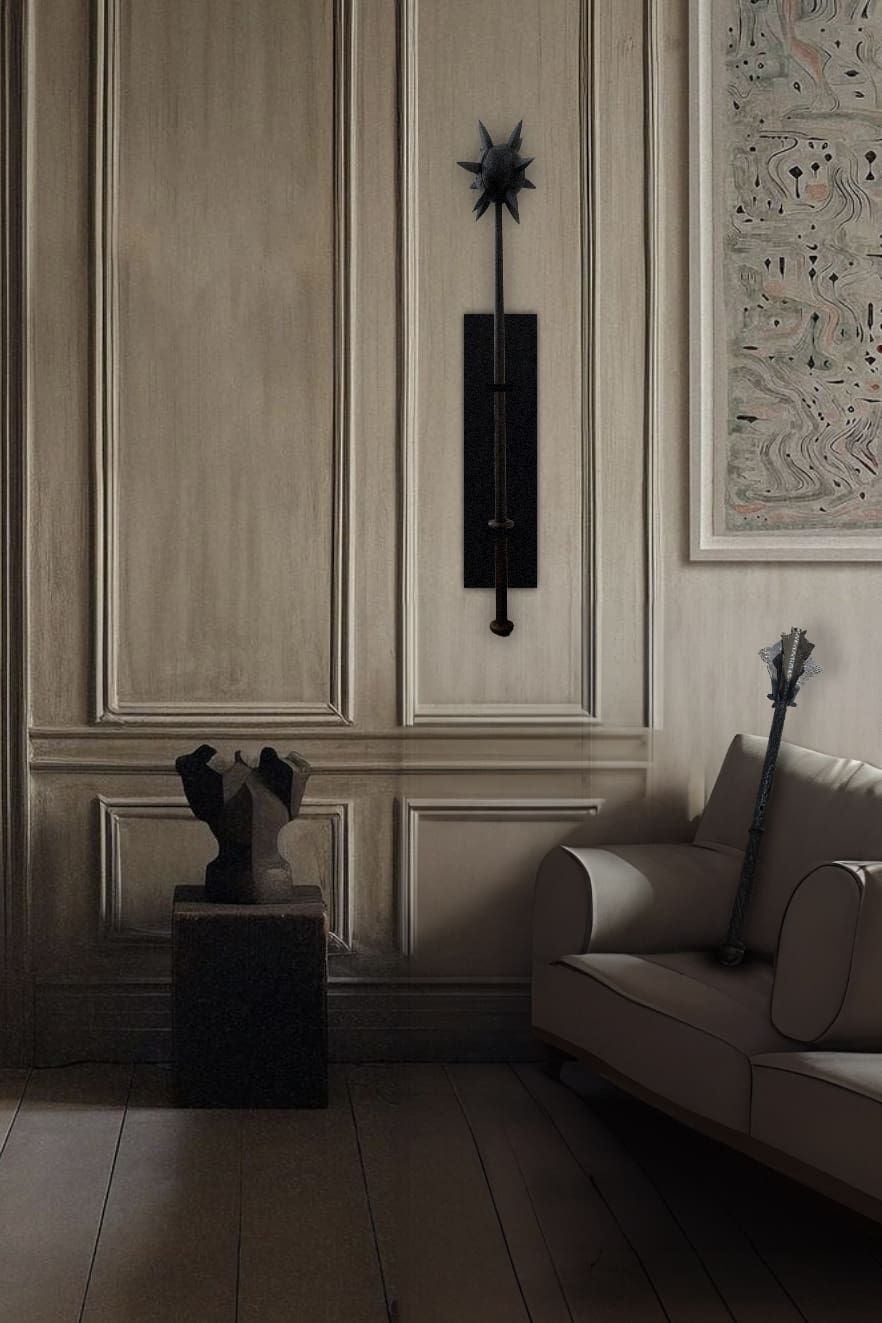
Sixteenth-century French iron arms of this quality and completeness are increasingly sought by serious collectors of European militaria, a market that has matured considerably as institutional scholarship has deepened understanding of Renaissance arms production and use. A morning star mace in solid, unrestored condition — retaining its original form without later additions or speculative reconstruction — represents a direct physical link to one of the most dramatic chapters in the history of warfare, when the contest between offensive and defensive technology was at its most intense. For the collector, this piece offers both the intrinsic appeal of exceptional craftsmanship and the historical gravitas of a weapon that witnessed the final flowering of armoured combat in Western Europe. It is equally suited to display within a collection of European arms and armour or as a centrepiece in any context where the material culture of the Renaissance military world is of particular interest.


 No products in the cart.