


The Minotaur in the European Sculptural Tradition
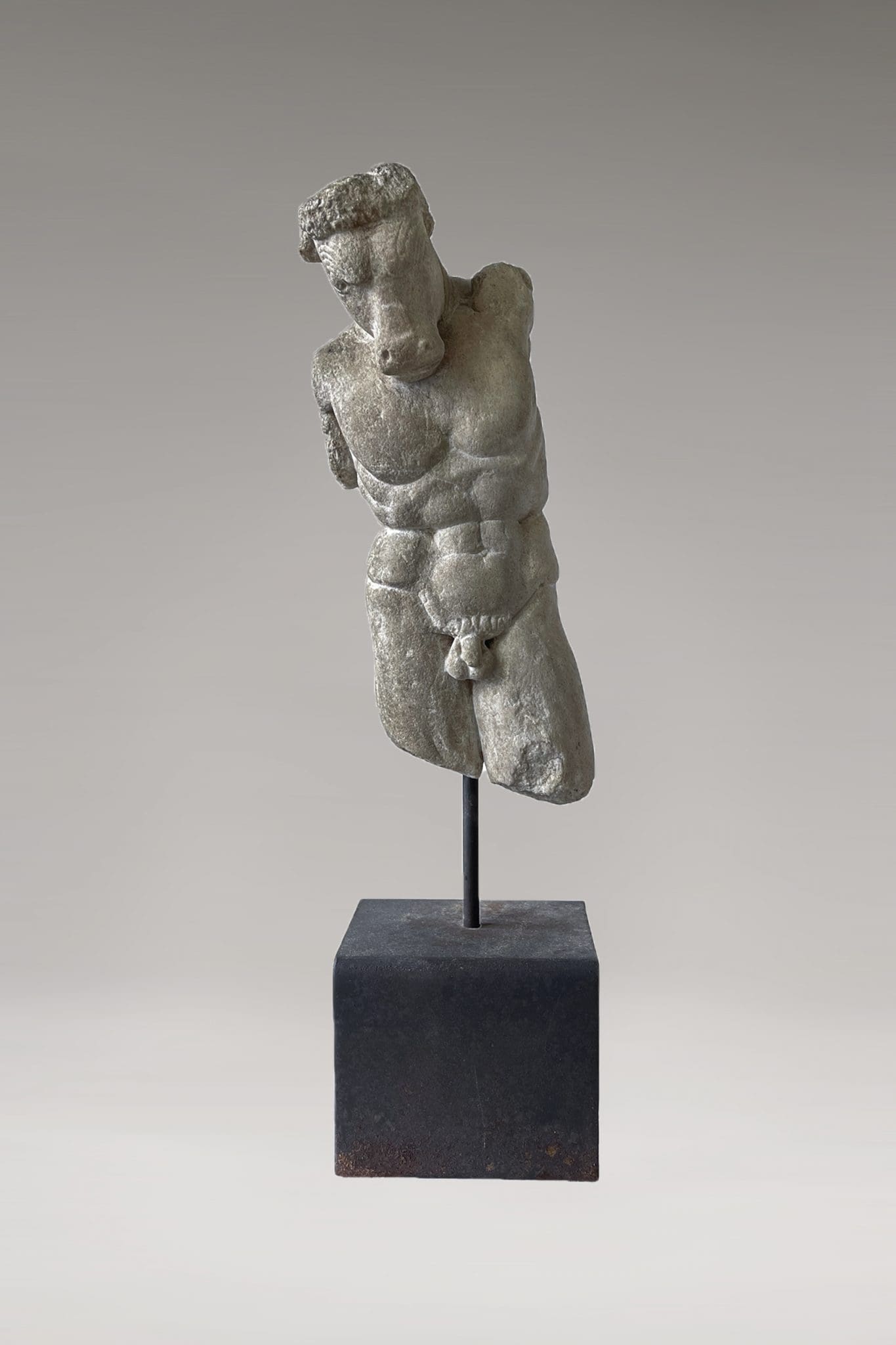
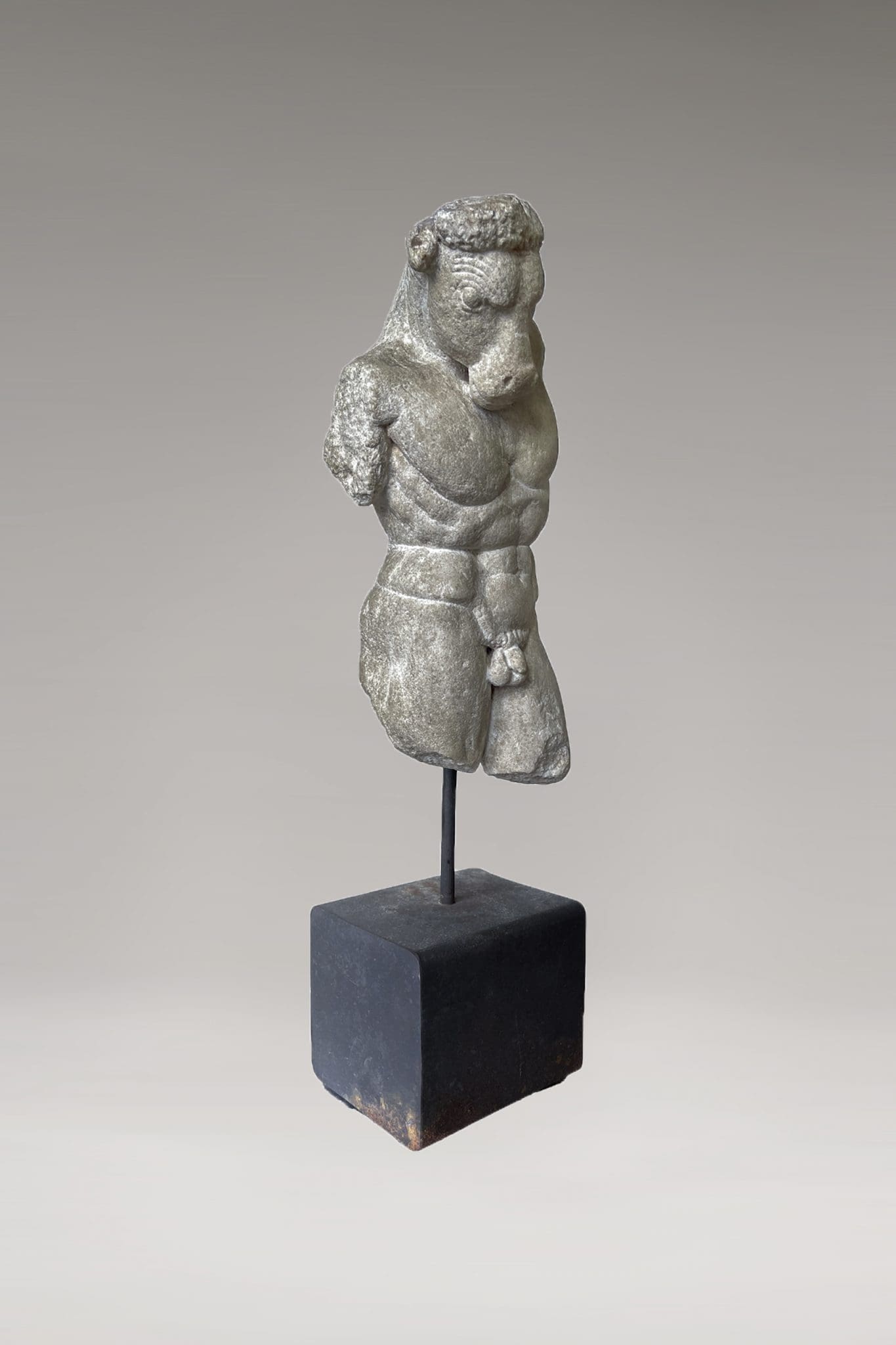
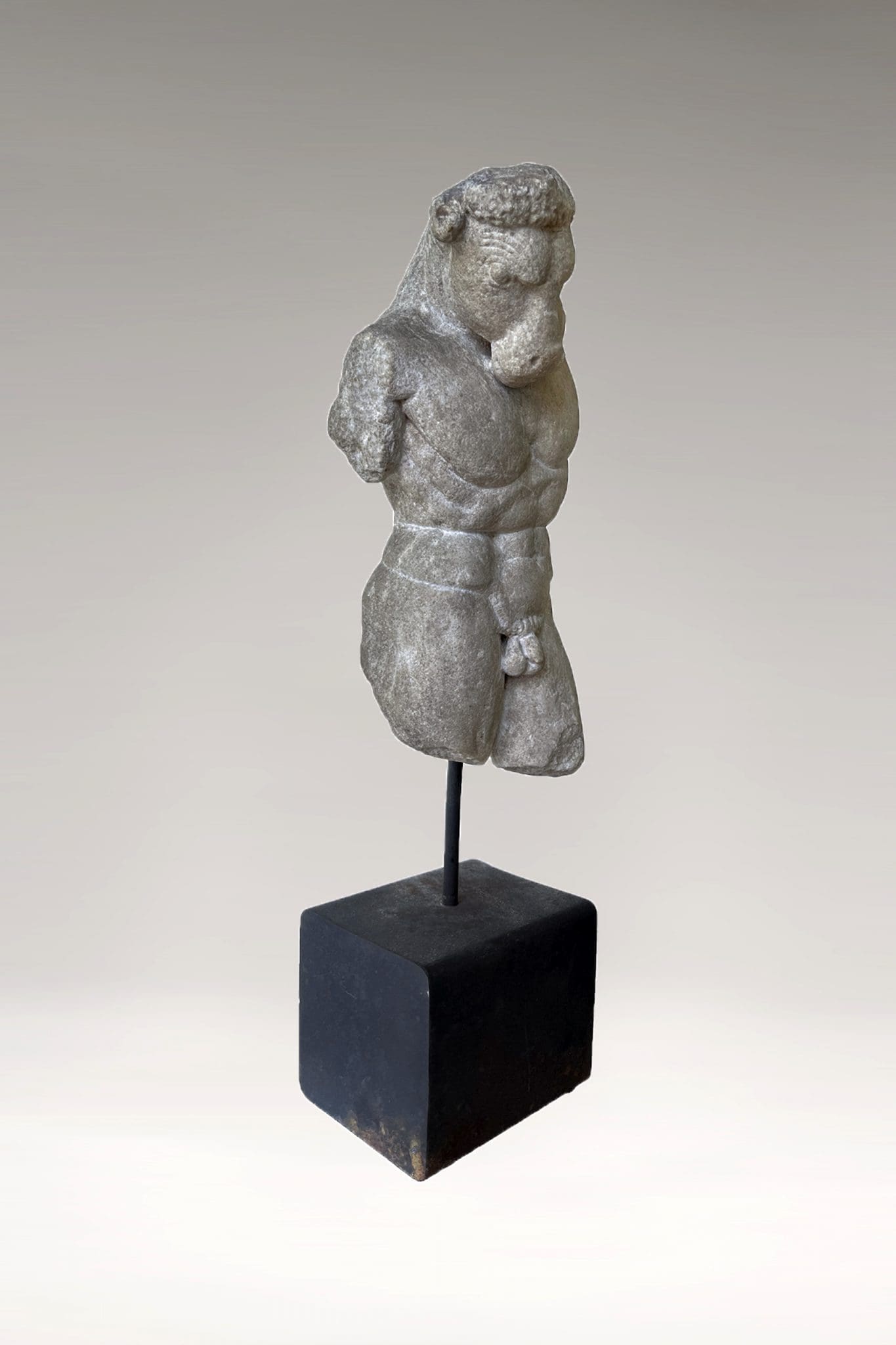
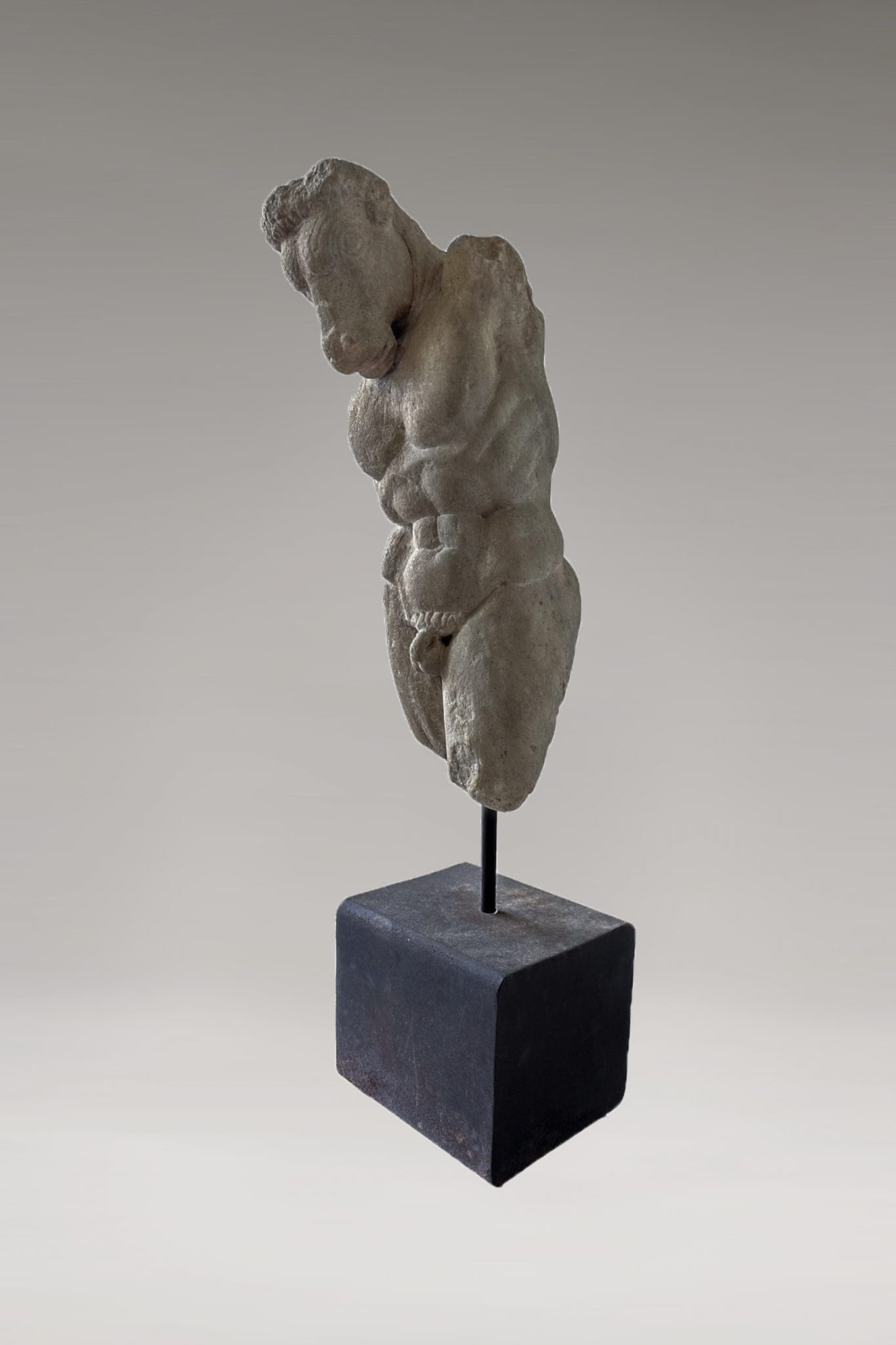
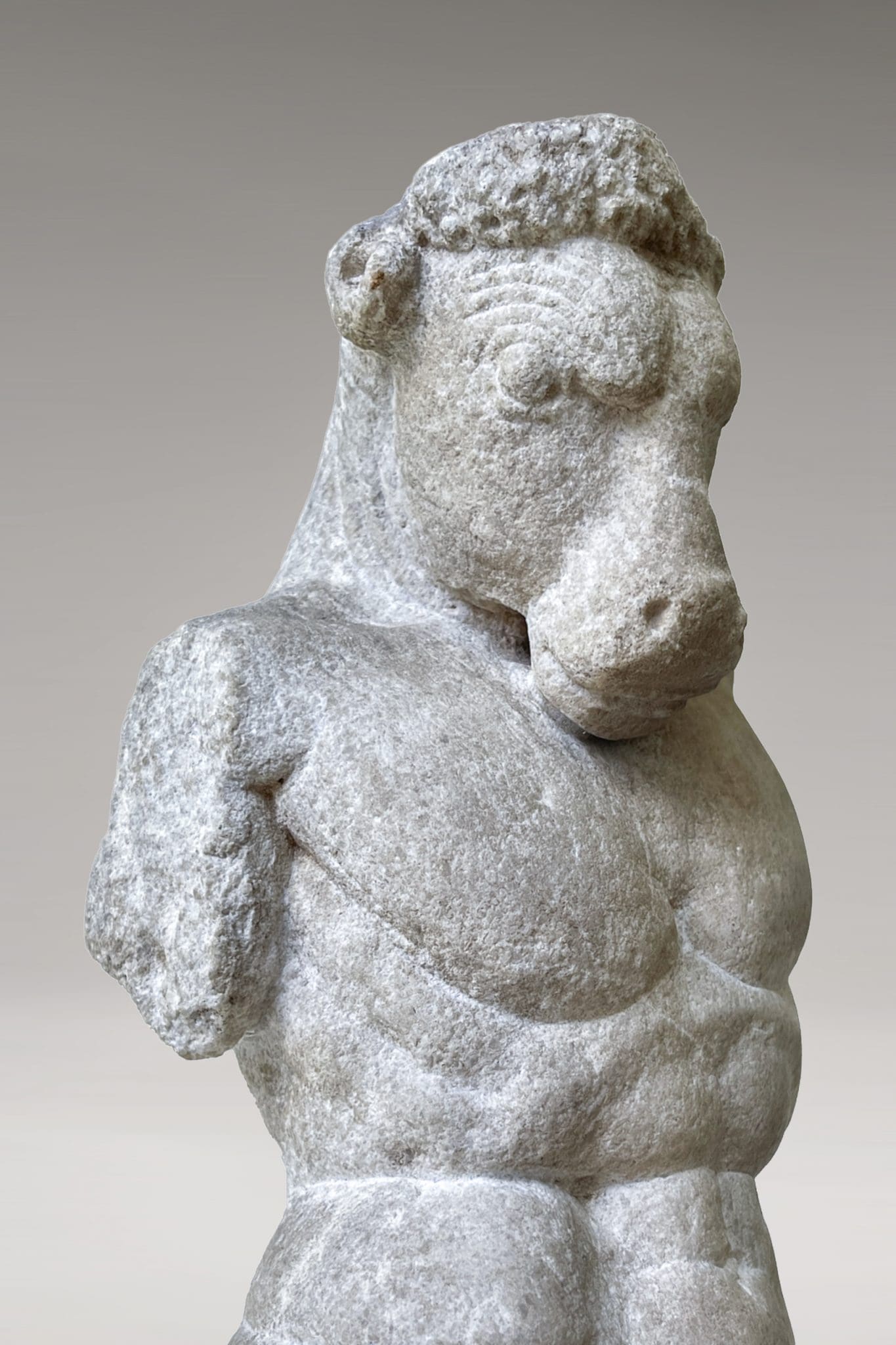
The Minotaur — the hybrid creature of Greek mythology, born of the union of Pasiphae and the Cretan Bull, confined by Minos to the labyrinth of Knossos — has been a recurring subject in European sculpture from antiquity through the modern period, its ambiguous nature serving successive ages as a vehicle for different concerns: transgression and its consequences in the ancient world; the conflict between reason and passion in the Renaissance; the unconscious drives that Freudian thought placed at the heart of human psychology in the twentieth century. The European decorative arts tradition — encompassing the cabinet sculptures, chimney-piece ornaments, and collector’s bronzes and marbles produced from the seventeenth century onwards — engaged with mythological subjects as a matter of course, treating the classical pantheon as an inexhaustible repertoire available for adaptation in every medium and at every scale. This Minotaur in marble belongs to the tradition of the small-format mythological sculpture: a work produced for a collector’s cabinet or a scholar’s study, where its subject invited meditation on the ancient stories and their moral dimensions.
Marble Carving at Cabinet Scale
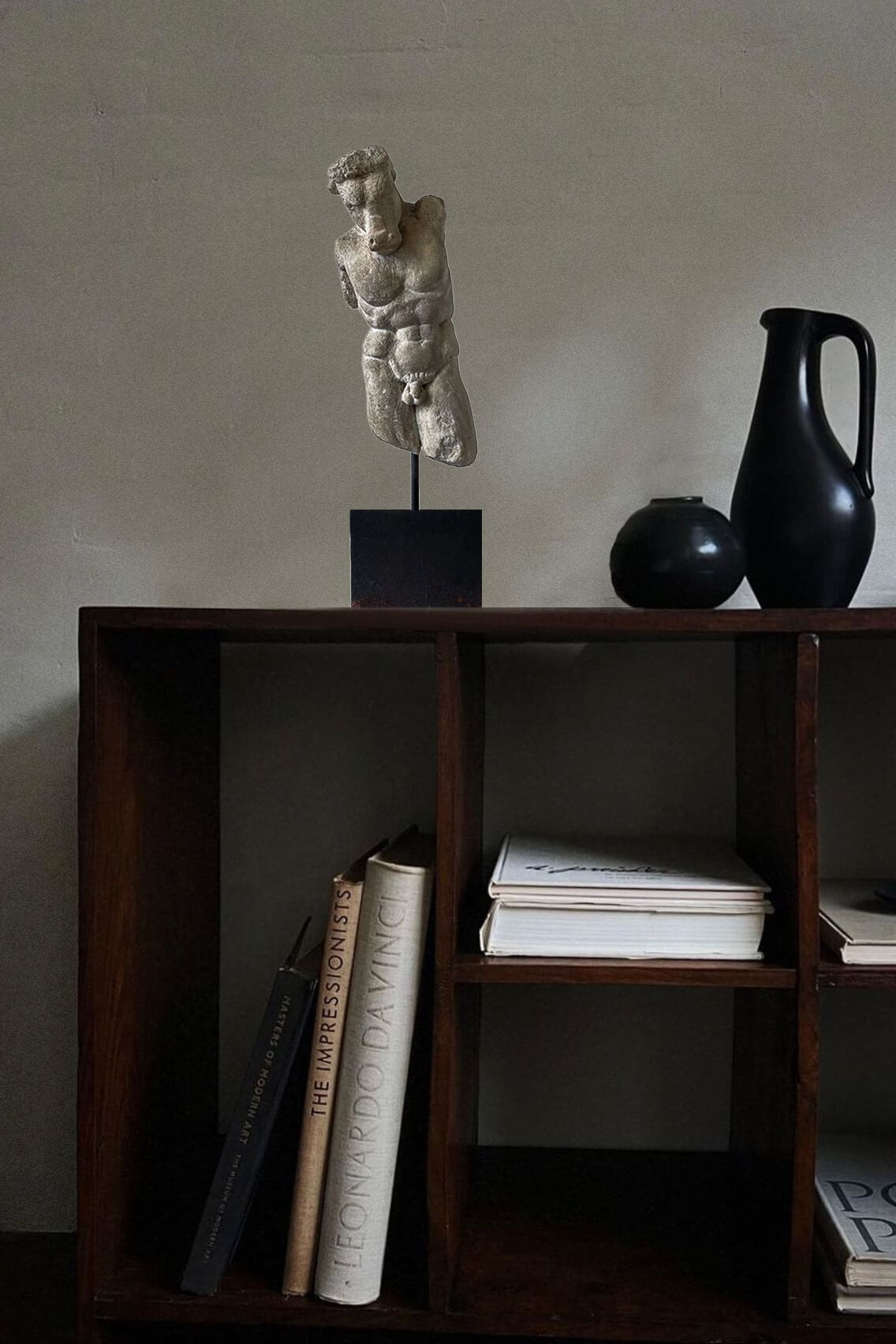
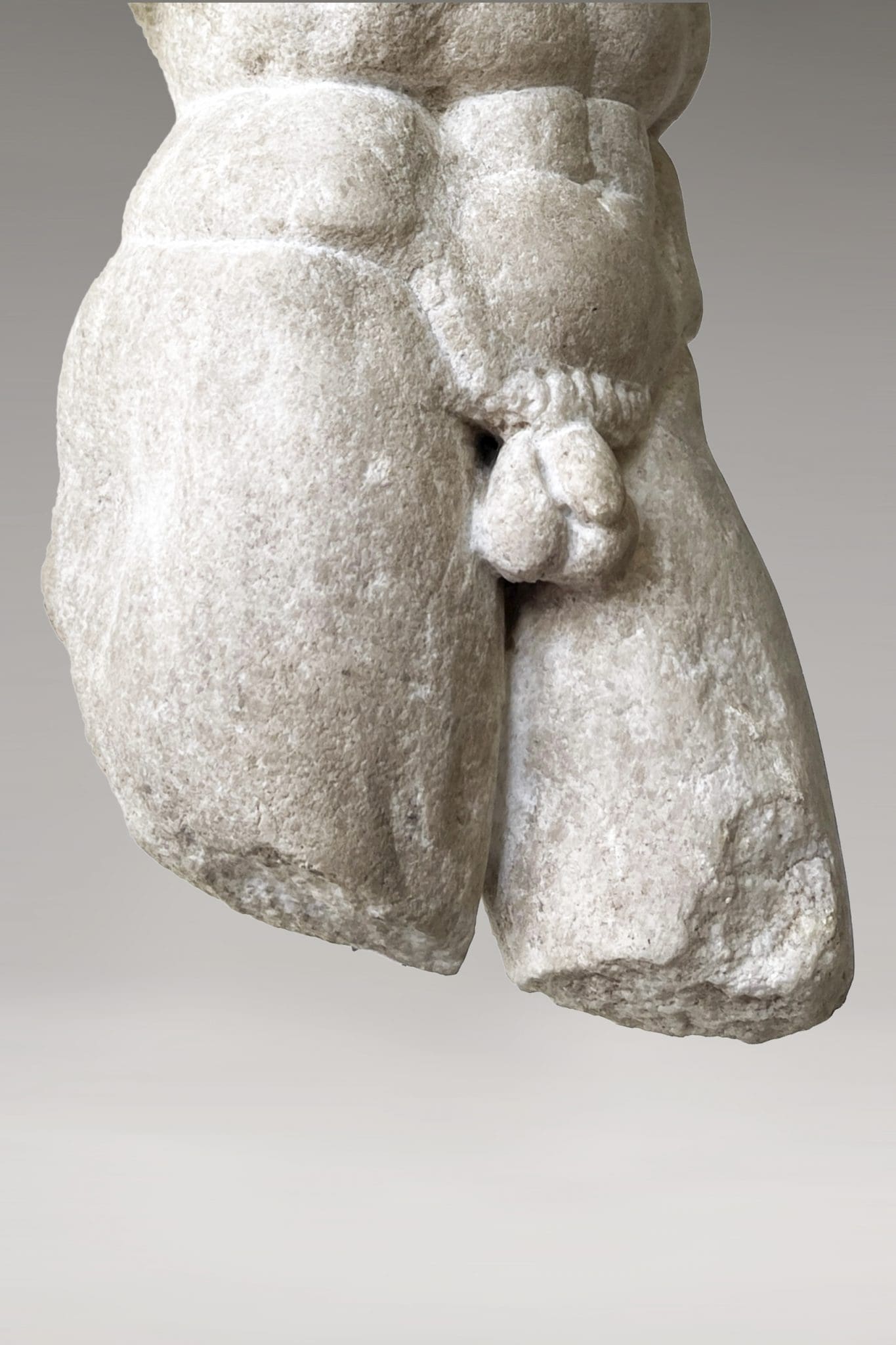
Marble — the stone of the Parthenon, the Laocoön, and Michelangelo’s David — carries the full weight of the Western sculptural tradition, and even at cabinet scale a marble carving in good condition retains the qualities that have made the material the sculptor’s primary choice for two and a half millennia: its luminous surface, its ability to take fine detail from a skilled hand, and the sense of permanence and authority it confers upon any subject. At 28 × 10 × 10 centimetres, this Minotaur is a compact and precise object — small enough to sit comfortably in the hand, complex enough in its formal organisation to reward sustained examination from multiple angles. The wear, chips, and pitting consistent with its age testify to the passage of centuries: these are not damages that diminish the work but the natural biography of a stone object that has survived intact across several centuries to the present. The very good overall conservation indicates that the essential surfaces — the modelling of the hybrid head, the articulation of the body, the finish of the base — remain readable and coherent.
Small-Format Mythological Sculpture as a Collecting Category
The cabinet sculpture — small-format works in marble, bronze, ivory, and semi-precious stone produced from the Renaissance onwards for the private cabinets of humanist collectors — has developed a sophisticated collector base over the past generation, as the scholarly apparatus of connoisseurship, attribution, and market tracking has caught up with the appreciation these objects have long commanded. A marble Minotaur of European origin, in solid provenance from a Madrid collection since 1991, and in the good overall condition this piece preserves, represents a coherent and desirable acquisition: a work that combines mythological gravitas, technical accomplishment in one of the Western tradition’s most demanding materials, and the particular intimacy that small-scale sculpture offers — an object made to be held, examined, and lived with rather than viewed from a distance.


 No products in the cart.