

The Minotaur in Western Art and Myth
Few figures in classical mythology have generated as sustained a dialogue with the visual arts as the Minotaur — the creature of Minos, half man and half bull, confined to the labyrinth of Knossos and fed on human tribute until its slaying by Theseus. Since antiquity the Minotaur has served as a screen for projection: in the ancient world it embodied transgression and the monstrous consequences of divine wrath; in the twentieth century, Picasso’s extended engagement with the figure — across hundreds of drawings, prints, and paintings — transformed it into a symbol of raw creative energy, erotic ambivalence, and mortal vulnerability. The Minotaur occupies a liminal space that no other mythological figure quite matches, suspended between the rational human world of language and civilisation and the pre-rational animal world of instinct and appetite. This ambiguity is precisely what has drawn generations of sculptors and painters to the subject, each finding in the hybrid body a different parable about the human condition and its unresolved contradictions.
González Andrés and the Language of Bronze
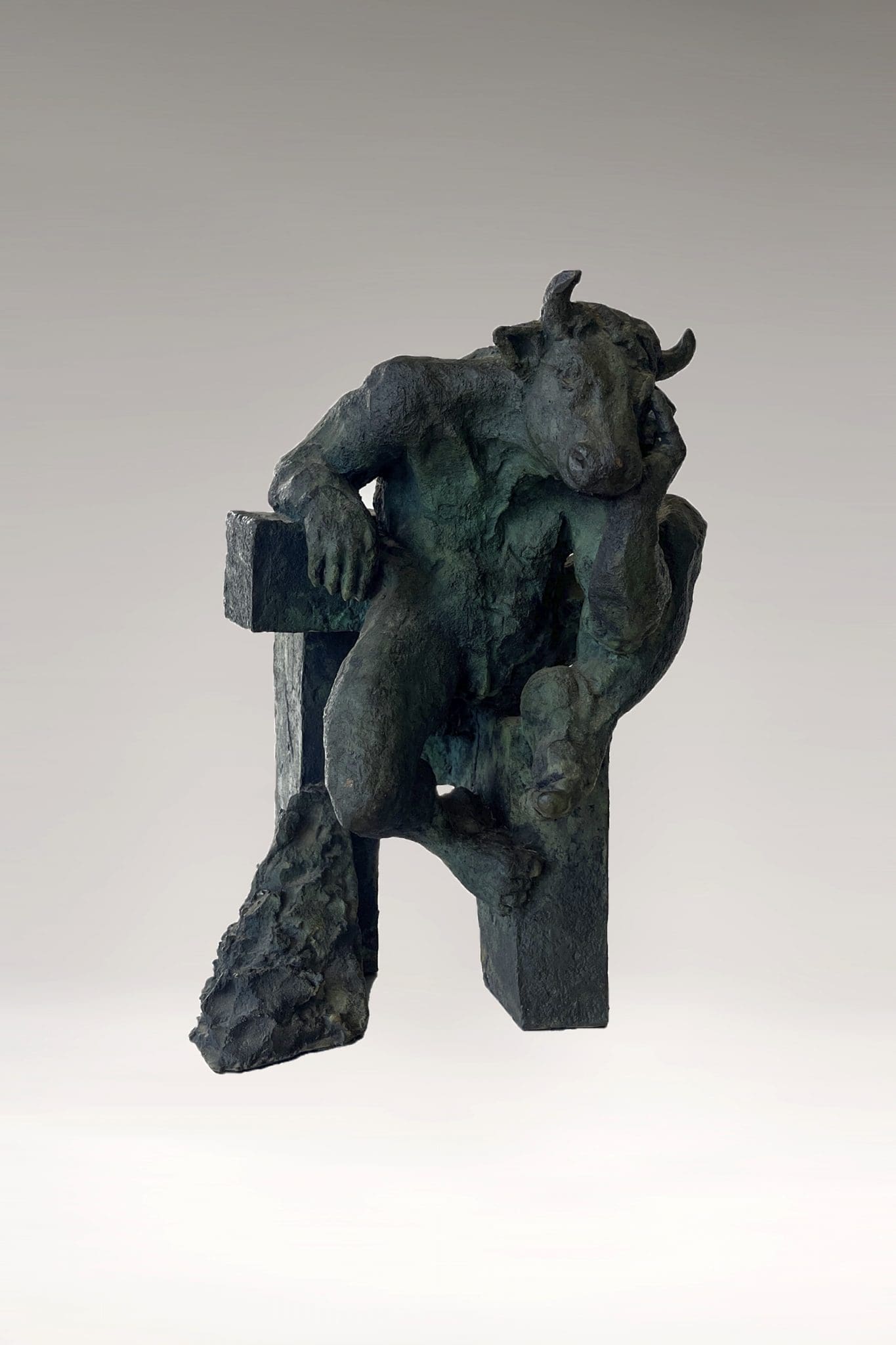
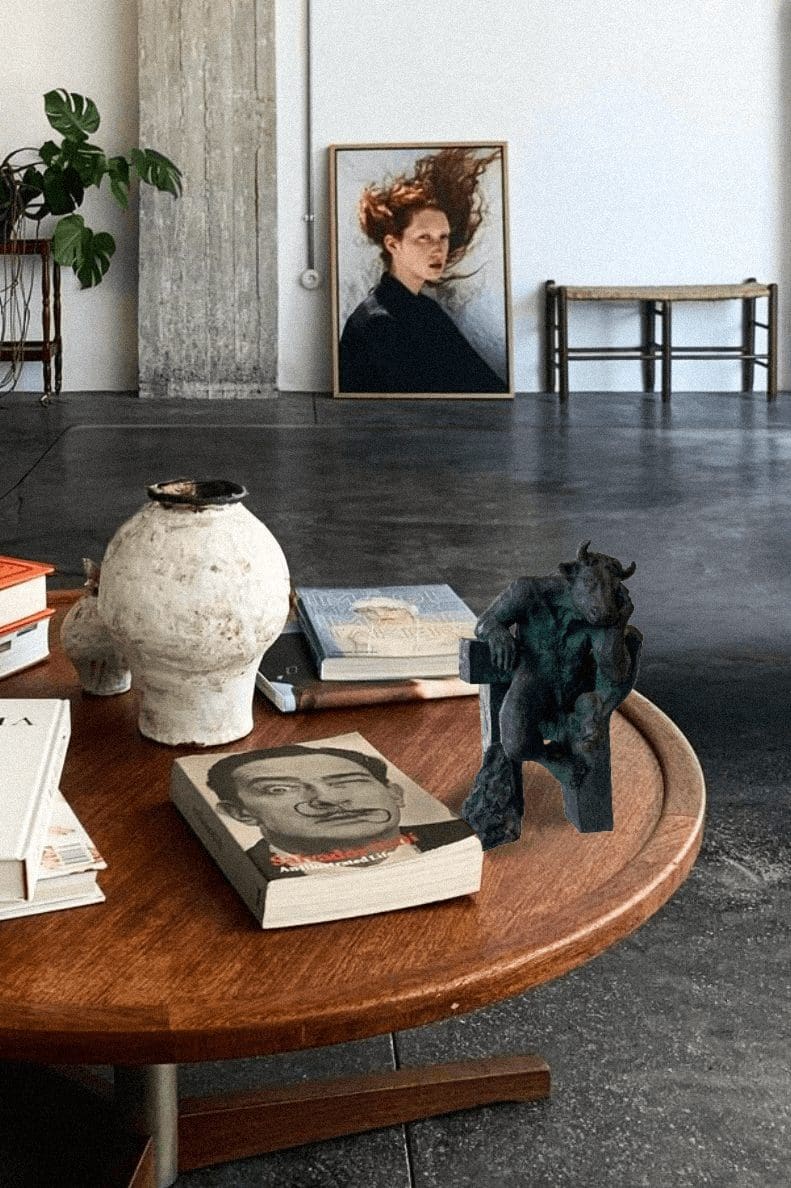
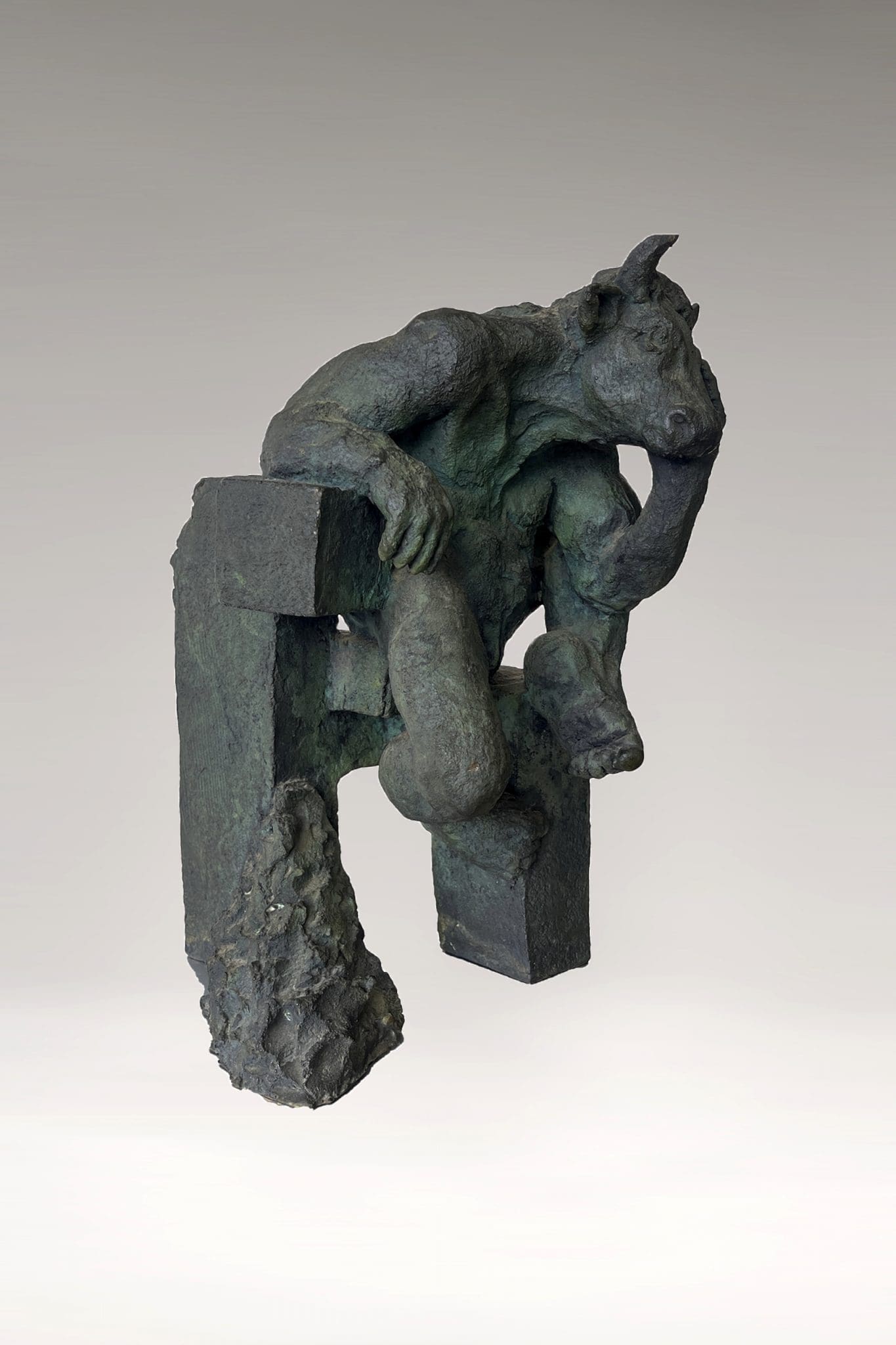
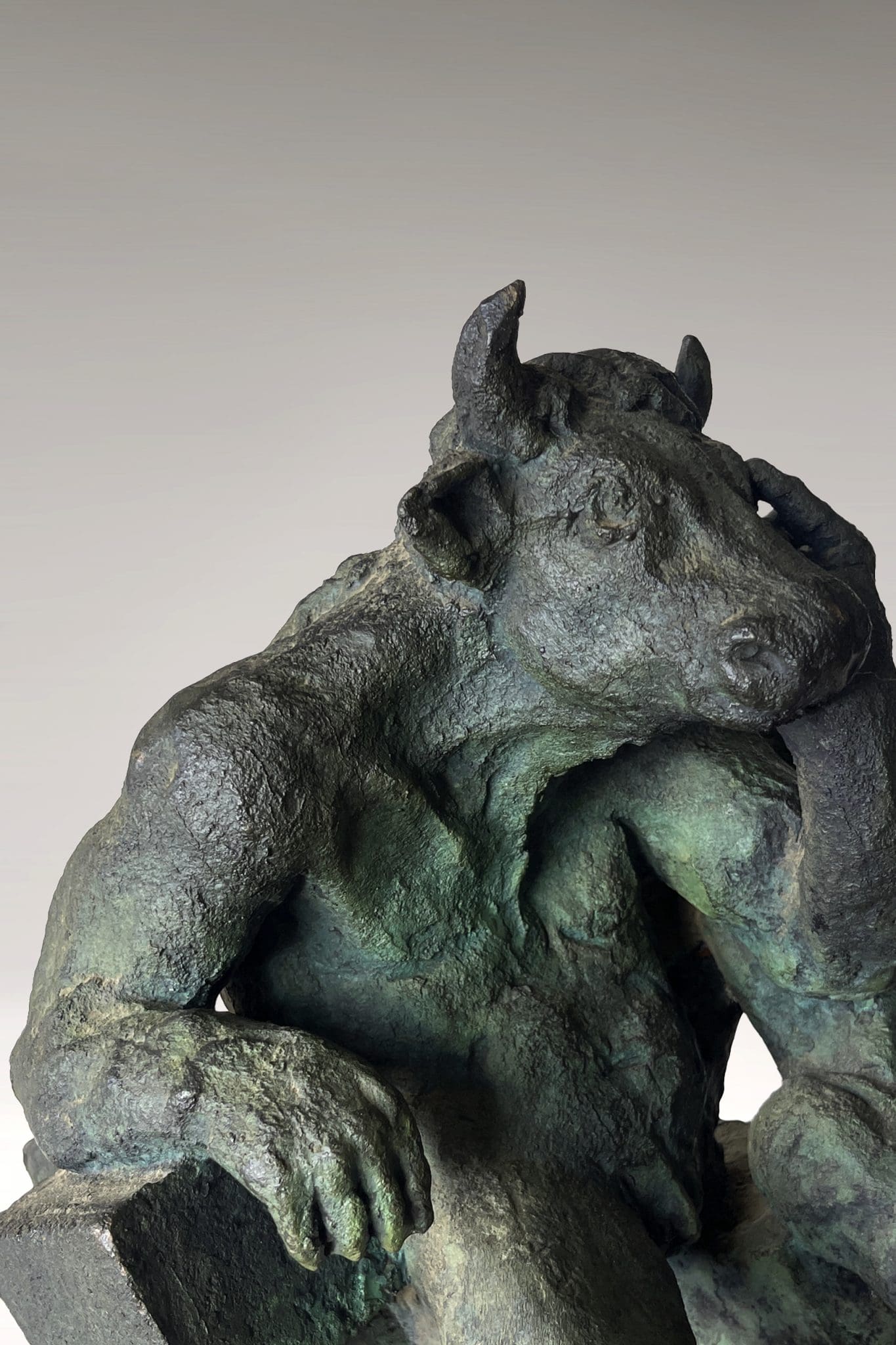
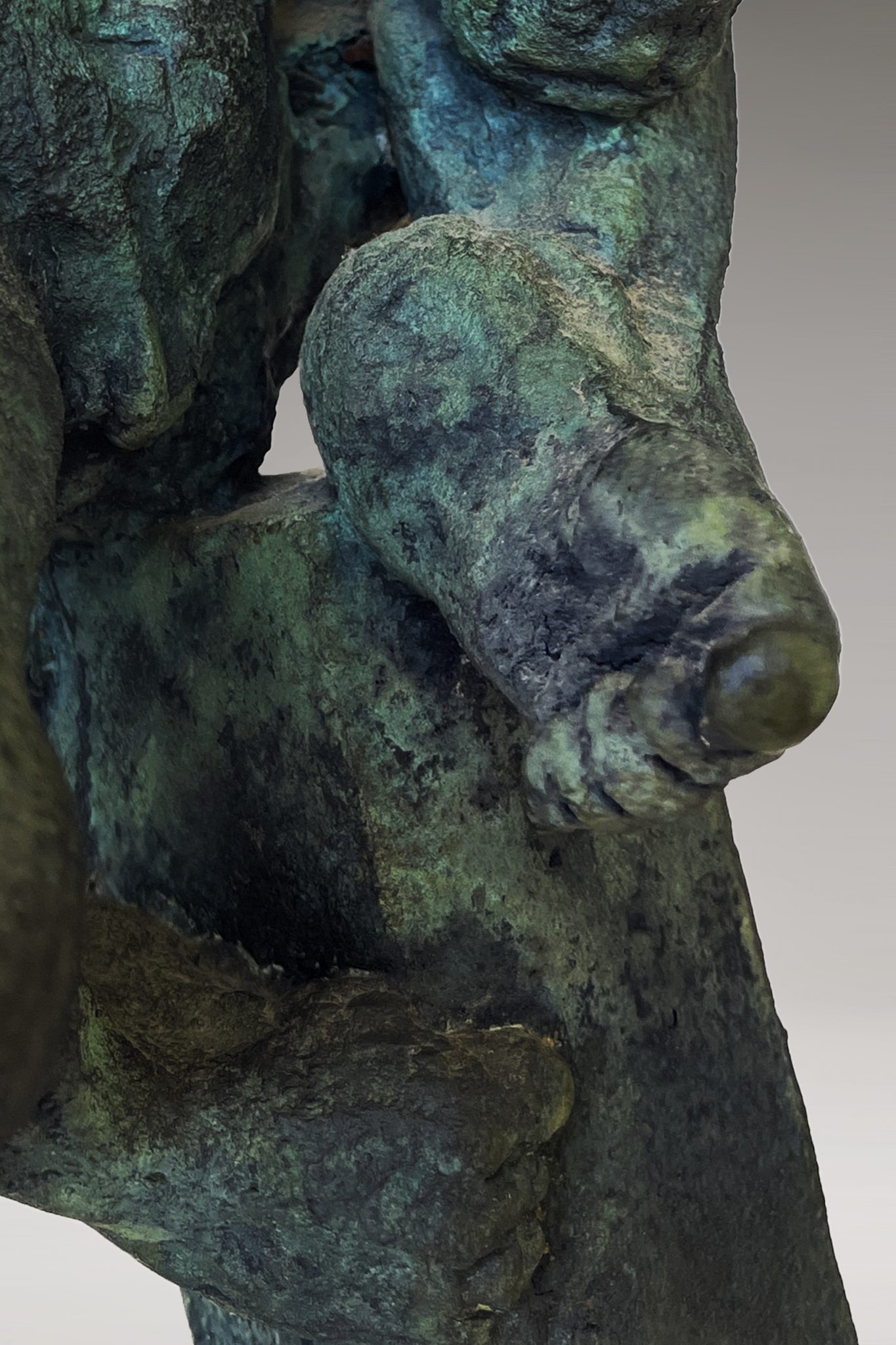
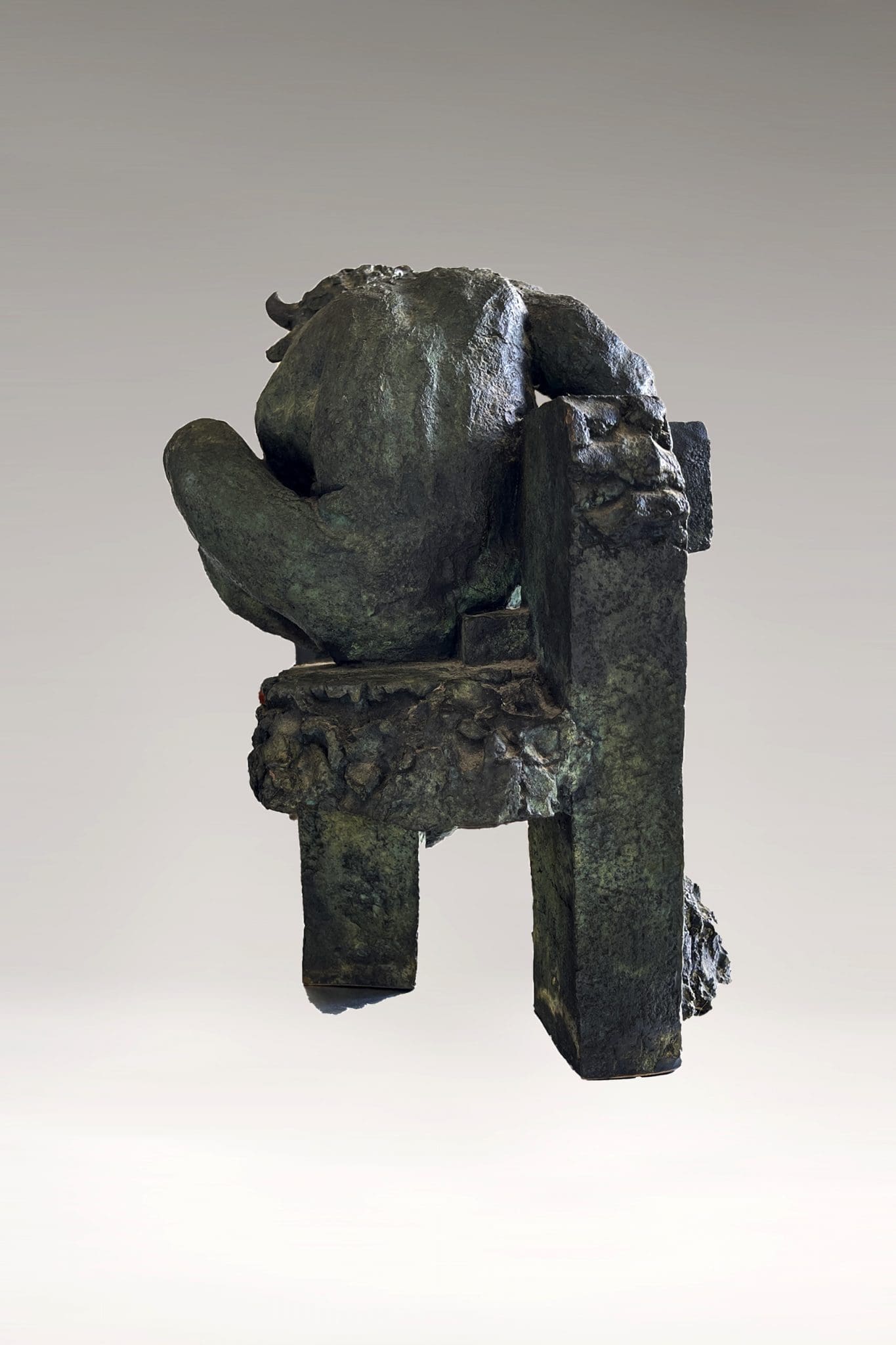
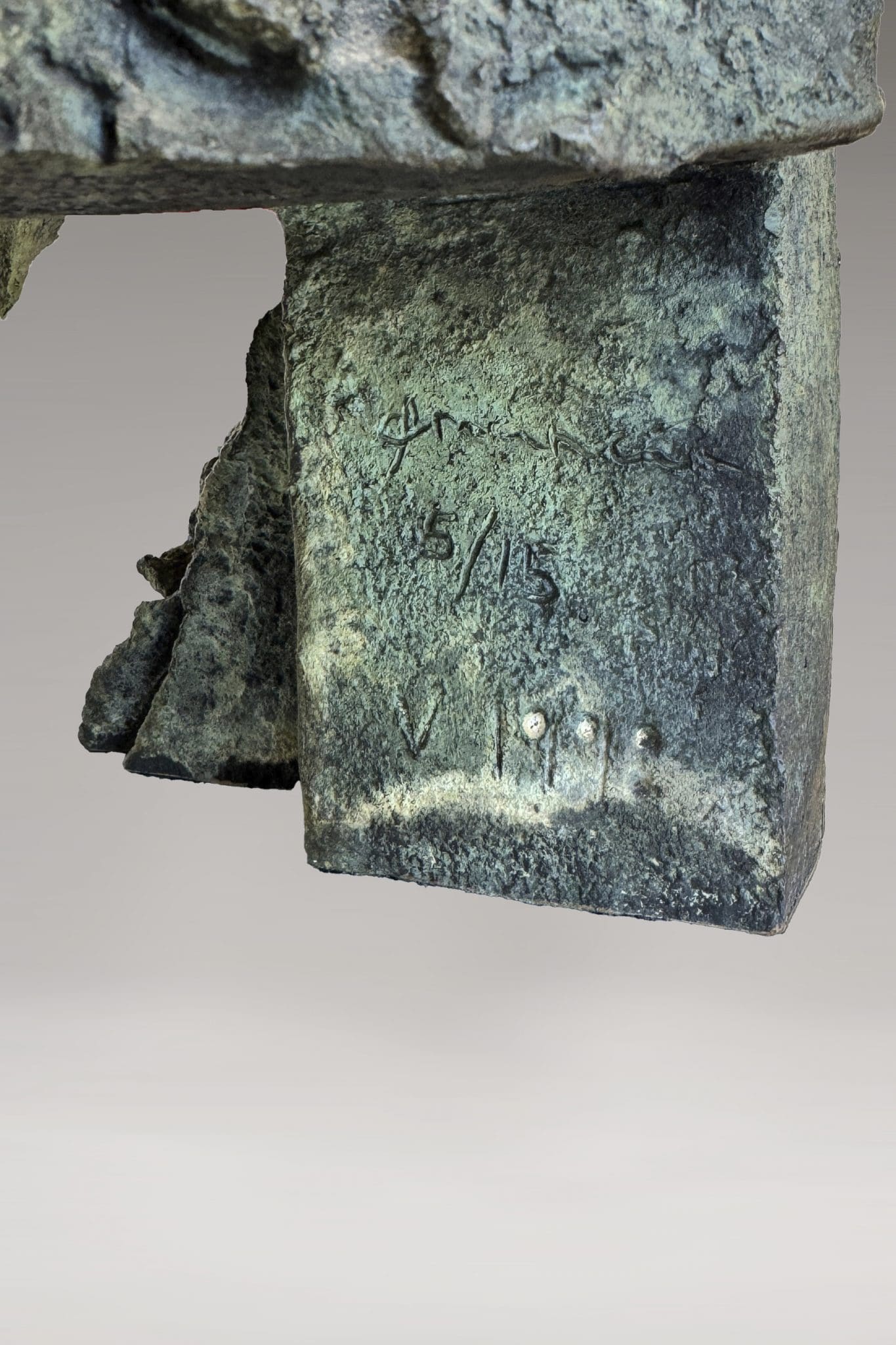
Amancio González Andrés approaches the Minotaur through the formal vocabulary of bronze casting, a medium whose physical properties — weight, permanence, the capacity to register the finest surface detail from a modelled clay or wax original — are ideally suited to the representation of mythological subjects that demand both physical presence and psychological depth. At 36 × 24 × 20 centimetres, this piece occupies the space of a substantial cabinet sculpture — large enough to impose itself in a room, compact enough to invite close inspection of its surface. The sculptor’s handling of the bronze reveals a command of contrasting textures: smooth passages that evoke human skin give way to rougher, more agitated surfaces in the animal portions of the body, enacting the mythological hybrid through material contrast as much as through formal anatomy. The patination of the bronze adds further chromatic richness, the warm brown-green tones deepening into shadow and catching light in ways that animate the figure across different conditions of illumination.
Collecting Contemporary Spanish Sculpture
The market for contemporary Spanish sculpture is one of the more dynamic sectors of the international art world, reflecting both the extraordinary vitality of Spain’s postwar and contemporary artistic scene and growing collector interest in voices beyond the canonical Anglo-American and Central European axes. González Andrés works within a tradition of Spanish figuration that draws on classical mythology and the human body as inexhaustible subjects, situating him in productive conversation with earlier masters while maintaining a distinctly contemporary sensibility. “Minotaur” is at once a meditation on one of Western art’s most enduring subjects and a demonstration of the artist’s mastery of the formal and technical demands of monumental casting at intimate scale. For collectors drawn to the intersection of classical mythology, contemporary European sculpture, and the irreplaceable material presence of cast bronze, this piece represents a significant and coherent acquisition.


 No products in the cart.