

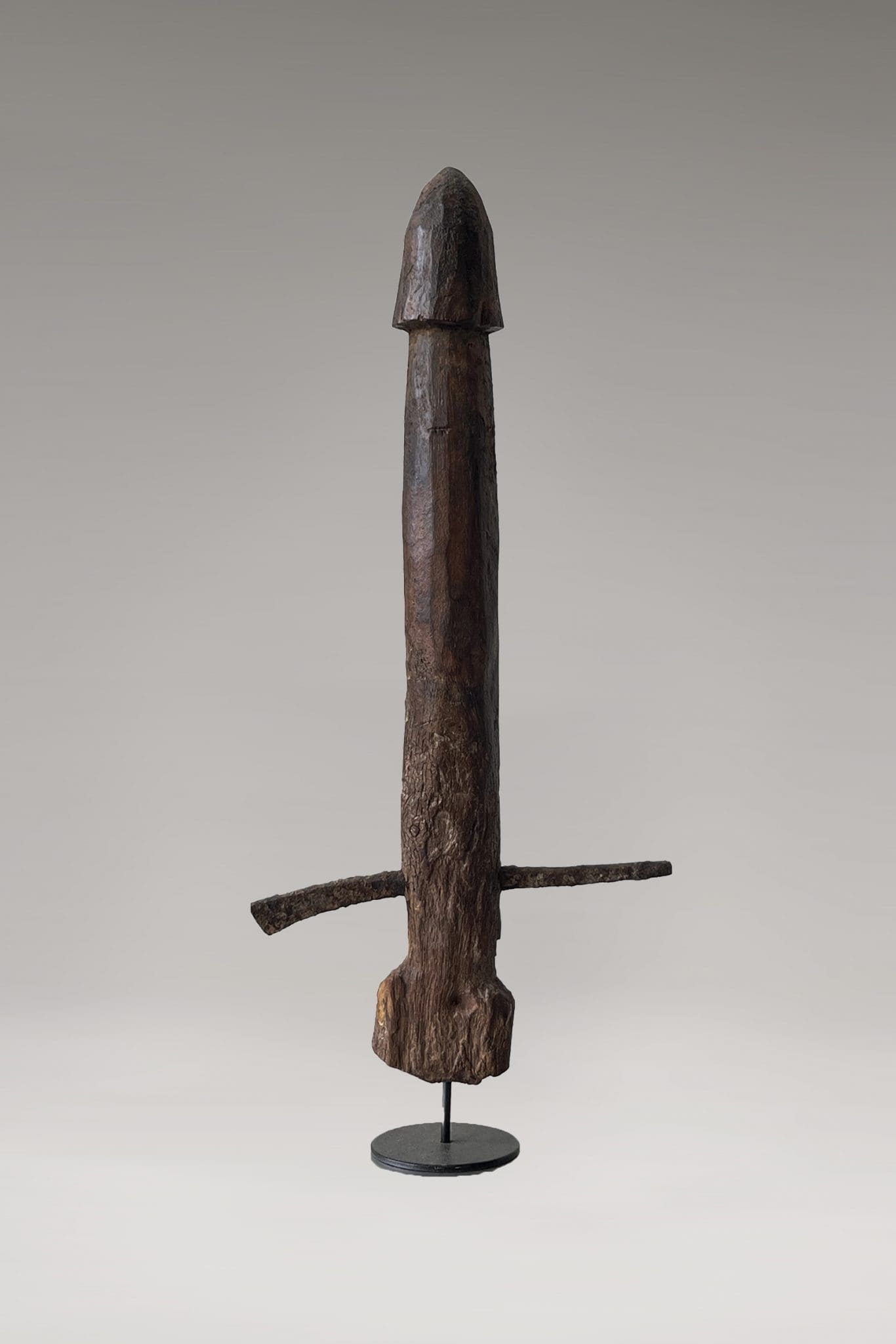
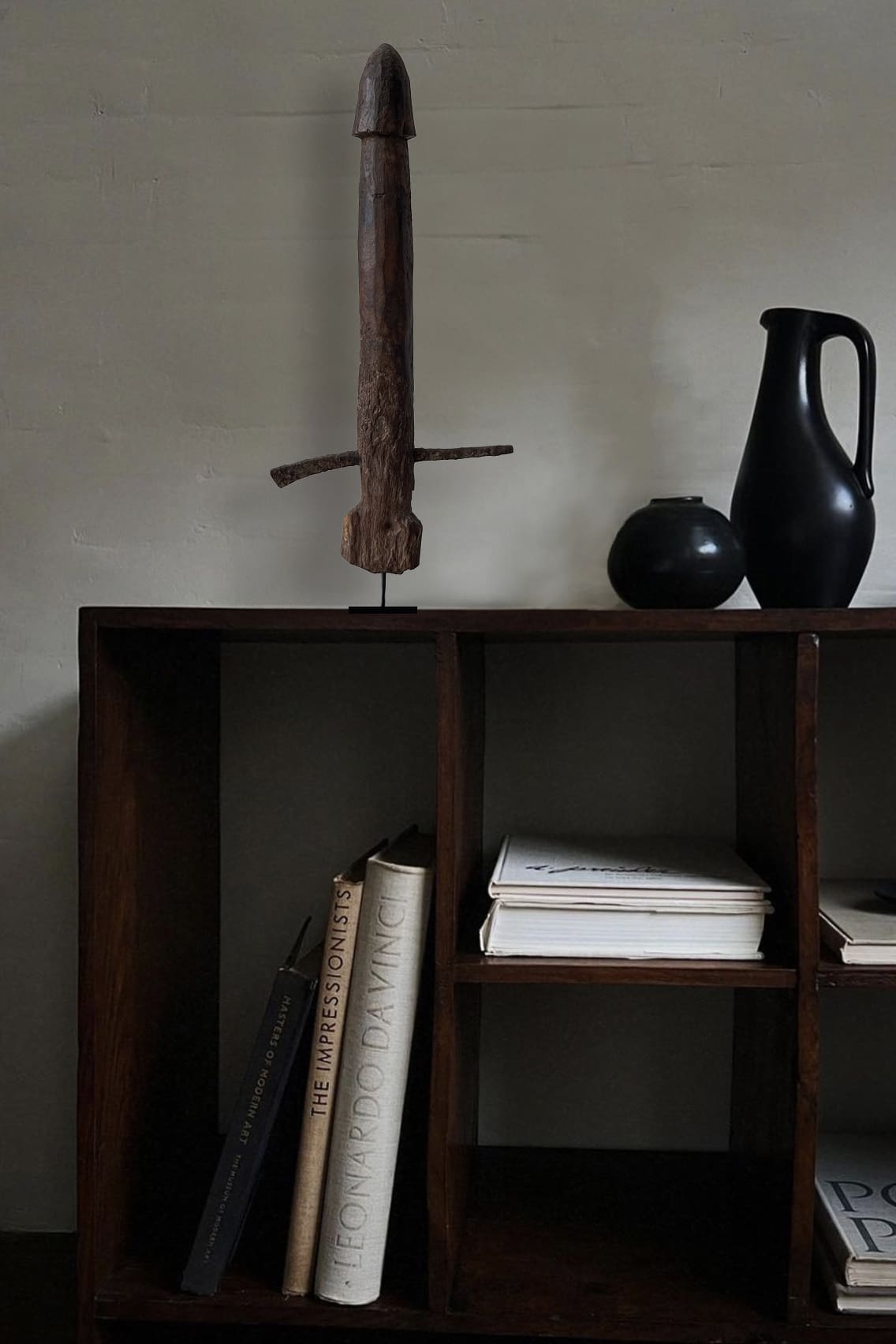
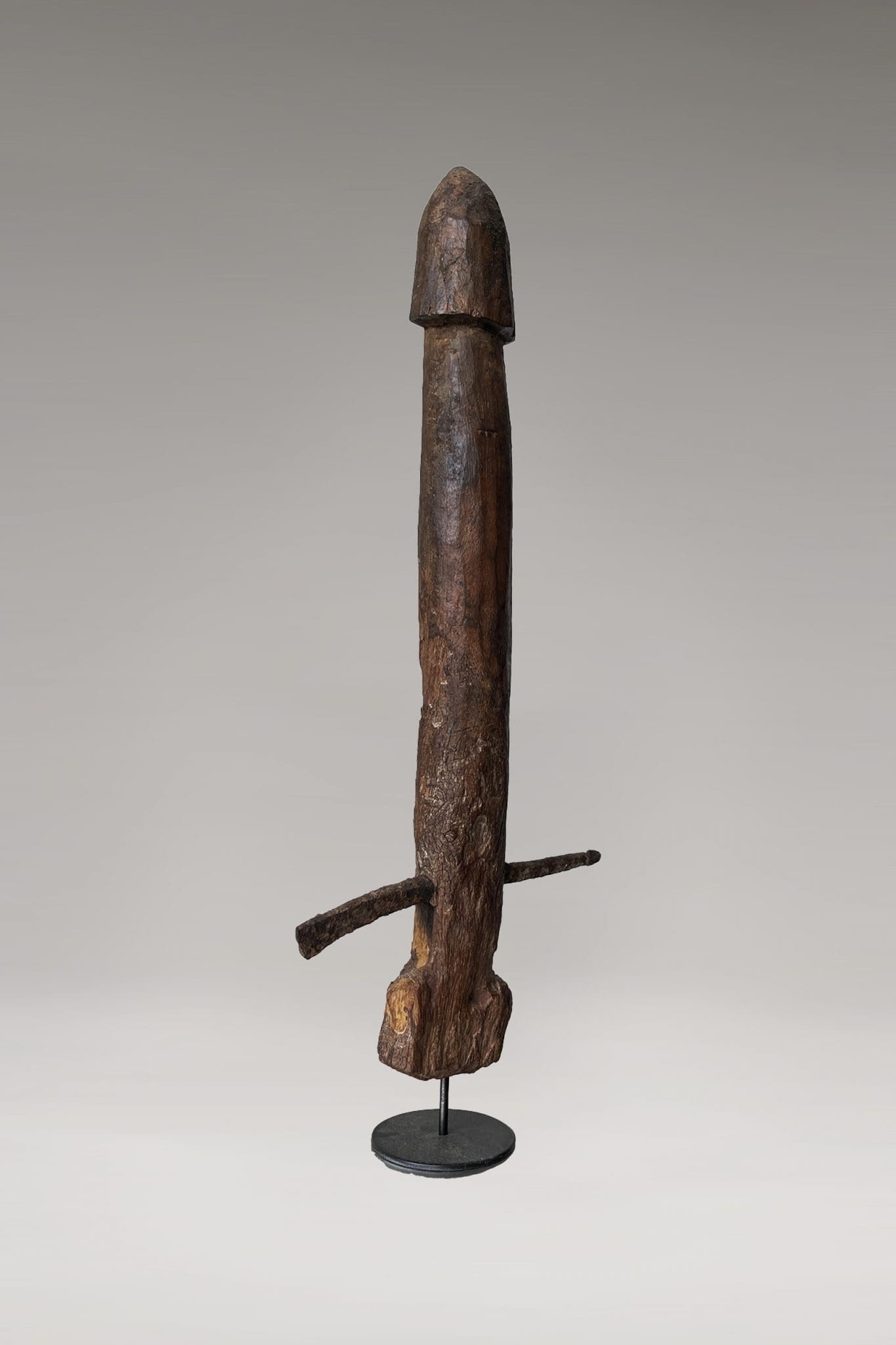
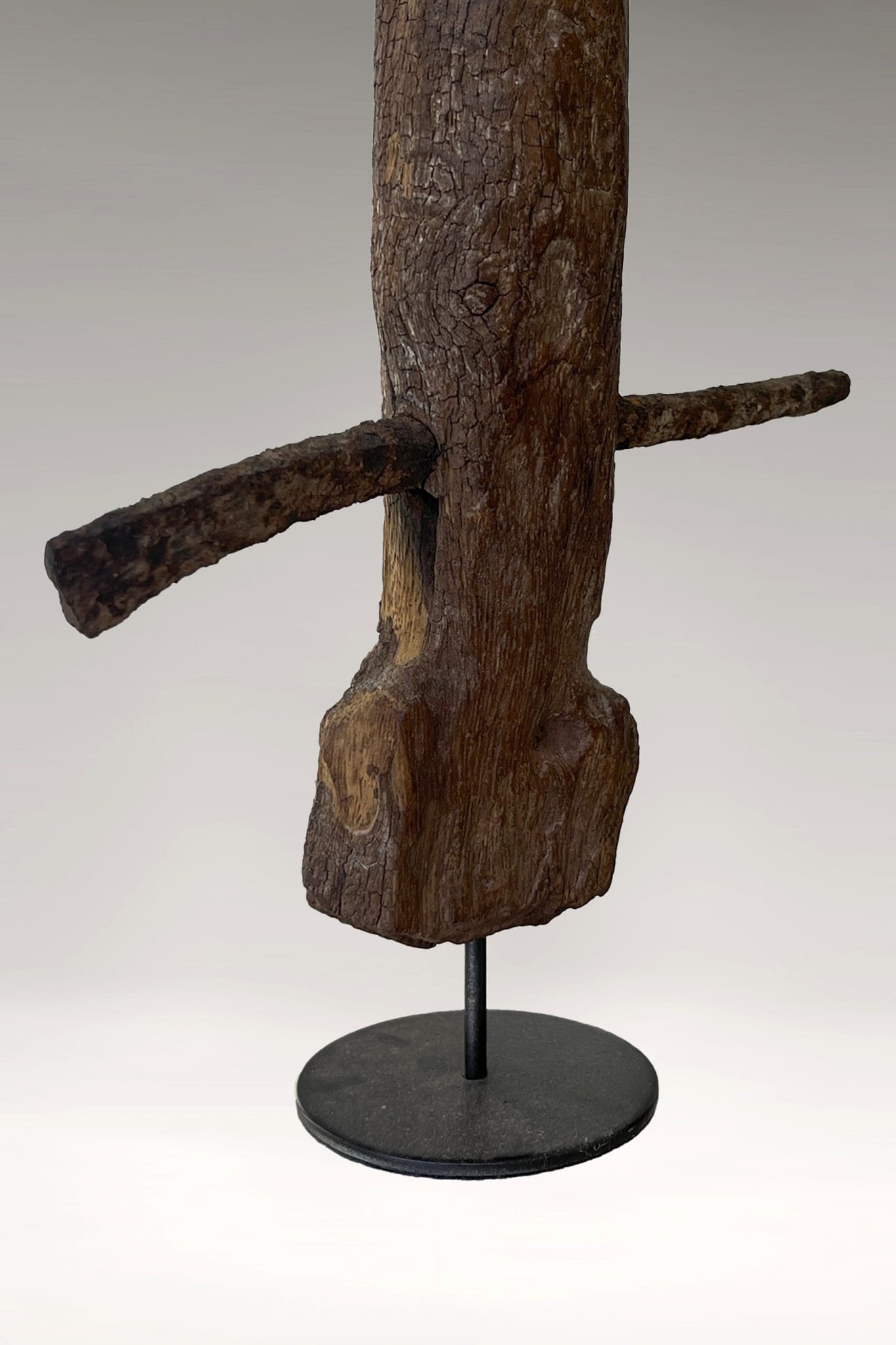
Legba: The Messenger at the Threshold
In the Vodun religious traditions of the Fon people of Benin (formerly Dahomey) and the Ewe people of Togo and Ghana, Legba holds a position of unique importance. He is the youngest of the vodun, the divine forces that the Fon acknowledge as governing the world — yet he is also, paradoxically, the one who must be addressed first in any communication with the divine, because without his cooperation, no message from the human world will reach the other vodun, and none from the divine world will reach humanity. Legba is the keeper of the crossroads, the master of boundaries, the one who opens and closes the paths between worlds. Without him, ritual is impossible; with him, anything can be negotiated. His character is simultaneously exuberant and demanding: Legba is associated with sexuality, with excess, with the irreverent energy that transgresses social norms — and his shrines, typically placed at crossroads, doorways, and the entrances to compounds, embody this character in the objects assembled there.
Iron, Phallus, and the Force of Legba
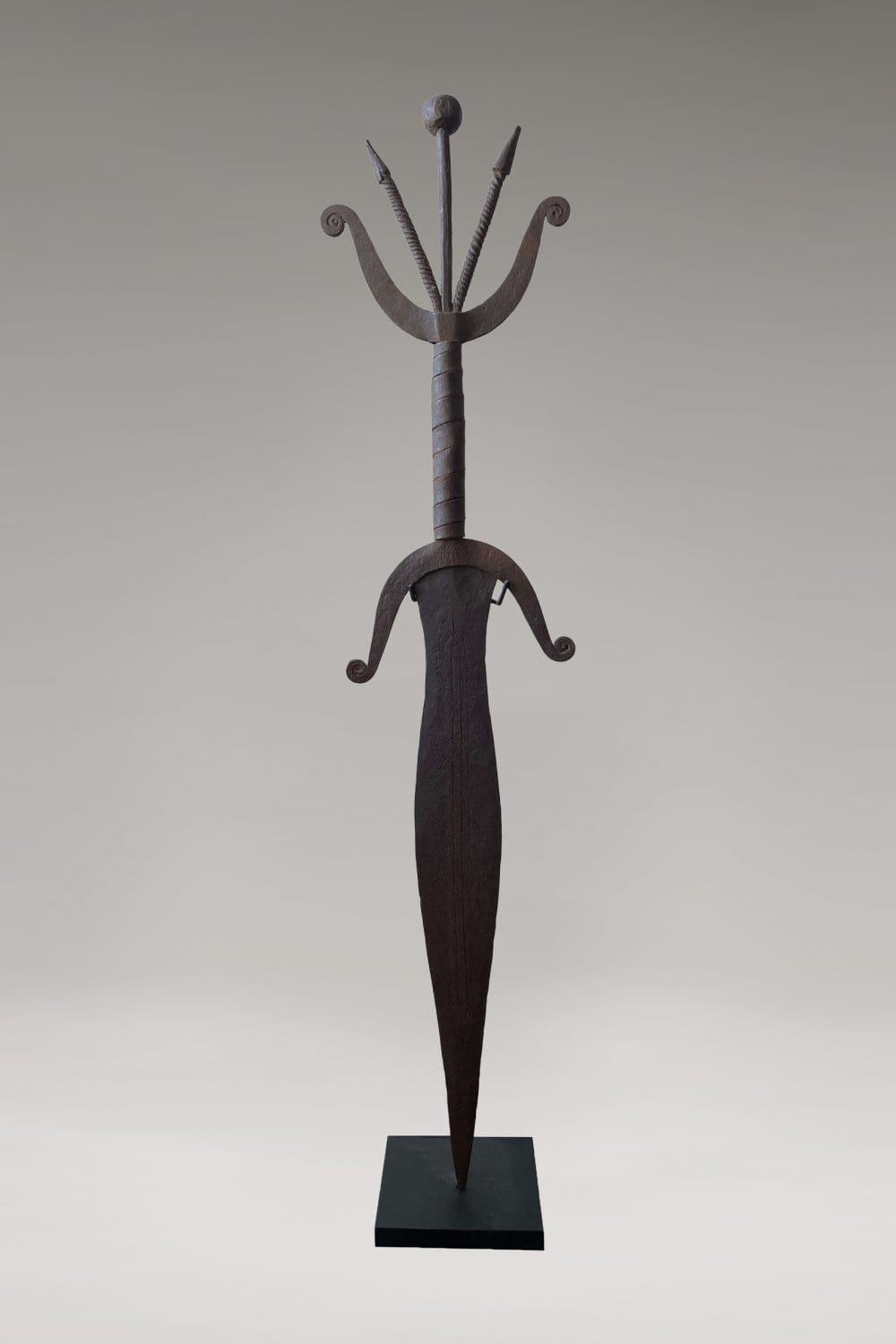
The phallic form of Legba votive objects is not incidental but theologically specific. Legba’s phallic iconography connects to his association with generative power — with the force that creates and sustains life — and with his role as the boundary-crosser who moves between realms. In Fon and Ewe tradition, the phallus is not merely an erotic symbol but a sign of vital energy, of the capacity for connection and generation that makes existence possible. Forged iron — the same material as the vodun Gu, the deity of iron and warfare — gives this Legba figure an additional layer of meaning: iron is the material of force, of the irreducible, of what persists when everything else has been worn away. A Legba figure in iron is thus doubly charged: the material and the form together constitute a statement about a force that is simultaneously creative, communicative, and indestructible.
Vodun and the Atlantic World
Vodun — the religious system that produced Legba and the other vodun — is one of the most widely distributed African religious traditions in the world. Carried to the Americas by the enslaved people of the Fon, Ewe, and Yoruba kingdoms, it became the foundation of Haitian Vodou, Cuban Santería, Brazilian Candomblé, and a dozen other syncretic traditions. In all of these, Legba persists in recognisable form: in Haitian Vodou he is Papa Legba, the old man at the crossroads; in Louisiana Voodoo he appears as a figure of similar function; in Brazilian Candomblé he is Exu, the trickster-messenger of the Yoruba tradition with whom he merged in the Atlantic passage. A Legba figure from West Africa carries this entire history within it — the origin of a religious imagination that proved durable enough to survive the Middle Passage and generate new forms across an ocean.





 No products in the cart.