

Bao: The Most Complex Board Game Most People Have Never Heard Of
The game of Bao is played primarily in Tanzania, Kenya, and across the Swahili coast — a strip of East African Indian Ocean culture whose maritime connections have shaped its intellectual and material life for more than a thousand years. Bao belongs to the mancala family of games, in which seeds or stones are distributed and redistributed around a board of hollowed cups according to rules governing capture, movement, and the accumulation of playing pieces. But Bao is not simply a mancala game: it is widely regarded by game theorists as one of the most strategically complex abstract board games in existence, its branching decision trees exceeding those of chess in certain configurations. To play Bao at an advanced level requires months of study, the memorisation of canonical opening sequences, and a capacity for simultaneous calculation that makes the game an intellectual test of the highest order. In Tanzania, Bao masters are figures of genuine social prestige; in Zanzibar, tournaments draw specialists who have devoted years to the game’s study.
The Board as Object
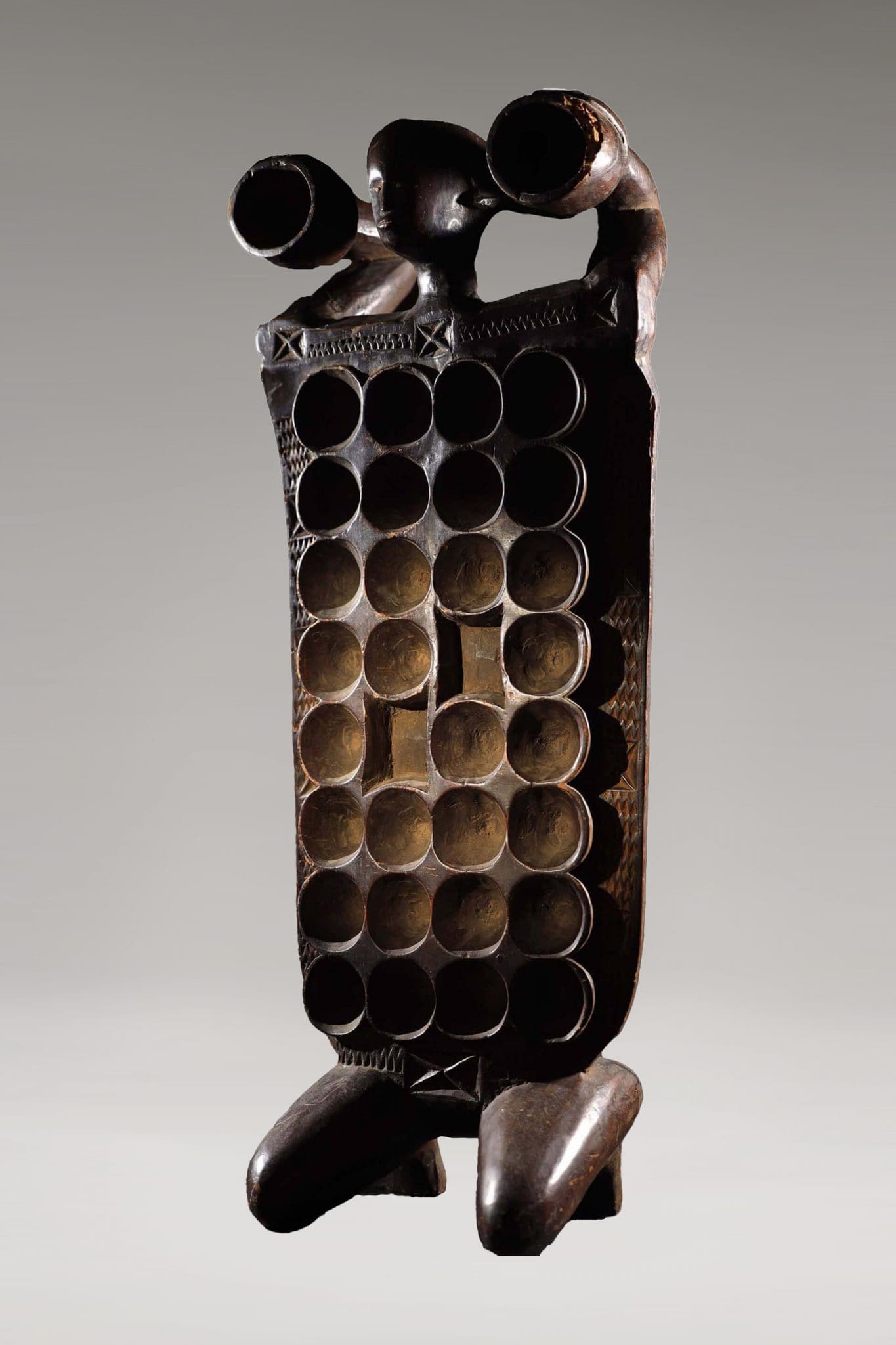
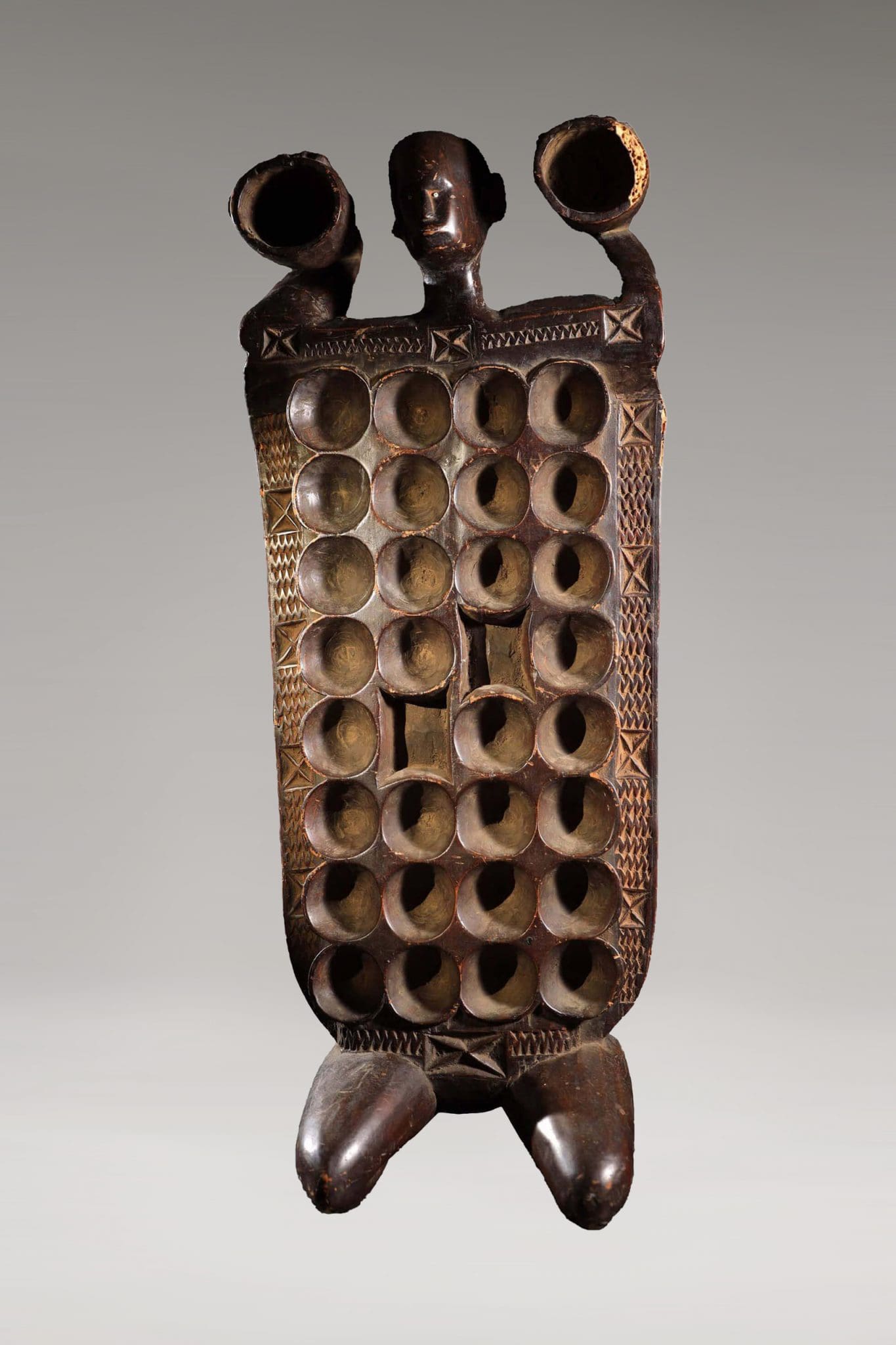
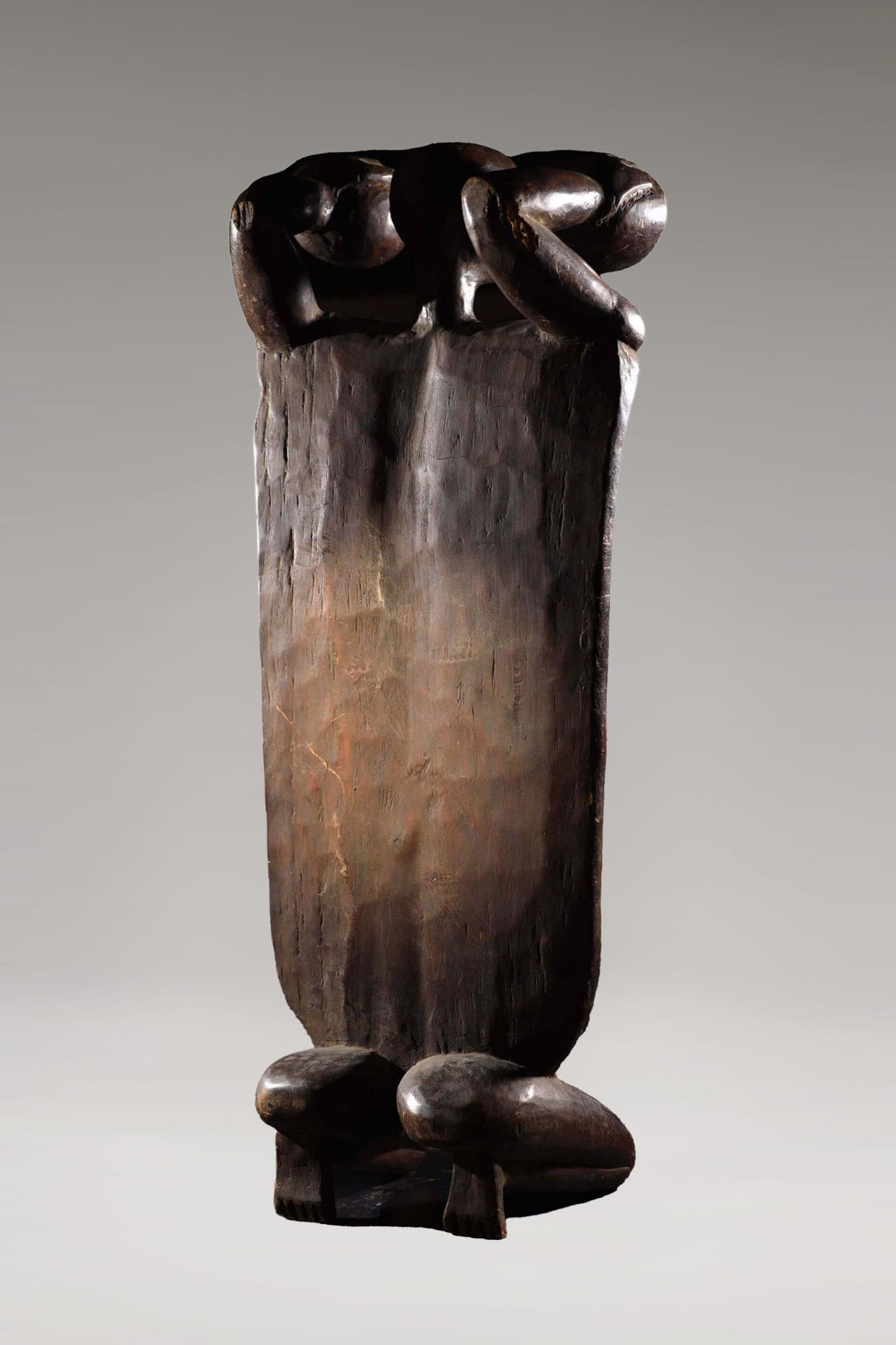
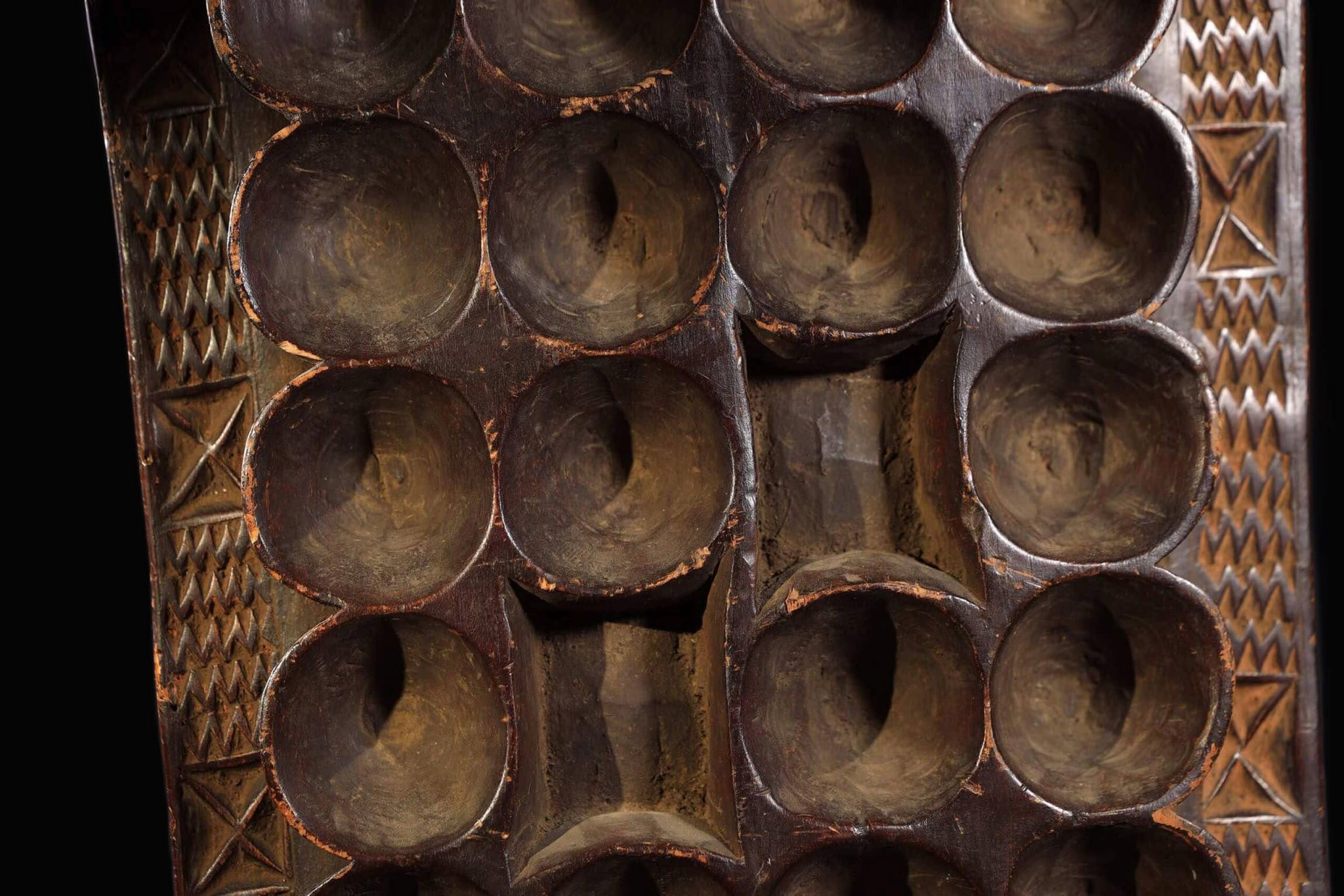
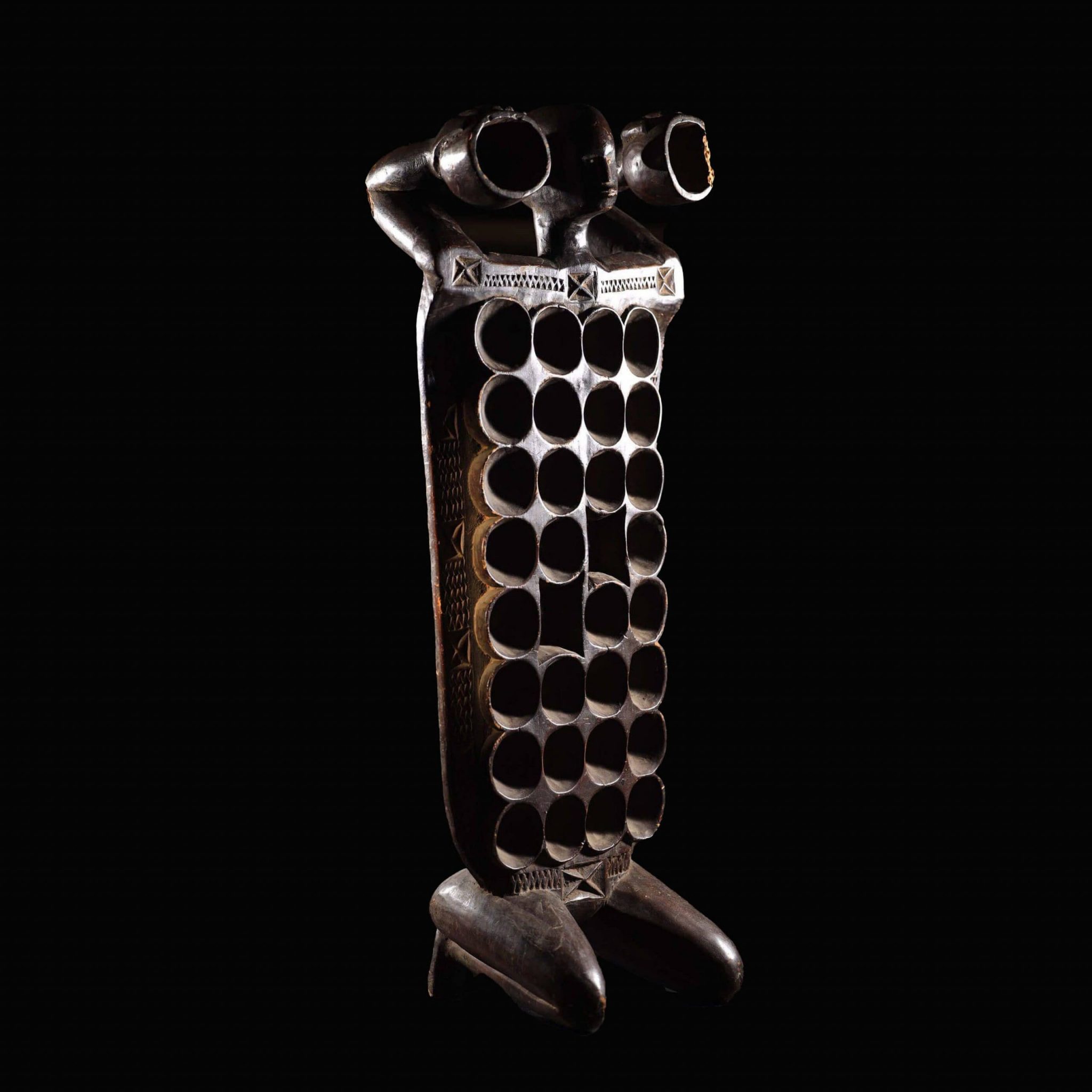
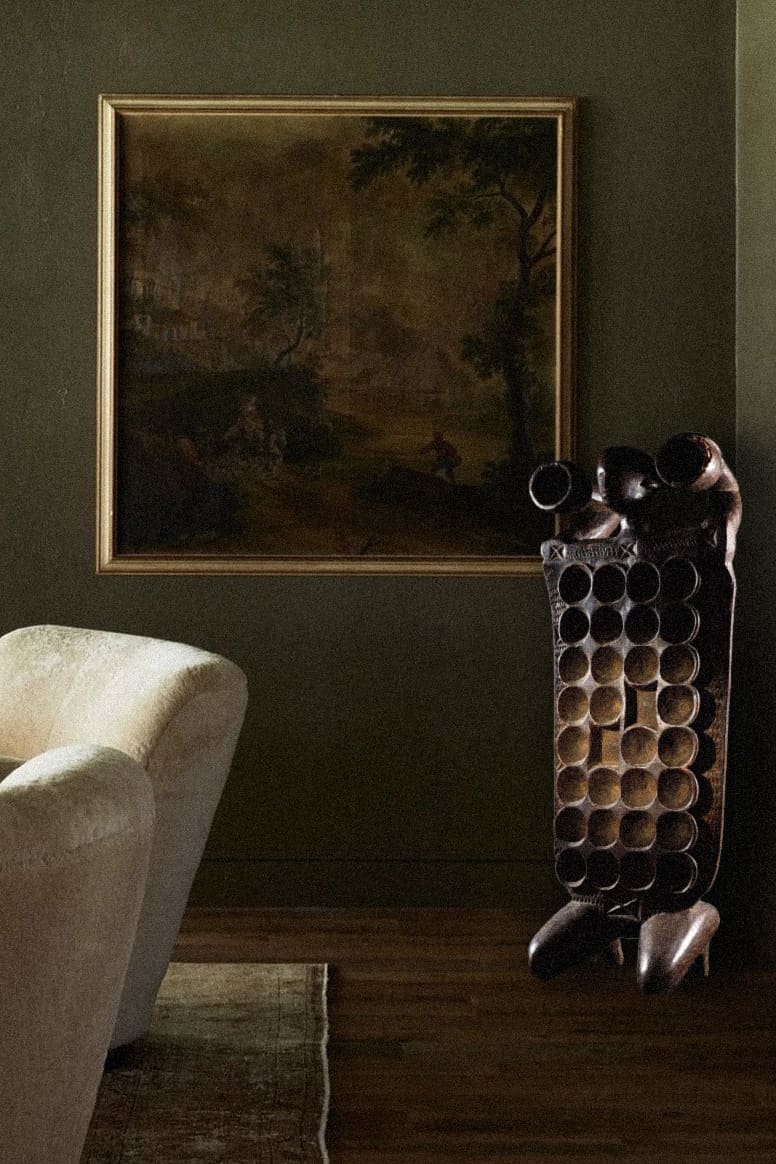
A large Bao board carved from a single piece of wood is itself a significant object, independent of the game it hosts. The standard Bao board has four rows of eight holes, each hole worn smooth by decades of handling — seeds or stones manipulated by skilled fingers, again and again, in thousands of games played across years or a lifetime. This wearing is not damage but documentation: the hollows in a well-used Bao board carry in their polished surfaces the record of all the hands and games that shaped them. A large board — indicating a full-size, serious playing surface rather than a portable travel version — would have been a household possession of some standing: an object that signalled the household’s engagement with the intellectual culture of Bao and provided a surface on which important games could be played. Bao boards of quality were sometimes carved with decorative elements on their sides or ends, marking them as prestige objects as much as gaming equipment.
Mancala Across Africa and the World
The mancala family of games is among the oldest documented in the world: archaeological evidence suggests versions were played in ancient Egypt, and the game’s distribution across Africa, the Middle East, South and Southeast Asia, and the Caribbean — where it arrived with enslaved Africans — speaks to a spread of at least two millennia. Within Africa, dozens of distinct mancala variants have developed, each with its own board configuration, rules, and cultural significance. Bao stands out within this family for its four-row configuration and its unusually sophisticated rules governing the opening phase of play, which creates a game of exceptional depth. A Bao board is thus not merely a game implement but a node in one of humanity’s longest-running intellectual traditions: the human impulse to devise and master games of pure strategic thought, played on surfaces worn smooth by generations of concentrated engagement.

 No products in the cart.