

The Boomerang: An Invention Without Parallel
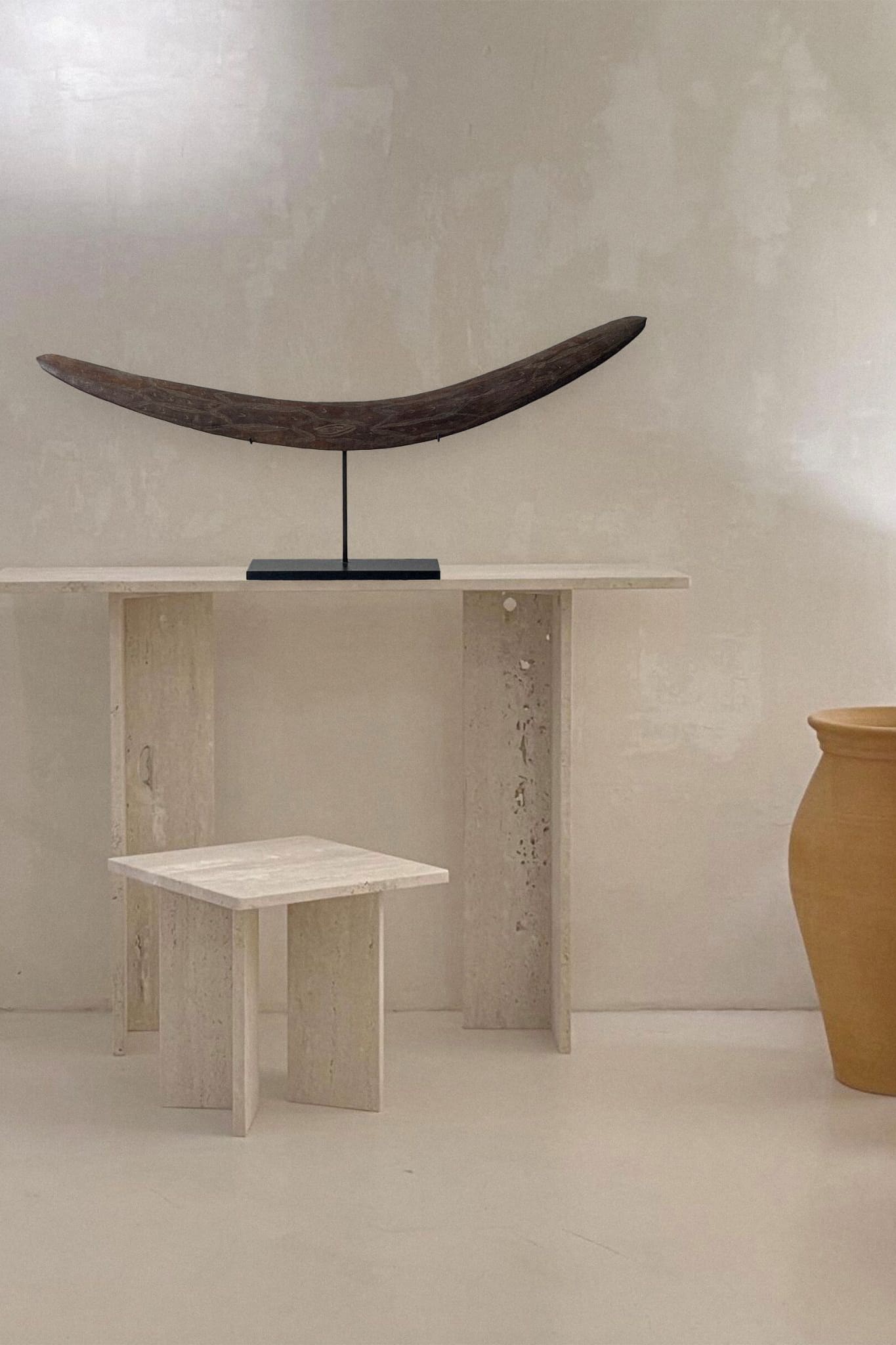
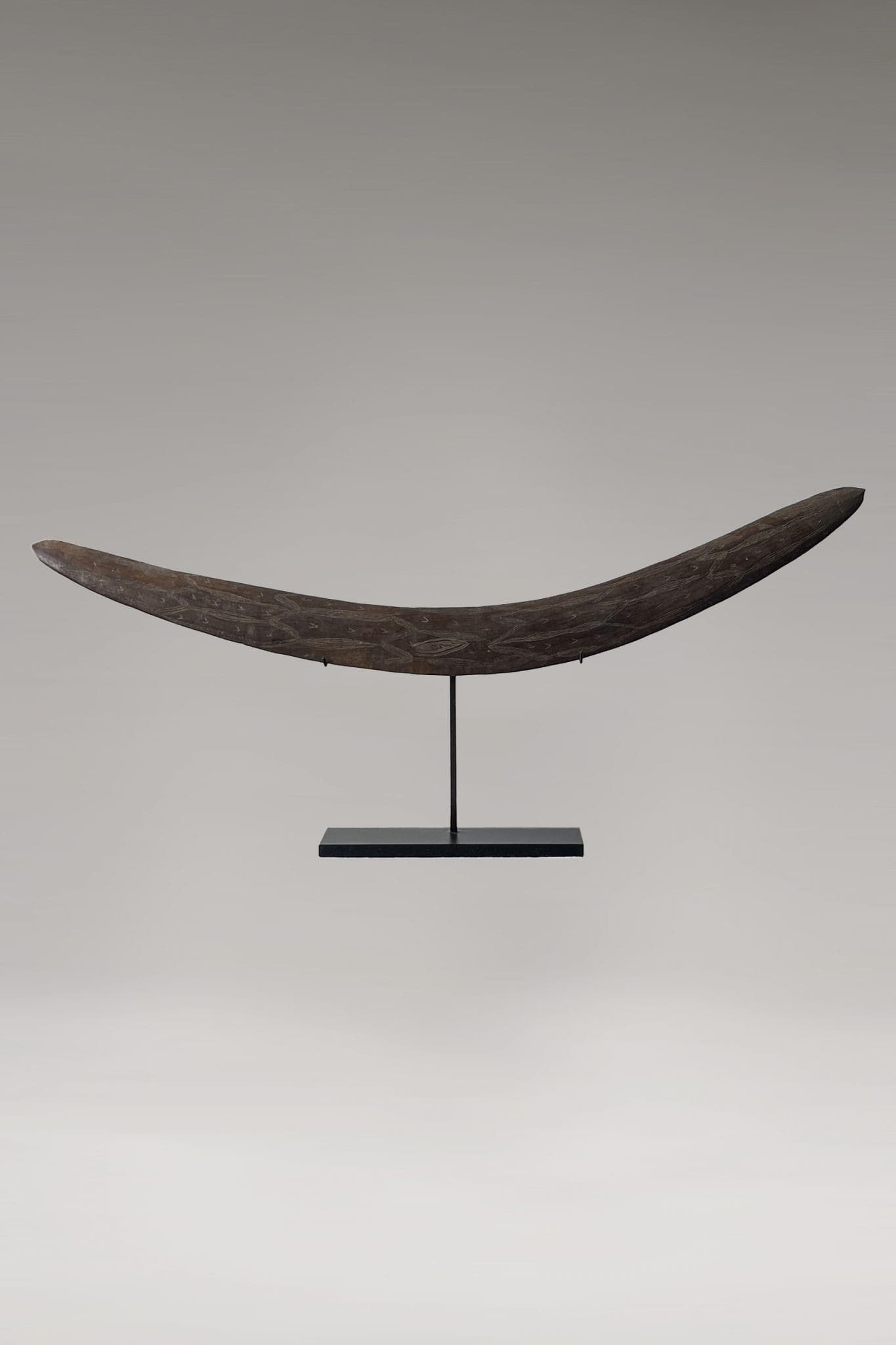
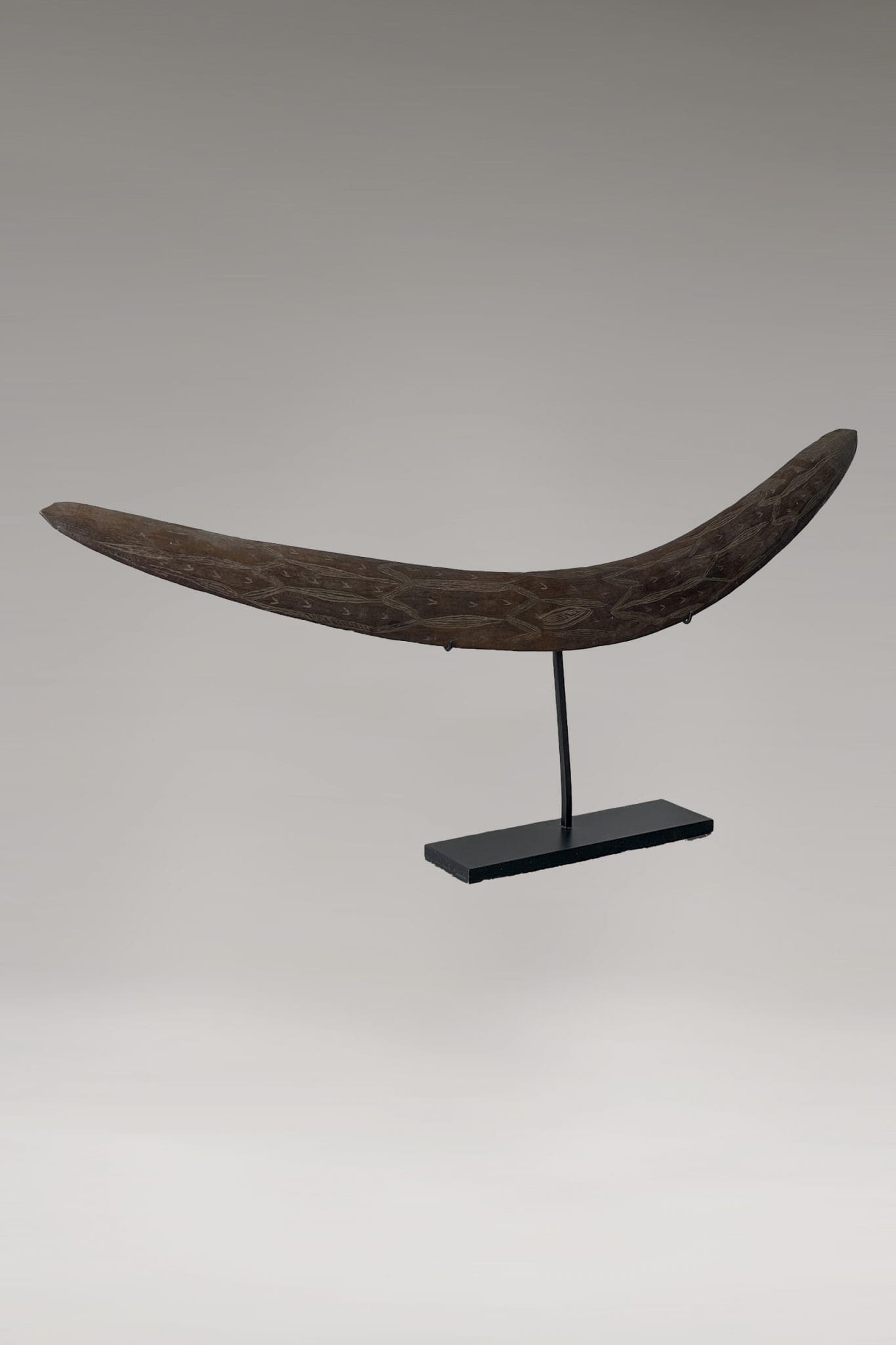
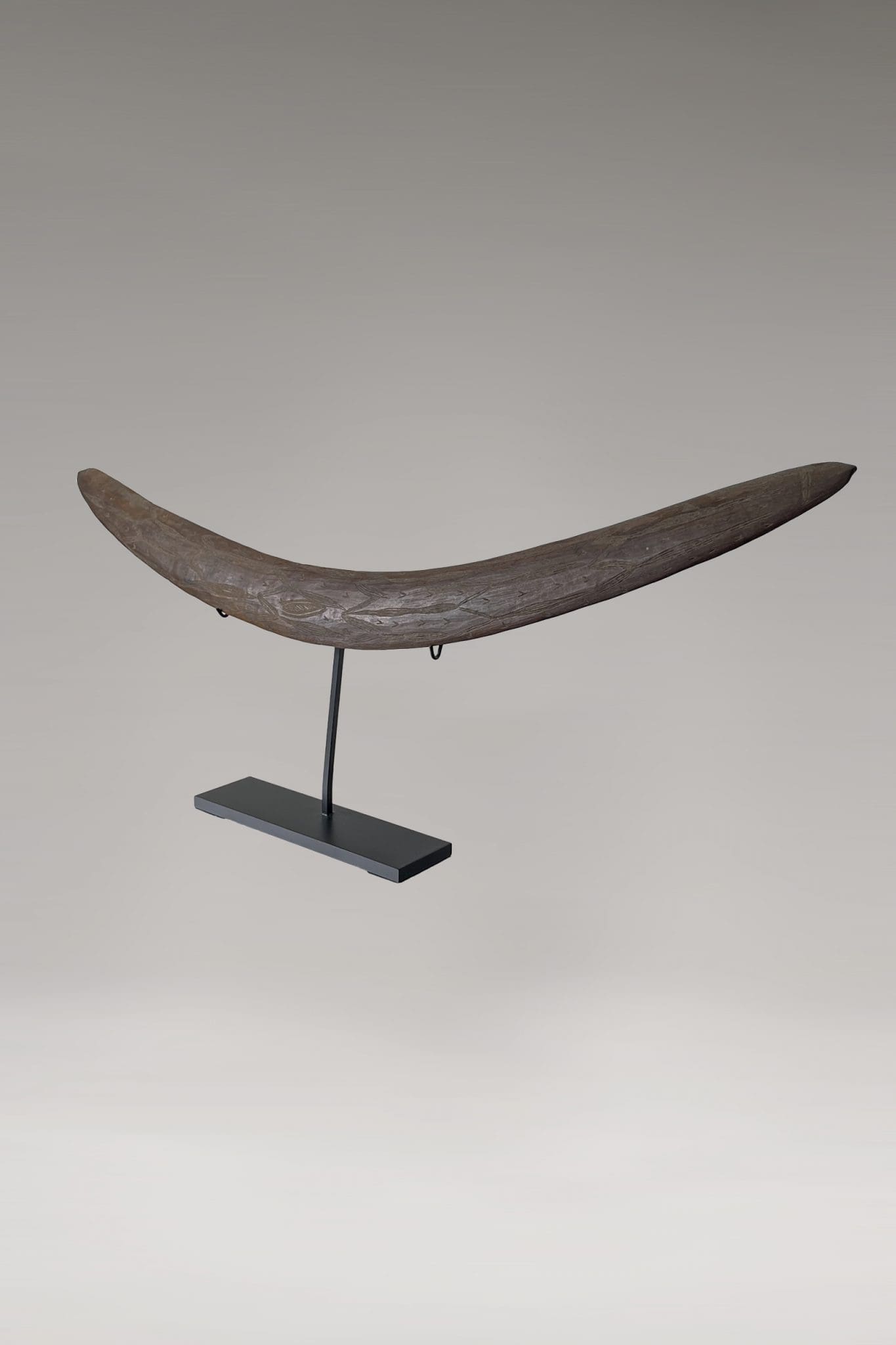
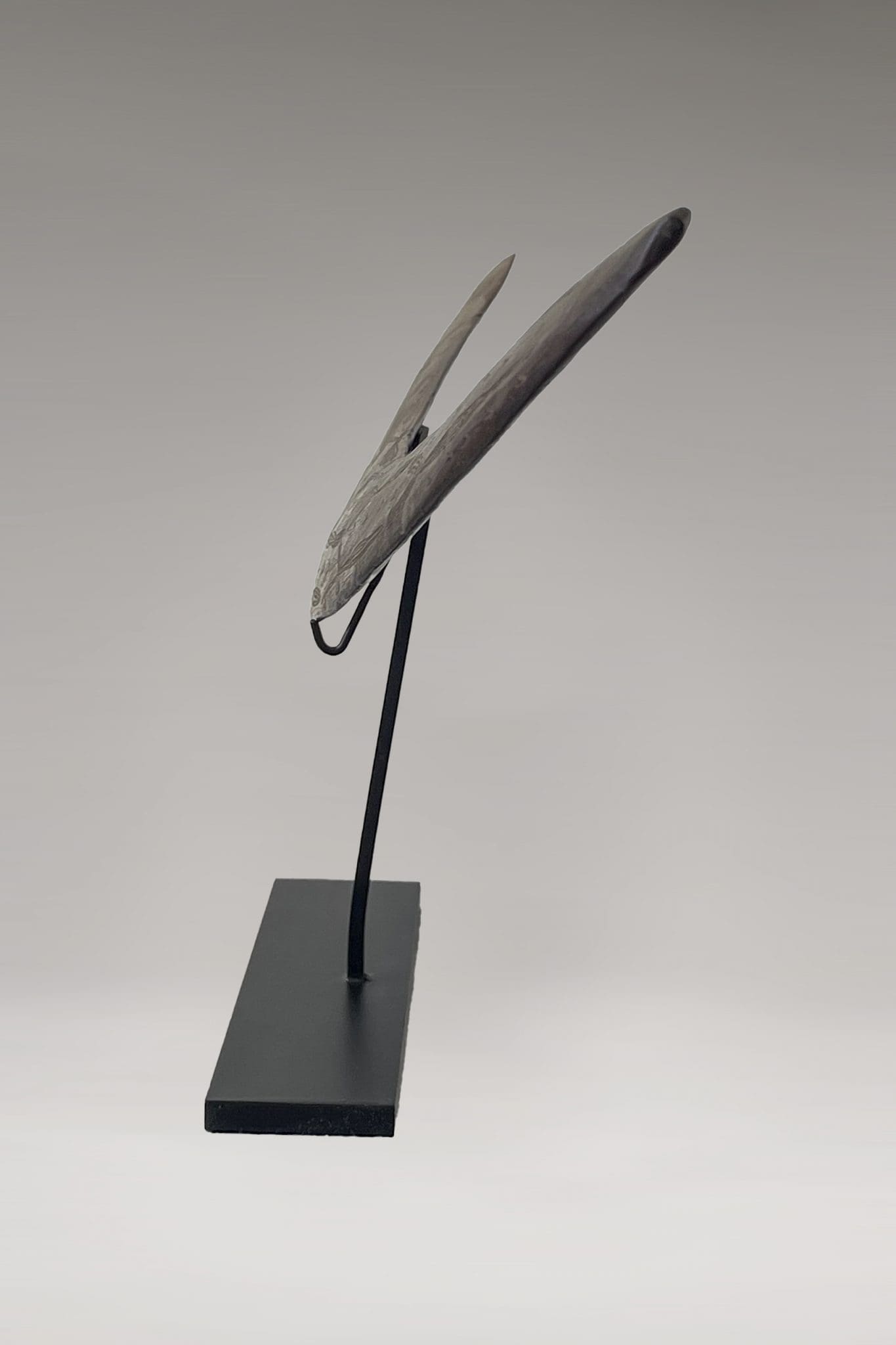
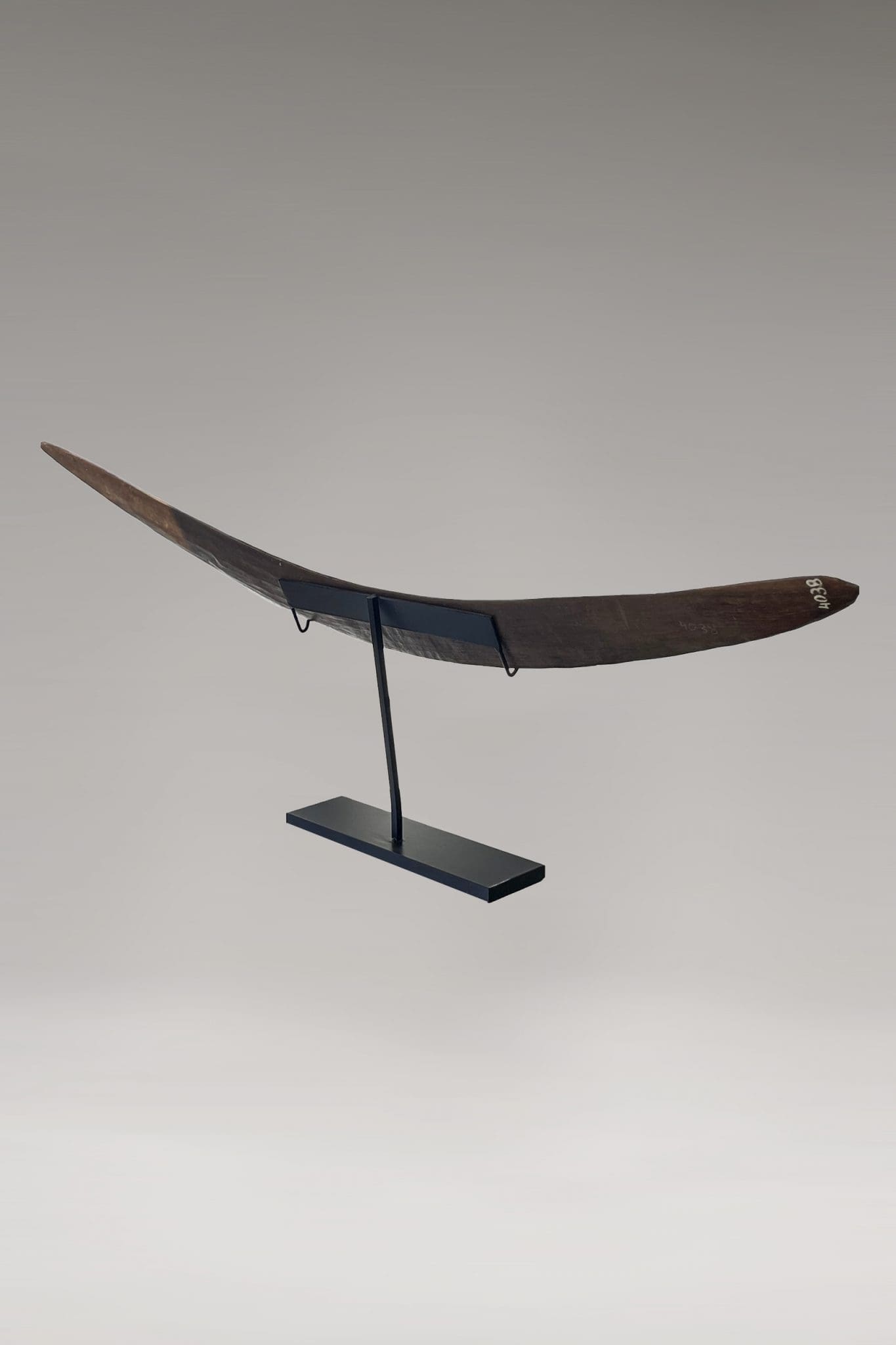
The boomerang is among the most recognisable objects in the world, and among the least understood. Popular imagination reduces it to the returning toy — a curiosity of physics that arcs back to the thrower — but the boomerangs used by Aboriginal Australians across tens of thousands of years of continuous practice were primarily non-returning hunting weapons: tools of extraordinary precision, shaped to travel in a flat, fast arc that could bring down birds in flight, drive game into nets, or be used in close combat. The returning boomerang was a specialised variant, used for specific purposes including bird hunting over water. The distinction matters because it places the boomerang in its proper context: not as a trick, but as one of the most sophisticated pieces of hand-thrown technology ever devised. At 73 centimetres in length, this example falls within the range of the larger hunting and ceremonial boomerangs, weapons requiring strength and skill to throw effectively and decorated to reflect the knowledge and identity of their maker.
Wood, Tool, and Geometry
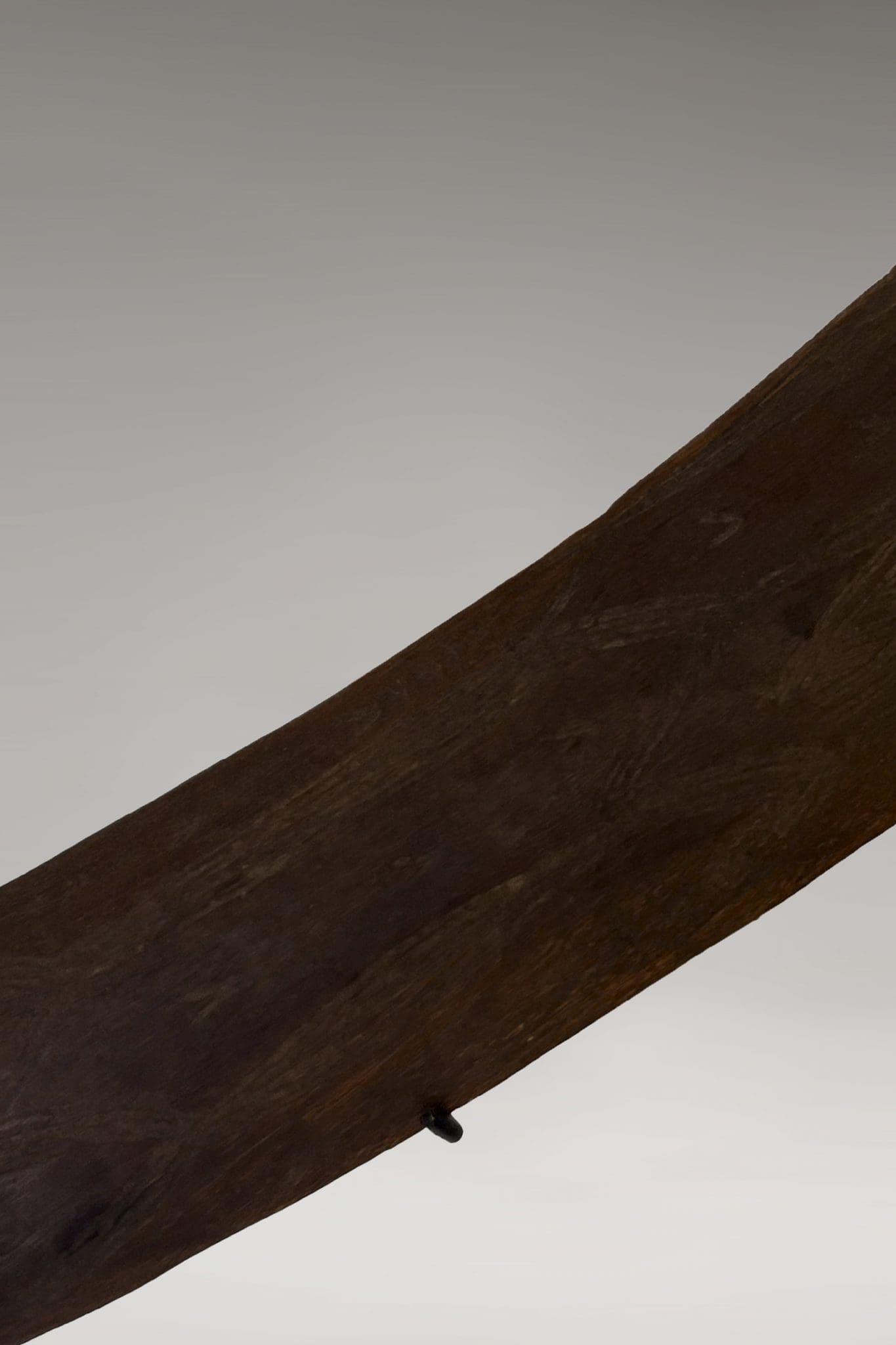
The making of a boomerang begins with the selection of the wood itself — specifically the curved grain found at the junction of a root and a trunk, or in the natural bend of a branch, where the fibres run continuously through the curve that will eventually become the boomerang’s aerodynamic profile. Aboriginal carvers read the wood for the object already within it, as sculptors working in a different tradition have always done. The carving that follows — thinning and shaping the two arms, adjusting the angle of the curve, balancing the mass along the length — requires an intuitive understanding of aerodynamics that Western science only formalised centuries after Aboriginal Australians had been applying it in practice. The geometric incised decoration on this example — hatching, crosshatching, zigzag lines, and other patterns — is not ornamental in a merely aesthetic sense. In Aboriginal material culture, geometric patterns encode information about country, kinship, and ceremony, making a decorated object simultaneously a beautiful and a meaningful one.
Sixty Thousand Years of Continuous Practice
The archaeological record places boomerangs in Australia at least 10,000 years ago, with some researchers arguing for much earlier dates. The oldest known boomerang in the world — found at Wyrie Swamp in South Australia — is dated to approximately 10,000 BCE. But the tradition of boomerang-making is embedded in a cultural continuum that stretches back to the first human settlement of the Australian continent, some 60,000 to 65,000 years ago. This 20th-century example thus belongs to the most recent chapter of one of the longest-running technological and artistic traditions in human history. It was made by someone working within a living practice — not reconstructing a lost craft but continuing one — at a moment when Aboriginal communities across Australia were navigating enormous social and political pressures while maintaining the knowledge systems that this object represents.






 No products in the cart.