

The Kris: Indonesia’s Most Loaded Object
In 2005, UNESCO inscribed the kris of Indonesia on its Representative List of the Intangible Cultural Heritage of Humanity — not for its function as a weapon but for the dense web of spiritual, aesthetic, social, and cosmological significance that accumulates in and around this asymmetrical dagger wherever it appears in the Indonesian archipelago. The kris is among the most studied objects in Southeast Asian material culture, and among the most complex: its wavy or straight blade, its distinctive stepped base (ganja), and above all its handle (hulu or gagang) constitute a system of visual and metaphysical communication that has been elaborated across centuries in Java, Bali, Madura, and dozens of island cultures beyond. To own a kris was to own an heirloom, a spiritual companion, and a social credential simultaneously. The handle, held in the hand during combat and displayed during ceremony, was frequently the most artistically worked element of the entire object — the component that most immediately communicated the identity and status of its owner.
Madura and Its Distinctive Handle Tradition
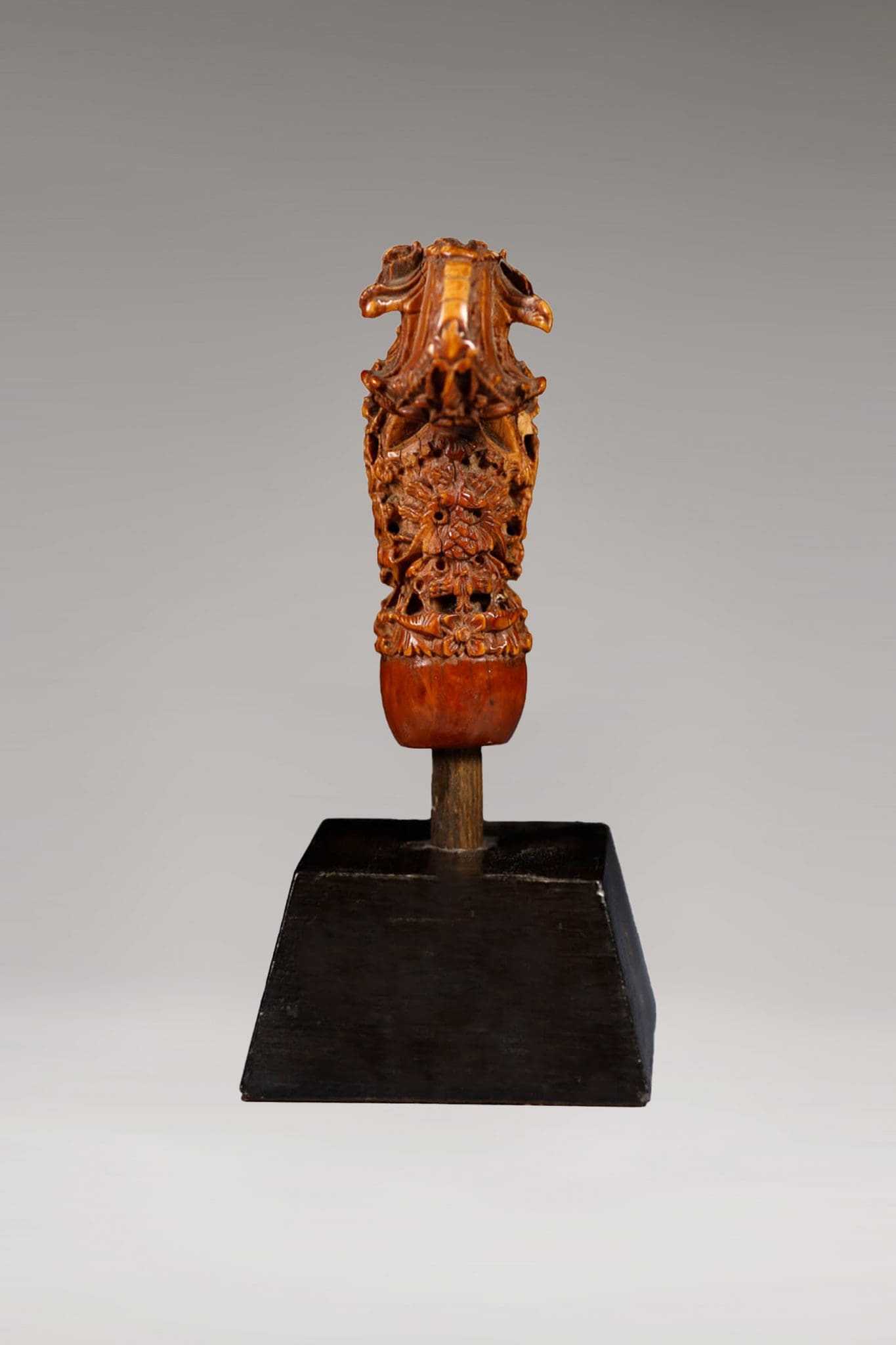
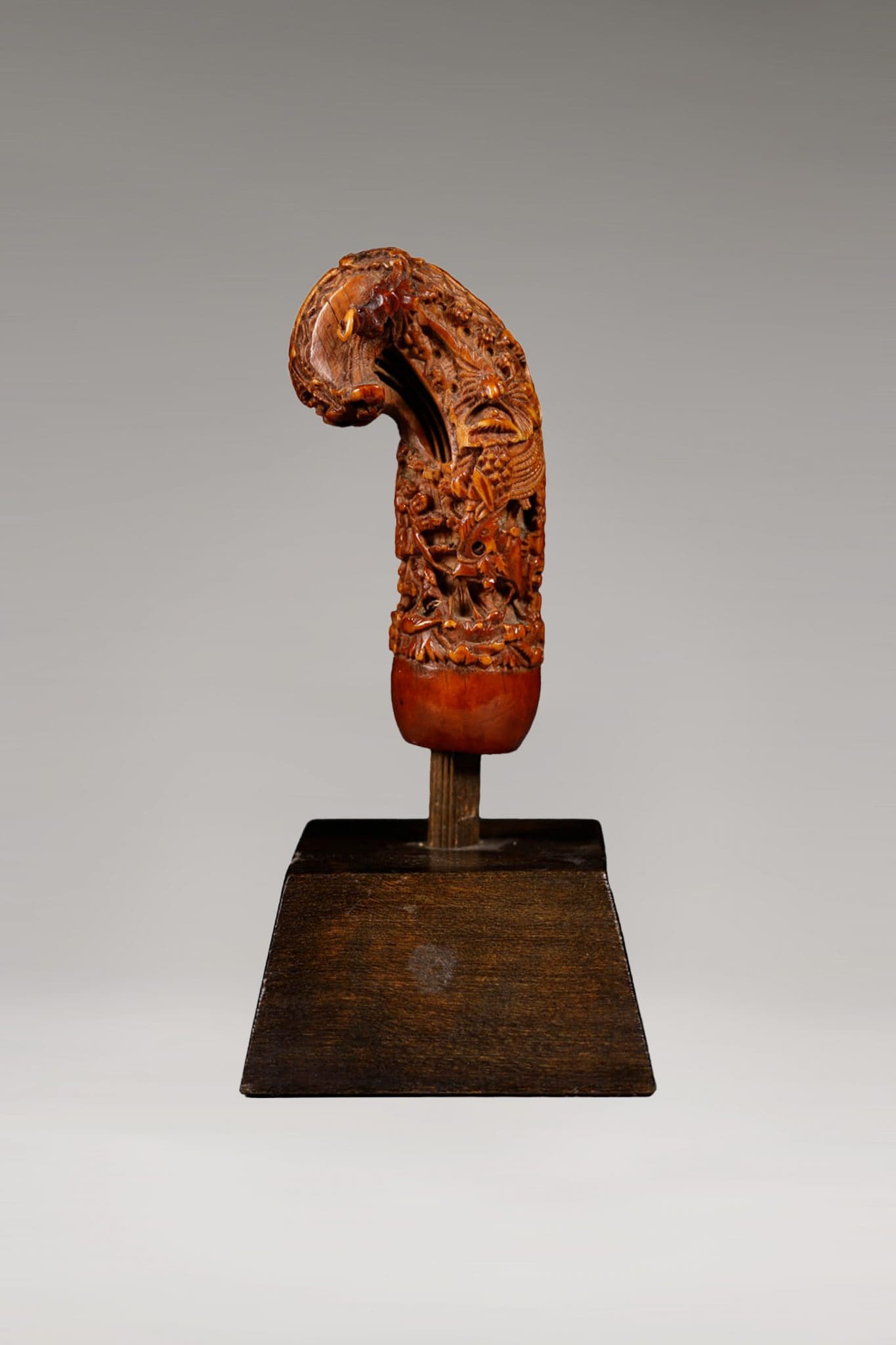
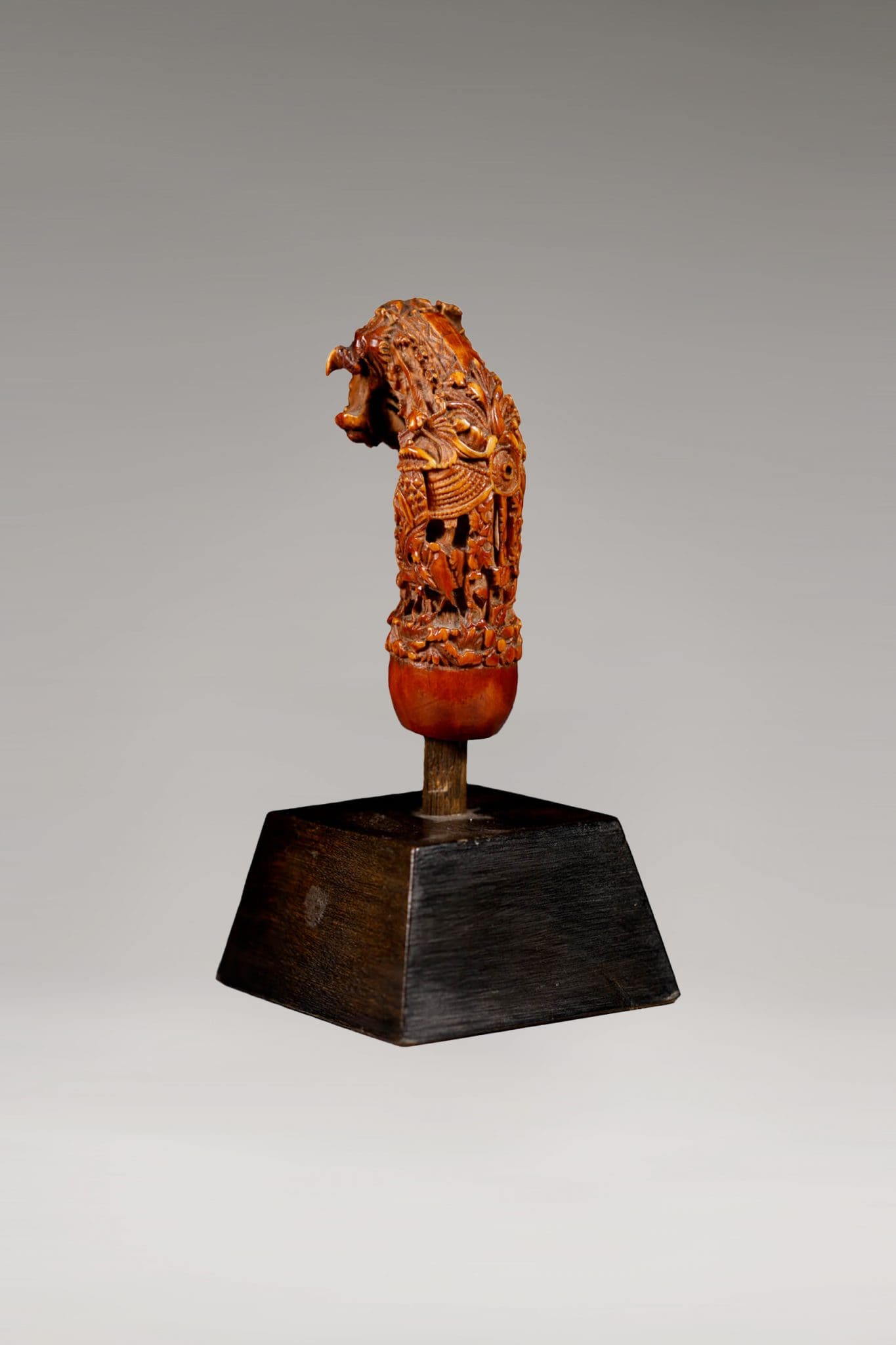
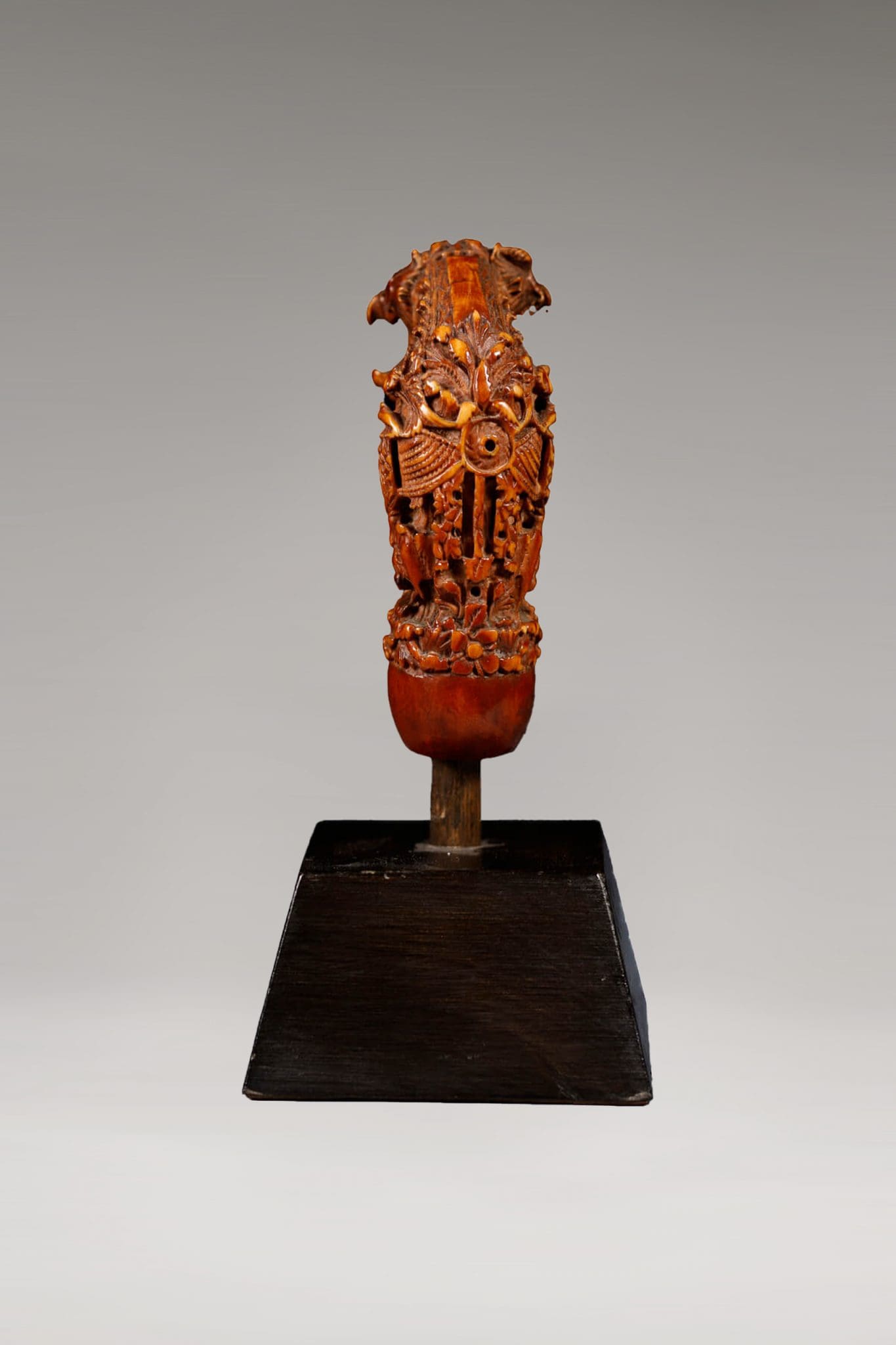
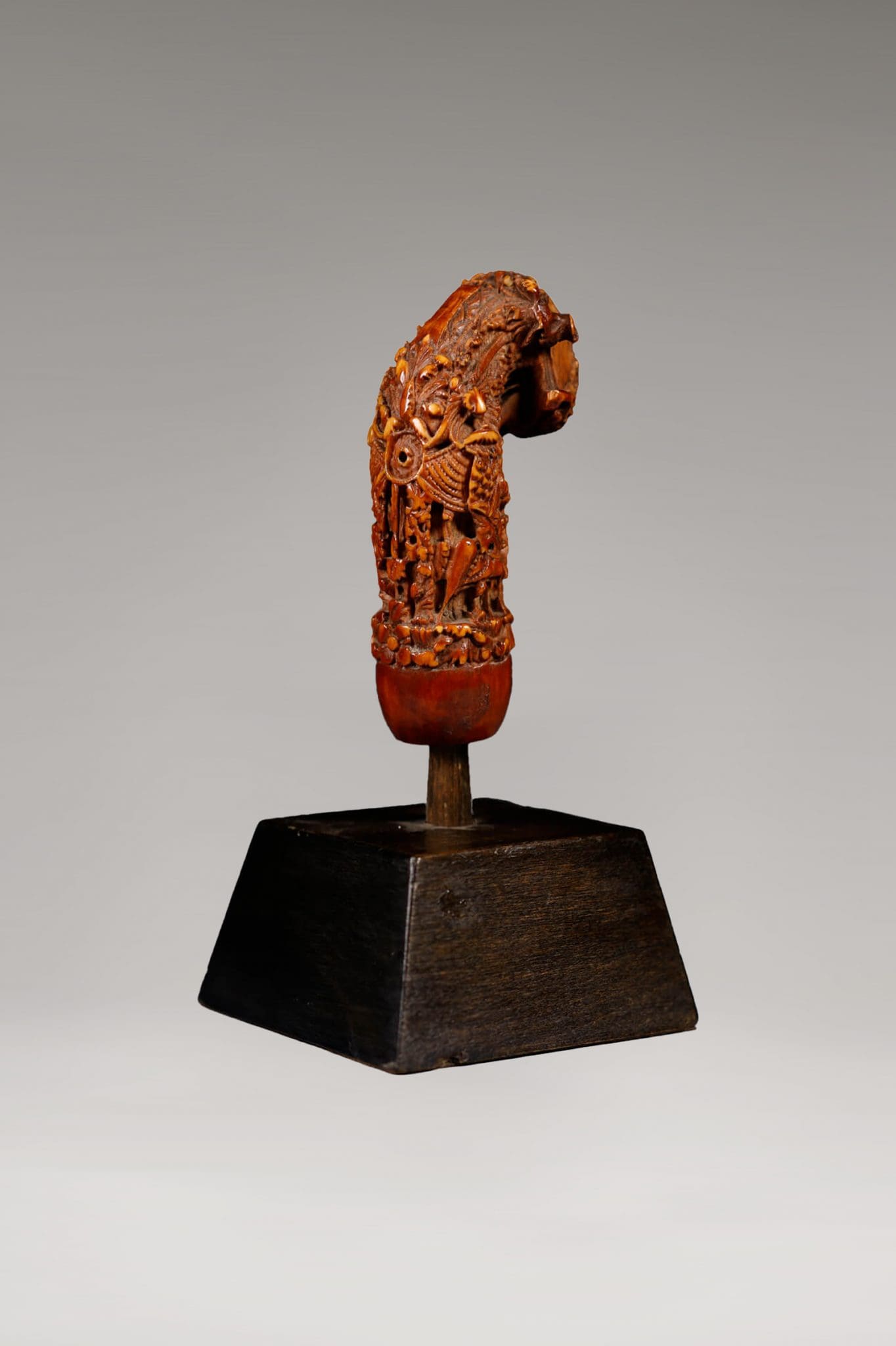
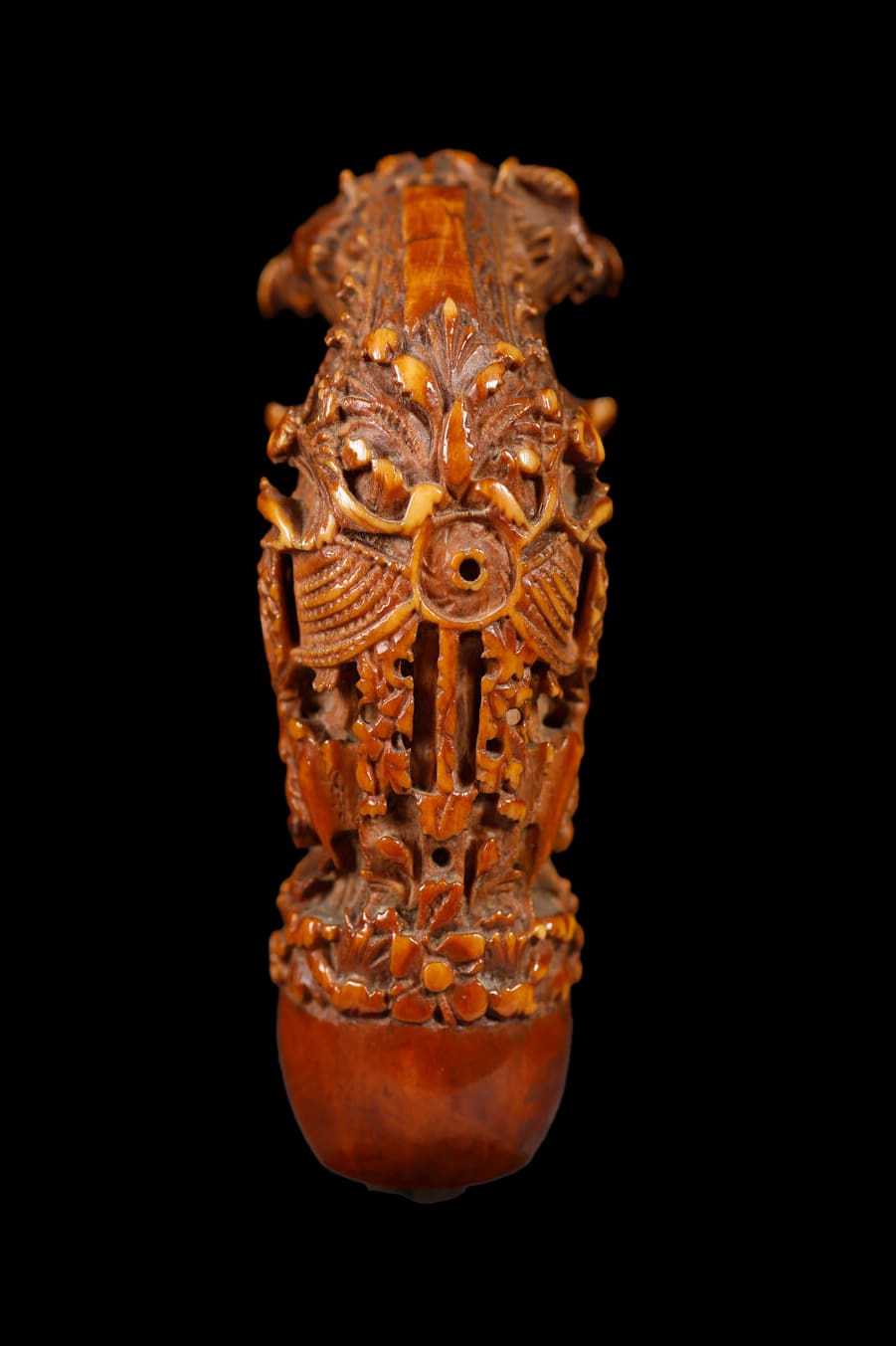
Madura Island, lying just northeast of Java across the narrow Madura Strait, developed its own distinctive approach to kris-making and, in particular, to handle carving. Madurese kris handles are characterised by their figural elaboration — human, demonic, and zoomorphic forms compressed into the small handle volume with a density of invention that reflects the long-standing Madurese engagement with Javanese court culture and Hindu-Buddhist iconographic traditions. Bone was used as a handle material across many Indonesian traditions, valued for its workability, its surface quality when polished, and its associations with ancestral presence — bone, in many Indonesian symbolic systems, was the enduring part of the person, the seat of inherited spiritual force. A bone handle thus did not merely hold the blade: it connected the user to a lineage of power.
An Object of Compressed Meaning
At 9.5 centimetres in length, this early 19th-century Madurese kris handle concentrates an enormous amount of cultural information into a very small space. The carver worked within a formal tradition that prescribed certain general parameters — the overall shape, the relationship between handle and blade collar, the iconographic repertoire available — while leaving room for individual invention in the treatment of surface, the specificity of the figure, and the quality of finish. An early 19th-century date places this handle in the period just before the Java War (1825–1830), when Javanese and Madurese aristocratic culture was still producing objects of considerable refinement within the traditional social system. To hold this handle is to make contact with that moment: a carved object passed through hands across two centuries, carrying its world of meaning as compactly and as durably as bone itself.




 No products in the cart.