

Nias Island and the Material Architecture of Prestige
Positioned off the western coast of Sumatra in the Indian Ocean, Nias Island has long occupied a singular place in the ethnographic study of Southeast Asian societies. Its villages, perched on ridgelines and connected by broad stone staircases, are defined by monumental wooden chieftains’ houses, carved stone seats, and a richly developed ceremonial life that made Nias one of the most intensely studied island communities in the region. At the centre of this ceremonial life was a sophisticated system of prestige marking. In Nias society — organised around inherited rank, ritual feasting, and the accumulation and redistribution of wealth — specific objects conferred and displayed social standing in ways that were immediately legible to all who observed them. Among these objects, none was more immediately distinctive than the kalabubu necklace.
The Kalabubu: A Collar of Distinction
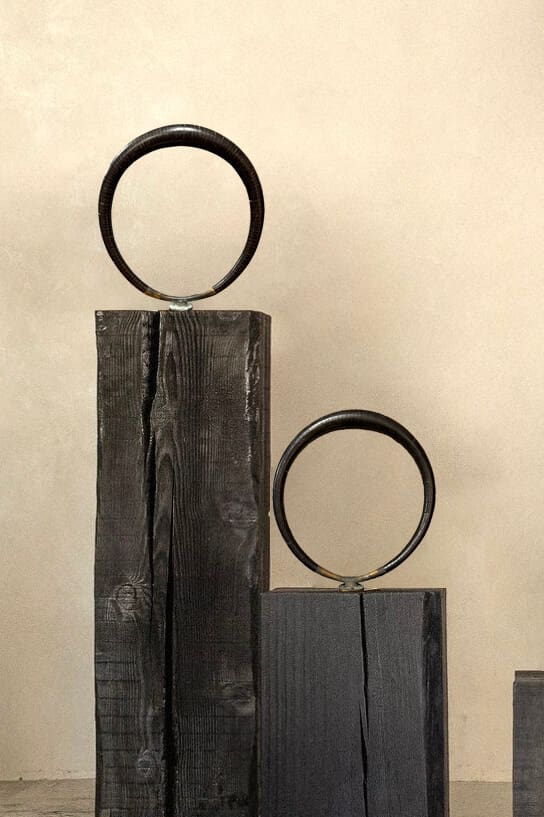
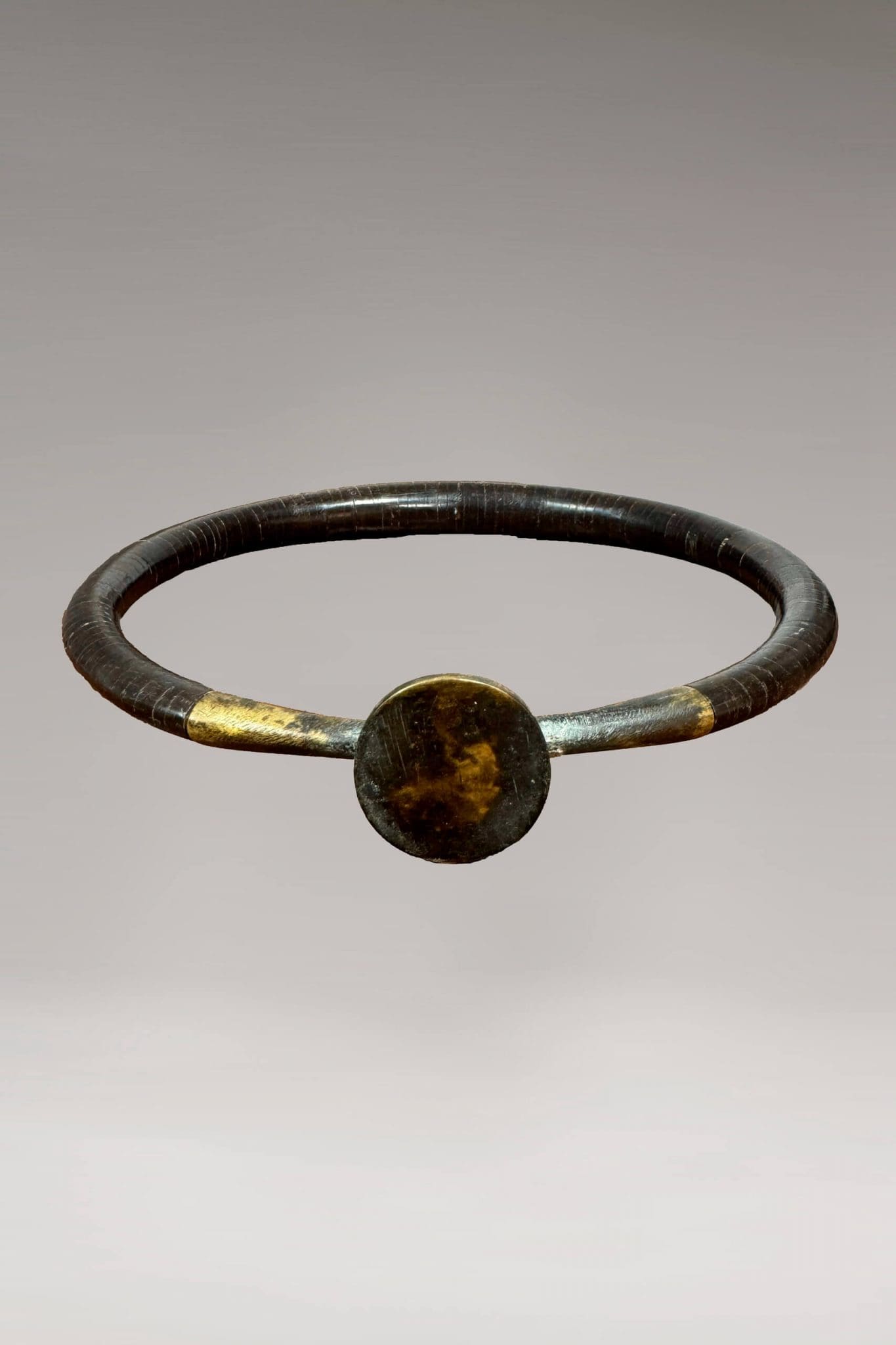
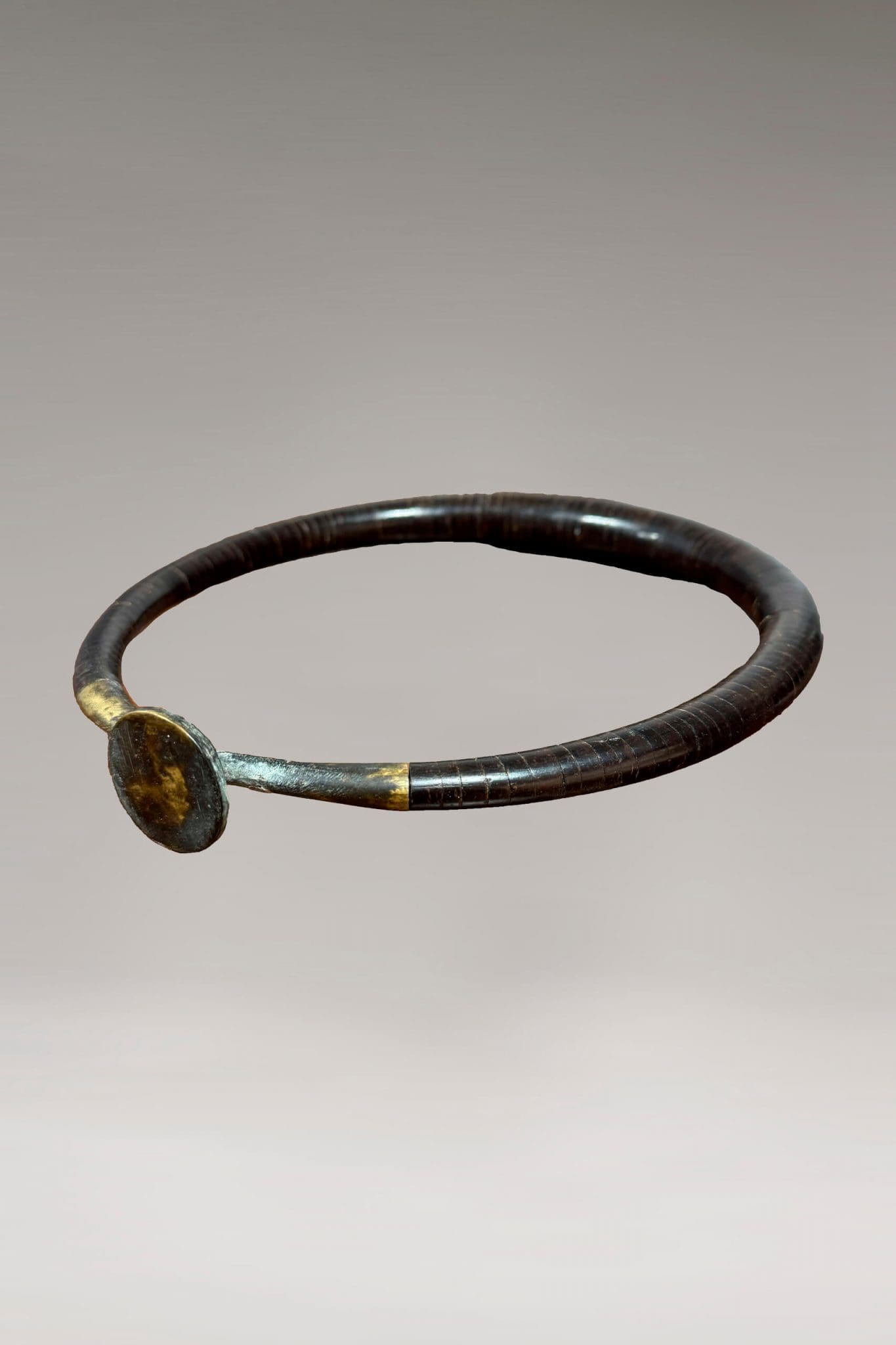
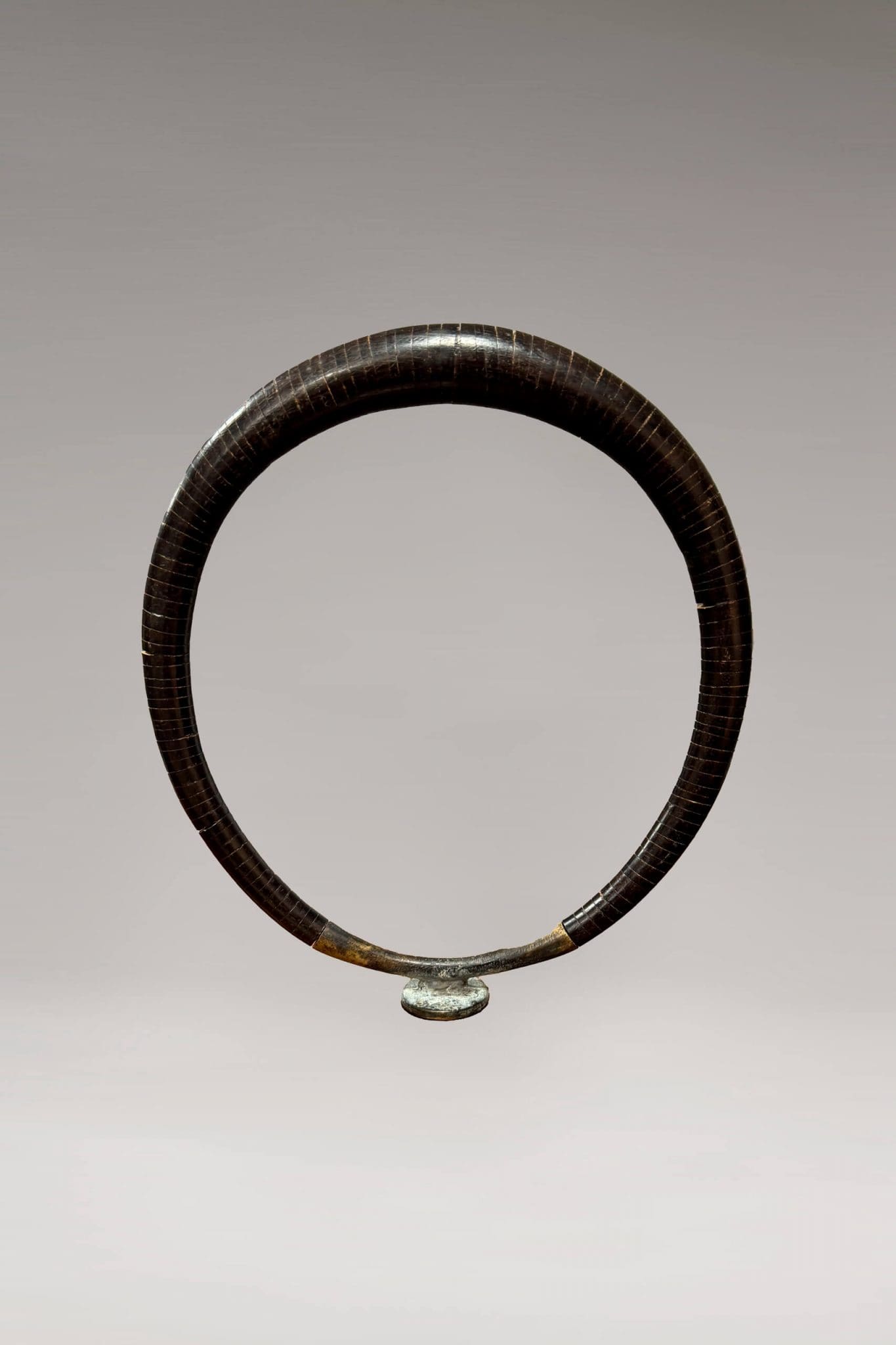
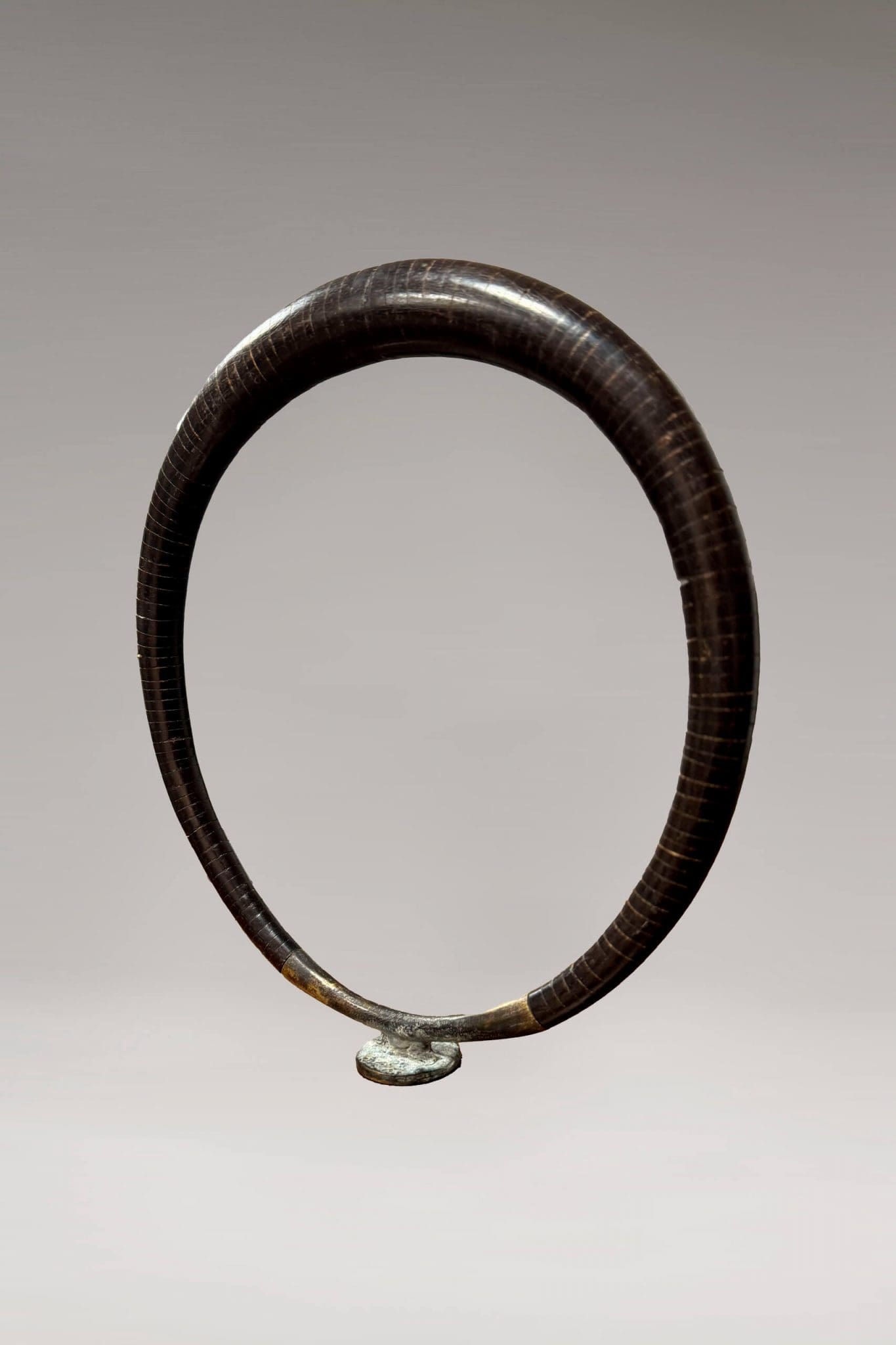
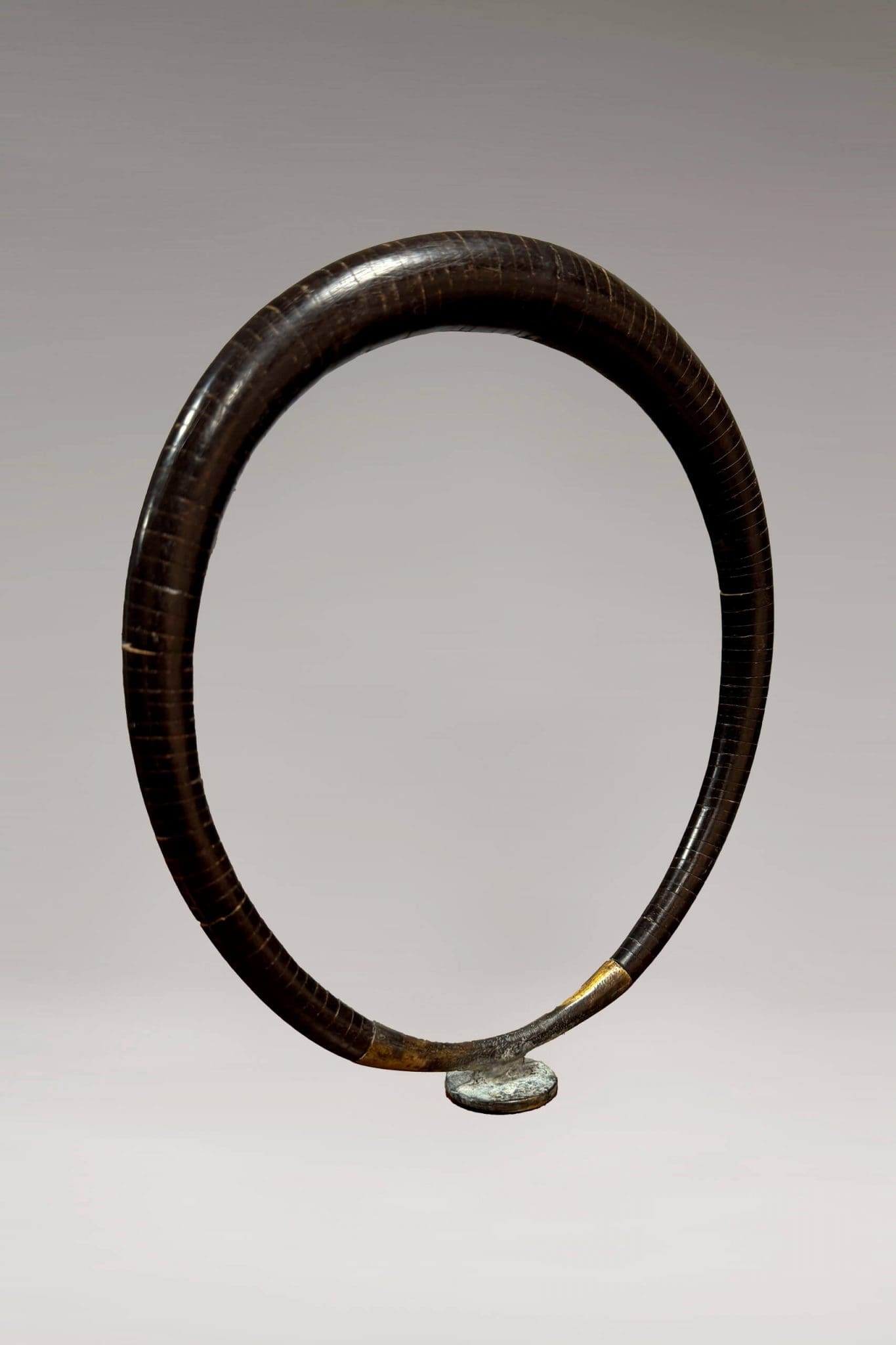
The kalabubu is a large, crescent-shaped or multi-strand collar composed of polished coconut shell discs, carefully cut, ground, and strung together into a substantial piece of adornment. Its scale is deliberate: worn against the chest and throat of a standing man, a kalabubu commands visual attention from across a ceremonial space. This was precisely its function — not to whisper status, but to announce it. In traditional Nias society, the kalabubu was restricted to men of rank — chiefs, warriors of proved distinction, and those who had fulfilled the demanding ritual obligations associated with the community’s initiation traditions. The wearing of this necklace was not an act of personal vanity; it was the visible end-product of a social process: feasting, exchange, achievement, and recognition by the community. This example, at 117 centimetres across when laid flat, is a substantial piece. The polished coconut shell discs reflect a craft practised across many island cultures of Southeast Asia, where coconut palm provided not only food and building material but a dense, durable medium for decorative arts.
Nias in the World
Nias first attracted sustained European attention in the 19th century, when Dutch colonial administration brought ethnographers, missionaries, and collectors into contact with its communities. The objects that left the island during this period entered collections across the Netherlands and eventually throughout Europe and the Americas. The 20th-century examples that now circulate in the ethnographic market represent the continuation of a material practice under new conditions — a nuance that makes them historically richer, not less interesting. A kalabubu necklace in good condition is an unusual find outside of major institutional collections. It carries the weight of Nias social architecture — a world where who you were was made visible in what you wore.





 No products in the cart.