


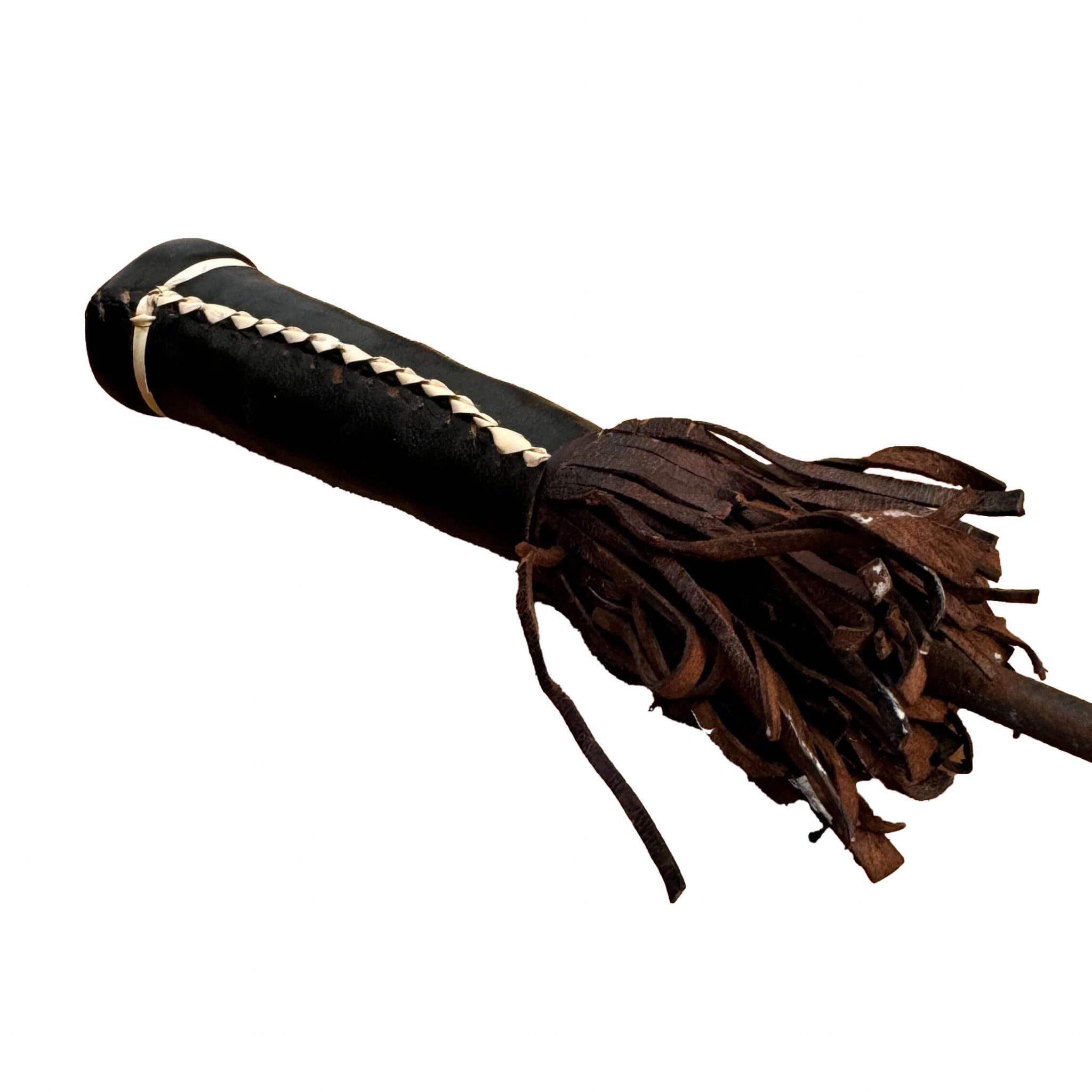
The Peul and Their Bladed Heritage
The Peul — also known as Fulani or Fula — are among the most widely dispersed peoples in the world. Their pastoral migrations have carried them across an enormous arc of sub-Saharan Africa, from Senegal and Guinea in the west, through Mali, Niger, and Burkina Faso, to Nigeria, Cameroon, and beyond into Central and East Africa. Wherever they have settled — even briefly — they have shaped the cultural and material landscape around them. For a people long defined by movement, portable objects of prestige held particular significance. The sword, in many Peul traditions, was not merely a weapon — it was a marker of social standing, worn and displayed during ceremonies, processions, and important gatherings. The quality of a sword’s blade, its handle, and especially its scabbard communicated messages about the owner’s lineage, wealth, and relationship to the Islamic scholarly and warrior traditions that the Peul have embraced since at least the 17th century.
Steel, Leather, and the Grammar of Sahelian Craftsmanship
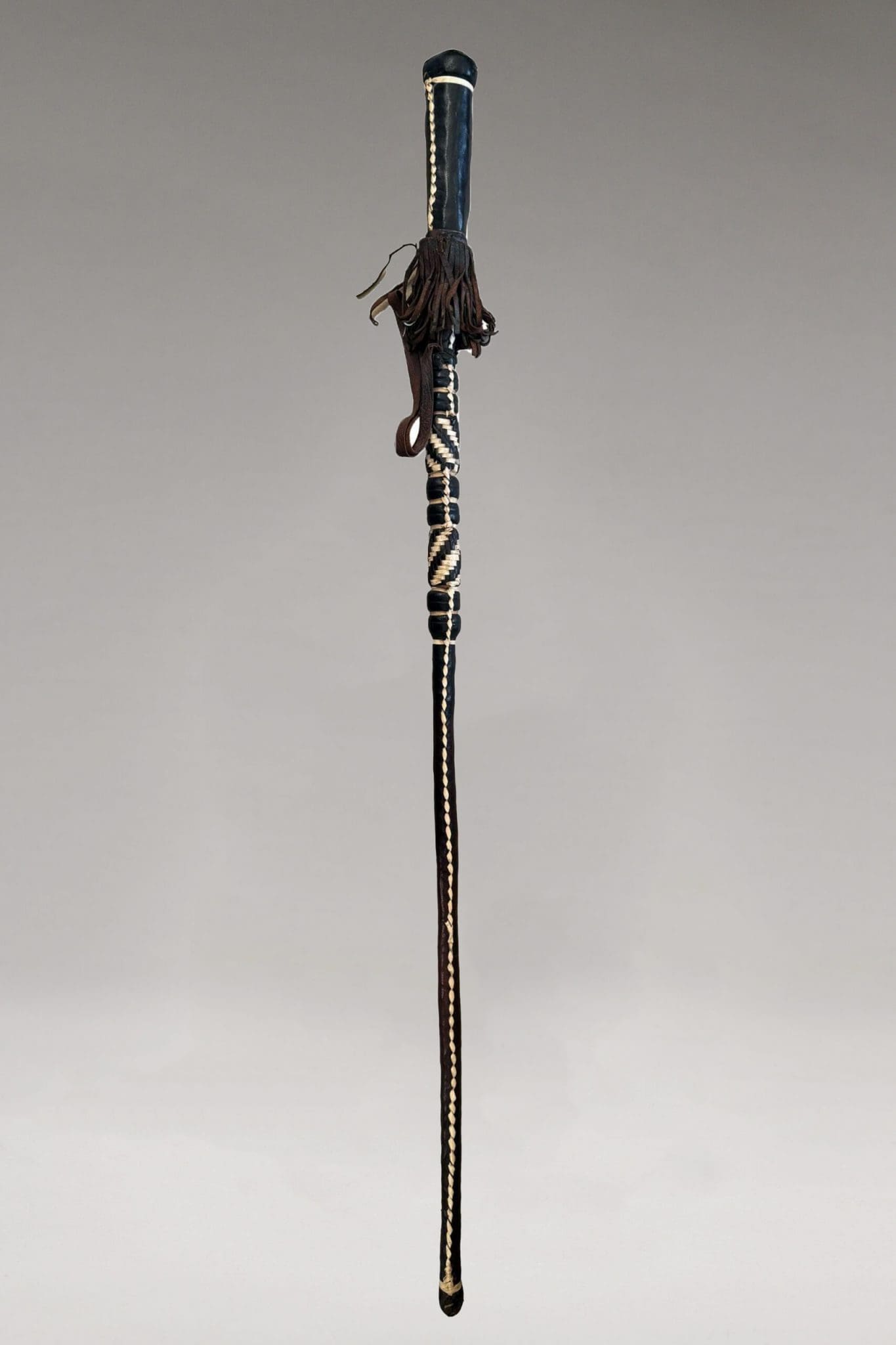
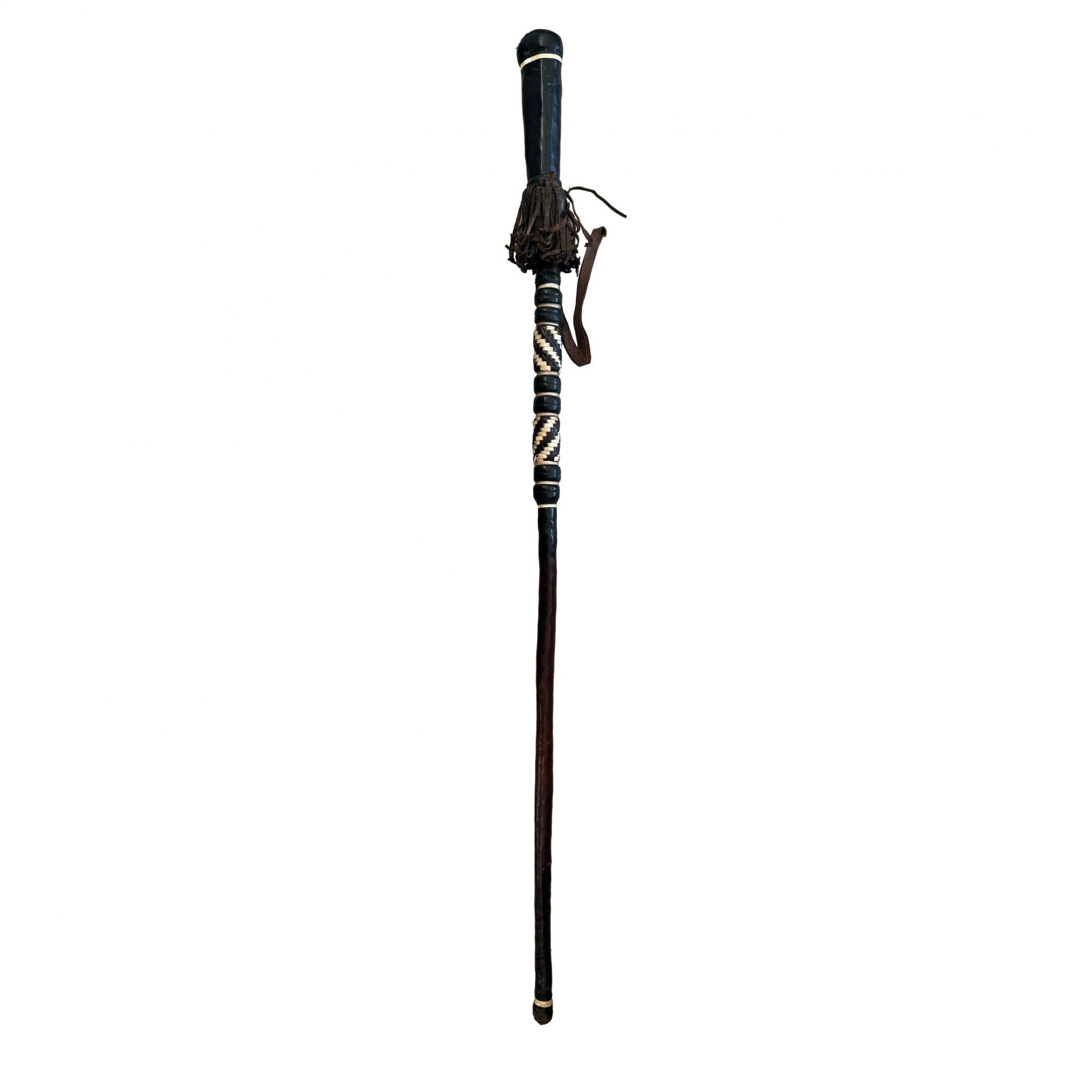
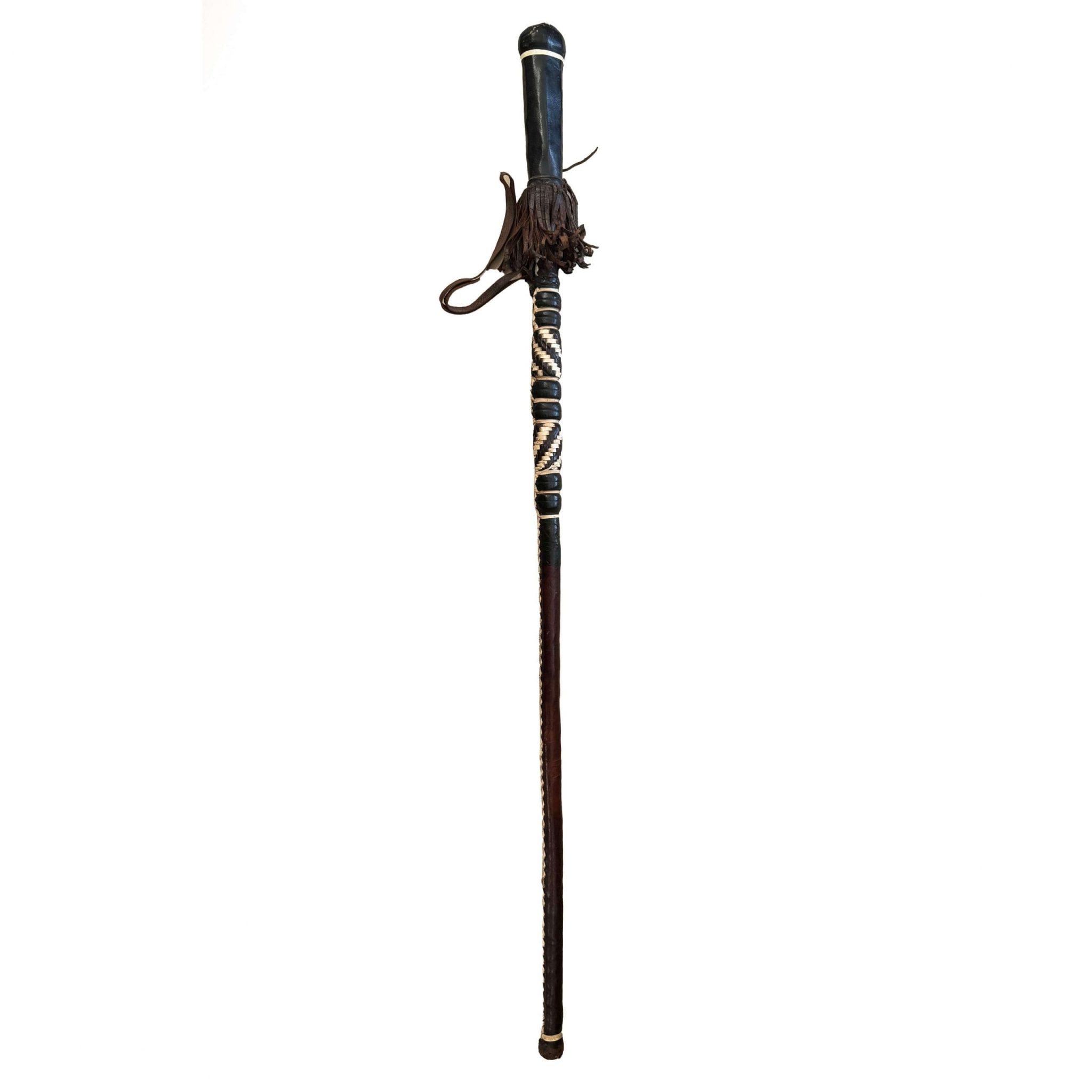
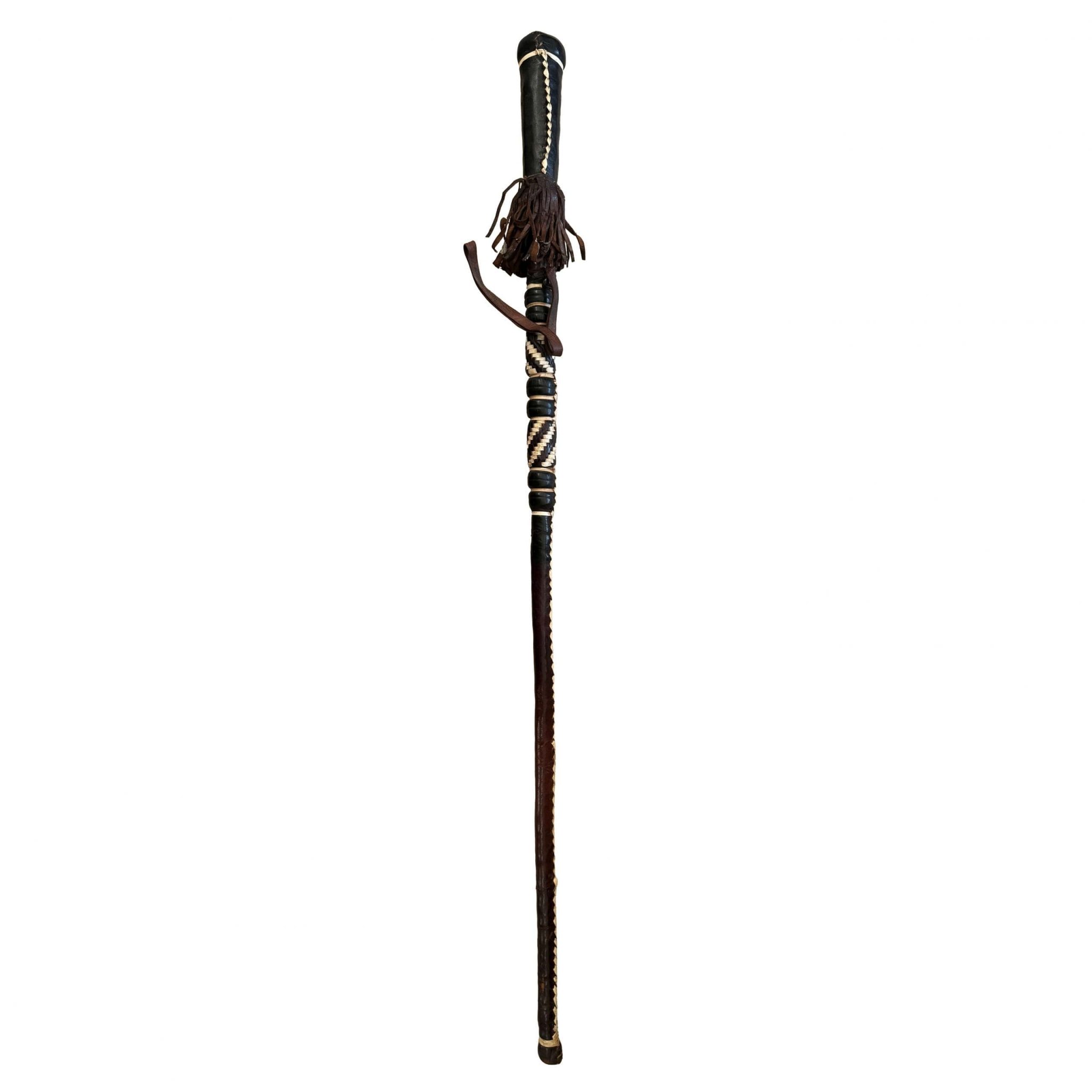
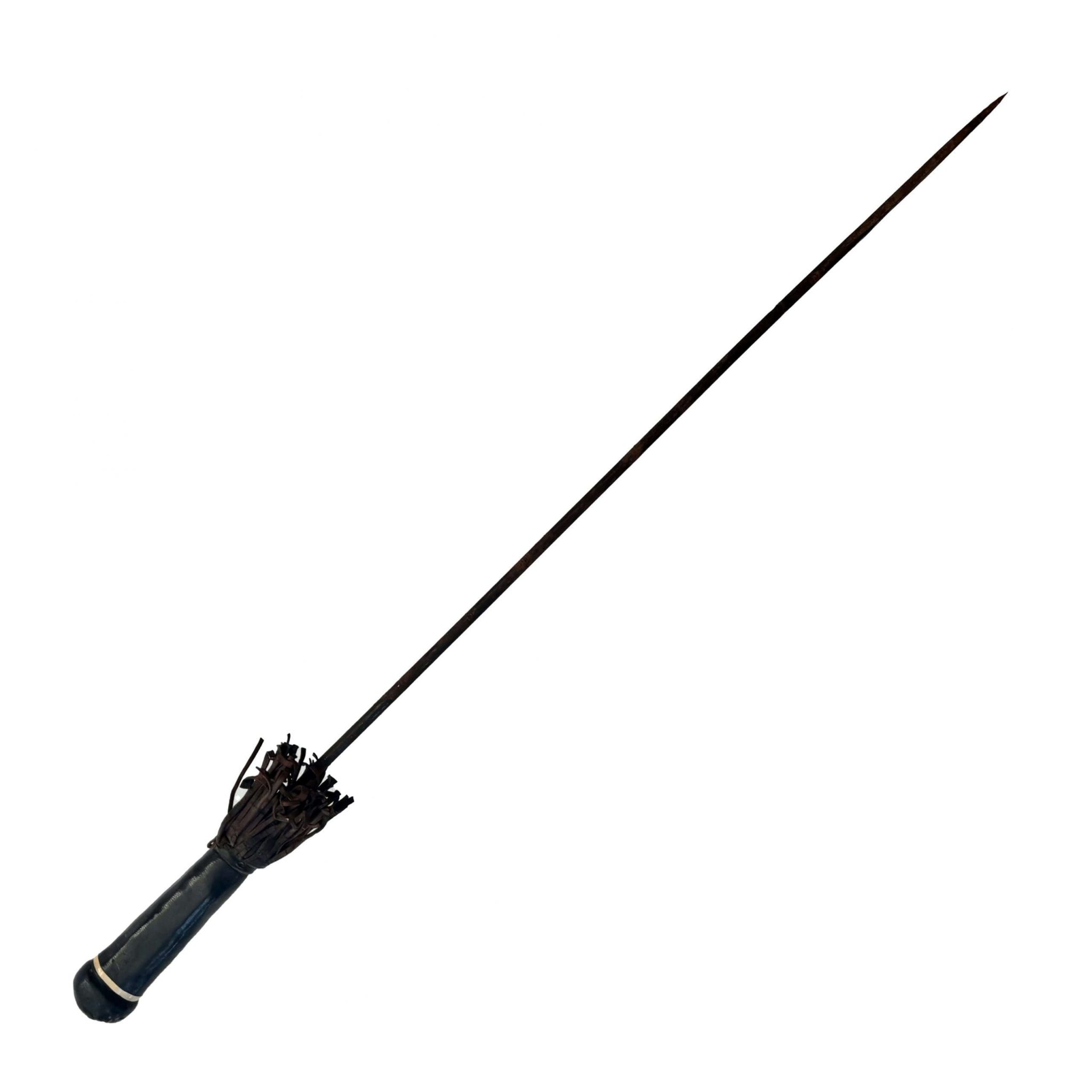
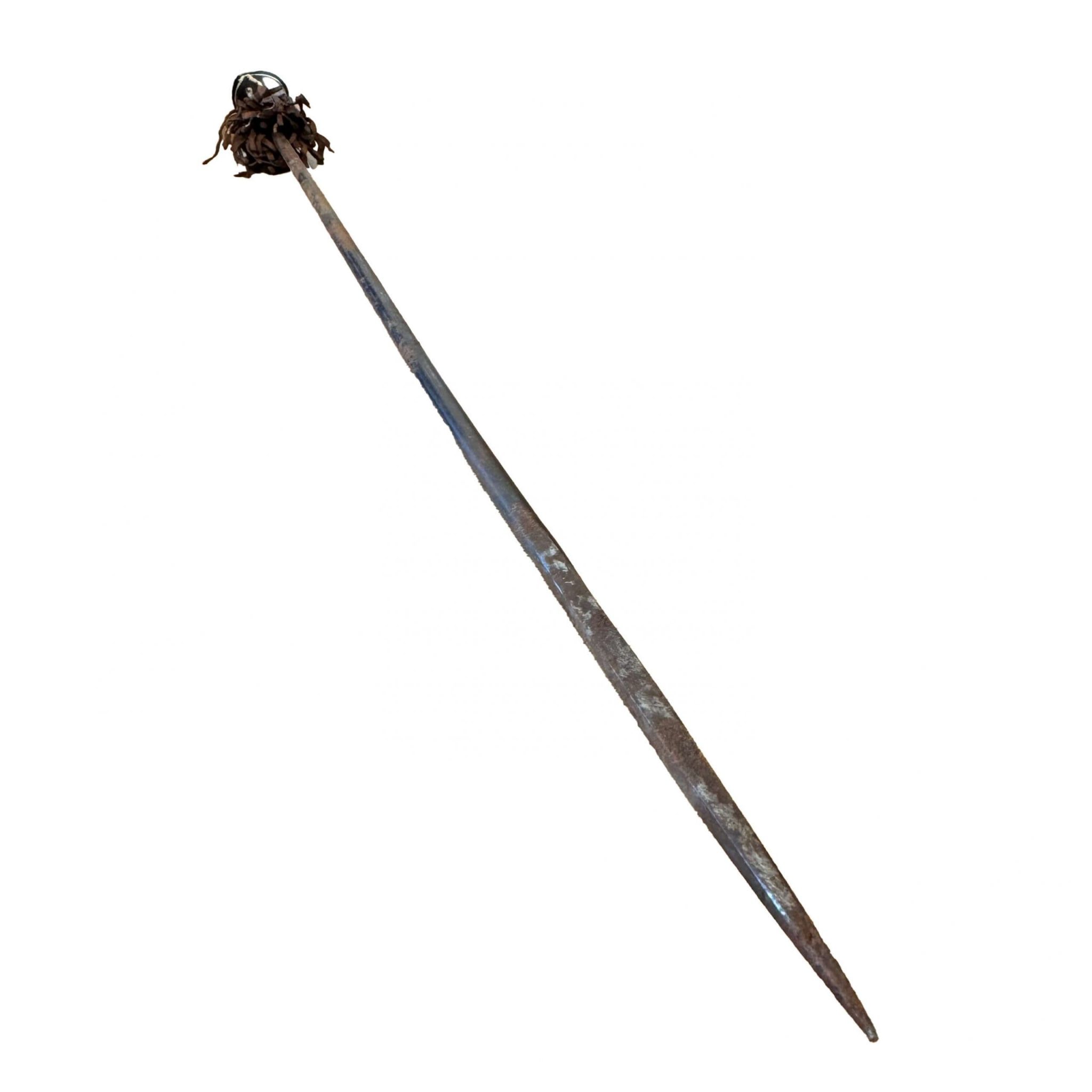
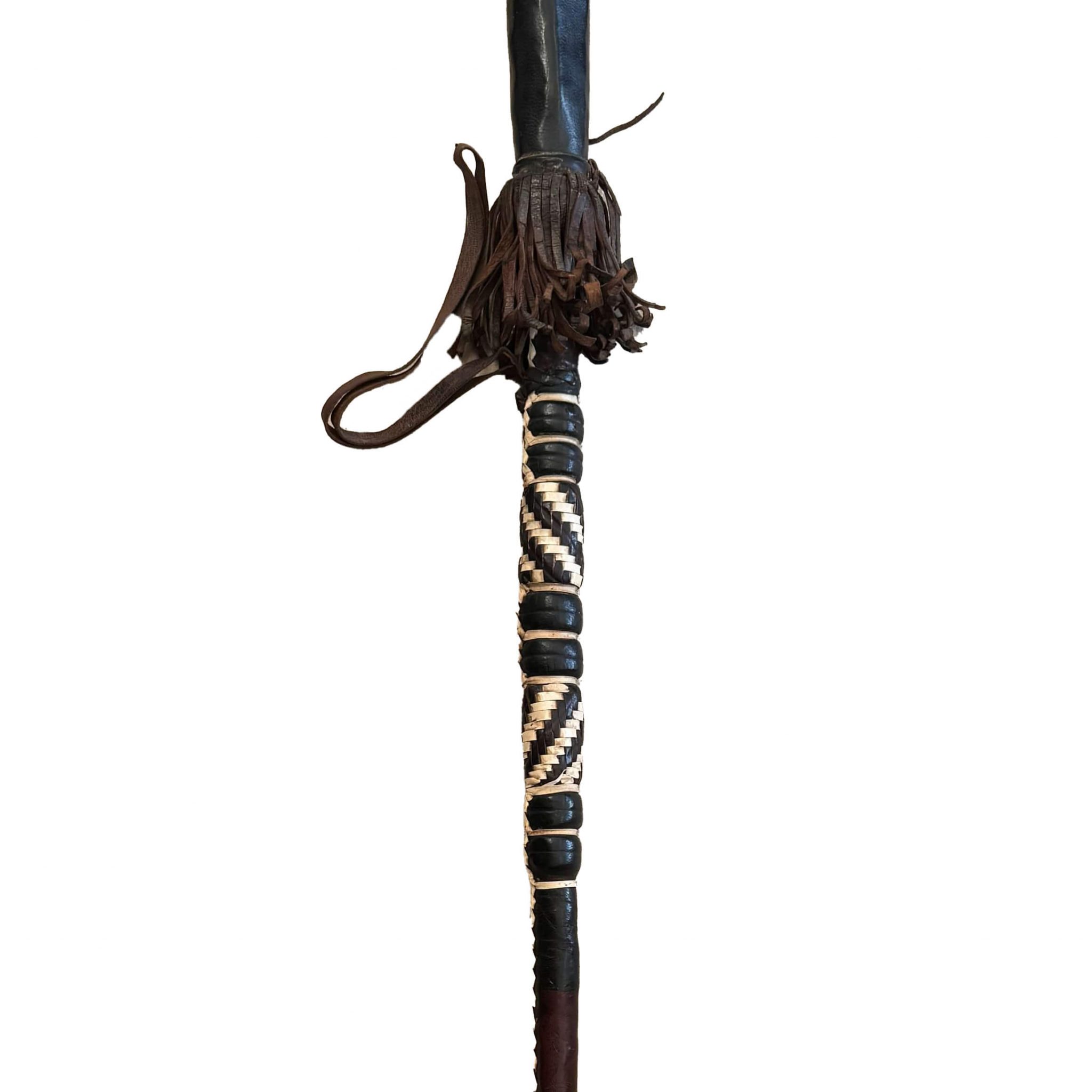
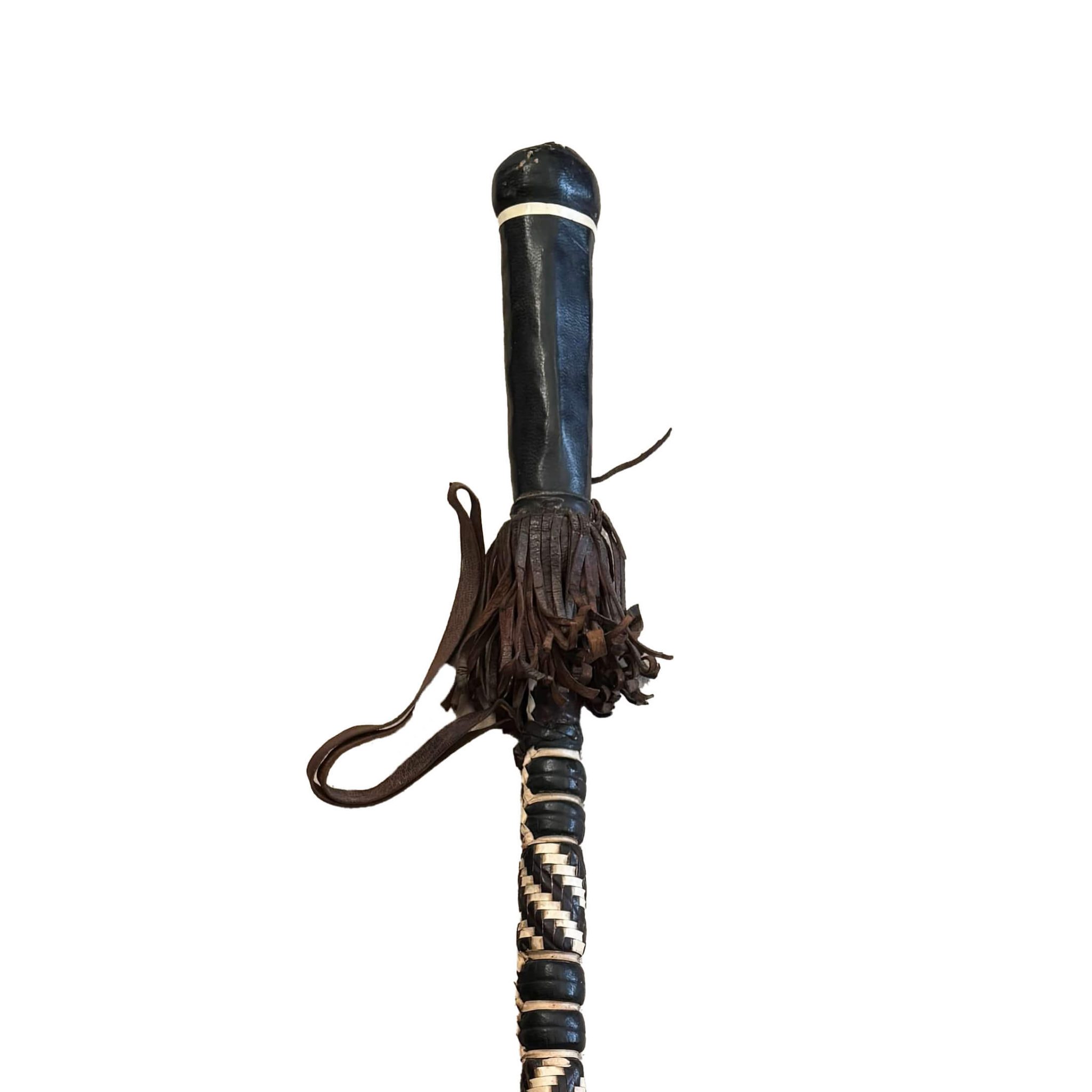
This Peul sword from Burkina Faso exemplifies the material grammar of Sahelian bladed weapons. At 76 centimetres overall, it falls within the range typical for dress swords used in ceremonial contexts rather than battlefield weapons, which tended toward shorter, heavier profiles. The forged steel blade carries the marks of smithing traditions rooted in West African iron-working — a craft practised in the Sahel for well over a thousand years. The leather scabbard is as important as the blade it protects. Among the Peul, leather-working was a specialised craft often carried out by specific castes whose products — saddle harnesses, quivers, sheaths, sandals — were objects of considerable value. The stitching, colour, and surface treatment of a leather scabbard could identify its maker’s workshop and, by extension, the social network within which the sword circulated.
A Material Record of West African Islamic Civilisation
The spread of Islam across the Sahel between the 12th and 18th centuries transformed the material culture of the region in lasting ways. Peul scholars and warriors became key agents of this transformation: jihads led by Peul leaders in the 18th and 19th centuries reshaped political geography from Futa Jallon in Guinea to the Sokoto Caliphate in Nigeria. In this context, the sword became deeply layered with meaning — simultaneously a tool of governance, a devotional object associated with righteous conduct, and a link to the prestige of Islamic scholarship and martial tradition. To handle a Peul sword is to hold a small fragment of this history: the pastoral cultures of the Sahel, their millennia-long engagement with iron and leather, their integration of Islamic symbolism into an already rich tradition of material prestige. Few objects distil so much so quietly.








 No products in the cart.