



A Cup Carved with Intent
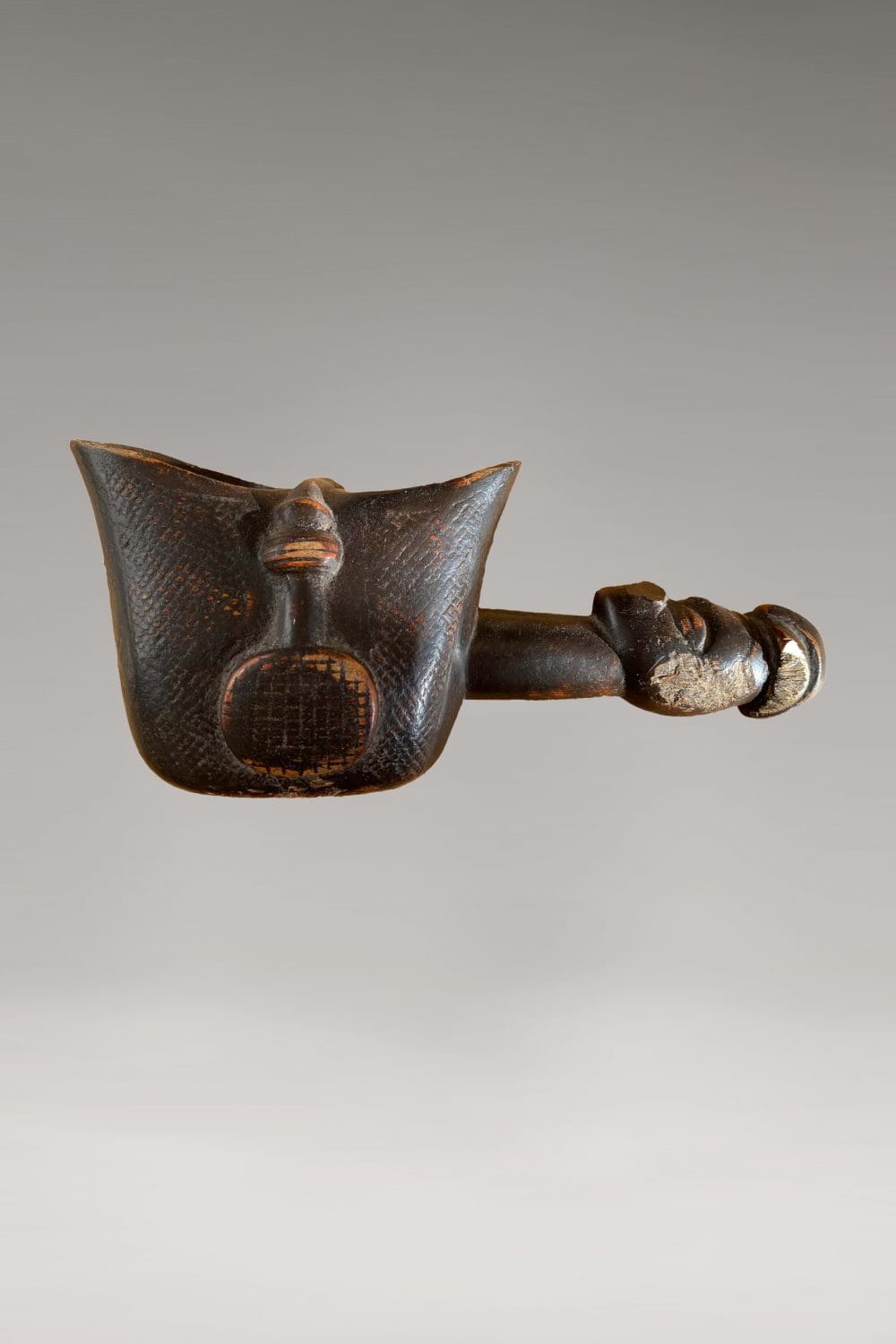
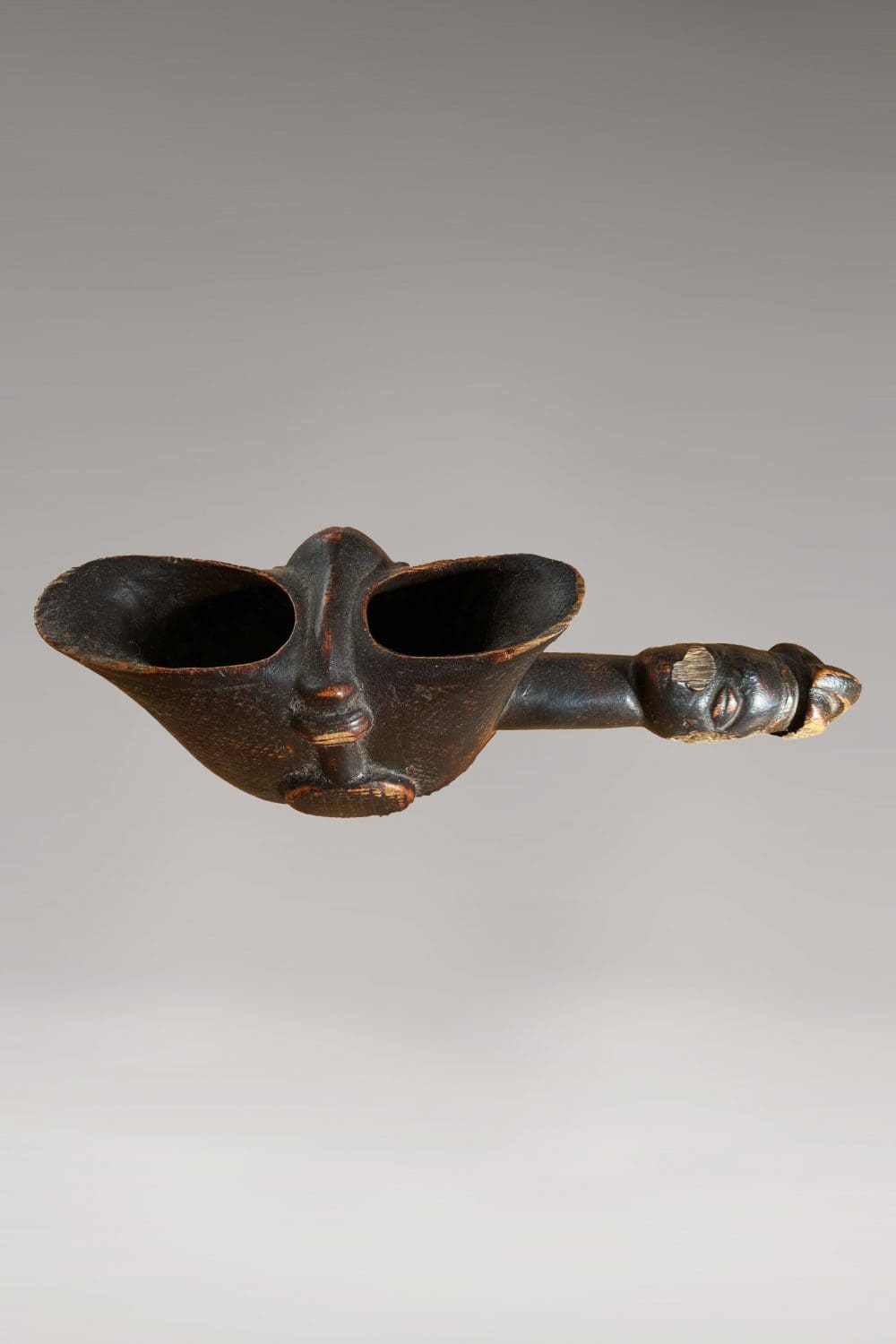
To look at a Suku cup is first to notice what it is not. It is not a vessel made for efficient manufacture — a bowl could have been hollowed from wood in a fraction of the time and served the liquid-containing function equally well. The carved Suku cup announces, from its first conception, that function is secondary to meaning. The form — its proportions, its surface treatment, its relationship between void and solid — is the work of a person with a deep command of sculptural thinking. This example, from the Democratic Republic of Congo, measures 26 centimetres in height: tall enough to require cradling in the hands rather than simply grasping, an act that transforms the ordinary motion of drinking into something more deliberate and ceremonial. The broad base gives way to a narrowing body, a form that at once suggests stability and elegance — a balance characteristic of Suku sculptural vocabulary at its most refined.
Reading the Patina
What time and use have deposited on this cup’s surface is, to the experienced eye, a document. The patina of a genuinely used Central African carved object accumulates through contact: oil from hands, sediment from liquids, exposure to fire smoke in domestic interiors, and the rhythms of cleaning and re-application of protective substances that formed part of the object’s care. This layered darkening cannot be replicated quickly — attempts to artificially age new work reveal themselves under close examination through inconsistent depth and surface behaviour. The patina on this Suku cup speaks to sustained contact with daily and ceremonial life. It is the kind of surface that ethnographers use as primary evidence of an object’s authenticity and cultural embeddedness — not a secondary quality but a form of information in itself.
Hospitality at Its Most Charged Register
The Suku occupy a territory near the confluence of the Kwango and Kasai rivers, a region that has been a transit zone for human movement, political power, and artistic influence for centuries. Their art shares formal qualities with neighbouring Yaka and Pende carvers, but is distinguishable by specific conventions: a characteristic treatment of facial features when the cup bears anthropomorphic elements, and a volumetric grammar that is distinctly Suku. Within this tradition, the cup occupied a space where everyday use and elevated status intersected. Ordinary vessels served the household; cups like this one — carved with skill, maintained with care — marked the occasions and the people for whom the everyday was insufficient. They are objects of hospitality at its most charged register: not the cup that quenches thirst, but the cup that marks the moment as worthy of being remembered.




 No products in the cart.