


Chi Wara: The Agricultural Hero of the Bamana
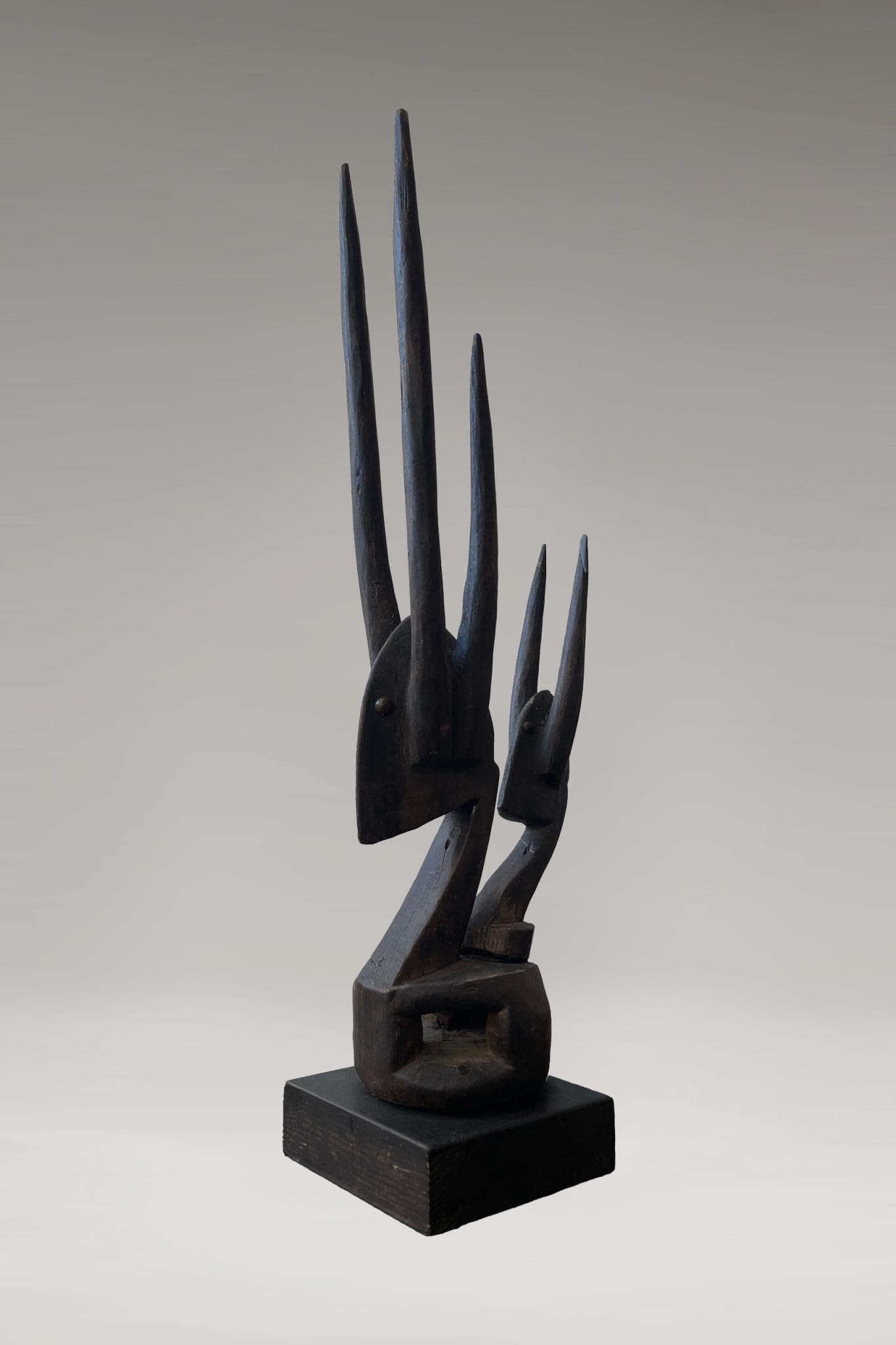
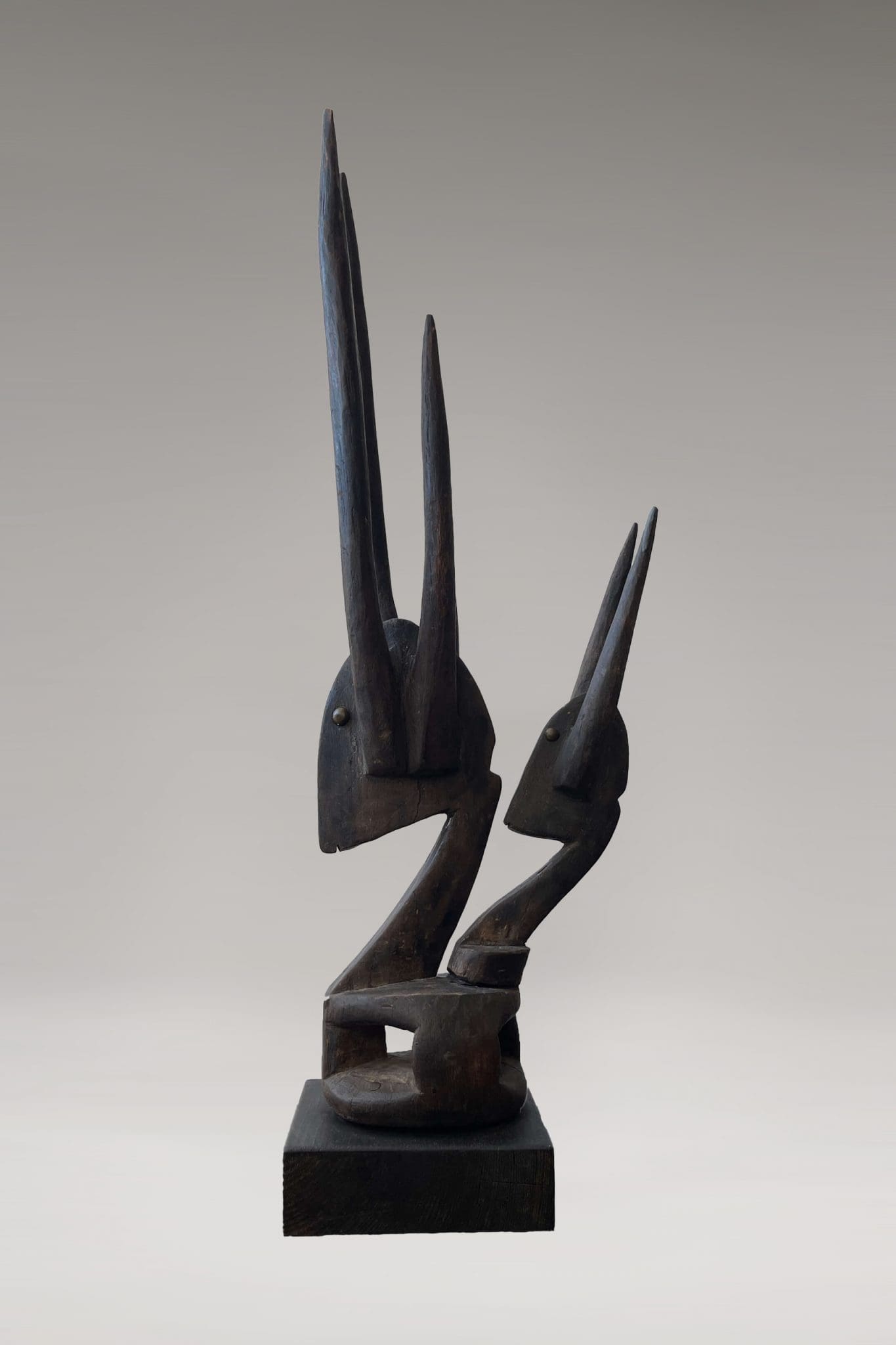
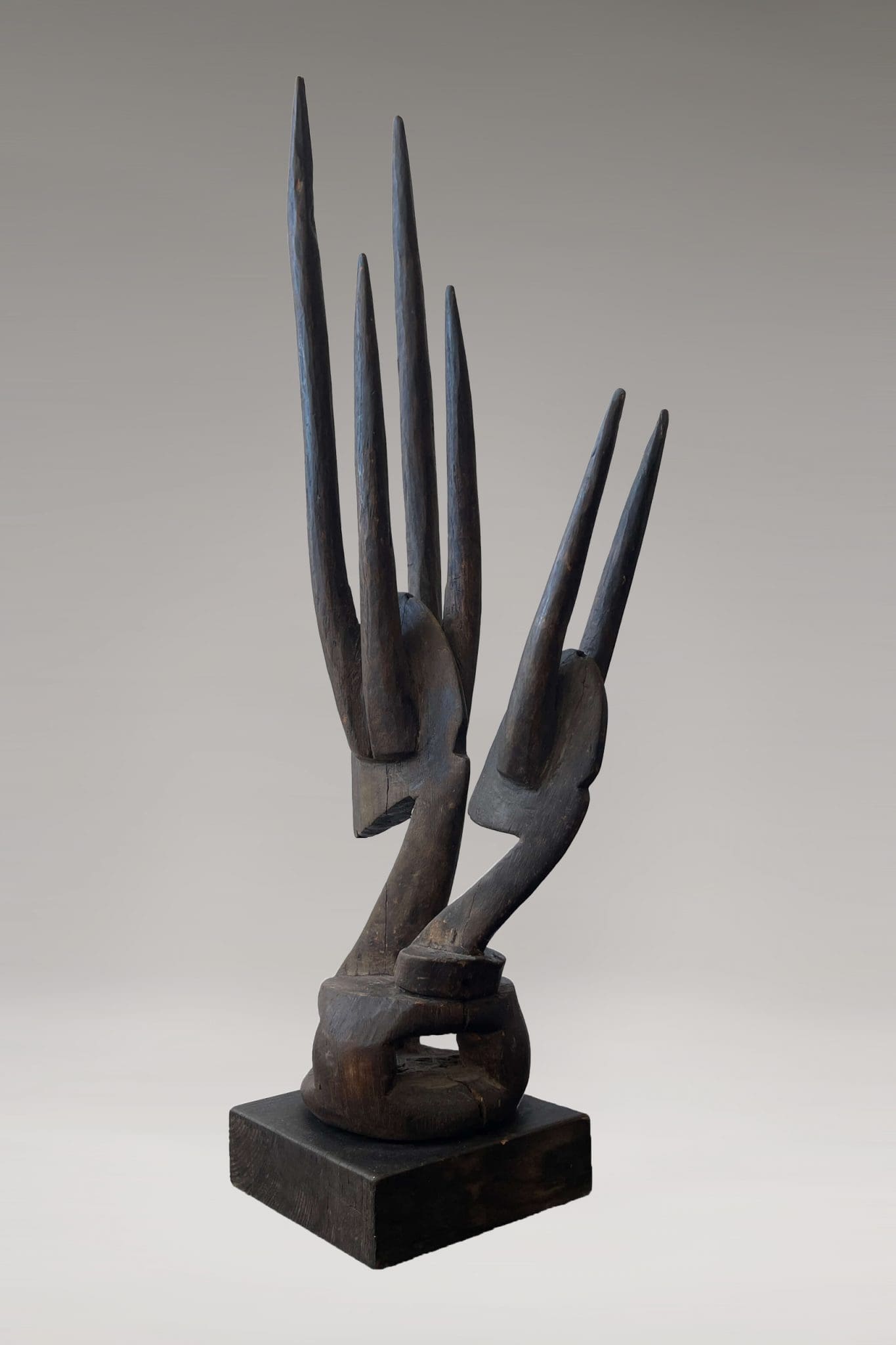
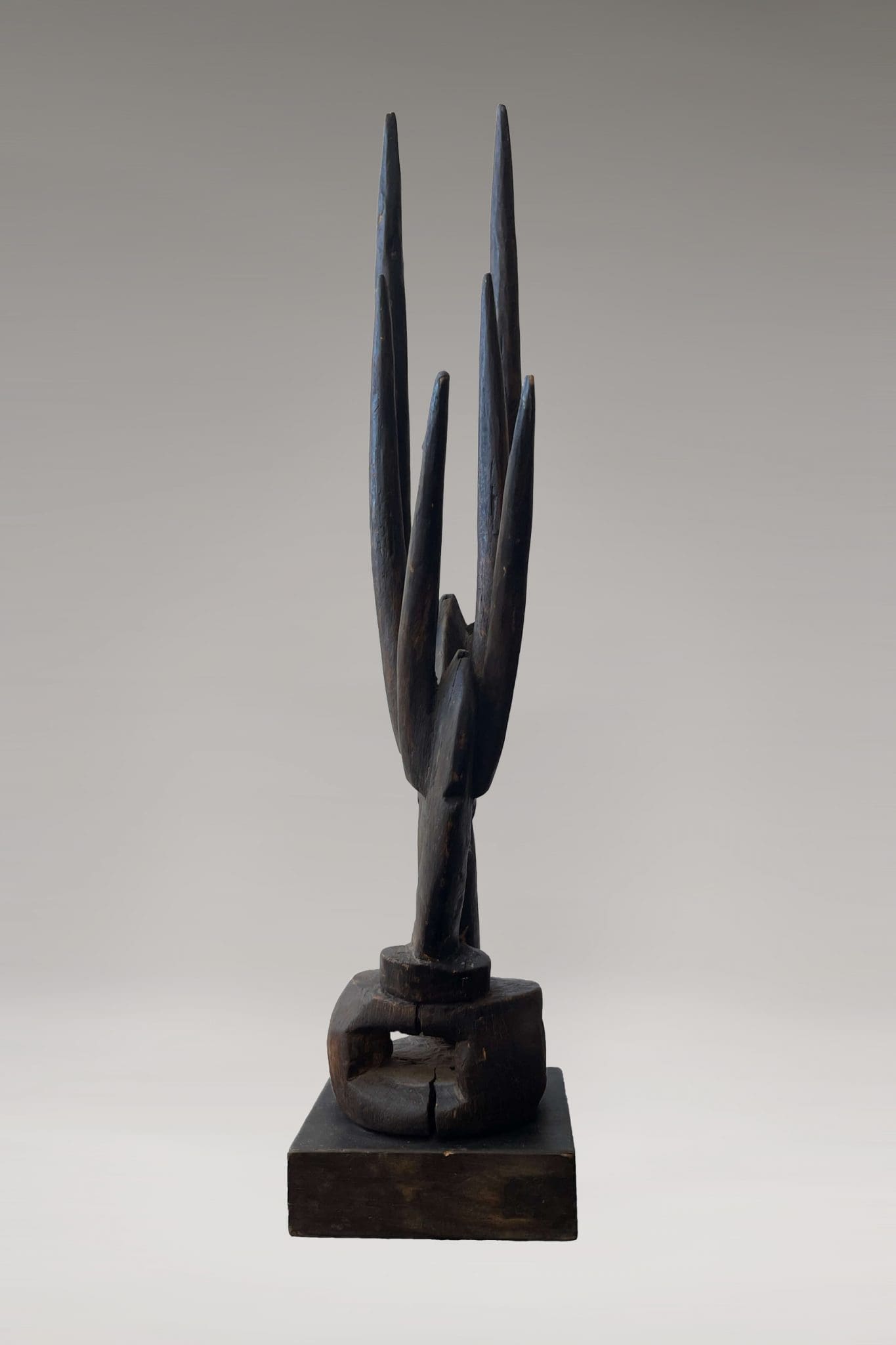
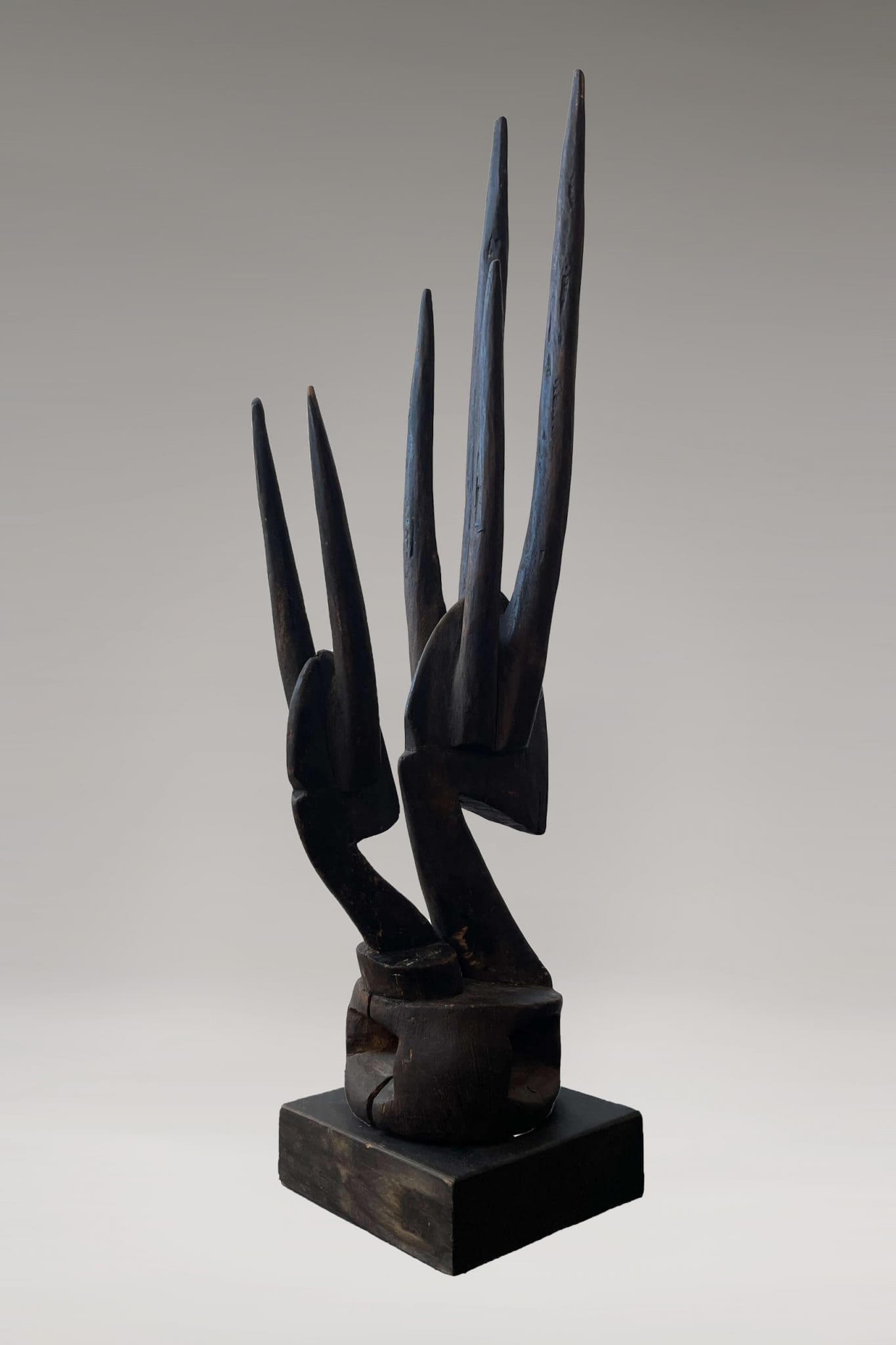
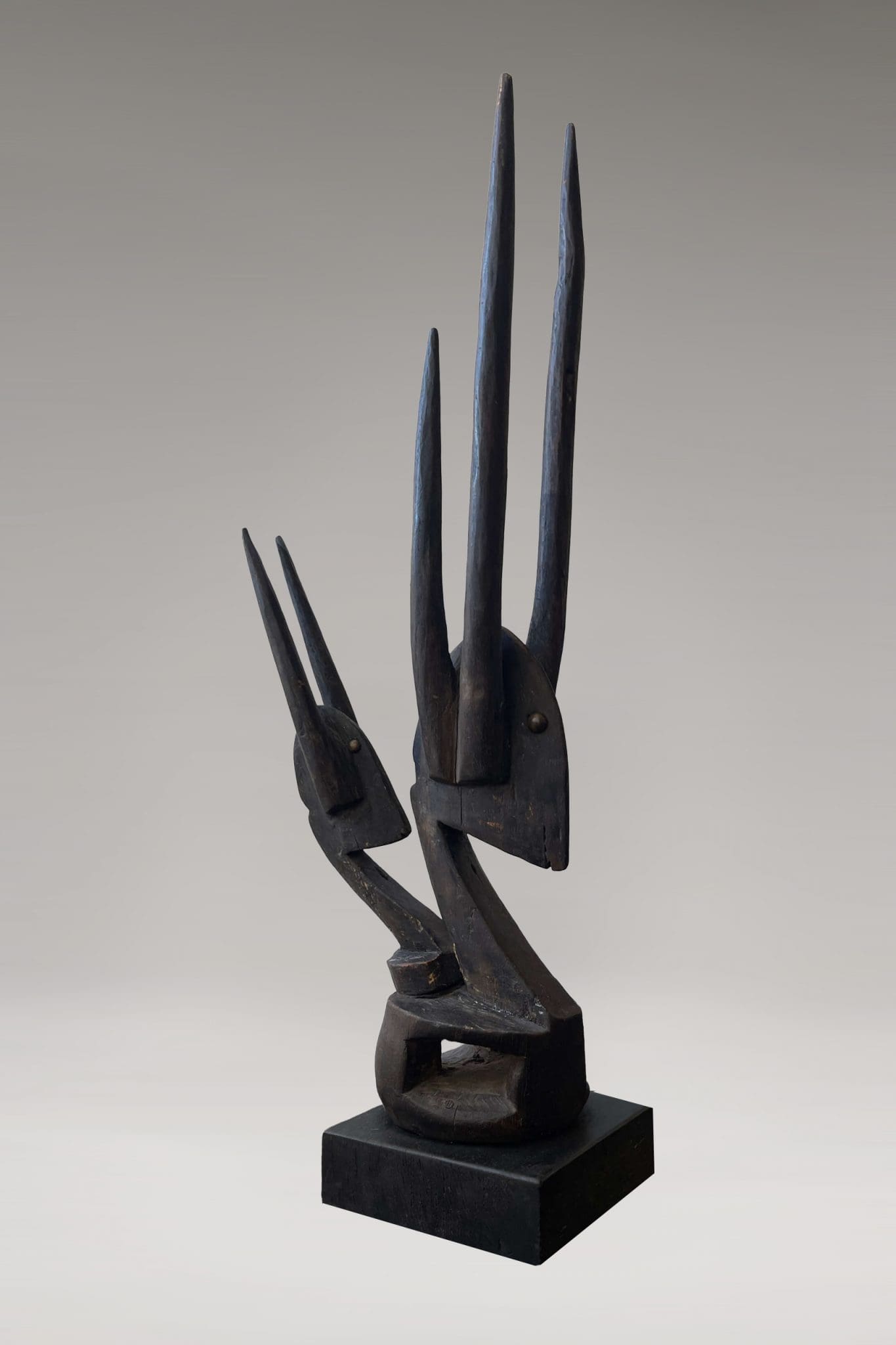
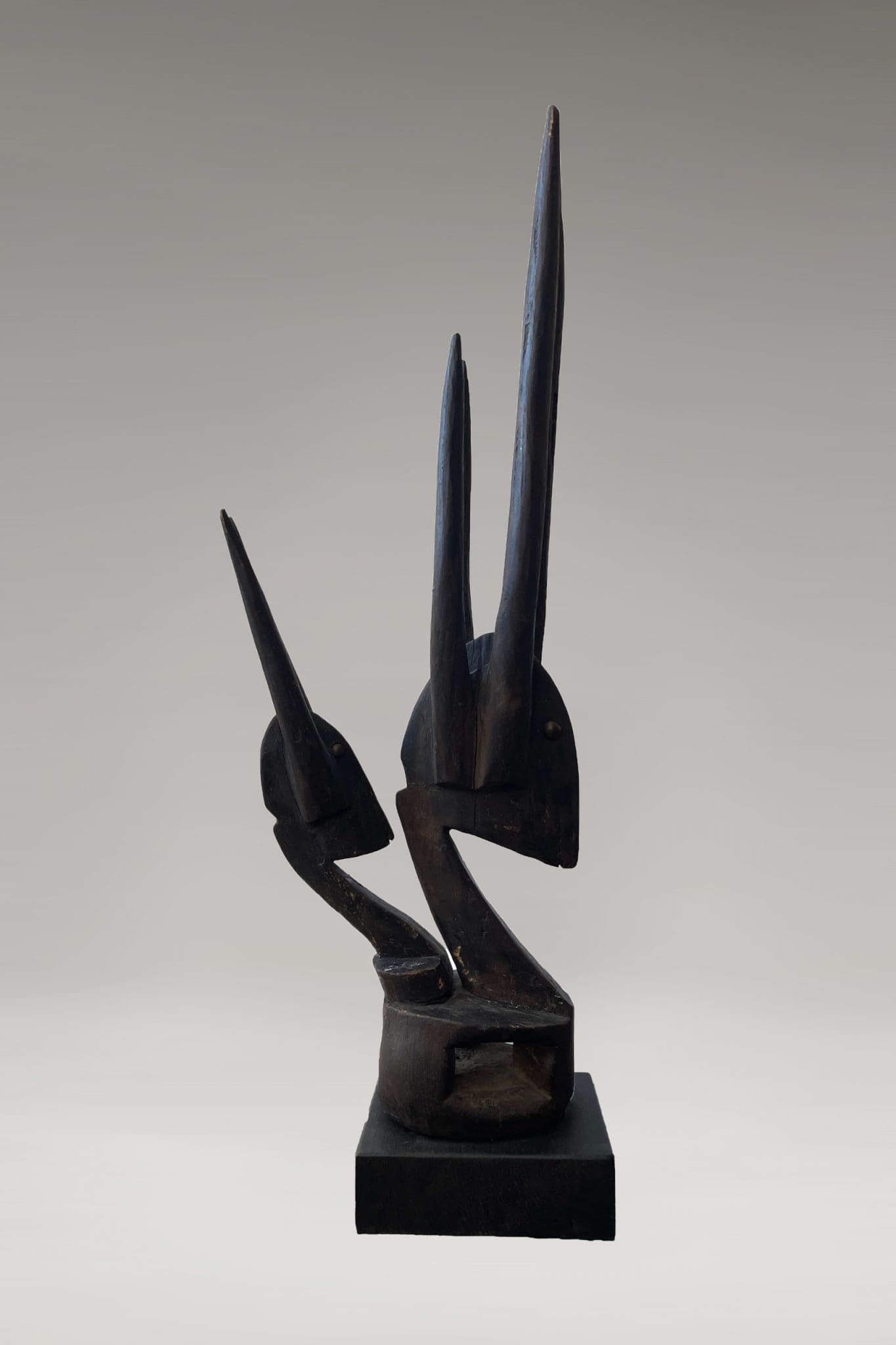
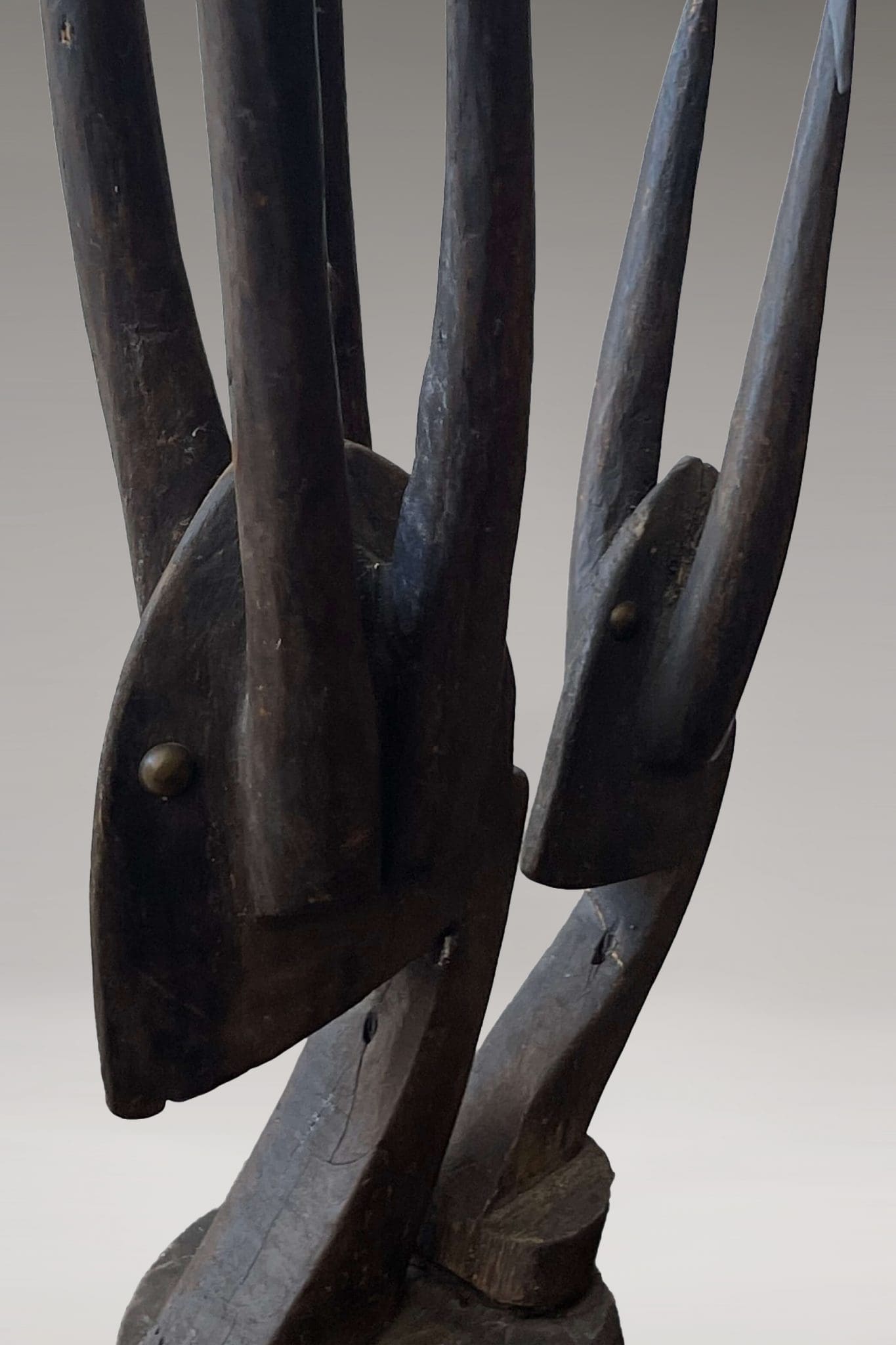
Among the Bamana people of Mali — one of the great artistic cultures of West Africa — the chi wara is more than a sculptural form. It is the material embodiment of a foundational myth: the story of Chi Wara, a semi-divine being, half-human and half-animal, who taught the ancestors of the Bamana to cultivate the earth. Chi Wara plunged into the ground and disappeared, his body becoming the seed, the soil, and the principle of agricultural life itself. The antelope headdresses carved in his honour appeared in pairs — male and female — worn by the finest young farmers of the community during planting season ceremonies, their dance movements imitating the roan antelope’s characteristic running motion and the action of the hoe breaking ground. The Chi Wara is not, therefore, an image of an antelope in the naturalistic sense: it is an image of a concept — the fusion of animal grace, agricultural knowledge, and divine gift that sustains human life.
The Form: Abstraction and Recognition
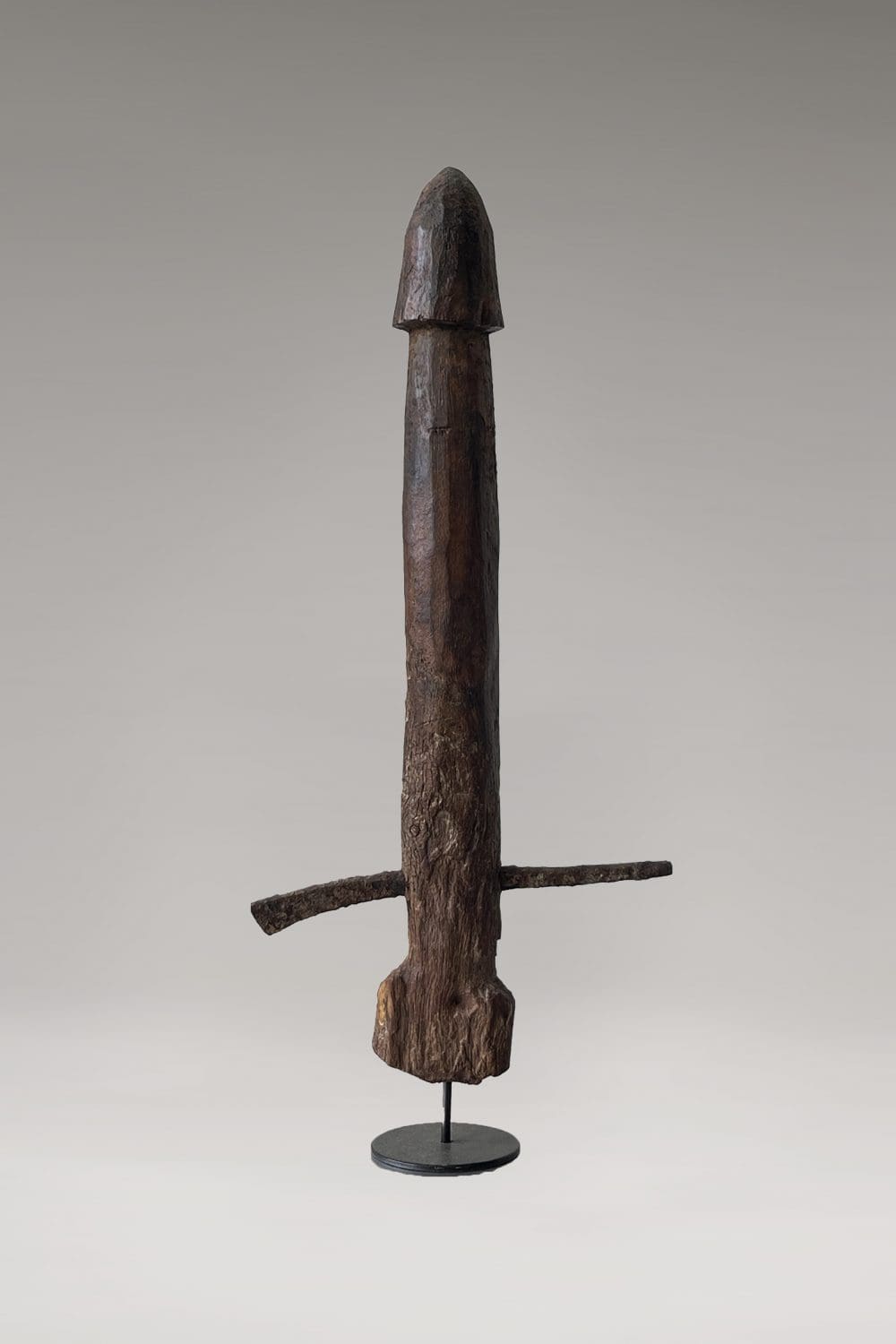
The Chi Wara headdress is among the most formally sophisticated objects in the entire corpus of African art. Working within a conventional vocabulary — the vertical spike of the horns, the elegant arch of the neck, the geometric reduction of the body — Bamana carvers produced objects of extraordinary variety within tight formal constraints. Each generation of carvers interpreted the form differently: some leaning toward elongation and extreme abstraction, others toward a denser, more volumetric treatment of the antelope’s body. What they shared was a commitment to the form as form: the Chi Wara succeeds not as a likeness of an antelope but as a structure that carries the symbolic charge of antelope-ness — its speed, its grace, its upward aspiration — while resolving those qualities into a work of pure sculptural intelligence. At 51 centimetres in height, this example occupies the scale typical of field-use Chi Wara: large enough to be visible above the dancer’s head and crowd, compact enough for sustained movement through a long ceremony.
The Chi Wara in the World
The Chi Wara was among the African sculptural forms that European modernists encountered earliest and responded to most directly. Its radical abstraction — the transformation of a recognisable animal into a vertical compositional problem — resonated with formal concerns that European sculpture was just beginning to articulate in the early 20th century. The result was a sustained international interest in Chi Wara sculpture that has placed examples in virtually every major museum collection of African art: the Musée du quai Branly in Paris, the Metropolitan Museum of Art in New York, the British Museum in London, the Etnografisch Museum in Antwerp. A mid-20th-century example in good condition, showing the natural patina of actual ceremonial use, carries both the formal achievement of the tradition and the documentary weight of an object that participated in the agricultural ceremonies it was made for.


 No products in the cart.