

The Chancay: A Coastal Civilisation Between Empires
On the desert coast of central Peru, between the Chancay and Huaura river valleys, the Chancay culture flourished between approximately 1200 and 1470 AD — a period that ended with the Inca expansion into the central coast under Pachacuti Yupanqui and his successors. Positioned between the earlier Huari civilisation and the Inca state that absorbed them, the Chancay developed a distinctive material culture whose textiles, ceramics, and funerary objects are immediately recognisable to specialists: a formal vocabulary of striking simplicity, dominated by cream-white grounds, black painted patterns, and the wide-eyed, frontally confronting faces that appear on their most characteristic ceramic vessels. The Chancay are particularly known for the quality and variety of their funerary assemblages: the desert environment of the Peruvian coast, so dry that organic materials survive for centuries without special preservation, has yielded intact burial bundles containing textiles, ceramic vessels, wooden implements, and objects — like this mask — made from vegetable fibre and pigment that would perish almost instantly in any wetter climate.
The Funerary Mask and the Chancay Afterlife
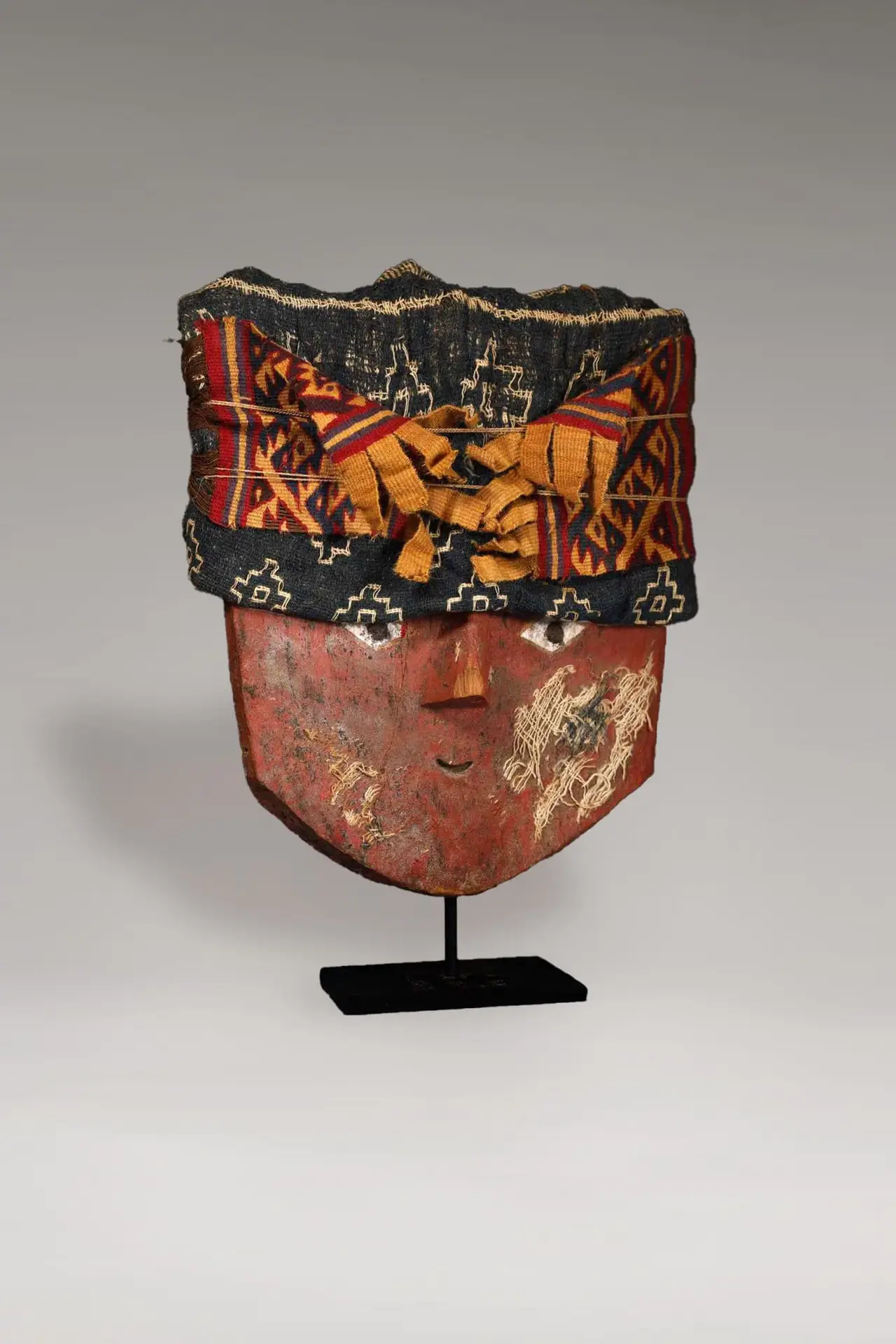
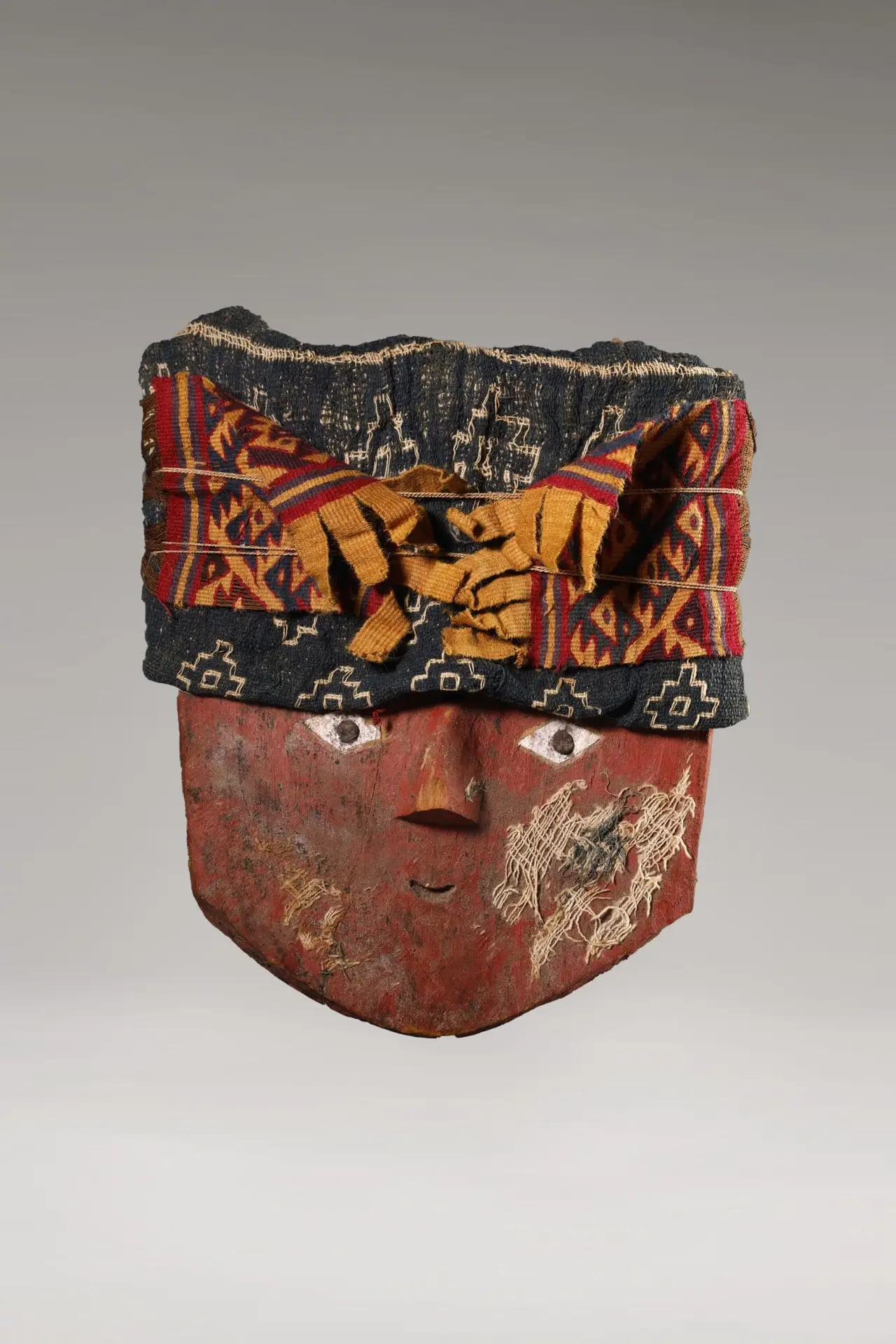
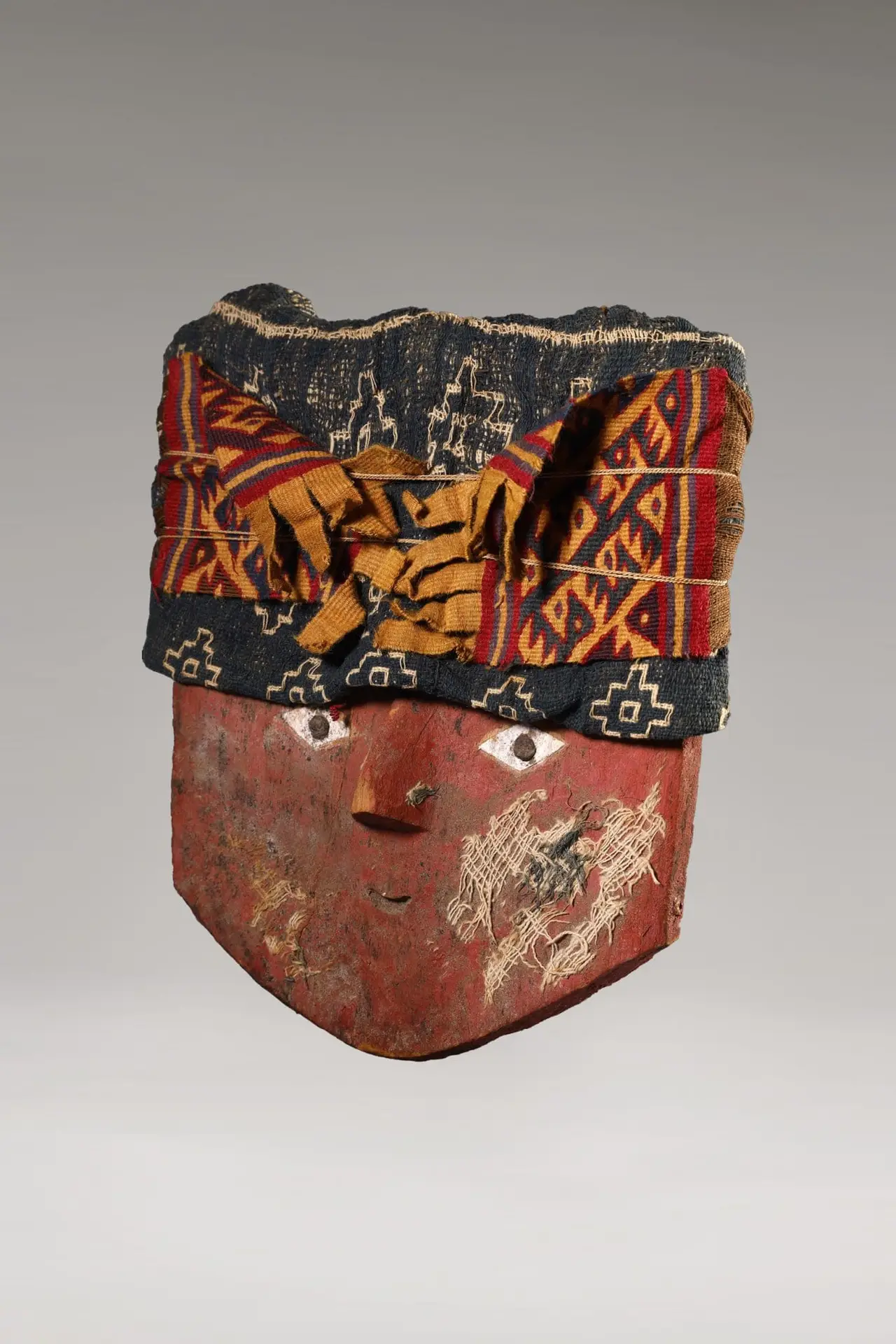
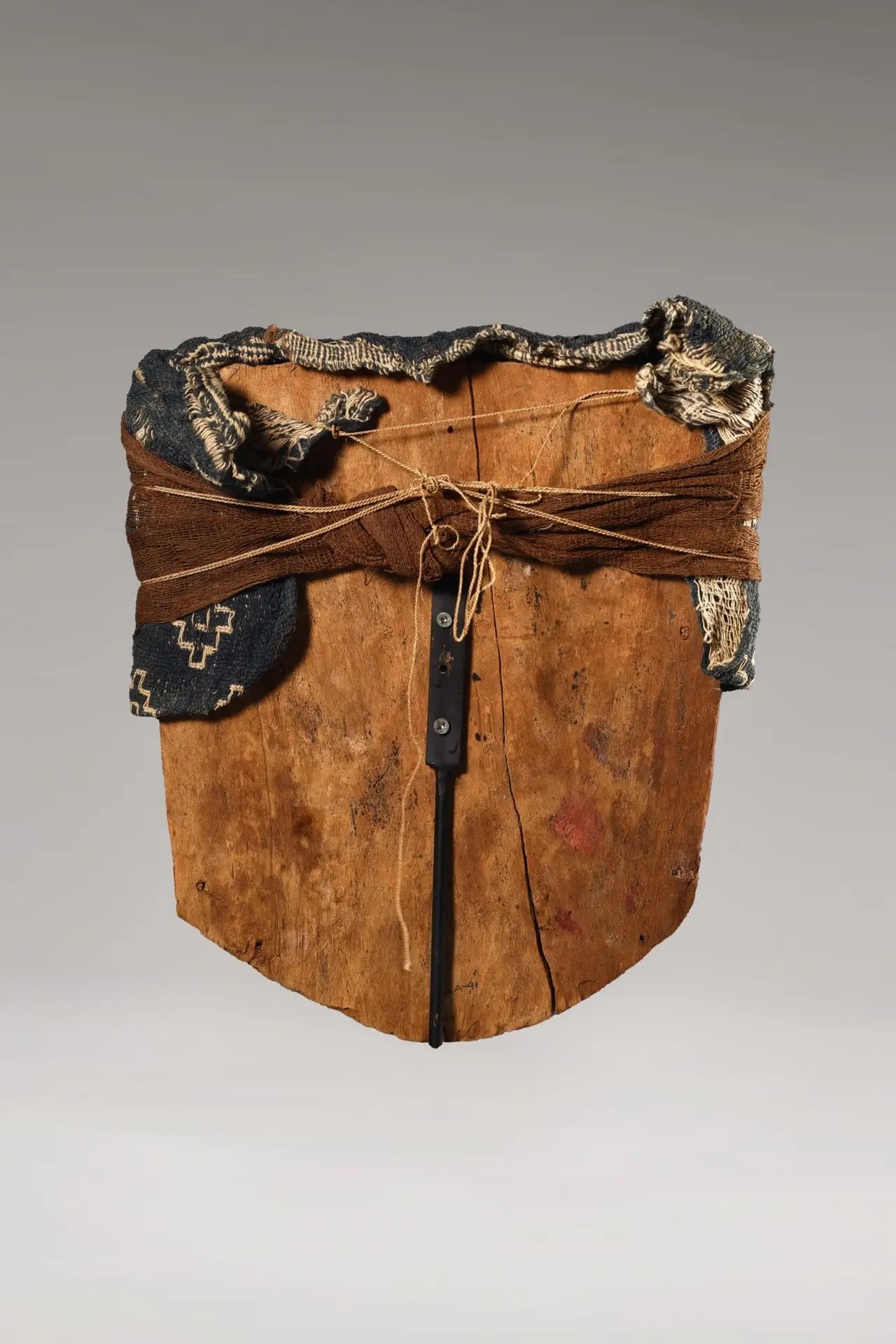
Among the Chancay, the dead were wrapped in multiple layers of textile into large funerary bundles and buried in shaft tombs or dry caves above the valley floor. The mask placed over or within the bundle served as a face for the bundle itself — a visible presence where the wrapped body was hidden. At 32 × 30 centimetres, flat and almost abstract in its rendering of the human face, this Chancay mask shares the formal characteristics that define the type: the wide, circular or oval eyes that give Chancay funerary figures their characteristic stare, the simply indicated nose, and the application of polychrome pigment over a vegetable fibre and wood substrate that made these objects simultaneously fragile and, in the dry coastal desert, remarkably durable. The mask does not aim at individual likeness: it aims at presence, at a generalised human face that could accompany and represent the dead in the conditions of the afterlife.
Five and a Half Centuries of Survival
That a Chancay funerary mask survives in good condition after more than five centuries is a testimony to both the exceptional preservation conditions of the Peruvian coast and the care with which it was made. Vegetable fibre and organic pigments are not materials designed for permanence in most climates; here, the combination of extreme aridity and stable temperature that characterises the coastal desert has preserved objects that would be entirely lost in almost any other environment on earth. What remains is the mask as the Chancay maker intended it: a flat, painted face that accompanied the dead out of the world of the living and into whatever lay beyond — a piece of portable cosmology, made with care, placed with purpose, and preserved by accident for five and a half centuries of unexpected continuation.



 No products in the cart.