


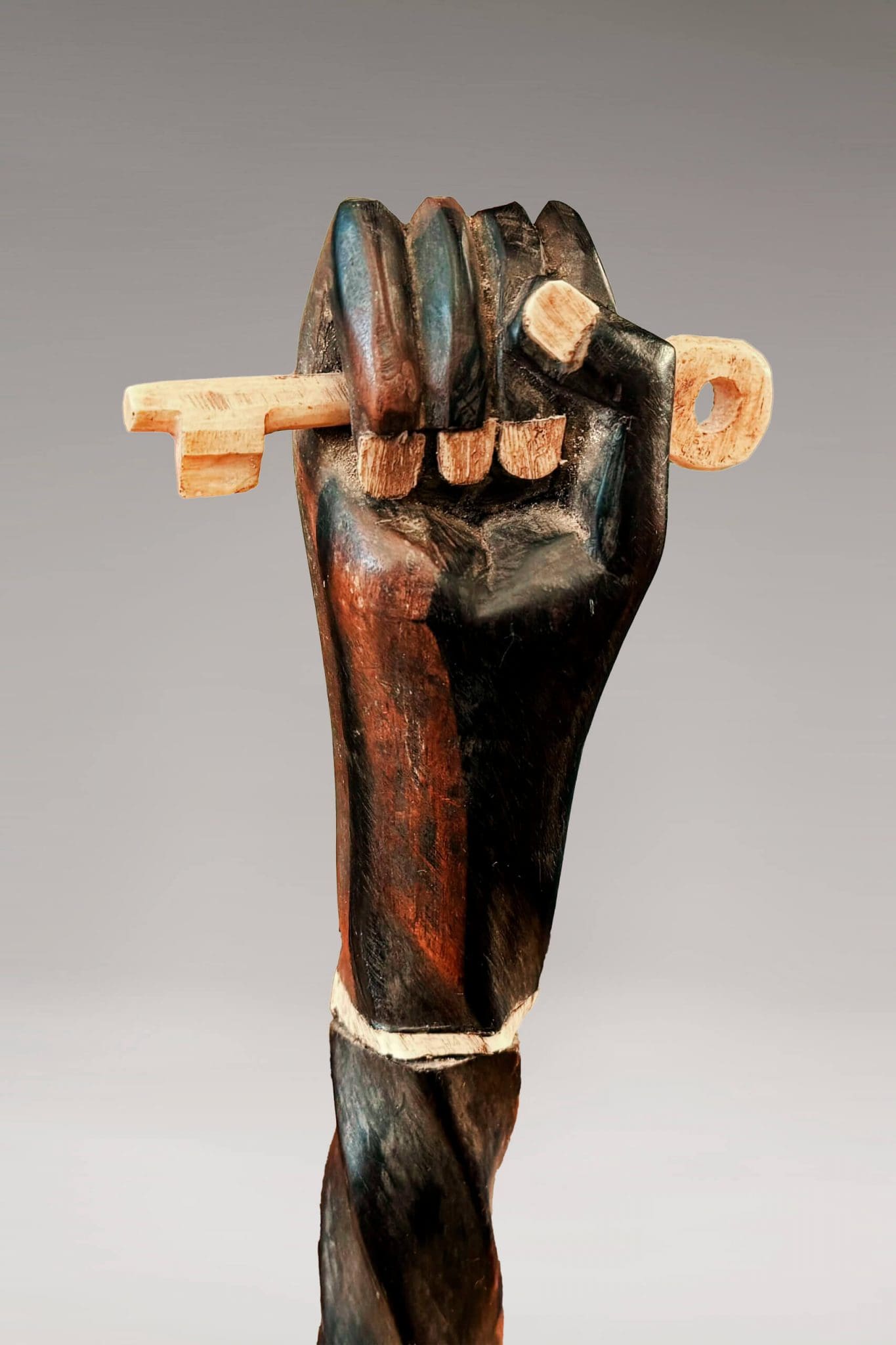
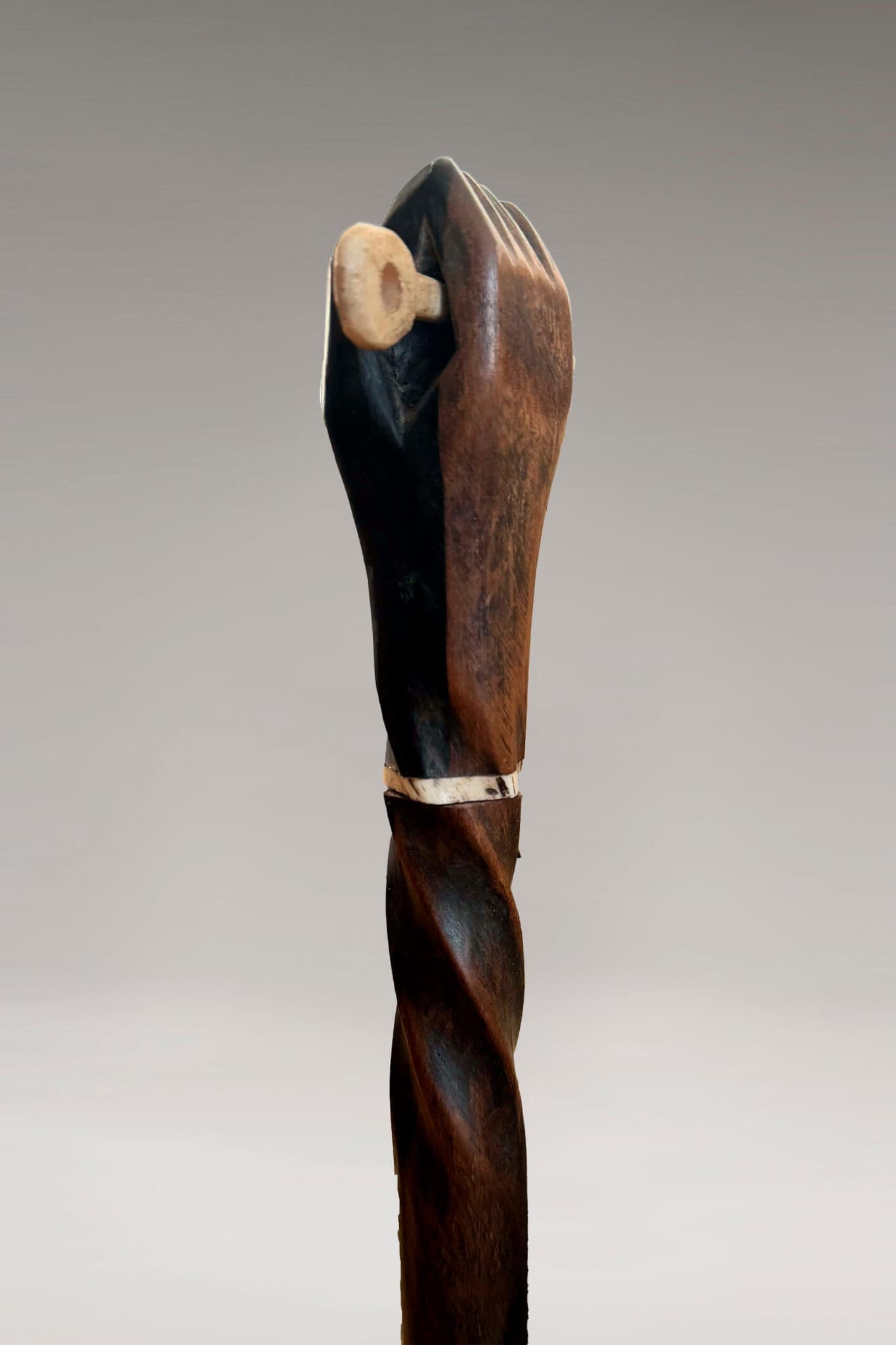
The Scepter as Symbol: Authority in Angolan Tradition
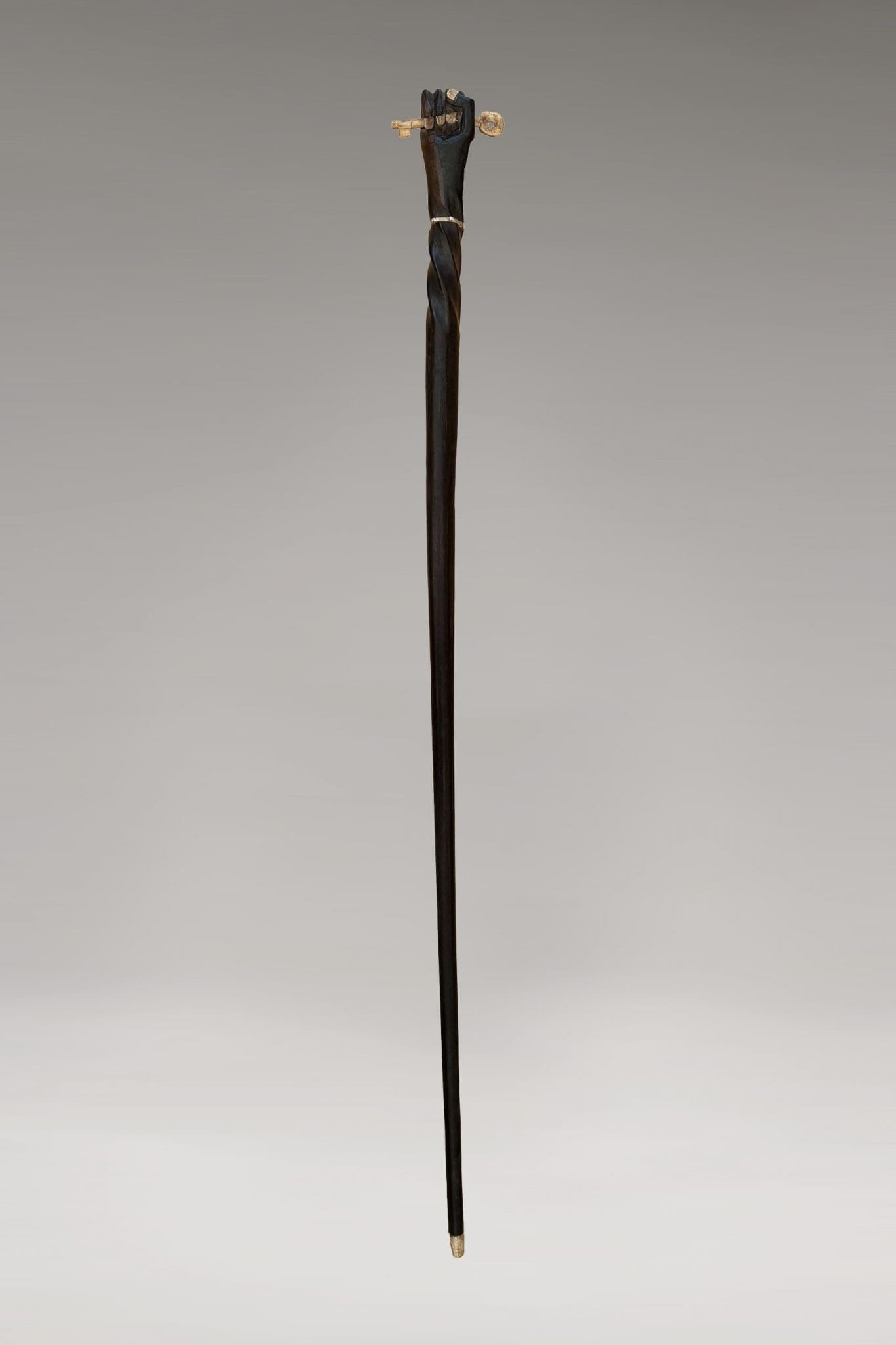
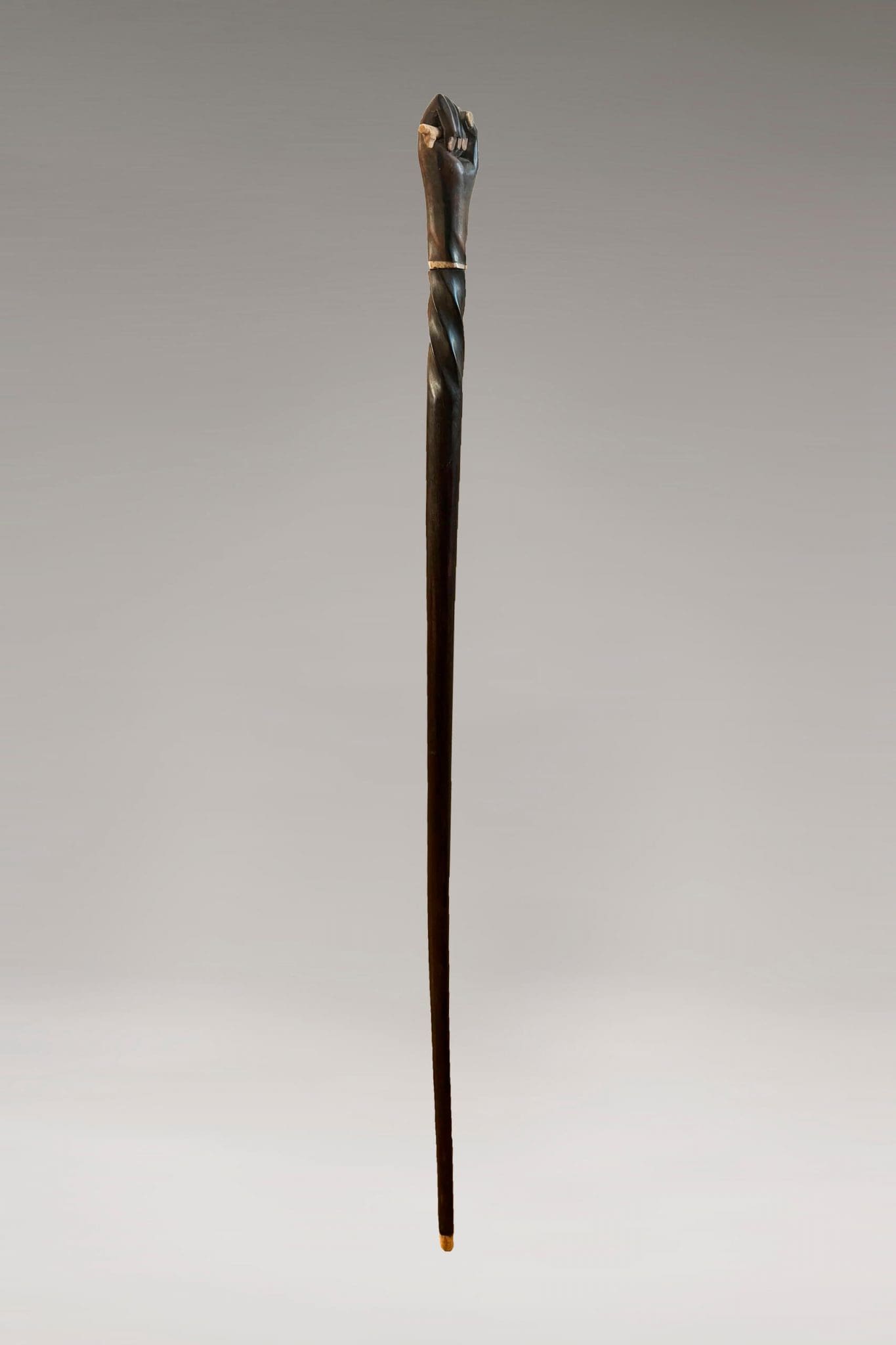
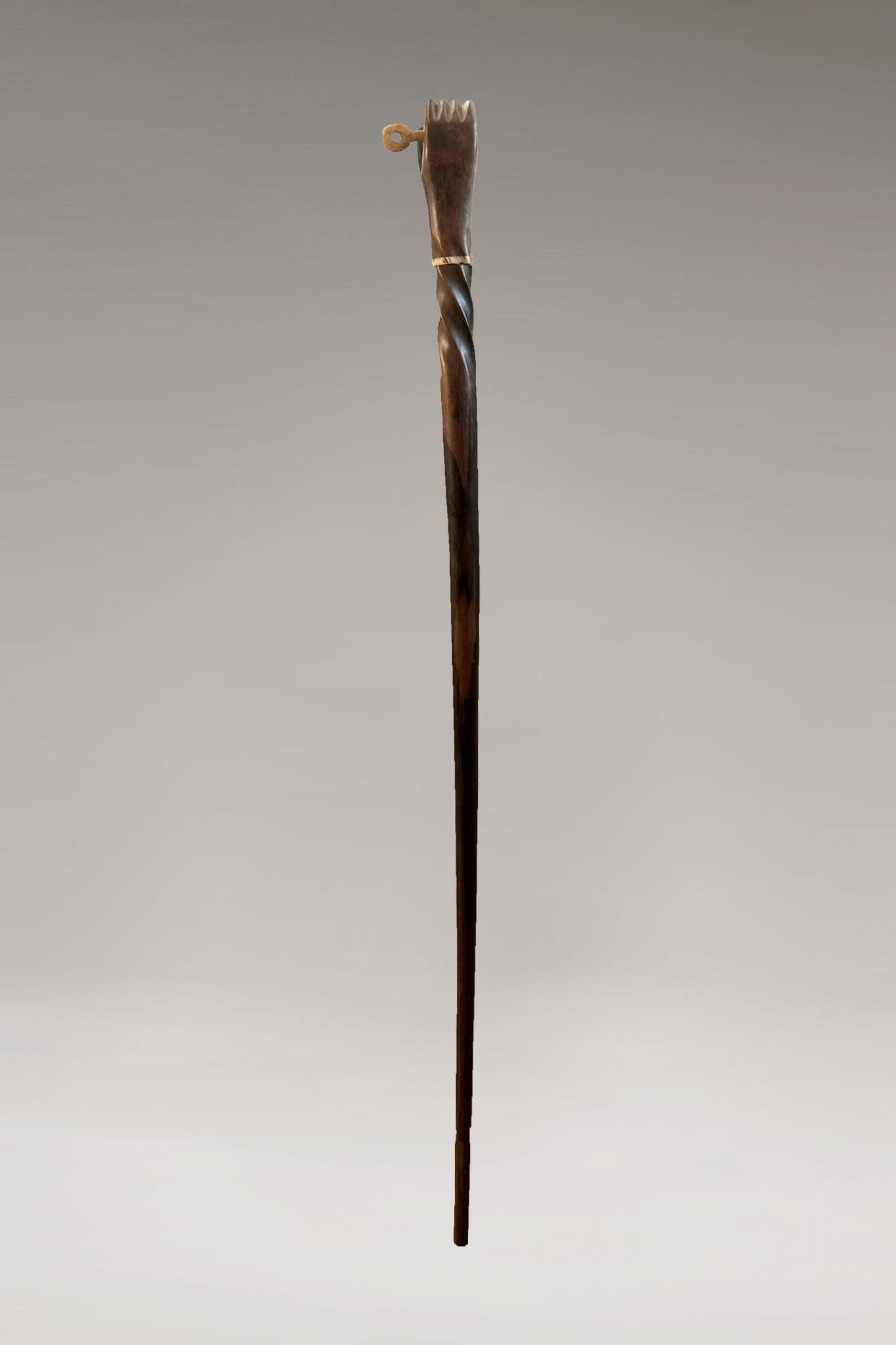
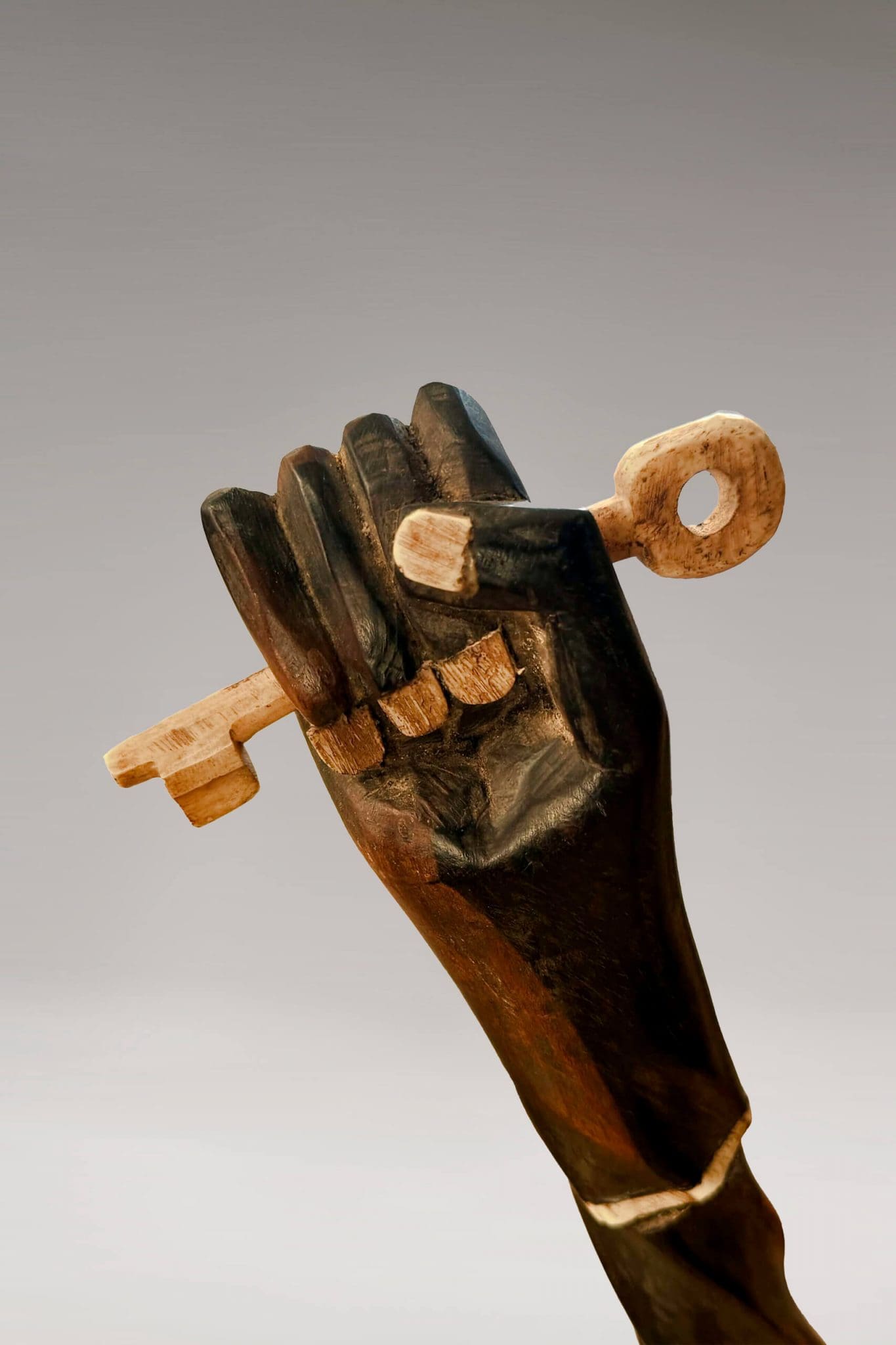
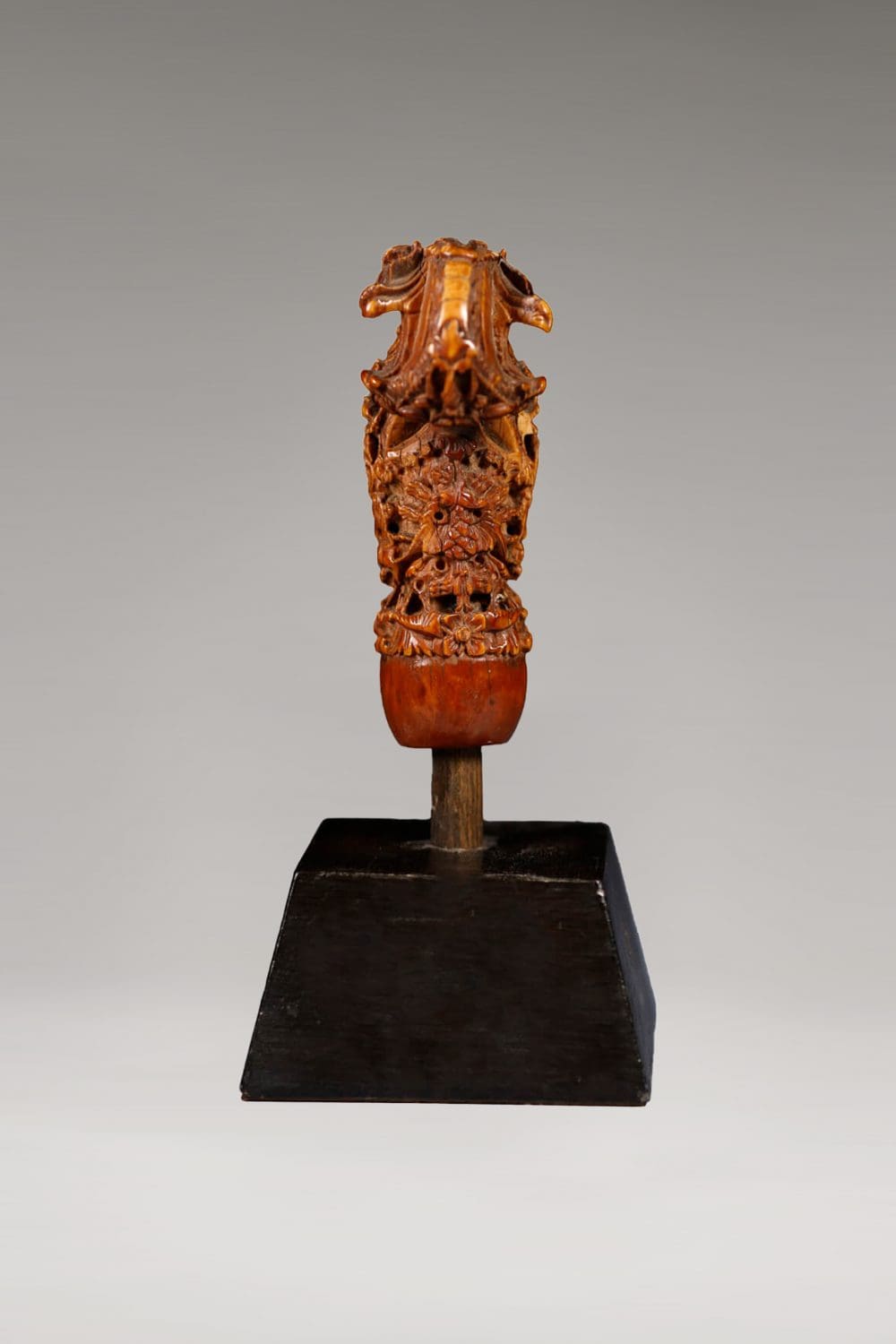
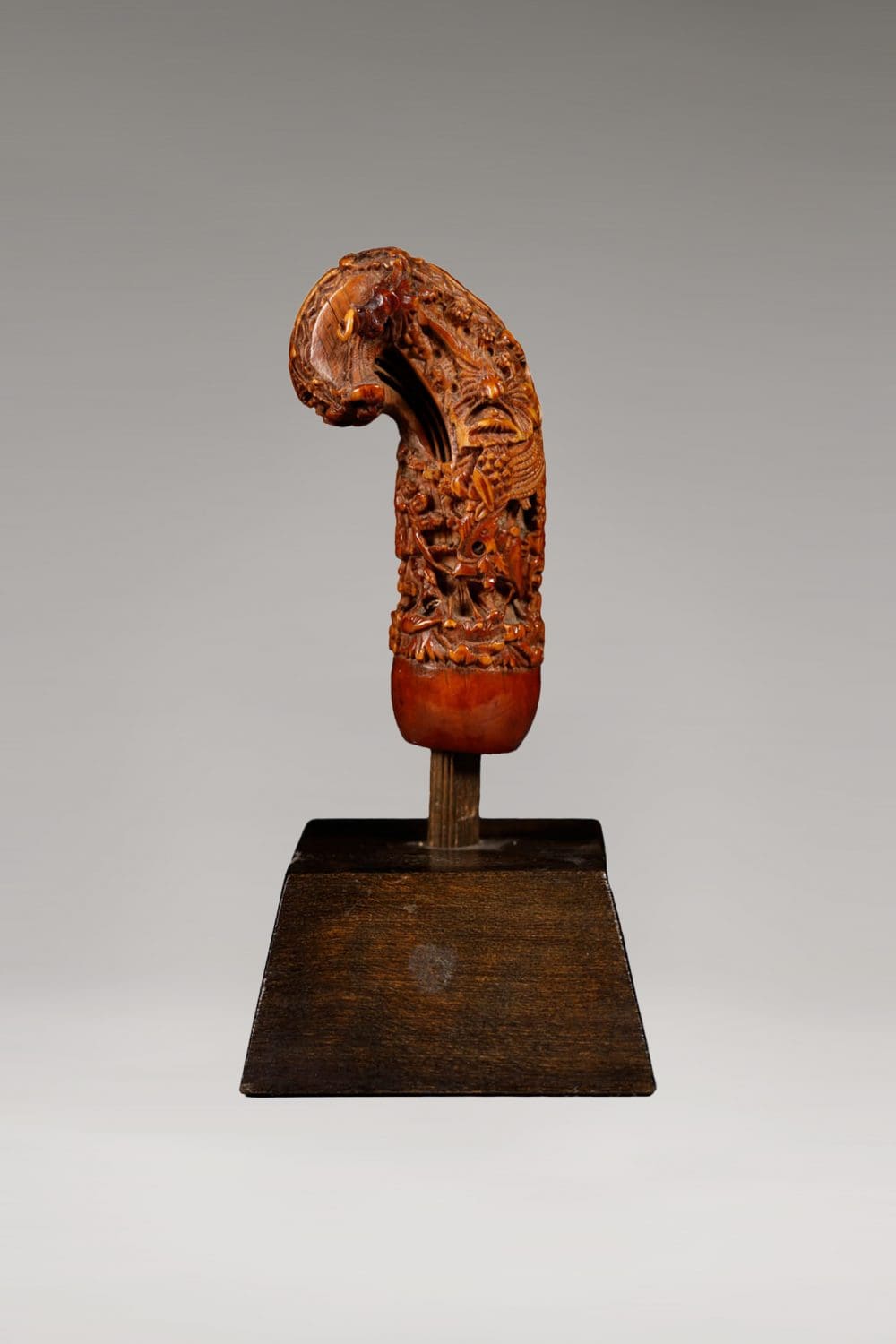
In the communities of Central Africa, leadership was never merely a political arrangement — it was a covenant between the living and the ancestral world. The chief was simultaneously governor, judge, and intermediary with forces beyond the visible realm. His implements of office — robes, hats, staffs, and scepters — were not ornamental accessories but charged objects through which power was transmitted and made legible. This Angolan ceremonial scepter, carved from bone and wood, belongs to this tradition of material authority. At 99 centimetres in length, it occupies the threshold between a walking staff and a ritual wand — long enough to command the eye, slender enough to be held with precision during ceremony. The combination of bone and wood speaks to both worlds: wood, rooted in the earth and the living community; bone, derived from life itself and pointing toward what endures after flesh.
Craft and Meaning in Central African Regalia
The peoples of Angola — among them the Chokwe, the Lunda, the Mbundu, and many others — developed sophisticated visual languages for marking hierarchy and sacred status. Scepters and staffs held by chiefs and lineage elders were often carved with motifs drawn from cosmology and genealogy: ancestor faces, geometric spirals, animal forms representing power and cunning. The pairing of bone and wood in a single object was not accidental. Bone carried particular resonance as a material connected to ancestors — the permanent substrate of the person that outlasts all else. To hold a scepter composed of bone was, in some traditions, to hold a fragment of ancestral presence: an umbilical cord reaching back through generations of legitimate rulers. This piece dates to the 20th century, a period during which traditional leadership structures in Angola persisted alongside and often in tension with colonial administration. Chiefs and local leaders navigated both worlds, maintaining ceremonial life even as political geography was transformed around them. Regalia like this Angolan ceremonial scepter became, in that context, an assertion of continuity — of a sovereignty that colonial maps could not fully erase.
A Witness to Ceremonial Life
What occasions called for this scepter’s appearance? Investiture ceremonies, in which a new chief received authority from his predecessors, were among the most charged moments in community life. Dispute resolution — held in the chief’s compound, under his watchful eye — also required the visible symbols of legitimate power. And in some traditions, the scepter appeared at funerary rites, where the boundary between the living and the dead required careful, authoritative management. Today, objects like this Angolan ceremonial scepter find their place in ethnographic collections and private cabinets precisely because they carry these histories so densely. They are not merely decorative artifacts — they are instruments of governance, theology, and memory, translated across time into the language of art.










 No products in the cart.